

Graham Platner’s recently released energy plan navigates several tensions, including how to build clean energy projects and transmission lines quickly while also incorporating community input. Such projects are not only needed to fight climate change but to help bring down sky-high electricity prices.
Platner’s plan contains only a short section on this tension, calling for permitting reform for clean energy. But Platner’s limited record in public office vividly illustrates it: As a member of the Planning Board in his hometown of Sullivan, Maine, Platner voted in 2024 to advance a temporary ban on larger solar projects in the town while permanent rules for permitting such projects could be worked out. At the same time, Platner has called for a large, federally-funded buildout of renewable energy, including wind and solar.
As a “home-rule” state, Maine’s constitution grants towns significant control over land use, including energy developments.
Platner told Inside Climate News that he was responding to public concerns in voting to pursue a moratorium on all solar projects besides rooftop residential ones.
“There’s been a lot of community backlash just here locally. Nobody was preparing for these large solar farms. The communities—they just kind of sprung up out of nowhere. And much like the data center stuff, a lot of people were frustrated because they didn’t understand what it was and they didn’t feel like they had any input.”
He says his goal with the moratorium was to buy time for Sullivan and its residents to “get ordinances in place and have a deeper and more nuanced conversation.”
Renewable energy advocates expressed understanding of that rationale.
“Moratoria can play an important role in giving towns an opportunity to take a beat and understand how they can locate solar or any type of new energy development or any type of development writ large and understand how they can best fit within their community,” said Eliza Donoghue, executive director of the Maine Renewable Energy Association. “Where we get concerned is when moratoria and standards that might follow them become a de facto ban on solar energy generation.” There is no evidence that either the yet-to-be-adopted Sullivan moratorium or the development review ordinance would fit that description.

While town manager Ray Weintraub said that no developers have yet proposed these types of larger-scale solar projects in Sullivan, several have been built nearby, including a 100-acre array on portions of a blueberry barrens in neighboring Hancock and several smaller projects in neighboring Franklin.
“So maybe we as a town should get ahead of this,” Weintraub described his thinking at the time.
The moratorium proposal has not yet advanced to a popular vote and, Weintraub said, almost certainly won’t be ready in time for this summer’s town meeting.
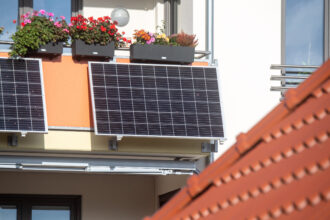
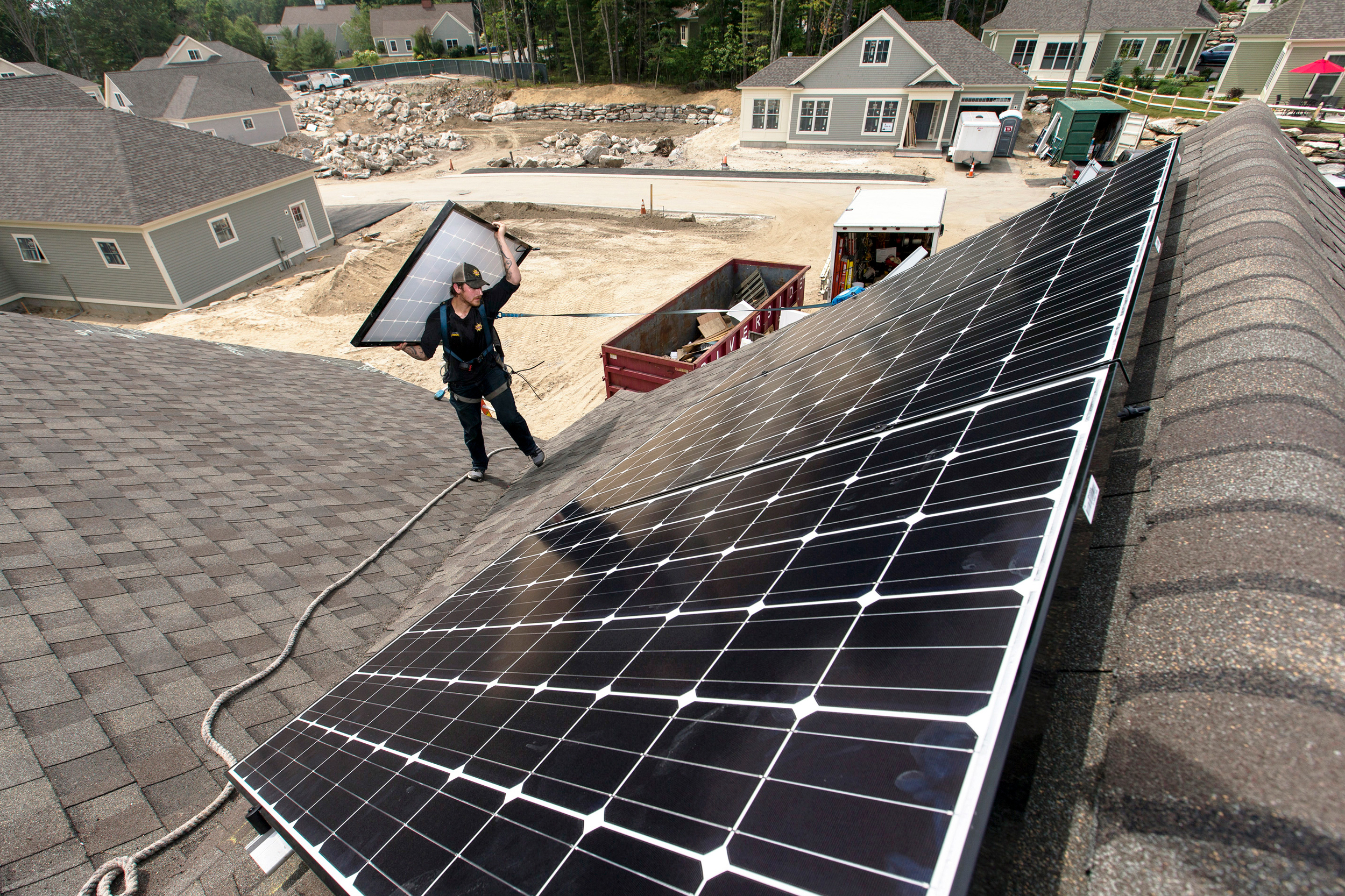
It was proposed during a time when at least a dozen towns around Maine adopted similar measures. That wave followed the rapid growth in solar installations of all sizes—ranging from a couple panels on a rooftop to 10-acre community solar arrays to utility-scale farms of 30 or more acres.
Total capacity in the latter two categories across Maine grew nearly 13-fold from 2020 to 2024, according to the U.S. Energy Information Administration, to a total of 1,640 megawatts, or roughly 8,000 acres of land, using a rough average of 5 acres per megawatt. That’s a tiny fraction of the state’s total lands and the arrays are helping Maine produce more of its power locally and without harmful emissions.
Several policies helped spur this growth, from state incentives for rooftop and community solar projects—chief among them the state’s net energy billing program—to federal investment and production tax credits.
But the rapid growth, combined with the perception that the state’s solar subsidies were contributing to higher electricity prices, contributed to a backlash.
This story is funded by readers like you.
Our nonprofit newsroom provides award-winning climate coverage free of charge and advertising. We rely on donations from readers like you to keep going. Please donate now to support our work.
Donate NowOne of the concerns motivating local moratoria was a perception that the solar farms were being built on a limited supply of agricultural land already under pressure from suburban housing growth. In response, Maine passed a law in 2023 requiring developers to get an extra permit and pay a special fee for solar projects on agricultural land that has been identified as especially fertile. (Hosting a solar farm on a portion of agricultural land can also enable farmers to keep their farms intact, and can even be co-located with some agricultural practices, as a stakeholder group reporting on the issue pointed out).
Last year, the state revised its net-energy billing rules to make them less generous to the owners or subscribers of participating solar panels and to exclude all but the smallest community solar projects.
Despite these measures, the movement to regulate solar farms does not appear to be going away. Perhaps in recognition of this, the state’s Department of Energy Resources released a handbook for towns interested in regulating solar arrays and the battery-energy storage systems that can be attached to them.
The handbook includes a model solar development ordinance for towns to draw from. The draft Sullivan ordinance differs from the model ordinance in several minor but potentially impactful ways. Most notably, it includes a noise-decibel limit for solar farms of 50-55 decibels at the property line. Solar panels are noiseless, but the motors and gears that enable them to track the sun and associated inverters and transformers produce low levels of noise.
Weintraub clarified that he had not yet introduced this draft ordinance to the town’s Planning Board during Platner’s time on it and confirmed that his intent was always for the moratorium to precede such an ordinance.
Platner said that he sees local solar ordinances and permitting reform as compatible. “We have a lot of issues in the permitting process these days that are far more than simply input from a community,” he said. These include federal and state environmental reviews and interconnection processes.
Among the hurdles projects must leap over, Platner sees community input as one that tends to create better outcomes.
“When you get more community input, you actually come up generally, I find, with better answers,” he said. “Things start getting placed in areas that aren’t going to piss everybody off, because you actually sat down and had a conversation.”
About This Story
Perhaps you noticed: This story, like all the news we publish, is free to read. That’s because Inside Climate News is a 501c3 nonprofit organization. We do not charge a subscription fee, lock our news behind a paywall, or clutter our website with ads. We make our news on climate and the environment freely available to you and anyone who wants it.
That’s not all. We also share our news for free with scores of other media organizations around the country. Many of them can’t afford to do environmental journalism of their own. We’ve built bureaus from coast to coast to report local stories, collaborate with local newsrooms and co-publish articles so that this vital work is shared as widely as possible.
Two of us launched ICN in 2007. Six years later we earned a Pulitzer Prize for National Reporting, and now we run the oldest and largest dedicated climate newsroom in the nation. We tell the story in all its complexity. We hold polluters accountable. We expose environmental injustice. We debunk misinformation. We scrutinize solutions and inspire action.
Donations from readers like you fund every aspect of what we do. If you don’t already, will you support our ongoing work, our reporting on the biggest crisis facing our planet, and help us reach even more readers in more places?
Please take a moment to make a tax-deductible donation. Every one of them makes a difference.
Thank you,