

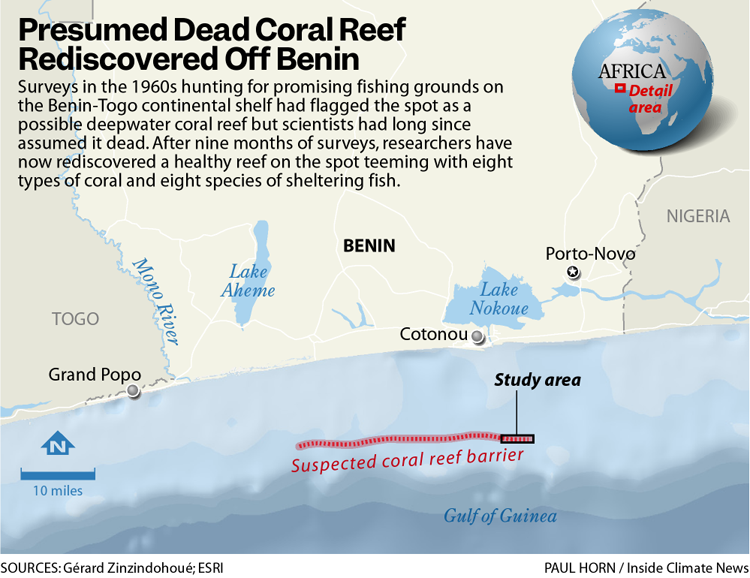
In the 1960s, fishing surveyors off West Africa’s Benin coast hauled up heads of coral in their nets. Employed by local governments to assess fish diversity and discover potentially trawlable seabeds in the sandy-bottomed Gulf of Guinea, the researchers shrugged off the discovery at the time, burying the find in a brief paragraph in a 130-something-page report.
With no surveys since, the scientists who followed had lost track of exactly where the reefs might lie. And as mass bleaching events and overfishing slashed the world’s coral reef area by more than 50 percent since the 1950s, local oceanographers had written off any remnants of a possible reef as dead.
More than six decades on, the mystery has been solved as a team of Beninese scientists rediscovered the healthy reef teeming with marine life. At least eight coral types and eight fish species have formed a thriving ecosystem on this long-forgotten site.
“I was guided by hope. A hope that sometimes there are species or ecosystems which kind of defeat time, or are trying to resist it,” said Gérard Zinzindohoué, the project lead for Coral Reefs Rediscovering & Exploration in Benin (COREB).
Fresh off seeing coral for the first time in Cape Verde in 2021, Zinzindohoué asked himself a simple question: Do we have any reefs in Benin?
After a colleague passed on the original 1960s report—which mapped out a potential 24-mile-long coral reef barrier along Benin’s coastline—Zinzindohoué recognized a gap in the scientific knowledge: “I realized how little we know about our own coastal environment.”
But in the years that followed, a string of failed grant applications halted progress on solving the mystery.
When he secured a $20,000 National Geographic Explorers grant in January 2025, the project finally ignited. Yet getting the gear was also challenging. The sonar equipment swallowed up almost 80 percent of the grant budget and nearly stalled entirely when the European supplier refused to accept payment from Zinzindohoué’s African bank account.
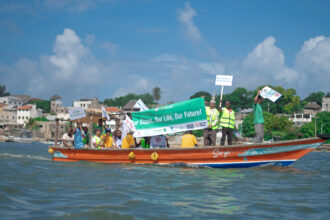
To complicate matters further, Benin doesn’t have a permanent research vessel. Zinzindohoué therefore had no choice but to seek the help of local fishermen to ferry the team to the suspected site 14 miles offshore and jury-rig the pirogue to accommodate towing the high-tech sonar device.
“The fishermen’s boats are not used to going that far offshore, so it was risky for everyone,” said Zinzindohoué, whose team battled repeated engine failures and months of nausea-filled fieldwork before finally locating two strong sonar echoes pinging from the depths below. National Geographic—whom Zinzindohoué credits with the success of the project—then dispatched a high-resolution Deep Sea Camera System from their Exploration Technology Lab to investigate the sonar results.
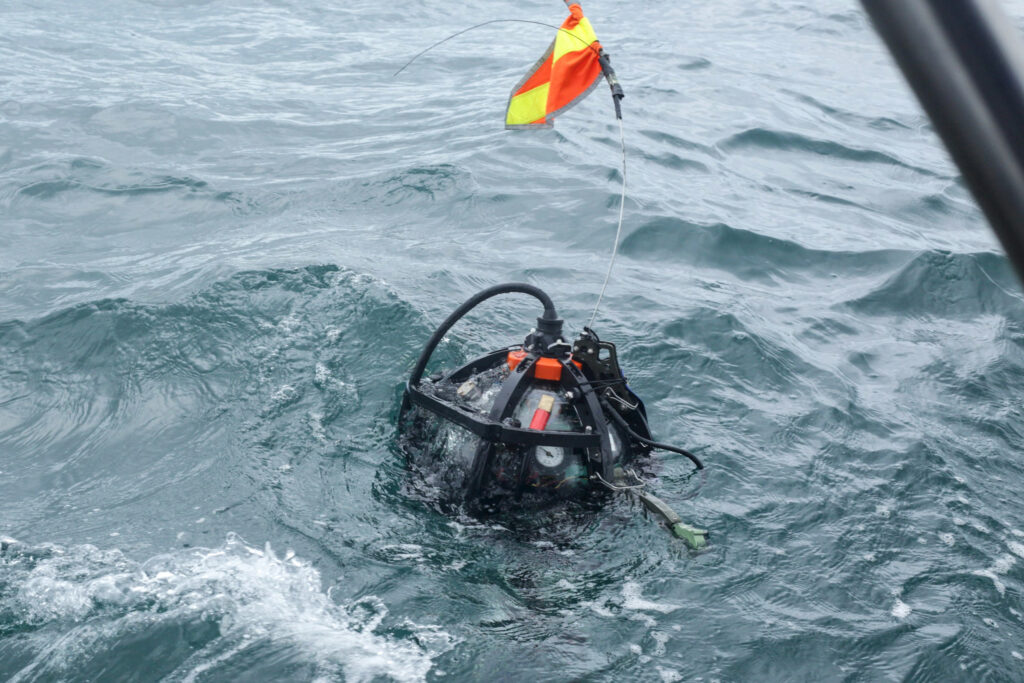
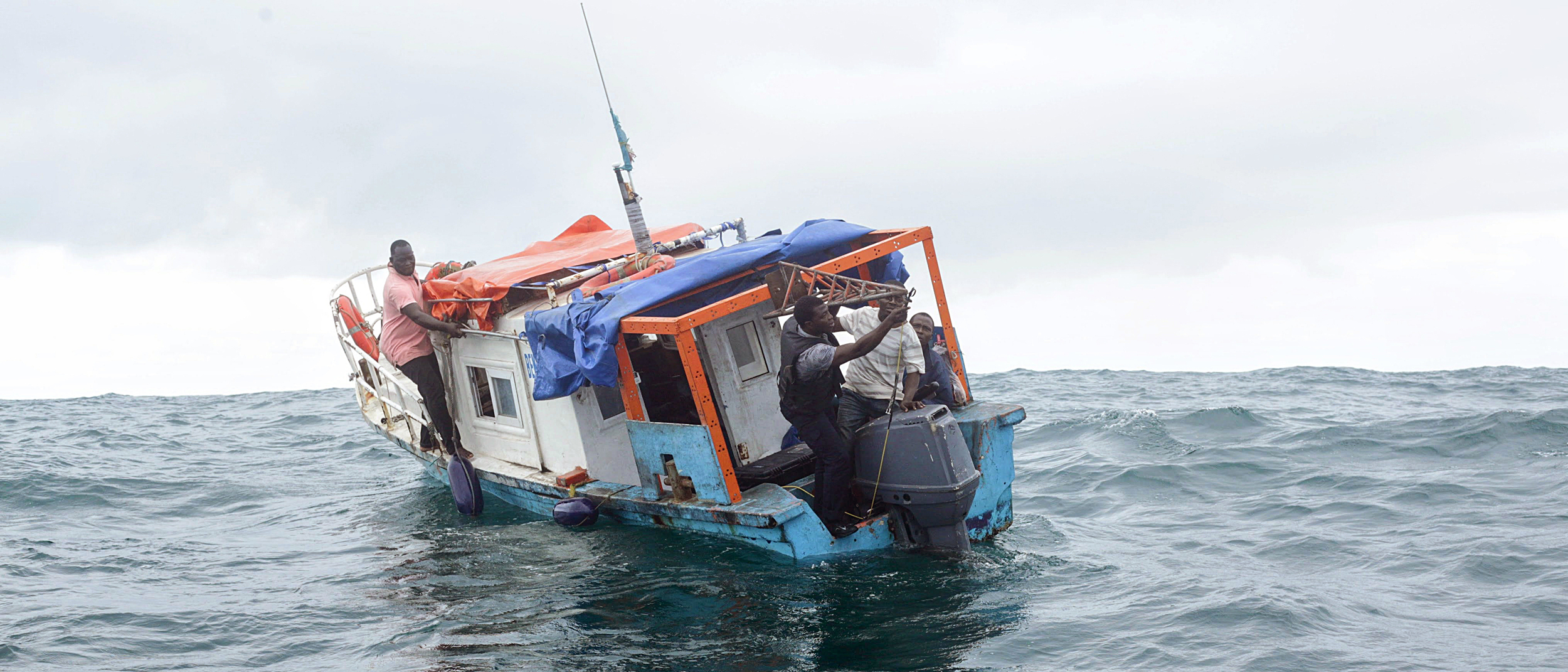
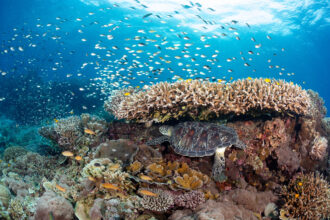
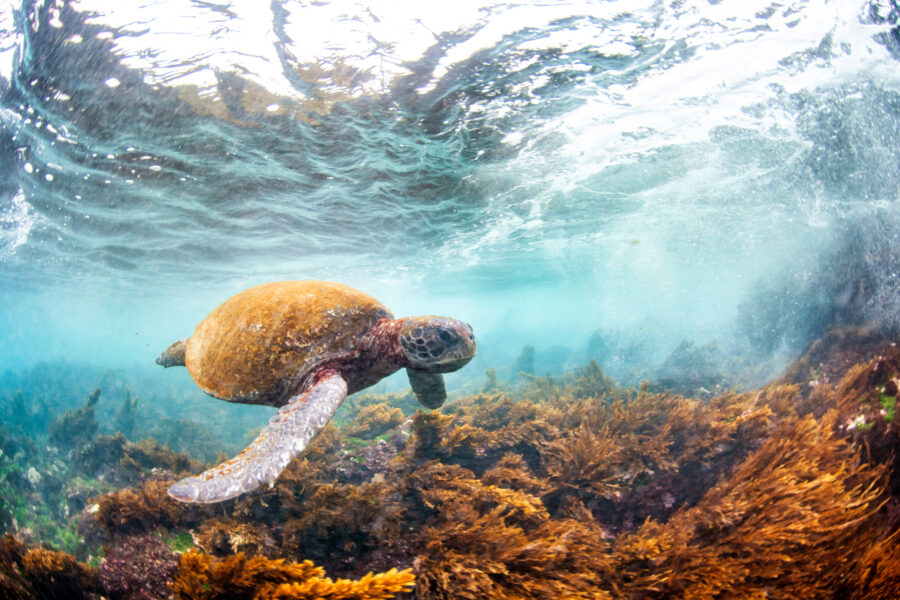
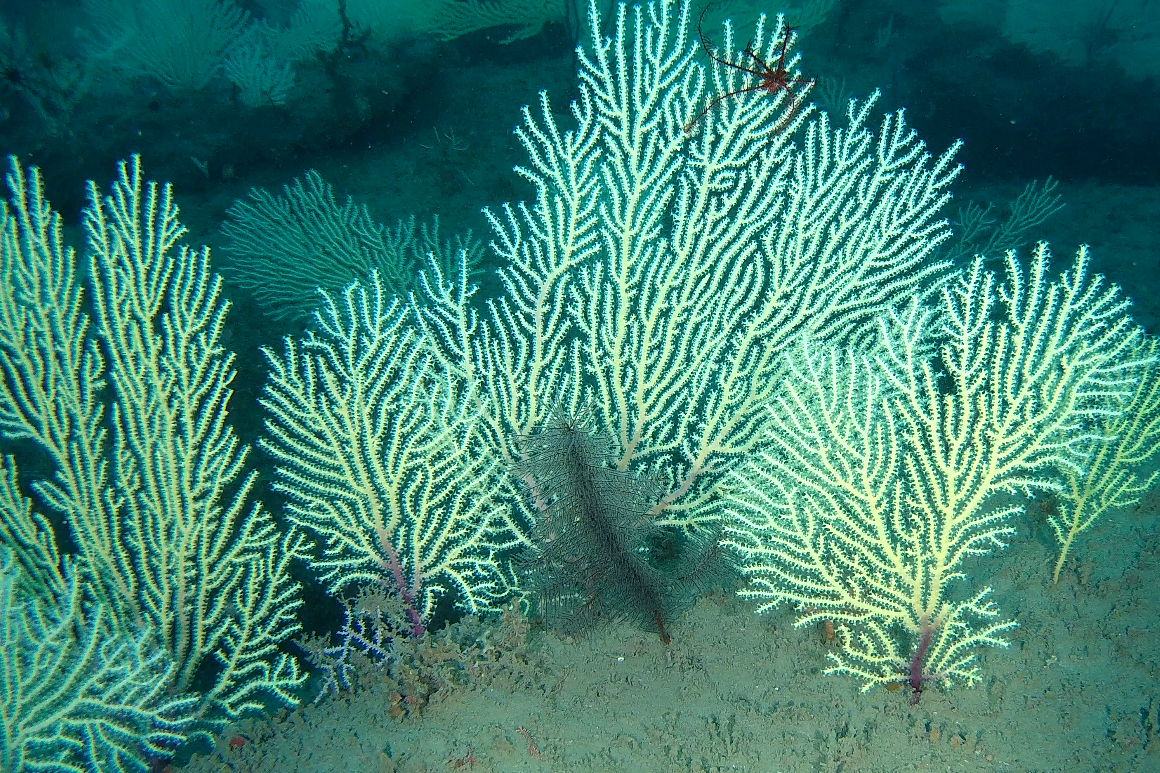
While their wooden pirogue bounced atop the offshore swell, the team filmed the seafloor below but had to wait until they returned to dry land to scour the footage. What they had captured was a wealth of marine life: Six types of soft coral; two black corals; and eight species of sheltering fish, from golden African snappers to the Monrovia doctorfish.
When the first images came through, Zinzindohoué texted Houangninan Midinoudewa, an oceanographic researcher at the Benin Marine Conservation Club and the same friend who first told Zinzindohoué of the 1960s report.
Midinoudewa remembers the moment: “I said, ‘Bro, 60 years later we are now discovering exactly what we have in our water.’ We found it still alive, producing more fish for communities and supporting livelihoods. I was really joyful and really overwhelmed.”
This story is funded by readers like you.
Our nonprofit newsroom provides award-winning climate coverage free of charge and advertising. We rely on donations from readers like you to keep going. Please donate now to support our work.
Donate NowWhile no coral samples have yet been extracted, researchers have classified the site as a mesophotic coral ecosystem (MCE). Such systems are light-dependent communities existing at the lower limits of reef-building corals. At more than 175 feet below the surface, the coral garden they discovered appears patchily scattered on a rocky substrate.
Bridging the gap between shallow reefs and deeper benthic habitats, MCEs are home to distinct species and unique environmental conditions. While scientists are increasingly recognizing their ecological and climatic importance, they remain among the least explored elements of tropical and subtropical marine biodiversity. And this one has real potential to unlock new information about coral history.
“Since it’s an undisturbed marine ecosystem, it can help through carbon dating or paleoclimatic study to tell us which kind of climate system has occurred here in the past,” said Zinzindohoué. “It’s better to know the past to help explain the present, and help know which kind of direction we can take in the future.”
In addition to the blackbar soldierfish, West African goatfish and Guinean angelfish filmed darting through the reef, the discovery presents potential conservation claims for other marine life.
“We will be advocating for its full protection, perhaps by setting up a marine protected area around it,” said Midinoudewa, who specializes in elasmobranchs—the study of sharks, rays and skates.
Midinoudewa is currently submitting an application to designate the area as an Important Shark and Ray Area with the International Union for Conservation of Nature. Based on the knowledge of local fishermen, Midinoudewa is confident the reef is home to sawback angel sharks, silky sharks, brown skates and marbled stingrays.
The team behind the discovery hopes this will spark a wave of similar discoveries in the waters off West Africa, an area of the world underserved by scientific research projects
“I hope the Gulf of Guinea will be a hub for research because we know our resources are being exploited and people [need to] know exactly what we have and why we should care,” said Midinoudewa.
Zinzindohoué agrees: “We don’t need to wait for others to come to our country to show us what is under our sea. We are the ones who must take responsibility.”
About This Story
Perhaps you noticed: This story, like all the news we publish, is free to read. That’s because Inside Climate News is a 501c3 nonprofit organization. We do not charge a subscription fee, lock our news behind a paywall, or clutter our website with ads. We make our news on climate and the environment freely available to you and anyone who wants it.
That’s not all. We also share our news for free with scores of other media organizations around the country. Many of them can’t afford to do environmental journalism of their own. We’ve built bureaus from coast to coast to report local stories, collaborate with local newsrooms and co-publish articles so that this vital work is shared as widely as possible.
Two of us launched ICN in 2007. Six years later we earned a Pulitzer Prize for National Reporting, and now we run the oldest and largest dedicated climate newsroom in the nation. We tell the story in all its complexity. We hold polluters accountable. We expose environmental injustice. We debunk misinformation. We scrutinize solutions and inspire action.
Donations from readers like you fund every aspect of what we do. If you don’t already, will you support our ongoing work, our reporting on the biggest crisis facing our planet, and help us reach even more readers in more places?
Please take a moment to make a tax-deductible donation. Every one of them makes a difference.
Thank you,
Johnny Sturgeon
Fisheries Reporter
Johnny Sturgeon is a London-based reporter covering fisheries and aquaculture. Joining us from the Outlaw Ocean Project, he has experience producing in-depth maritime investigations for nonprofit newsrooms. A former boatbuilder, he holds a B.A. in History & Politics from the University of Oxford, and an M.S. from Columbia Journalism School.