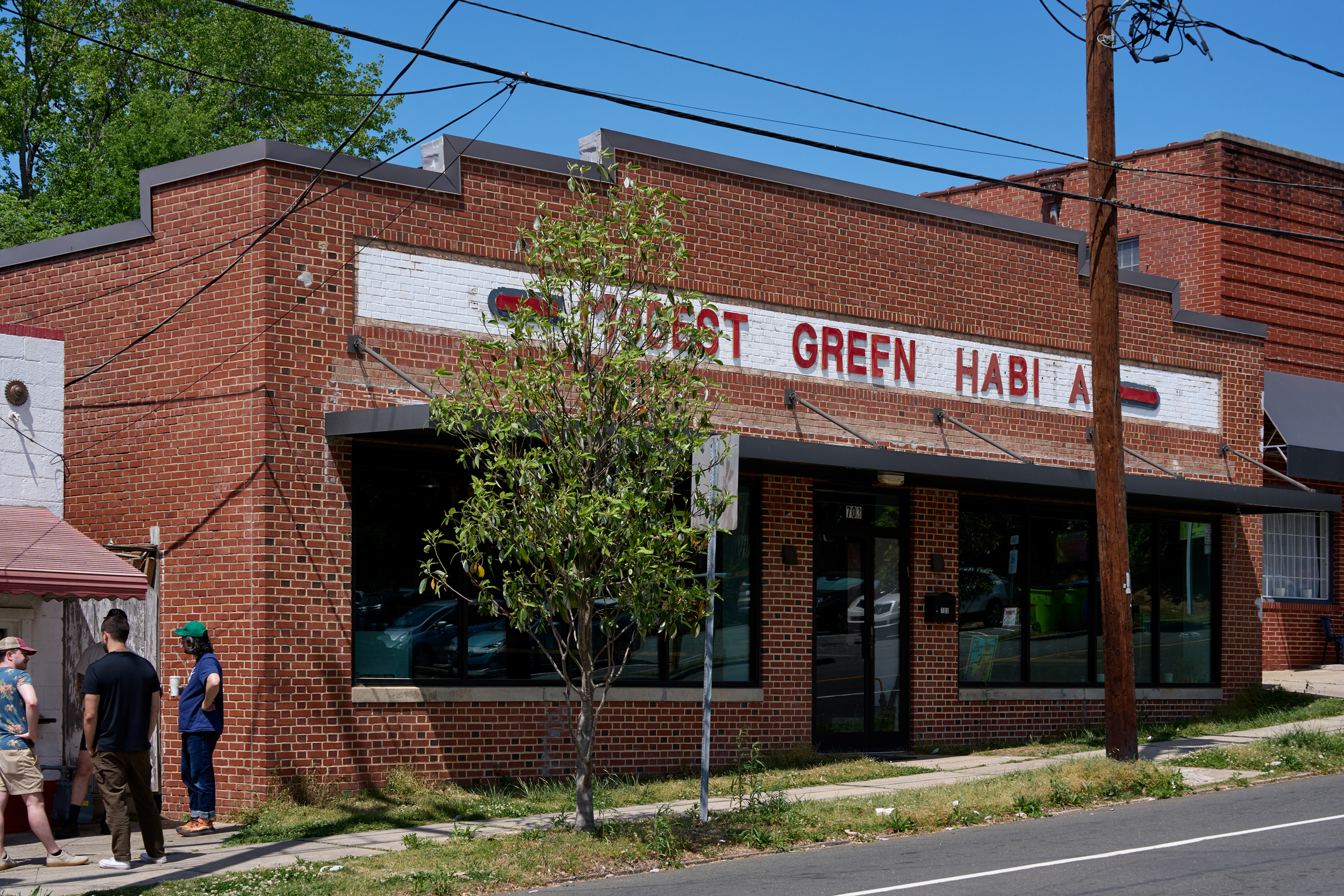


American Efficient, a Durham-based energy efficiency business facing more than $1 billion in federal fines and repayments for allegedly manipulating electricity markets, has filed for bankruptcy protection, court filings show.
The filing comes three months after the Federal Energy Regulatory Commission unanimously ruled that the company withheld key information from, and defrauded, electric grid operators, including PJM Interconnection. PJM is the regional transmission organization that manages wholesale electricity markets in Washington, D.C., and all or parts of 13 states, including northeastern North Carolina.
FERC fined the company $722 million and ordered it to repay more than $410 million in “unjust profits” to electric grid operators.
“I don’t vote lightly for disgorgement and civil penalties this high,” said FERC Commissioner Lindsay See, a Republican and Biden administration appointee, at a public meeting in April. “But we’ve not been faced with a scam that robbed ratepayers of hundreds of millions of dollars in this way before.”
American Efficient has long denied the allegations. Last year, the company called FERC’s accusations “baseless,” and a consequence of bad math and a misreading of the agreements the company had with grid operators.
After FERC’s ruling in April, an American Efficient spokesperson said the company “stands by its position that the commission’s allegations are meritless and that it did not commit any wrongdoing.”
Ben Abram, American Efficient managing director, declined to comment on the bankruptcy.
Abram graduated from Duke University and later served on its board of trustees. He is married to state Sen. Sophia Chitlik, who represents parts of Durham County.
American Efficient filed for a Chapter 11 bankruptcy reorganization. The company has assets worth $1 million to $10 million, according to bankruptcy filings, and liabilities of $1.4 billion. In addition to the FERC penalty, the company owes $3.2 million in taxes in four states, including North Carolina.
FERC’s investigation into American Efficient began five years ago after independent market monitors became skeptical of the company’s business model and alerted the commission’s enforcement staff, Inside Climate News previously reported.
American Efficient operated as an energy efficiency aggregator. It bought sales data about certain items’ “environmental attributes”—the inherent characteristics of light bulbs, appliances, caulk and other products that make them energy efficient—from large retailers, like Lowe’s, The Home Depot and Walmart, as well as lighting manufacturers and distributors.
A Simple Guide to the Complex World of Energy Sales
FERC: The Federal Energy Regulatory Commission, which oversees and regulates electric power, natural gas and other utility-related projects, including pipelines and markets. Congress created FERC in 1977. Its five commissioners are appointed by the president, with the consent of the U.S. Senate. No political party can hold more than three seats; its current political makeup is three Democrats and two Republicans.
Regional Transmission Organizations/Independent System Operators: RTOs and ISOs administer the transmission grid and wholesale electricity markets regionally throughout the U.S. and parts of Canada. The grid operators are like orchestra conductors, with utilities, power producers and energy efficiency aggregators as the instruments. RTOs and ISOs operate the capacity auctions, which are regulated by independent market monitors.
Capacity markets, also known as capacity auctions: These markets are supposed to increase grid reliability, lower costs to ratepayers and balance the supply and demand of electricity.
In a capacity market, a grid operator pays an energy generator or an energy efficiency resource, such as American Efficient, for its ability to produce or save power to ensure the grid is reliable in the future, as far out as three years.
Power suppliers and energy efficiency aggregators bid their committed amount of energy—or savings—into the market. The RTO/ISO rejects bids for prices that are higher than necessary to meet a need. The highest-priced resource that is needed sets the price for everyone, even the lowest-cost resource. This is known as the clearing price.
Energy efficiency aggregator: An aggregator bundles multiple energy efficiency products and bids those savings into capacity markets. Some utilities, like Duke Energy, aggregate and sell products, like smart thermostats and LED light bulbs, to customers, with oversight from the state utilities commission. Non-utilities, like American Efficient, have varying methods of accounting for the savings.
Once it had the retailers’ sales data on the number of units sold, American Efficient then calculated how much electricity those products were expected to save. The company profited when it sold the value of the projected savings to grid operators at capacity auctions.
At these auctions, the grid operator pays a power supplier, such as a utility, or an energy efficiency resource, such as American Efficient, for its ability to produce or save power to ensure the reliability of the electric grid in the future.
These costs are ultimately passed on to ratepayers through their respective utilities.
Over more than a decade, grid operators paid American Efficient hundreds of millions of dollars on the theory that encouraging energy efficiency reduces the amount of power they must procure. For example, American Efficient received a $26 million performance bonus for purportedly saving energy during Winter Storm Elliott in 2022.
The payments to the retail stores were designed to encourage the sale and use of energy-efficient products, thereby saving electricity and, theoretically, reducing air pollution and greenhouse gas emissions.
But in investigatory documents, FERC alleged that American Efficient’s business model did not save energy but was merely “market research.”
The company’s payments to the retailers were as little as 12 cents per refrigerator and even less per light bulb. FERC investigators said there was no evidence these micro-payments, as American Efficient called them, incentivized the stores to promote the energy-efficient products to their customers.
The company didn’t verify how the stores were spending the micro-payments, according to FERC files, or track whether consumers who bought the appliances or light bulbs actually saved energy.
The investigation quoted testimony by a former policy director at one of American Efficient’s affiliated companies, who told FERC staff that “American Efficient did not believe it was causing energy efficiency to occur, or that it did.”
The employee is not named in the document.
The company disputed the former policy director’s accounts, and in court documents called her a “disgruntled employee.”
Beyond the bankruptcy filing, American Efficient can still argue the FERC case before a judge and jury. Since the company will likely miss the payment deadline, FERC will proceed to federal District Court, which could hear new evidence and arguments. If American Efficient prevails at trial, the court could cancel the fine or both sides could reach a settlement.
Forty percent of FERC investigations that carry a proposed penalty result in a settlement or reduced fines, federal records show.
Neither side has filed for a new trial, according to the federal court docketing system.
About This Story
Perhaps you noticed: This story, like all the news we publish, is free to read. That’s because Inside Climate News is a 501c3 nonprofit organization. We do not charge a subscription fee, lock our news behind a paywall, or clutter our website with ads. We make our news on climate and the environment freely available to you and anyone who wants it.
That’s not all. We also share our news for free with scores of other media organizations around the country. Many of them can’t afford to do environmental journalism of their own. We’ve built bureaus from coast to coast to report local stories, collaborate with local newsrooms and co-publish articles so that this vital work is shared as widely as possible.
Two of us launched ICN in 2007. Six years later we earned a Pulitzer Prize for National Reporting, and now we run the oldest and largest dedicated climate newsroom in the nation. We tell the story in all its complexity. We hold polluters accountable. We expose environmental injustice. We debunk misinformation. We scrutinize solutions and inspire action.
Donations from readers like you fund every aspect of what we do. If you don’t already, will you support our ongoing work, our reporting on the biggest crisis facing our planet, and help us reach even more readers in more places?
Please take a moment to make a tax-deductible donation. Every one of them makes a difference.
Thank you,

Lisa Sorg
Reporter, North Carolina
Lisa Sorg is the North Carolina reporter for Inside Climate News. A journalist for 30 years, Sorg covers energy, climate environment and agriculture, as well as the social justice impacts of pollution and corporate malfeasance.
She has won dozens of awards for her news, public service and investigative reporting. In 2022, she received the Stokes Award from the National Press Foundation for her two-part story about the environmental damage from a former missile plant on a Black and Latinx neighborhood in Burlington. Sorg was previously an environmental investigative reporter at NC Newsline, a nonprofit media outlet based in Raleigh. She has also worked at alt-weeklies, dailies and magazines. Originally from rural Indiana, she lives in Durham, N.C.