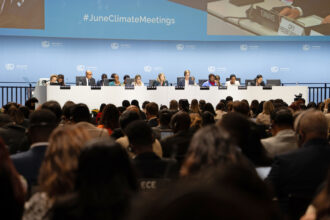
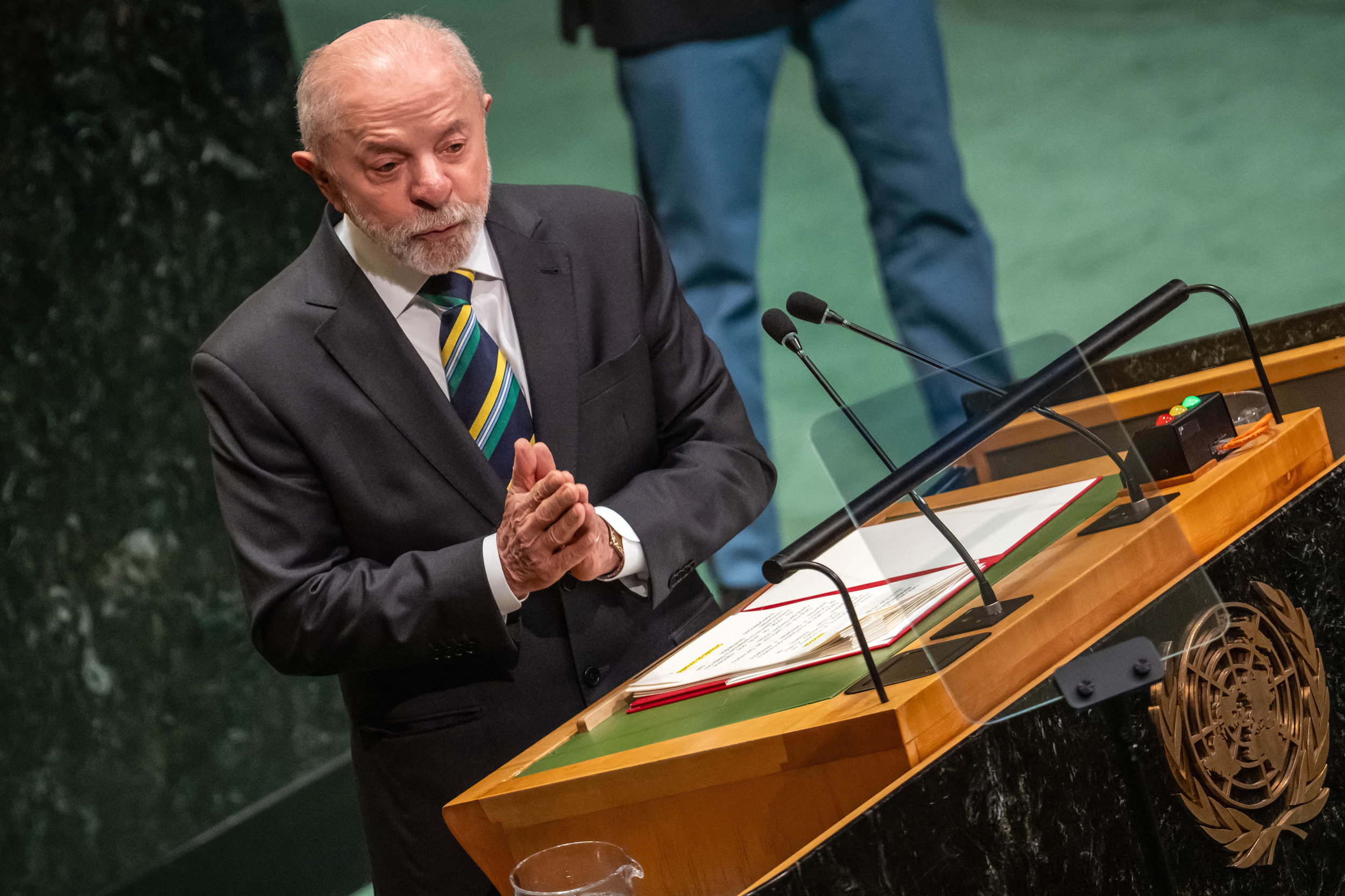


Two divergent worldviews emerged from the first two national addresses on the opening day of the United Nations General Assembly’s 81st session in New York.
Brazil’s president, Luiz Inácio Lula da Silva called for decarbonizing economies, protecting forests and supporting the energy transition through technology transfer. U.S. President Donald Trump followed with a rejection of global climate and artificial intelligence regulations, dismissing warnings about global warming while presenting fossil fuel abundance and technological supremacy as foundations of national power.
This year’s General Assembly session is taking place against a slew of global challenges supercharged by geopolitical rivalries and rising planetary warming. June was the second-warmest on record globally and the hottest Western Europe ever measured. A potentially record-breaking El Niño is expected to peak around December, raising fears of drought, crop failures and global food-price shocks.
In the U.S., surging AI data center growth is triggering expensive fossil-fuel generation and grid upgrades, raising electricity bills. Meanwhile, the U.S.-Iran conflict has spread through the region, with clashes between Houthi and Saudi forces further roiling global oil markets already constrained by disruptions in the Strait of Hormuz.
Lula framed climate policy, forest protection and technology regulation as necessary parts of a rule‑based, multilateral effort to reduce emissions and manage systemic risks. He said the planet is facing a shared, urgent climate emergency that demands decarbonization and environmental protection—not delay or denial. He called for nations to “resume the offensive and inflict a defeat on denialism,” and warned that “the glaciers in the Himalayas are melting” and “torrential rains and forest fires” are already here. The impacts, Lula said, “will hit the most vulnerable the hardest.”
He presented Brazil as proof that countries can “combine economic value with reduced emissions,” and pledged to “move forward by the roadmap for the decarbonization of the Brazilian economy.” In his view, forests and ecosystems are climate assets worth protecting and technology, including AI, must be governed and restrained, calling it an “unprecedented technological revolution with great risks and opportunities.” Lula insisted it would be an “unforgivable historical mission not to address the challenge of regulating the big techs and artificial intelligence” and criticized “technical oligarchies without rules or transparency” that bypass the U.N. and scientific oversight.
Trump presented an almost opposite worldview by downplaying climate change, celebrating fossil fuel expansion and attacking global climate regulation. He mocked those who warned about global warming as “the very same people who said we’ll all be dead in 12 years because of global warming, a name since reborn to climate change because the planet was cooling, not warming, and nobody was dead.”
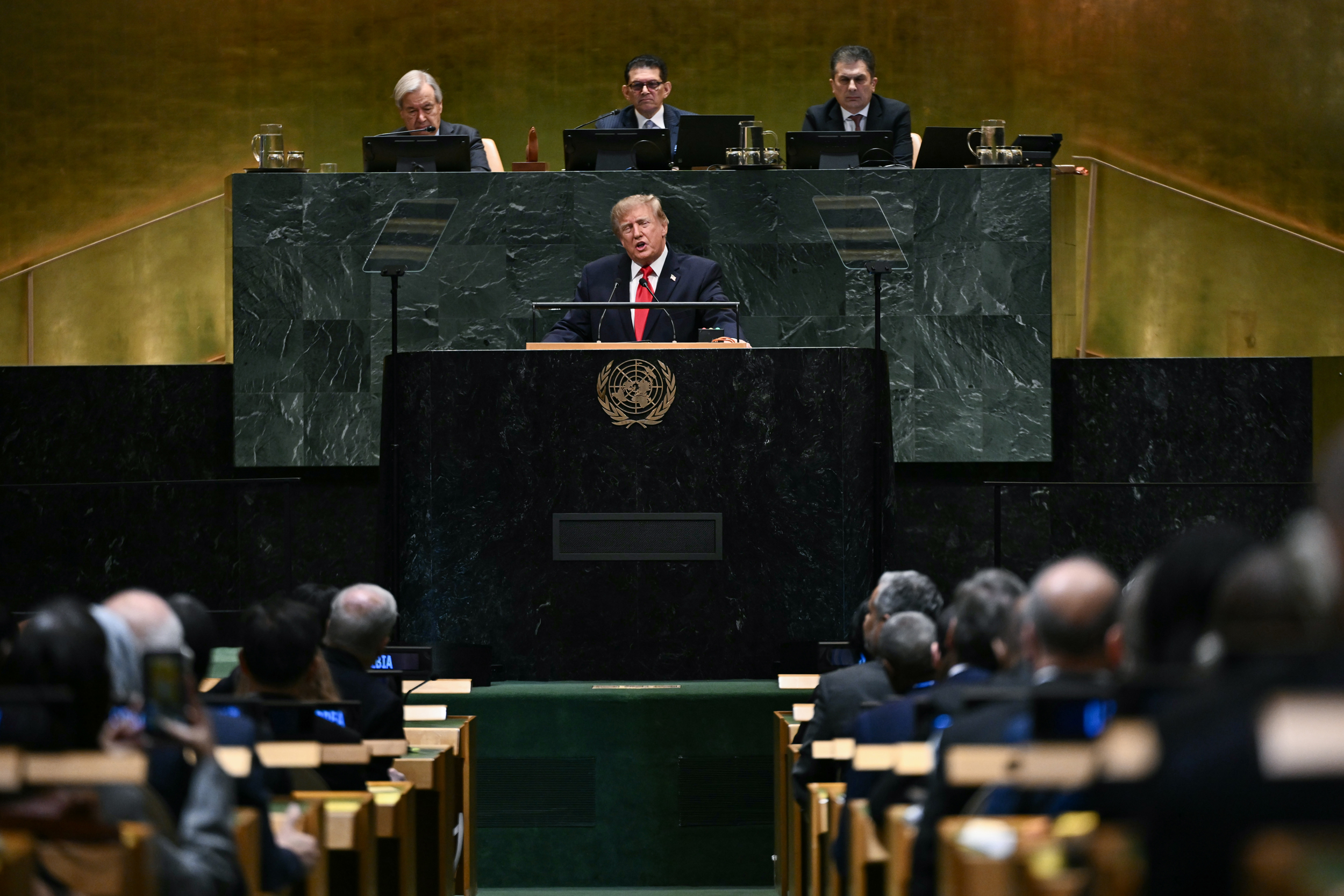
Trump claimed his administration had stopped what he called an international “global carbon tax” on shipping, insisting “there is no global government, and while I’m president, there will be no global taxes.” Rather than talking about emissions or a just energy transition, he boasted that American energy is fueling the planet and claimed that the U.S. and Venezuela together hold “more than 60 percent of the oil in the world.” This alone, he said, will drive down energy costs.
On technology, he rejected any “globalist scheme to control” AI, rebranding it as “super-intelligence” and pledged his administration will “only encourage superintelligence.” On the whole, Trump’s roughly 35-minute speech treated carbon taxes, climate regulations and global tech governance as threats to sovereignty and growth, and presented fossil fuels and technological dominance as core tenets of national strength.
Environmental advocates, climate scientists and experts reacted sharply to those remarks and challenged Trump’s assertions on climate change and high energy costs.
This story is funded by readers like you.
Our nonprofit newsroom provides award-winning climate coverage free of charge and advertising. We rely on donations from readers like you to keep going. Please donate now to support our work.
Donate Now“The American people are experiencing first-hand the harsh and deadly realities of climate change, from extreme heatwaves to catastrophic wildfires and flooding,” said Rachel Cleetus, senior policy director with the Climate and Energy program at the Union of Concerned Scientists. In a statement, she said climate disasters are damaging and destroying homes and critical infrastructure, inflating insurance premiums and increasing costs for communities.
“The science is clear: fossil fuel-driven climate change is already causing significant harm and these harms will only grow if we fail to sharply curtail heat-trapping emissions and invest in resilience,” Cleetus said.
David Victor, a distinguished professor of innovation and public policy at the School of Global Policy and Strategy at UC San Diego said Trump’s climate denial and disengagement can frustrate meaningful progress on commitments made at the recent Conference of Parties to the U.N. Framework Convention on Climate Change, where member nations negotiate how to cut emissions, adapt to climate impacts and fund those initiatives.
“America’s energy power has little to do with the Trump administration or its ‘energy dominance’ strategy. And all the harm that the prolonged war in Iran has done on the Persian Gulf infrastructure has, plausibly, been the largest single setback in the global energy system since the 1970s.” he wrote in emailed comments, adding that staking a claim on Venezuelan oil doesn’t greatly affect how the global oil markets operate.
Victor noted that Trump largely sidestepped climate change in his speech, giving more attention to artificial intelligence, noting that the administration’s hostility to regulating AI is perhaps the most consequential of his statements.
“We know [Trump] is a climate denialist. He has made it clear that he will continue drilling and buying fossil fuels. He has also acted on dismantling every science-based institution in the US. However, what we want to hear from other heads of state, especially from rich nations, is what they plan to do,” said a statement from Tasneem Essop, executive director of the Climate Action Network International.
She asked world leaders if they will step up to the challenge climate change poses or “hide behind Trump and shy away from their responsibilities to urgently transition away from fossil fuels.”
In a separate statement, the advocacy group Oil Change International said: “Donald Trump used his platform at the UN General Assembly to brag about the U.S’s fossil fueled imperialism. From Iran, to Venezuela, to Greenland, Trump’s actions follow a familiar path: use military force to dominate sovereign nations, let Big Oil cash in, and leave ordinary people to bear the costs through war, pollution, rising energy bills, and worsening climate disasters.”
The statement said that governments can either follow Trump into a future of conflict and economic volatility, or build a stable and prosperous future by investing in energy independence and political stability through clean, renewable energy. “On the road to COP31, governments must reject Trump’s attempt to build a fossil fuel empire and show that his agenda will not dictate our shared future,” it added.
This year’s gathering is the last for Secretary-General António Guterres, who will step down at the end of this year. Experts say his successor will inherit an even bigger challenge of keeping the global leadership invested in the common cause of rallying around efforts to fight climate change, resolve conflicts and empower fragile economies in Africa and the developing world more generally.
About This Story
Perhaps you noticed: This story, like all the news we publish, is free to read. That’s because Inside Climate News is a 501c3 nonprofit organization. We do not charge a subscription fee, lock our news behind a paywall, or clutter our website with ads. We make our news on climate and the environment freely available to you and anyone who wants it.
That’s not all. We also share our news for free with scores of other media organizations around the country. Many of them can’t afford to do environmental journalism of their own. We’ve built bureaus from coast to coast to report local stories, collaborate with local newsrooms and co-publish articles so that this vital work is shared as widely as possible.
Two of us launched ICN in 2007. Six years later we earned a Pulitzer Prize for National Reporting, and now we run the oldest and largest dedicated climate newsroom in the nation. We tell the story in all its complexity. We hold polluters accountable. We expose environmental injustice. We debunk misinformation. We scrutinize solutions and inspire action.
Donations from readers like you fund every aspect of what we do. If you don’t already, will you support our ongoing work, our reporting on the biggest crisis facing our planet, and help us reach even more readers in more places?
Please take a moment to make a tax-deductible donation. Every one of them makes a difference.
Thank you,

Aman Azhar
Reporter, Washington, D.C.
Aman Azhar is a Washington, D.C.-based journalist who covers environmental justice for Inside Climate News with focus on Baltimore-Maryland area. He has previously worked as a broadcast journalist and multimedia producer for the BBC World Service, VOA News and other international news organizations, reporting from London, Islamabad, the United Arab Emirates and New York. He holds a graduate degree in Anthropology of Media from University of London’s School of Oriental and African Studies (SOAS) and an MA in Political Science from the University of the Punjab, and is the recipient of the Chevening scholarship from the UK government and an academic scholarship for graduate studies from the Australian government.