

The Upper Colorado River Commission welcomed a new representative from New Mexico at a meeting in downtown Denver on Tuesday, where it discussed ongoing negotiations over how to share America’s most over-allocated river.
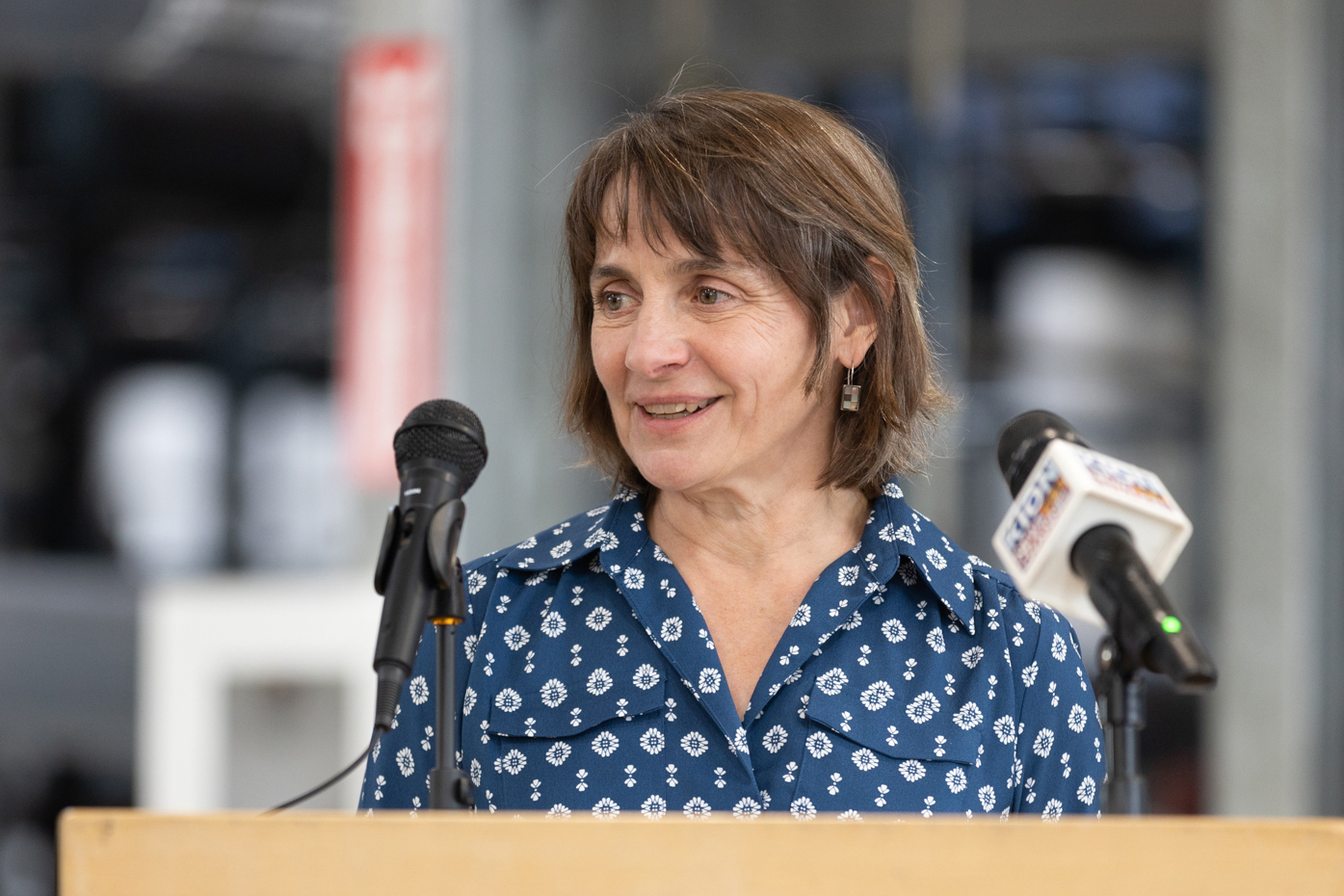
Tanya Trujillo, deputy state engineer and senior water policy advisor to New Mexico Gov. Michelle Grisham, replaced Estevan López as the state’s top negotiator on the Colorado River, which supplies water to 40 million people across seven Western states, 30 tribes and Mexico.
Trujillo served as the Interior Department’s assistant secretary for water and science under President Joe Biden. She said she had not previously been part of negotiations, but she carries decades of familiarity with the basin and its challenges.
“This, for me, is not a congratulations moment,” Trujillo said during her opening remarks, noting that she had not asked to be appointed to the role but was given it after Grisham became discouraged by the lack of progress in negotiations. “We are in a crisis.”
While no one person is to blame for the impasse, Trujillo said New Mexico will take a “fresh look” at some of the issues with an eye towards collaboration.
“We have a crisis in the relationships and in the collegiality that we have with our basin state partners,” she said. “I think we need to think differently about some things.”
Grisham’s office did not respond to a request for comment on Trujillo’s appointment.
But Trujillo’s message of collaboration quickly collided with the intense political, economic and environmental pain brought on by decades of overallocation of the river’s water supply and poor hydrology.
“A solution is much easier to find when there’s flexibility of storage,” said Becky Mitchell, Colorado’s negotiator. “We do not have that now.”
In the U.S., the Colorado River Basin is split into an upper basin including Colorado, New Mexico, Utah and Wyoming, and a lower basin comprising Arizona, California and Nevada. Water use in the basins, recently between 11 and 13 million acre-feet, has consistently outstripped what the river provides, leading to some reductions in usage but an imminent need for much steeper cuts.
Officials from each basin state have been negotiating since 2020 over new guidelines for dividing the river’s dwindling flows. So far, they have failed to reach consensus, missing two federal deadlines to make a deal.
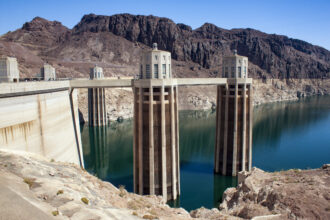
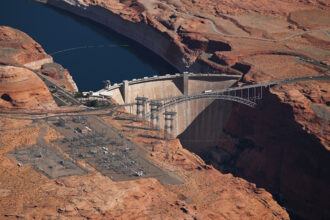
As the states continue to try to overcome the impasse, the federal government has endeavored to augment the dwindling supplies of the two largest reservoirs in the U.S., lakes Mead and Powell, which deliver a substantial amount of the Lower Basin’s water supply. To do so, it plans to draw 1 million acre-feet of water from Flaming Gorge Reservoir, a comparatively full, federally managed storage pool spanning the Utah-Wyoming border. One acre-foot of water can serve between 1 and 3 households, depending on the climate.
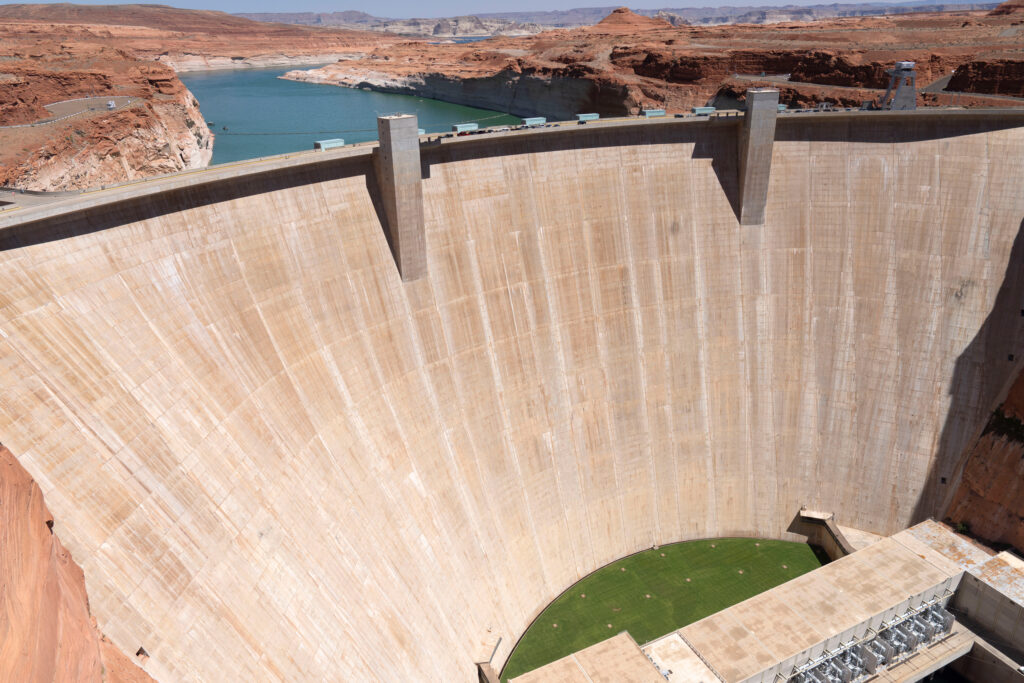
Though the Upper Basin states have agreed to the drawdown, they repeatedly emphasized Tuesday that—while they are open to collaboration and hope to avoid conflict—future releases from Upper Basin reservoirs are off the table.
“The [Upper Basin reservoirs] will not rescue the basin from an extended crisis,” said Brandon Gebhart, Wyoming’s state engineer and Colorado River negotiator. “They are only a finite tool, not a solution.”
The Upper Basin negotiating team stressed that the region is already forced to live with devastating cuts every time there is a poor water year. This past winter will go down as the warmest and driest since recordkeeping began in many parts of the West. Gene Shawcroft, Utah’s negotiator, joined Gebhart and Mitchell in stating that water users with rights beginning in the 19th century—decades before the 1922 Colorado River compact determined how the river would be shared—have been cut off from deliveries this year.
Any new agreements about how to share the river must be “responsive to what the hydrology and the reservoirs are telling us,” Mitchell said.
Absent a seven-state solution, the federal government is planning to release a final Environmental Impact Statement for its Colorado River management plan in mid-July.
About This Story
Perhaps you noticed: This story, like all the news we publish, is free to read. That’s because Inside Climate News is a 501c3 nonprofit organization. We do not charge a subscription fee, lock our news behind a paywall, or clutter our website with ads. We make our news on climate and the environment freely available to you and anyone who wants it.
That’s not all. We also share our news for free with scores of other media organizations around the country. Many of them can’t afford to do environmental journalism of their own. We’ve built bureaus from coast to coast to report local stories, collaborate with local newsrooms and co-publish articles so that this vital work is shared as widely as possible.
Two of us launched ICN in 2007. Six years later we earned a Pulitzer Prize for National Reporting, and now we run the oldest and largest dedicated climate newsroom in the nation. We tell the story in all its complexity. We hold polluters accountable. We expose environmental injustice. We debunk misinformation. We scrutinize solutions and inspire action.
Donations from readers like you fund every aspect of what we do. If you don’t already, will you support our ongoing work, our reporting on the biggest crisis facing our planet, and help us reach even more readers in more places?
Please take a moment to make a tax-deductible donation. Every one of them makes a difference.
Thank you,

Jake Bolster
Reporter, Wyoming and the West
Jake Bolster reports on Wyoming and the West for Inside Climate News. Previously, he worked as a freelancer, covering climate change, energy, and the environment across the United States. He holds a Masters in Journalism from Columbia University.