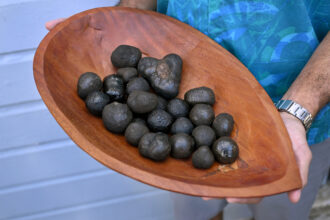


The Trump administration is moving closer to opening up U.S. waters for deep-sea mining—a contentious and largely untested industry focused on extracting mineral-rich deposits from the ocean floor containing cobalt, copper, nickel and manganese.
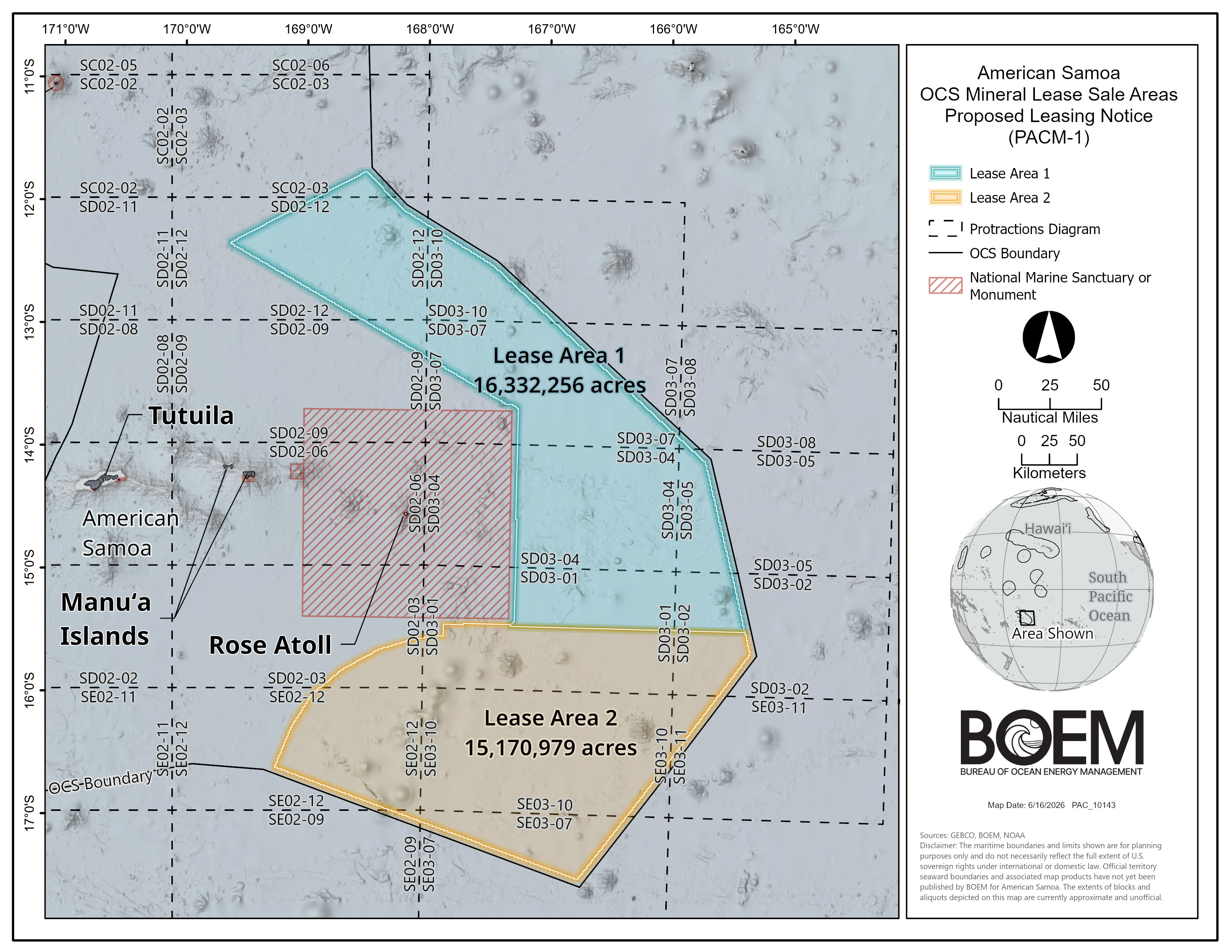
Last week, the Department of Interior’s newly created Marine Minerals Administration (MMA) announced a proposal to hold a lease sale for deep-sea mining activities in federal waters off the coast of American Samoa in the South Pacific. If the plans move forward, it would be the first deep-sea mining lease sale in the world. Interested deep-sea mining companies could bid for 20 years of mining rights across more than 31 million acres of American Samoa’s outer continental shelf in an auction tentatively scheduled for November 19, 2026.
The announcement has drawn widespread criticism from environmental advocates and scientists who say any deep-sea mining activities, including preliminary exploratory activities, could pose irreparable harm to the marine environment and the American Samoan people, whose culture and livelihoods are deeply entwined with the ocean.
“Pacific people have made our position clear: we do not want deep sea mining in our waters,” Sabrina Suluai-Mahuka, founder of Finafinau, an environmental advocacy group in American Samoa, said in a press release. “Our ocean is our home, our food, our culture, and our future, and we are calling on the Administration to stop this reckless lease sale before irreversible harm is done.”
The proposal marks the latest step in the Trump administration’s push to pave the way for deep-sea mining in the U.S and abroad. Since President Donald Trump signed an executive order last April directing federal agencies to fast-track the issuance of seabed mining permits, the government has sought to position the U.S. as a leader of the emerging industry, despite global opposition.
Supporters of deep-sea mining say critical minerals found on the seafloor may be eventually used to manufacture green technologies and military defense systems.
“Critical minerals have become a strategic asset in global competition, and China’s dominance in the supply of many of these materials creates unacceptable risks for America’s energy, defense and manufacturing sectors,” said Matt Giacona, acting director of the Marine Minerals Administration, in a statement about the latest proposed lease sale. “Advancing this notice is an important step toward building a secure domestic critical minerals supply chain, strengthening U.S. economic and national security, and ensuring America can compete and win in the 21st century.”
But deep-sea mining has not yet been conducted at a commercial scale anywhere in the world. There are still no formalized regulations to govern the industry in the U.S. or globally.
“Our ocean is our home, our food, our culture, and our future, and we are calling on the Administration to stop this reckless lease sale before irreversible harm is done.”
— Sabrina Suluai-Mahuka, Finafinau
In fact, global delegates are gathering this month in Kingston, Jamaica at the International Seabed Authority to continue negotiating a long debated Mining Code that would regulate activities related to extracting deep-sea minerals, including prospecting, exploration and commercial exploitation in international waters.
Forging ahead without such regulations in place and paving the way for future mining near American Samoa will inevitably result in harm to critical marine ecosystems and the people who depend on them, said Taryn Kiekow Heimer, a senior attorney and director for ocean energy at the Natural Resources Defense Council.
“It is an incredibly reckless and destructive move to deep seabed mine in this area,” she said.
In a statement to Inside Climate News, the MMA wrote that “plans will not be approved before completion of additional technical and environmental reviews to ensure that the activities described will be carried out in a safe and environmentally responsible manner.”
Directly adjacent to the proposed lease area is the Rose Atoll, a national wildlife refuge and marine national monument that was established by president George W. Bush in 2009.
For generations, the remote coral atoll served as a waypoint for Polynesian navigators, and it is still highly revered amongst Indigenous peoples in the Pacific as part of their cultural heritage.
From an ecological standpoint, this atoll is extremely important, said Alan Friedlander, an affiliate researcher at the Hawaii Institute of Marine Biology, based at the University of Hawaii, who conducted a survey of the area with NOAA, the National Oceanic and Atmospheric Administration, in the early 2000s.
“It’s one of the last largely intact marine ecosystems that we have under U.S. jurisdiction,” Friedlander said.
This story is funded by readers like you.
Our nonprofit newsroom provides award-winning climate coverage free of charge and advertising. We rely on donations from readers like you to keep going. Please donate now to support our work.
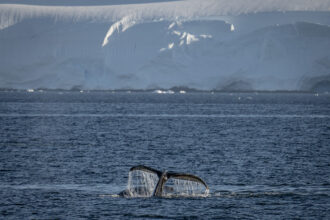
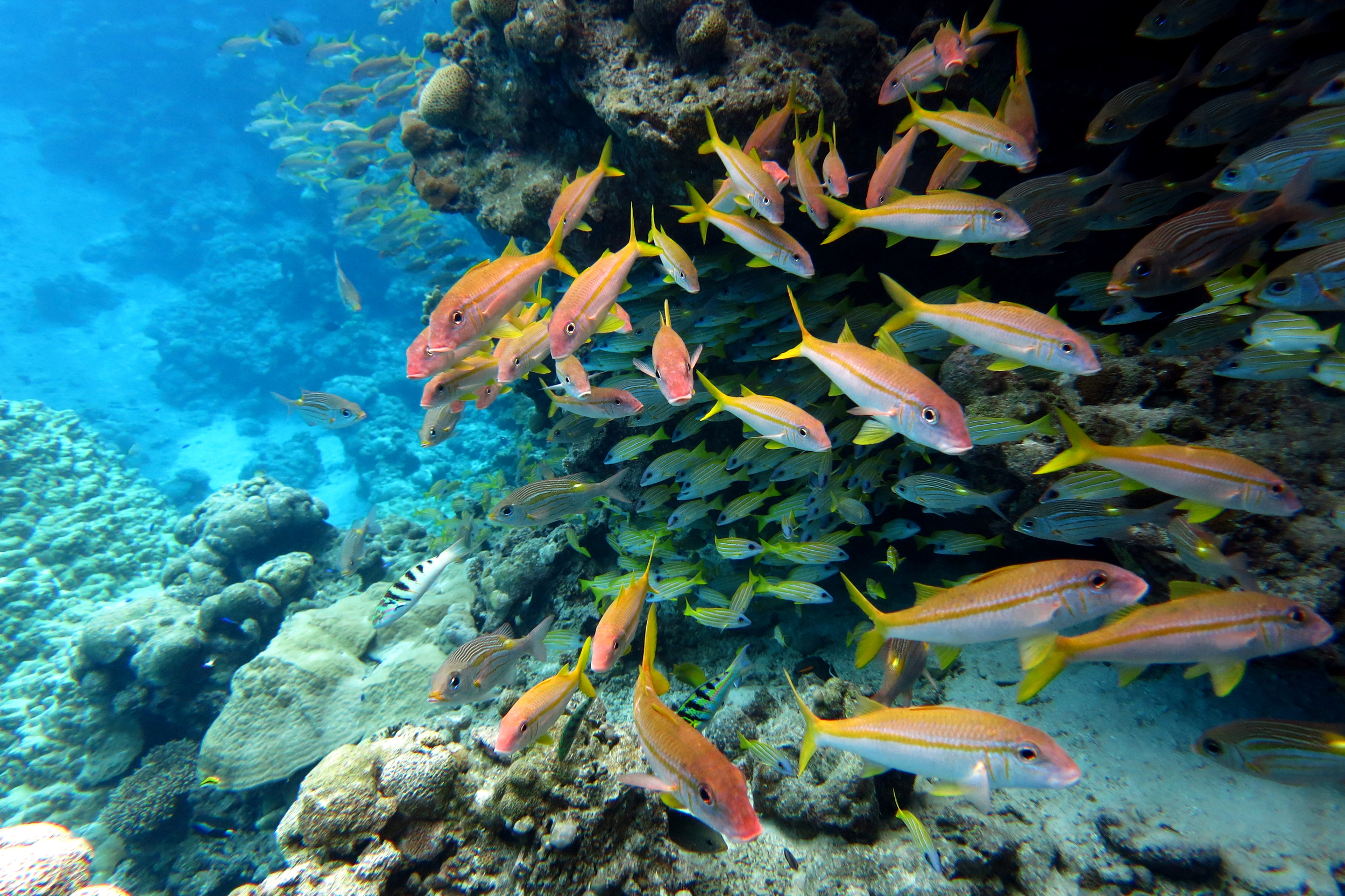
Donate NowIts remote location and protected status has allowed its colorful reefs to flourish even as others around the world suffer from global warming and threats like overfishing, dredging and pollution. The corals are largely nourished by nutrients deposited by thousands of seabirds that nest on the remote atoll’s two islands. Sharks and other apex predators are abundant in surrounding waters, as are giant clams, which are now scarce throughout much of the Pacific due to overharvesting. Migrating humpbacks pass by the atoll, and critically endangered hawksbill sea turtles also nest on its shores.
Activities associated with deep sea mining would likely disrupt this precious interconnected ecosystem, Friedlander said. That includes everything from increased shipping traffic and underwater noise to sediment plumes generated by some of the machinery that is needed to extract mineral deposits from the seabed.
“We probably should take the precautionary approach to this, and try to understand this complex ecosystem better before we go into activities that potentially have pretty long-term deleterious effects,” he said.
“It’s one of the last largely intact marine ecosystems that we have under U.S. jurisdiction.”
— Alan Friedlander, Hawaii Institute of Marine Biology
There are still several steps that must be completed before the Marine Minerals Administration finalizes the decision to hold a mining lease sale, including the publication of a final leasing notice.
“Issuance of the notice does not guarantee that a lease sale will be held, nor does it guarantee that any exploration or collection activities will occur should MMA move forward with a sale,” officials said in a public statement.
American Samoa’s governor, Pula’ali’i Nikolao Pula, has 60 days to review and comment on the proposed leasing notice.
“The governor does have a chance to object during these next 60 days,” said Kiekow Heimer.
In the meantime, the governor has encouraged his constituents to share their thoughts on deep-sea mining and any recommendations they have.
“This is an opportunity for our community to provide informed input,” Gov. Pula said in a statement. “I remain steadfast in my position that any such development must be fully transparent, responsible, science-based, and carefully managed to protect our environment, safeguard our vital tuna fisheries and cultural heritage, and deliver meaningful, tangible benefits for the people of American Samoa.”
About This Story
Perhaps you noticed: This story, like all the news we publish, is free to read. That’s because Inside Climate News is a 501c3 nonprofit organization. We do not charge a subscription fee, lock our news behind a paywall, or clutter our website with ads. We make our news on climate and the environment freely available to you and anyone who wants it.
That’s not all. We also share our news for free with scores of other media organizations around the country. Many of them can’t afford to do environmental journalism of their own. We’ve built bureaus from coast to coast to report local stories, collaborate with local newsrooms and co-publish articles so that this vital work is shared as widely as possible.
Two of us launched ICN in 2007. Six years later we earned a Pulitzer Prize for National Reporting, and now we run the oldest and largest dedicated climate newsroom in the nation. We tell the story in all its complexity. We hold polluters accountable. We expose environmental injustice. We debunk misinformation. We scrutinize solutions and inspire action.
Donations from readers like you fund every aspect of what we do. If you don’t already, will you support our ongoing work, our reporting on the biggest crisis facing our planet, and help us reach even more readers in more places?
Please take a moment to make a tax-deductible donation. Every one of them makes a difference.
Thank you,

Teresa Tomassoni
Oceans Correspondent
Teresa Tomassoni is an environmental journalist covering the intersections between oceans, climate change, coastal communities and wildlife for Inside Climate News. Her previous work has appeared in The Washington Post, NPR, NBC Latino and the Smithsonian American Indian Magazine. Teresa holds a master’s degree in Journalism from the Craig Newmark Graduate School of Journalism at CUNY. She is also a recipient of the Stone & Holt Weeks Social Justice Reporting Fellowship. She has taught journalism for Long Island University and the School of the New York Times. She is an avid scuba diver and spends much of her free time underwater.