

A new report suggests dozens of “forever chemicals” linked with cancer and other human health problems are prevalent in Florida waterways, reflecting widespread contamination of the toxic chemicals in streams, rivers and lakes across the country.
Roughly 96 percent of 23 Florida waterways tested between 2022 and 2024 contained 43 different kinds of PFAS, according to the report published this month by the Environment America Research & Policy Center, the U.S. PIRG Education Fund and Frontier Group.
PFAS are manufactured chemicals used since the 1940s in products such as nonstick cookware, waterproof fabrics, long-lasting cosmetics and firefighting foam. The chemicals do not break down easily in the environment and can accumulate in humans and animals. The problem is a growing concern as climate change increases the amount of rain dumped by hurricanes and other storms, causing more runoff that can wash the chemicals into waterways.
PFAS have been linked with several kinds of cancer, including prostate, kidney and testicular cancers. They are also associated with high cholesterol and obesity, developmental problems such as low birth weight and fertility problems. The chemicals are found across the globe, in regions as remote as Grand Canyon National Park and the Tibetan mountains.
“PFAS chemicals are very persistent. They stay in the environment for a very long time,” said John Rumpler, clean water director and senior attorney at the Environment America Research & Policy Center. “We know that PFAS chemicals can pose threats to health and wildlife at very, very small amounts. So when you find PFAS in the water, even if it’s a few parts per trillion, it’s definitely a serious problem.”
Nationwide, 83 percent of 1,602 waterways tested were contaminated with PFAS, according to the report. Researchers detected as many as 114 different kinds of PFAS at the sites, including the Mississippi River and Lake Ontario. The report drew on PFAS monitoring data from surface waters between 2022 and 2024, collected primarily by the Environmental Protection Agency and also the Waterkeeper Alliance and state environmental agencies in Maine and Massachusetts.
The highest PFAS concentration was found in a retention pond at the Brunswick Executive Airport in Brunswick, Maine, where there was an accidental release in 2024 of aqueous film-forming foam. Other sites with high PFAS concentrations included Holloman Lake, near Holloman Air Force Base in New Mexico; Sargent Creek, adjacent to a fire training facility in Minnesota, and waterways near Milwaukee Mitchell International Airport in Wisconsin.
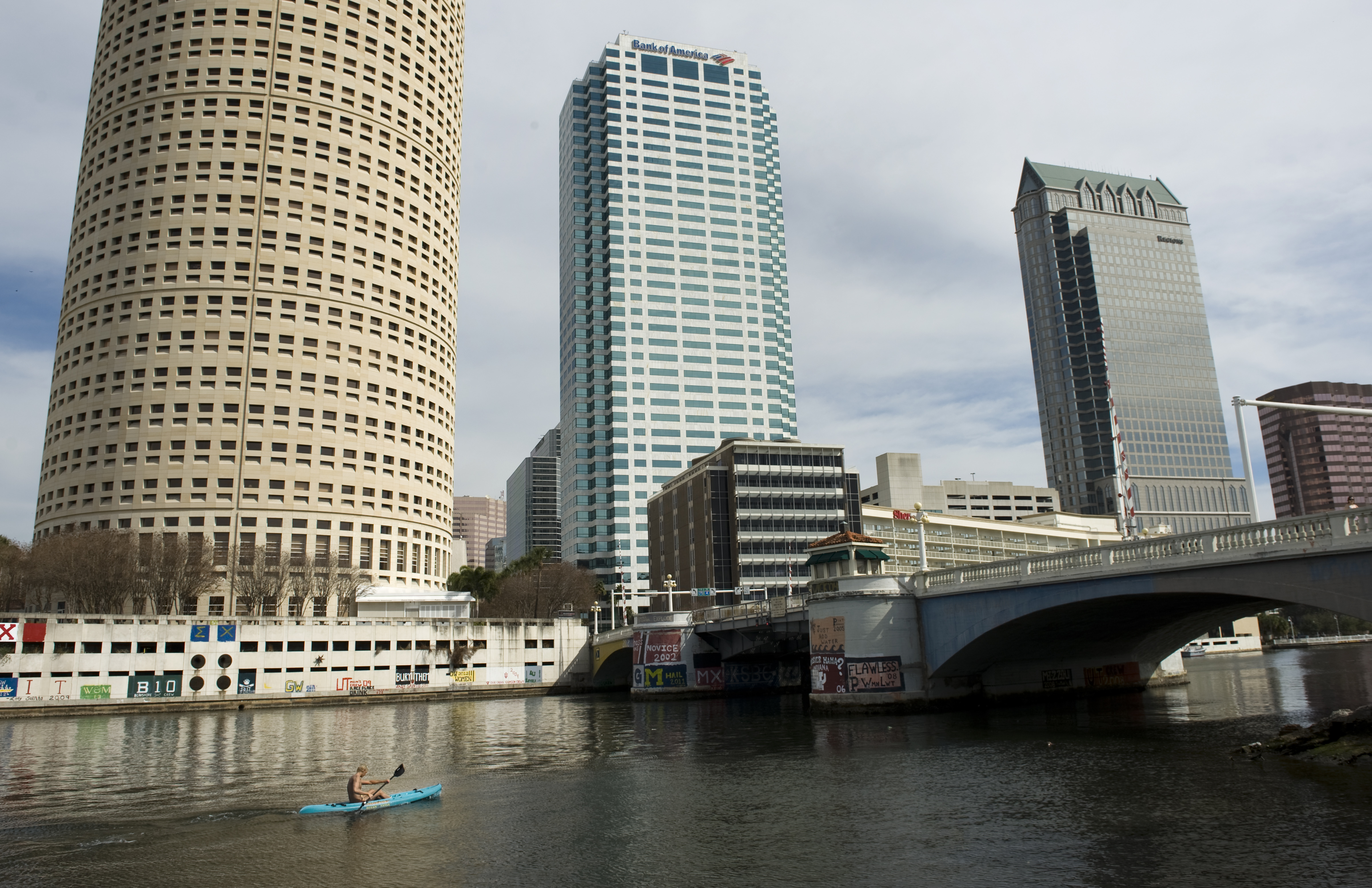
In Florida, the contaminated waterways spanned from Miami to the Panhandle. Among them was the Hillsborough River, which provides drinking water for Tampa. In central Florida, 36 PFAS compounds were detected at all six monitoring sites in Tiger Lake. The lake, some 70 miles south of Orlando, is used for recreational activities such as kayaking and fishing. This is troubling, as the toxic chemicals can accumulate in freshwater fish, exposing people who eat them.
PFAS accumulation in fish is of particular concern in underserved communities, where people rely on fish they catch as part of their diets, said Christian Wells, professor of anthropology and director of the Center for Brownfields Research and Redevelopment at the University of South Florida.
“In a lot of low-income and rural kind of communities, people use fishing not just for recreation but for subsistence, and they are starting to consume fish that have very high levels of PFAS,” he said. “Not only is that bad for your health, but it’s also very difficult to identify in the environment. It’s difficult to regulate. I suspect the problem is a lot worse than people think.”
This story is funded by readers like you.
Our nonprofit newsroom provides award-winning climate coverage free of charge and advertising. We rely on donations from readers like you to keep going. Please donate now to support our work.
Donate NowA new state law that took effect July 1 aims to address the PFAS problem in Florida by phasing out aqueous film-forming foam, among other measures.
Rumpler said the report likely underestimates the extent of PFAS contamination nationwide, because it excludes some testing data and many waterways have never been tested. The report recommends phasing out PFAS, barring industrial facilities from discharging the toxic chemicals into waterways and ending the use of PFAS-laden sewage sludge on farmland. The report also calls for continued monitoring to track changes over time.
“There are numerous waterways where there is no data at all,” Rumpler said. “That doesn’t mean no PFAS was found. It just means there is no data that we had available to ascertain whether PFAS was present or not. There could be PFAS across other waterways.”
About This Story
Perhaps you noticed: This story, like all the news we publish, is free to read. That’s because Inside Climate News is a 501c3 nonprofit organization. We do not charge a subscription fee, lock our news behind a paywall, or clutter our website with ads. We make our news on climate and the environment freely available to you and anyone who wants it.
That’s not all. We also share our news for free with scores of other media organizations around the country. Many of them can’t afford to do environmental journalism of their own. We’ve built bureaus from coast to coast to report local stories, collaborate with local newsrooms and co-publish articles so that this vital work is shared as widely as possible.
Two of us launched ICN in 2007. Six years later we earned a Pulitzer Prize for National Reporting, and now we run the oldest and largest dedicated climate newsroom in the nation. We tell the story in all its complexity. We hold polluters accountable. We expose environmental injustice. We debunk misinformation. We scrutinize solutions and inspire action.
Donations from readers like you fund every aspect of what we do. If you don’t already, will you support our ongoing work, our reporting on the biggest crisis facing our planet, and help us reach even more readers in more places?
Please take a moment to make a tax-deductible donation. Every one of them makes a difference.
Thank you,

Amy Green
Reporter, Florida
Amy Green covers the environment and climate change from Orlando, Florida. She is a mid-career journalist and author whose extensive reporting on the Everglades is featured in the book MOVING WATER, published by Johns Hopkins University Press, and podcast DRAINED, available wherever you get your podcasts. Amy’s work has been recognized with many awards, including a prestigious Edward R. Murrow Award and Public Media Journalists Association award.