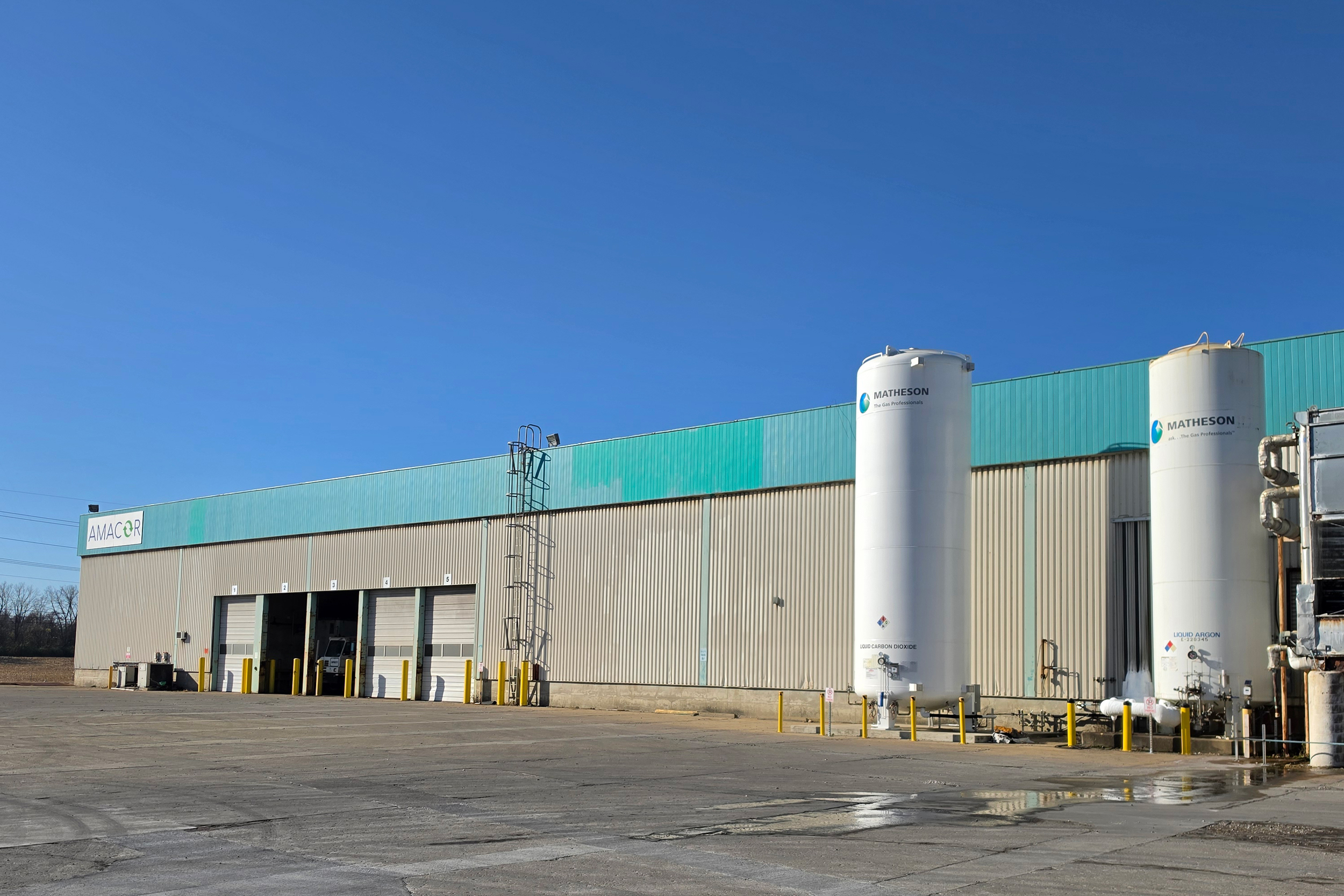


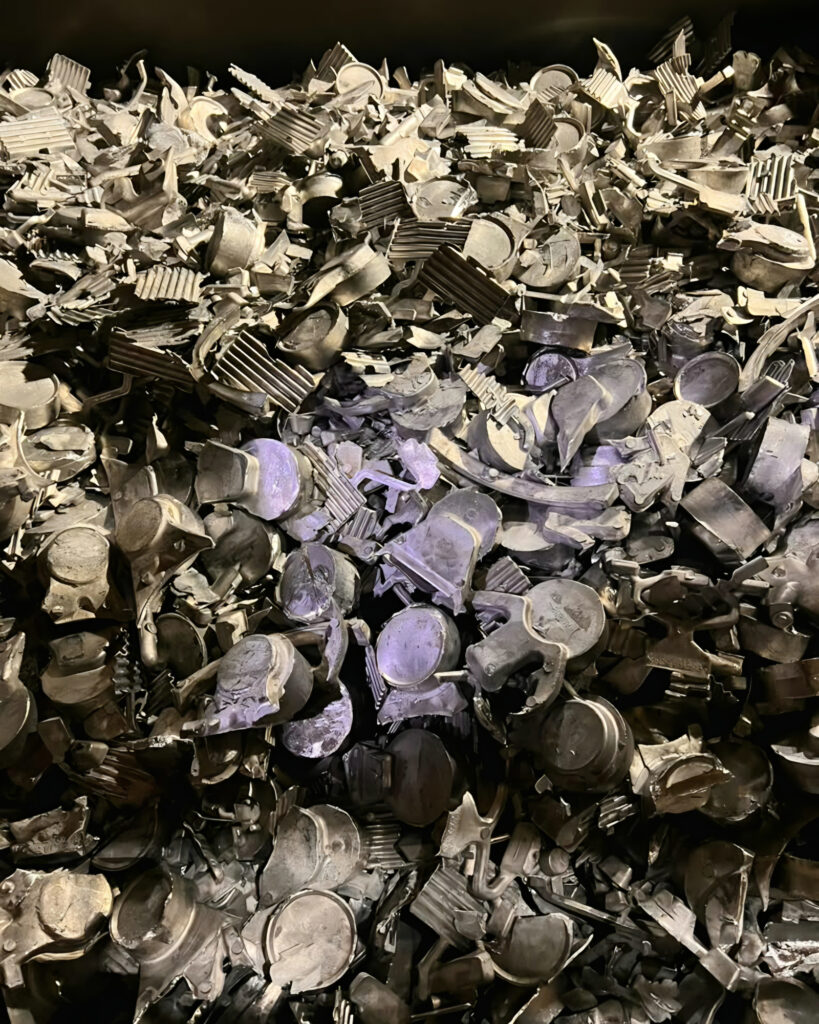
ANDERSON, Ind.—Inside a cavernous former General Motors plant, furnaces melt scrap metal into high-purity metal ingots at one of the world’s largest magnesium recyclers.
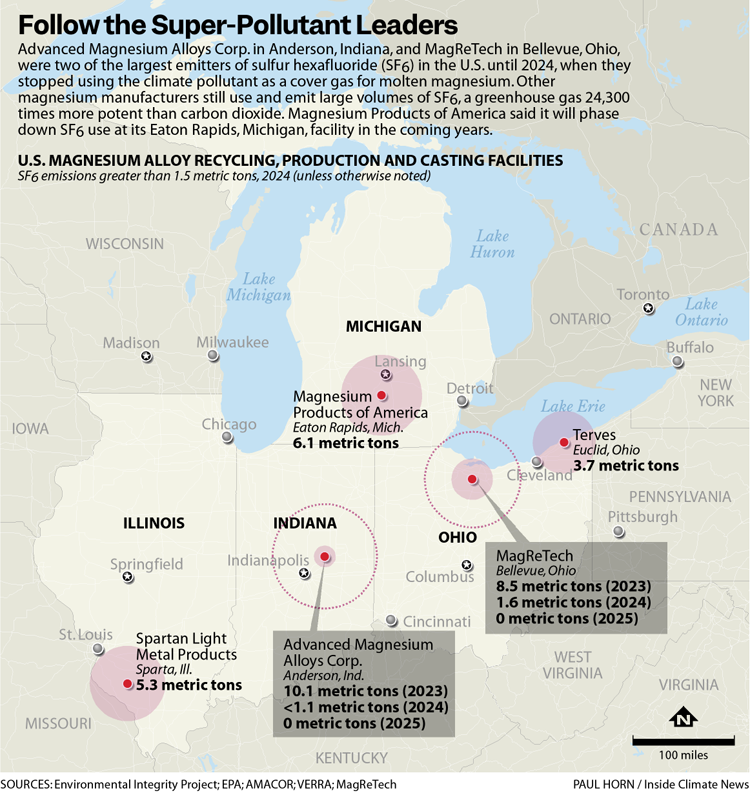
Until recently, Advanced Magnesium Alloys Corp. was also the country’s largest emitter of sulfur hexafluoride, the most potent greenhouse gas on the planet.
In 2023, the company used 10 metric tons of the climate pollutant as a “cover gas” to prevent molten magnesium from burning. Once used, the gas was released directly into the atmosphere. The emissions from a plant with just 40 employees were equivalent to the annual greenhouse gas pollution of nearly 60,000 automobiles.
Then, in 2024, the company switched to a climate-friendly alternative. Its SF6 emissions fell to zero.
SF6 “served this industry for many years, but it’s also proven to be not very good for civilization,” said Arie Shaked, chief operations officer for Advanced Magnesium Alloys.
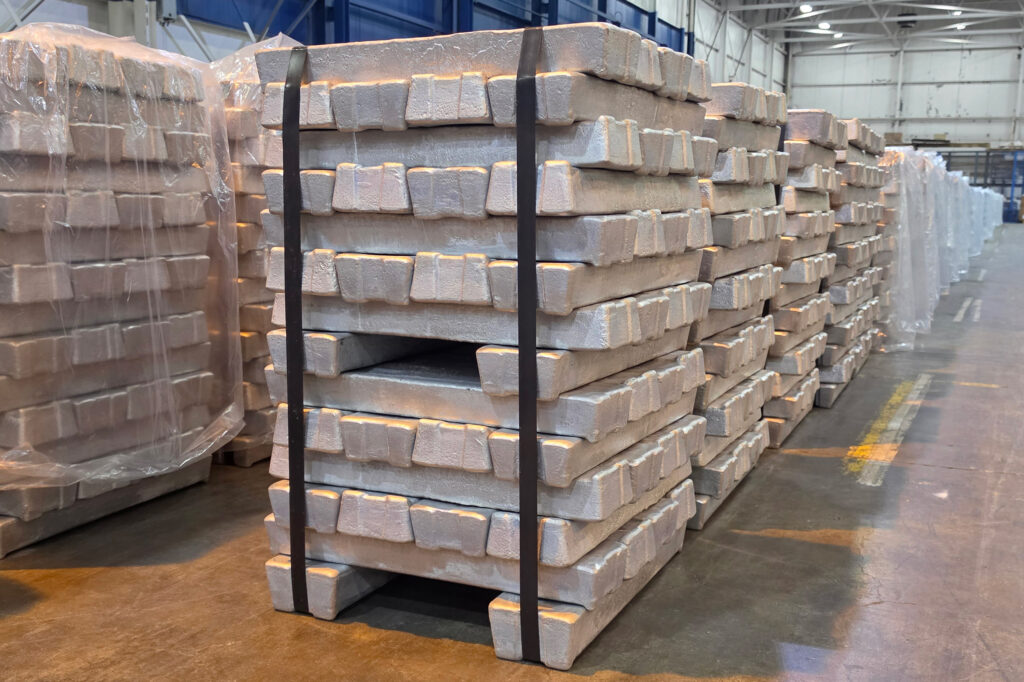
During a recent tour of the facility, Shaked walked past rows of freshly cooled, carefully stacked bricks of lightweight magnesium alloy that others will cast into automobile parts, such as steering wheels or car seat frames, or blend into aluminum alloys. A cloud of magnesium oxide dust rose from the open hatch of a nearby furnace as workers scrubbed the unit between production cycles.
SF6 is invisible, non-toxic and effective at preventing fires. The gas is also 24,300 times more effective at warming the atmosphere than carbon dioxide, pound for pound.
The U.S. has no federal regulations prohibiting its use in magnesium production and casting—the process of pouring or injecting molten metal into molds to form parts—and Indiana hasn’t enacted any rules of its own. But California and the European Union banned its use for those purposes roughly a decade ago.
The U.S. instead took a voluntary approach to reducing emissions. From 1999 to 2010, the Environmental Protection Agency and the International Magnesium Association worked with manufacturers to develop best practices with the goal of eliminating SF6 use by 2010. The effort included a 2008 study at Advanced Magnesium Alloys, where researchers tested alternative cover gases.
SF6 emissions from U.S. magnesium production and casting fell 74 percent between 1999 and 2010 but have since plateaued. In 2023, the most recent year for which data is available, emissions totaled 1.1 million metric tons of carbon dioxide equivalent, EPA records show. That’s equal to the annual greenhouse gas emissions of more than a quarter-million automobiles.
Before joining Advanced Magnesium Alloys, Shaked managed a magnesium planet in Israel, where he oversaw the company’s transition from SF6 to sulfur dioxide in the late 1990s and early 2000s. Although sulfur dioxide is widely used as an alternative cover gas, it is also corrosive and toxic. Drawing on that experience, Shaked was reluctant to make the same switch at the Indiana plant. The company twice tested an alternative, fluorine-based cover gas, but neither trial succeeded.
Shaked said low winter temperatures, incorrect gas mixtures or insufficient amounts of the gas may have contributed to the failures.
A few years ago the company began testing the fluorine-based gas again, initially hoping it might work for part of their process. But after experimenting with different volumes and concentrations, they found the gas, known as BestSolv Zulu, could replace SF6 throughout the plant. The company is now seeking carbon credits for its emissions reductions. It remains unclear how potential revenue from the credits will compare to the cost of the transition, Shaked said.
While Advanced Magnesium Alloys transitioned off SF6, other Midwest manufacturers, many of whom supply the automotive industry here in one of the nation’s major industrial regions, continue to rely on it.
Magnesium Products of America, a die caster in Eaton Rapids, Michigan, released 6 metric tons of SF6 in 2024, according to data the company reported to the EPA, making it the largest emitter among magnesium producers in the country that year. However, the company also used about 7 metric tons of an alternative, climate-friendly cover gas, allowing it to reduce the amount of SF6 it would otherwise have needed.
Jonathan Weiler, chief engineer for Meridian Lightweight Technologies, its parent company, confirmed the figures and said the company aims to eliminate routine use of the climate pollutant at its Michigan facility within three to five years. The company also operates plants in Canada, where it reduced SF6 use by more than 90 percent since 2023, said Weiler, who is also the president of the International Magnesium Association.
Terves, a magnesium and aluminum alloys producer in Euclid, Ohio, emitted 3.7 metric tons of SF6 in 2024, according to EPA data based on information submitted by the company. But Andrew Sherman, Terves’ founder and chief technical officer, disputed the figure, saying the company only emitted a fraction of that amount. Sherman did not respond to questions about whether the company plans to reduce its reliance on SF6.
Spartan Light Metal Products in Sparta, Illinois—one of the first magnesium casting companies to join the EPA’s SF6 emissions reduction partnership in the late 1990s—released 5.3 metric tons of SF6 in 2024. The company did not respond to requests for comment.
Auto manufacturers, the largest consumer of cast magnesium in the U.S., also had little to say.
This story is funded by readers like you.
Our nonprofit newsroom provides award-winning climate coverage free of charge and advertising. We rely on donations from readers like you to keep going. Please donate now to support our work.
Donate NowFour of the top five leading carmakers in the United States—Ford, Toyota, General Motors and Stellantis—declined to comment about whether they consider suppliers’ use of SF6 when choosing manufacturers of magnesium parts.
A spokesperson for Honda, the fourth-largest U.S. car manufacturer by market share in 2024, said in a written statement that the company “does not give preference to suppliers that do not use SF6 as a cover gas.”
Two industry trade groups, the Alliance for Automotive Innovation and MEMA, The Vehicle Suppliers Association, declined to comment.
MagReTech, a magnesium recycler in Bellevue, Ohio, released 1.6 metric tons of SF6 in the first half of 2024 before completing its transition to an alternative cover gas, according to Mike Holt, sales director for parent company PSW Group.
Holt said moving away from SF6 reduces the carbon footprint of the company’s products. Unlike Advanced Magnesium Alloys, MagReTech is not seeking carbon credits for making the switch.
The path to financing a transition away from SF6 may be narrowing. Verra, a Washington, D.C.-based nonprofit, administers the voluntary carbon-credit program that Advanced Magnesium Alloys is pursuing. It recently stopped accepting new emissions-reduction proposals from magnesium producers.
The decision followed a finding by the Integrity Council for the Voluntary Carbon Market, an industry standards organization, that it could not determine whether magnesium producers would switch away from SF6 without the financial incentive of carbon credits. Such programs are designed to support projects that would not otherwise happen.
Scott Bartos, a former EPA official and program manager for the magnesium industry partnership, said the program’s end in 2010 reflected a broader failure of government leadership on environmental issues. Bartos said reviving an industry forum could help companies share lessons and encourage others in the industry to adopt similar practices.
Andrew Spear, executive vice president of the International Magnesium Association, said the organization continues to share information about alternative cover gases through its member communications, annual conference and website.
“We recognize that reducing greenhouse gas emissions remains an important priority and support continued industry efforts to identify and implement effective solutions,” Spear said.
About This Story
Perhaps you noticed: This story, like all the news we publish, is free to read. That’s because Inside Climate News is a 501c3 nonprofit organization. We do not charge a subscription fee, lock our news behind a paywall, or clutter our website with ads. We make our news on climate and the environment freely available to you and anyone who wants it.
That’s not all. We also share our news for free with scores of other media organizations around the country. Many of them can’t afford to do environmental journalism of their own. We’ve built bureaus from coast to coast to report local stories, collaborate with local newsrooms and co-publish articles so that this vital work is shared as widely as possible.
Two of us launched ICN in 2007. Six years later we earned a Pulitzer Prize for National Reporting, and now we run the oldest and largest dedicated climate newsroom in the nation. We tell the story in all its complexity. We hold polluters accountable. We expose environmental injustice. We debunk misinformation. We scrutinize solutions and inspire action.
Donations from readers like you fund every aspect of what we do. If you don’t already, will you support our ongoing work, our reporting on the biggest crisis facing our planet, and help us reach even more readers in more places?
Please take a moment to make a tax-deductible donation. Every one of them makes a difference.
Thank you,

Phil McKenna
Reporter, Boston
Phil McKenna is a Boston-based reporter for Inside Climate News. Before joining ICN in 2016, he was a freelance writer covering energy and the environment for publications including The New York Times, Smithsonian, Audubon and WIRED. Uprising, a story he wrote about gas leaks under U.S. cities, won the AAAS Kavli Science Journalism Award and the 2014 NASW Science in Society Award. Phil has a master’s degree in science writing from the Massachusetts Institute of Technology and was an Environmental Journalism Fellow at Middlebury College.