

It’s shaping up to be another hot Florida summer. Among the most vulnerable are those with the least resources for dealing with the heat: underserved communities and communities of color, who often are excluded from environmental and climate protections.
That includes the state’s more than 150,000 farmworkers, who are responsible for raising the food that nourishes us. Jeannie Economos is a pesticide safety environmental health project coordinator for the Farmworker Association of Florida. Her work focuses on pesticide protections for farmworkers, as pesticide exposure can lead to illness and birth defects.
This interview has been edited for length and clarity.
AMY GREEN: How hot is it this summer for Florida’s farmworkers?
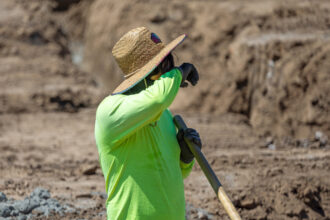
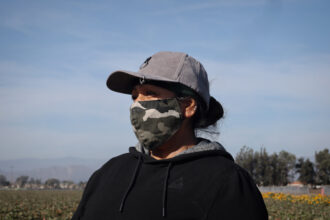
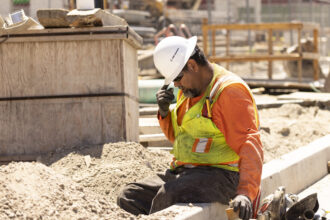
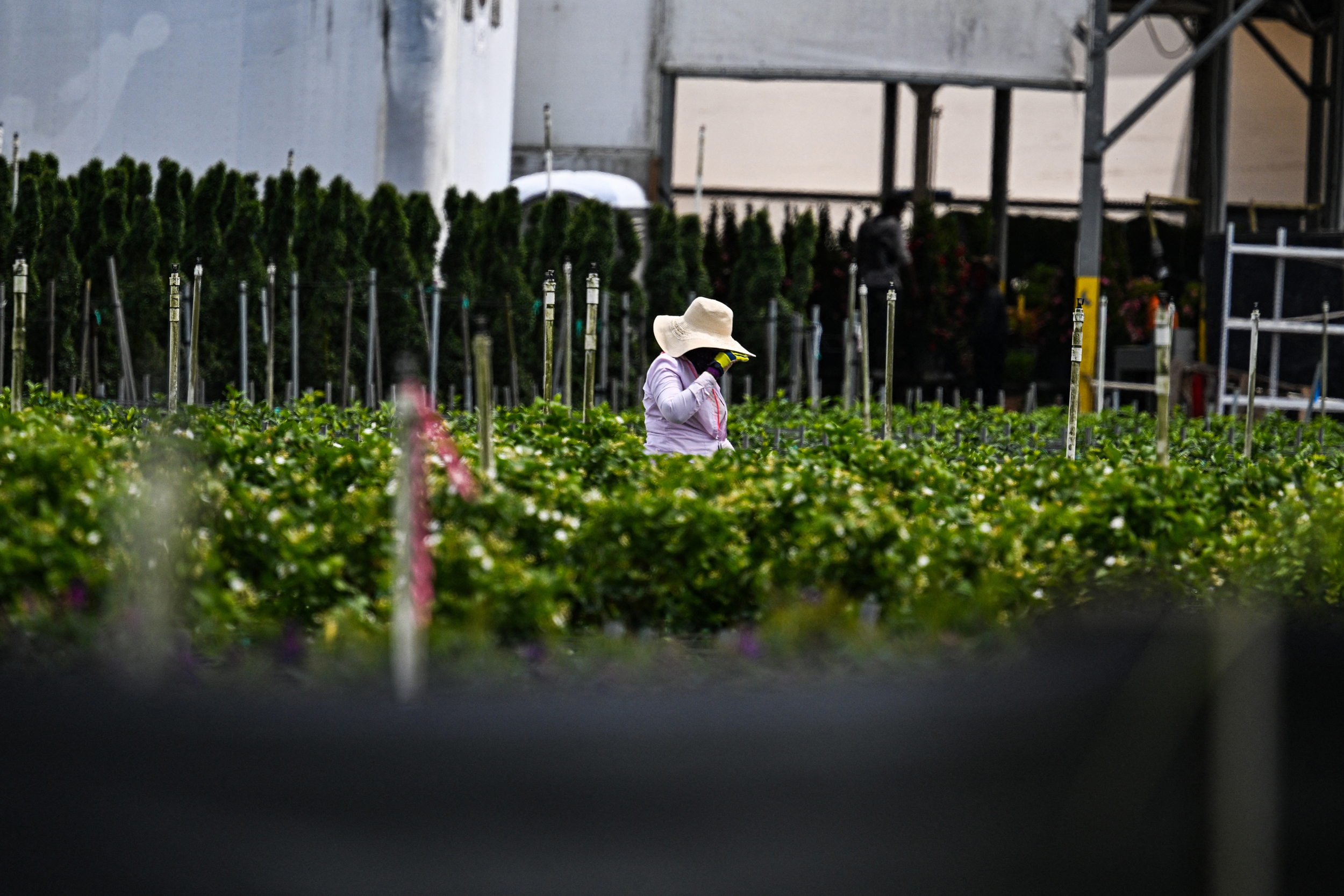
JEANNIE ECONOMOS: Workers that have been doing farmwork for a long time will tell us that even though they’re used to the heat because they work in Florida, that every year the heat feels different. And it feels hotter. And it feels like it’s scorching, and almost like it’s attacking rather than just being hot. There’s a different quality to the heat that they haven’t experienced before, and it’s really rough.
GREEN: How does heat affect the body, especially for Florida’s farmworkers?
ECONOMOS: It affects all aspects of the body. One of the main concerns that we have is dehydration, because not only can dehydration make you thirsty and make you tired and make you weak. But chronic dehydration and even acute dehydration can affect your other organs, including your kidney and your heart and your brain and your liver because your blood flow is different throughout your body. Your elimination of toxins is different. So it really affects all organs of the body, and people don’t realize that. If you’re climbing on a ladder it can make you dizzy. It can make your judgment different, and you could be falling off a ladder. You’re more prone to accidents if you’re really hot and you’re dehydrated.
GREEN: What are the predominant crops in Florida?
ECONOMOS: Florida is really diverse. We have a lot of what they call specialty crops, which is really strange that they would call the most important crops specialty crops. But we have a lot of blueberries, strawberries, tropical fruit. Our orange industry has reduced a lot, but we still have orange groves. We have vegetables like lettuces, peppers, all kinds of peppers, bell peppers, other kinds of peppers. Cucumbers, corn, cabbage, kale, broccoli, all kinds of vegetables, squash.
But a lot of the things that we all take for granted and get at the store every day are grown by farmworkers in the summertime or late spring, early summer. You have your watermelon and cantaloupe and other kinds of melons. So just about everything that you can think of.
GREEN: Gov. Ron DeSantis signed a bill into law two years ago prohibiting local governments from implementing heat protections for outdoor workers. What kind of impact has that measure had on Florida’s farmworkers?
ECONOMOS: Well, it’s terrible. [The Farmworker Association of Florida] supported a bill in the state Legislature to have the state pass heat-protection standards for all outdoor workers. We tried to get the state to pass really basic, simple things like access to water, access to shade, enough breaks so you could drink water. And growers said, “Well, we already do this. We don’t need these regulations.” Well, if you already do it, then it shouldn’t bother you if we have these regulations. It’s for the ones that don’t do it.
This story is funded by readers like you.
Our nonprofit newsroom provides award-winning climate coverage free of charge and advertising. We rely on donations from readers like you to keep going. Please donate now to support our work.
Donate NowGREEN: Florida also is vulnerable to intensifying storms and flooding as the global climate warms. What other climate and environmental risks are Florida’s farmworkers grappling with?
ECONOMOS: They’re the most impacted communities. And they live in generally, sometimes inadequate housing. And they’re often in vulnerable areas. So farmworkers are hit not only by flooding and damage to their homes. But if there’s crop damage then they also lose their work. So then they are trying to fix their homes and trying to find a place to live, trying to recover from the storm itself, and they might not have work for two weeks or two months until the next crop comes in. Then if they’re undocumented, that makes them afraid to get help and then they really go underground.
I think what people don’t realize is first of all, farmworkers work very hard. It’s physical work. It’s in the heat. Then also oftentimes they are not allowed to bring their water bottles to the work area with them because of fear of contamination, especially in food crops.
So to be able to drink enough, because they’re supposed to stay hydrated, they have to walk to the cooler, wherever the cooler is. That can be sometimes a quarter of a mile away, and sometimes the water isn’t cold. Sometimes the water isn’t clean if they’re working outside. Then oftentimes they don’t have time to go get a drink of water because their supervisor wants them to be back. They only have like 10 minutes to go to the bathroom. So sometimes farmworkers actually wear diapers to work. Sometimes they won’t drink water because they don’t want to have to go to the bathroom. And then even during lunch if they have only a half-an-hour lunch break, they have to walk to the area where the lunch room is, and then that takes up time too.
There’s a real concern about the compounding effect of being exposed to high heat temperatures and pesticides. There’s only a few studies so far, but we’re asking for more studies because the studies that we’ve seen show that there is increased absorption of pesticides in the body when there’s high temperatures.
We need to be looking at more than just the short-term impacts, because there’s acute symptoms that everybody’s looking at. Somebody fainted. Somebody went unconscious. Somebody died. There’s long-term consequences. There’s reproductive health consequences for farmworker women: low birth weight, higher miscarriages. A lot of women have to work when they’re pregnant. The statistics that you hear are not even half the story.
About This Story
Perhaps you noticed: This story, like all the news we publish, is free to read. That’s because Inside Climate News is a 501c3 nonprofit organization. We do not charge a subscription fee, lock our news behind a paywall, or clutter our website with ads. We make our news on climate and the environment freely available to you and anyone who wants it.
That’s not all. We also share our news for free with scores of other media organizations around the country. Many of them can’t afford to do environmental journalism of their own. We’ve built bureaus from coast to coast to report local stories, collaborate with local newsrooms and co-publish articles so that this vital work is shared as widely as possible.
Two of us launched ICN in 2007. Six years later we earned a Pulitzer Prize for National Reporting, and now we run the oldest and largest dedicated climate newsroom in the nation. We tell the story in all its complexity. We hold polluters accountable. We expose environmental injustice. We debunk misinformation. We scrutinize solutions and inspire action.
Donations from readers like you fund every aspect of what we do. If you don’t already, will you support our ongoing work, our reporting on the biggest crisis facing our planet, and help us reach even more readers in more places?
Please take a moment to make a tax-deductible donation. Every one of them makes a difference.
Thank you,

Amy Green
Reporter, Florida
Amy Green covers the environment and climate change from Orlando, Florida. She is a mid-career journalist and author whose extensive reporting on the Everglades is featured in the book MOVING WATER, published by Johns Hopkins University Press, and podcast DRAINED, available wherever you get your podcasts. Amy’s work has been recognized with many awards, including a prestigious Edward R. Murrow Award and Public Media Journalists Association award.