

The first day of the United Nations’ COP31 climate talks in Turkey focused on the nexus of food, agriculture and health, setting a hopeful tone for negotiators and advocacy groups that have been pushing to make food systems a bigger priority at the annual gatherings.
Even before the talks wrapped up Sunday, those hopes had faded. Despite the increasing evidence that cutting emissions from agriculture and the land it occupies represents the most expedient path to lowering climate pollution in the short term—an emergency break on global warming—negotiators left the event with little action on the farming front.
Farmers in the world’s most vulnerable countries will pay the price, advocates and researchers warn, pointing to this year’s “super” El Niño as a case in point.
As the event got underway, a new report from the International Fund for Agricultural Development and Turkey’s Ministry of Agriculture and Forestry said the weather phenomenon could cost the global economy $11 trillion.
“The weather shock is becoming an economic shock, and it is arriving at the worst possible time,” said Jahan-Zeb Chowdhury, the fund’s lead technical specialist for the environment and climate. “Farmers are already vulnerable because of the two other shocks they have experienced—fertilizer and energy.”
The report noted fertilizer prices skyrocketed in 2026 as its main ingredients were stalled in the Strait of Hormuz due to the war in Iran. Fuel prices also soared because of the blockage of the strait. These financial pressures, along with expected volatile weather over the next several months, could push tens of millions more people into acute food insecurity by the end of next year, the report said.
In its latest analysis, the U.N. Food and Agriculture Organization projected that the El Niño could cause major droughts across much of Africa, Central America and parts of South and Southeast Asia.
A separate FAO analysis submitted to the conference found that 86 percent of countries include food systems and agriculture in Nationally Determined Contributions, their roadmaps for meeting the goals of the 2015 Paris climate agreement. If those countries executed those contributions, emissions from agriculture could shrink more than 40 percent within four years and 76 percent by 2035, compared to 2019 levels.
Yet negotiators at the conference failed to produce any meaningful measures to address the climate crisis through agricultural practices. Governments did not reach any agreement on a cover decision, the concluding statement of the conference, which not only omitted any reference to fossil fuels, but also lacked any mention of food systems or agriculture.
“At a time when urgent and ambitious action is needed, commitments fall far short of what is required to protect our planet and support the hundreds of millions of smallholder farmers who are already bearing the brunt of unpredictable weather, declining harvests and increasing hardship,” said Surita Sandosham, president and CEO of Heifer International, in a written statement.
Countries first developed an agriculture-specific negotiating track at the conference held in Egypt in 2022. The intention was to bring a greater focus on agriculture and, ultimately, more financing for farmers to adapt to changing weather conditions.
But the FAO points out that financing for food and agriculture has fallen by 10 percent since 2024, and receives about 5 percent of climate-related development finance, despite needing nearly 20 percent.
“In their new climate plans countries clearly recognize the opportunities for actions that can build resilience while also reducing emissions significantly from the agricultural sector,” said Kaveh Zahedi, who directs the FAO’s Office of Climate Change, Biodiversity and Environment, in a statement. “But the urgency for action is not being matched by climate finance, nor reflected in the negotiated outcomes.”
Those negotiations likely will resume at COP32, which will be held in Addis Ababa, Ethiopia.
Already, the leadership seems poised to tackle agriculture issues.
During the first week of this year’s conference, Ethiopia announced it would join the Alliance of Champions for Food Systems Transformation, a coalition of governments that are urging more robust negotiations around agriculture. Another group, the True Animal Protein Price Coalition, issued a declaration on low-emitting food systems, saying its members would explore “protein diversification”—a diplomatic term for the sensitive topic of reducing emissions from livestock through dietary shifts.
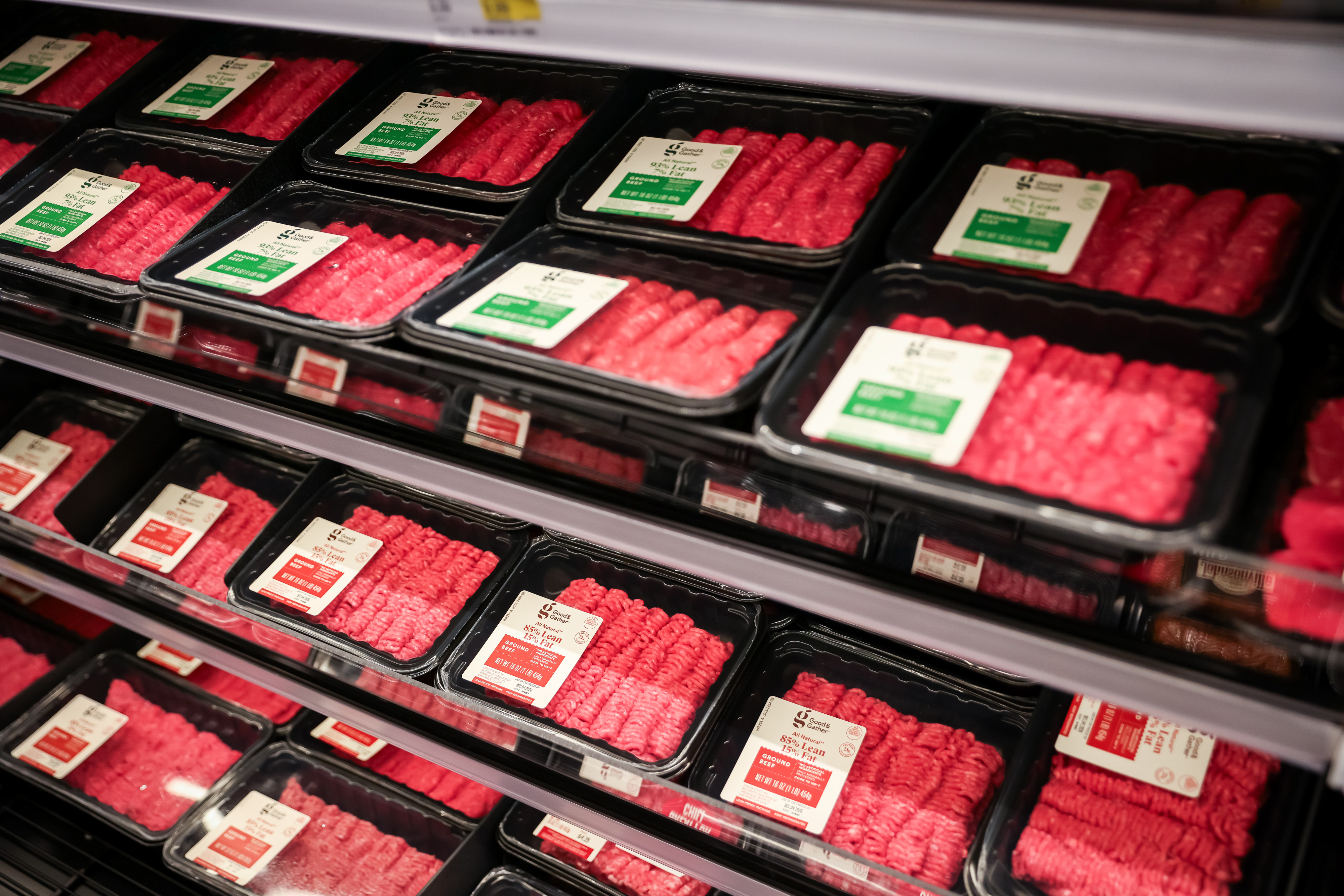
The U.N. has noted a lack of progress on reducing emissions from the livestock sector, which currently accounts for at least 15 percent of total greenhouse gas emissions and one-third of methane, the super-polluting greenhouse gas. Livestock industry lobbyists continue to show up in full force at each year’s conference, contributing to the collapsed efforts on food systems, critics said.
This story is funded by readers like you.
Our nonprofit newsroom provides award-winning climate coverage free of charge and advertising. We rely on donations from readers like you to keep going. Please donate now to support our work.
Donate NowThe CEO of JBS, the world’s largest meat company, which recently abandoned its pledge to lower emissions and emits as much methane as the world’s largest oil companies, appeared on a panel at the event, where the company’s Australian subsidiary received an award for its sustainability efforts. The award was given by the Sustainable Business COP, a private-sector initiative launched at COP31 by the Brazilian National Confederation of Industry. JBS’ business operations are largely centered in Brazil.
The company celebrated the recognition in a recent post on its website and pointed to a study showing that JBS lowered the emissions intensity of its cattle in one program in Australia by 10 percent, while also increasing production.
“That’s a key lesson: helping producers improve economic and agronomic success can also generate co-benefits for the environment,” the company wrote. “This lesson extends far beyond Australian cattle production.”
DeSmog reported that the food industry had 260 representatives at the event, including more than 40 percent who were also representatives of their respective countries.
“We cannot respond to the climate crisis without changing the models of production and consumption that are driving environmental destruction,” said Dali Nolasco Cruz, a board member of Slow Food, an advocacy group that supports small-scale farmers and food systems. “Nor can we claim to be tackling the climate crisis while ignoring food systems, both a major part of the problem and one of our greatest opportunities for change.”
About This Story
Perhaps you noticed: This story, like all the news we publish, is free to read. That’s because Inside Climate News is a 501c3 nonprofit organization. We do not charge a subscription fee, lock our news behind a paywall, or clutter our website with ads. We make our news on climate and the environment freely available to you and anyone who wants it.
That’s not all. We also share our news for free with scores of other media organizations around the country. Many of them can’t afford to do environmental journalism of their own. We’ve built bureaus from coast to coast to report local stories, collaborate with local newsrooms and co-publish articles so that this vital work is shared as widely as possible.
Two of us launched ICN in 2007. Six years later we earned a Pulitzer Prize for National Reporting, and now we run the oldest and largest dedicated climate newsroom in the nation. We tell the story in all its complexity. We hold polluters accountable. We expose environmental injustice. We debunk misinformation. We scrutinize solutions and inspire action.
Donations from readers like you fund every aspect of what we do. If you don’t already, will you support our ongoing work, our reporting on the biggest crisis facing our planet, and help us reach even more readers in more places?
Please take a moment to make a tax-deductible donation. Every one of them makes a difference.
Thank you,