

Since returning to the White House for his second term, President Donald Trump and his administration have drastically cut environmental programs and programs designed to serve disadvantaged communities and communities of color. These are groups with the fewest resources to deal with climate impacts such as hotter temperatures and more damaging storms.
The cuts have put pressure on nonprofits to fill the funding gaps. Yoca Arditi-Rocha is chief executive officer of the CLEO Institute, a Florida-based nonprofit dedicated to educating and empowering communities to stand up for climate action.
This interview has been edited for clarity and length.
AMY GREEN: How have the changes in the federal government and federal policy under the Trump administration affected the environmental justice agenda in Florida?
YOCA ARDITI-ROCHA: The Trump administration really delivered a gut punch to the very communities that for so long have been exposed to pollution while having the fewest resources to adapt to it or cope with it.
Programs to improve housing or encourage clean energy or energy efficiency improvement, to protect their health or save money while protecting the natural world, were slashed.
And so by eliminating those life-saving programs, we move from protecting the most vulnerable to really throwing them into the deep end of the pool without a life jacket.
That said, while many of the underserved communities are on the front lines of these issues, every American is also feeling it, too.
We truly are at an inflection point. Climate, energy and affordability are really converging, and electricity bills are rising across the country. Energy has become a cost-of-living issue, alongside food, housing and healthcare.
So we see a lot of people in these communities making life-changing decisions, whether it is to buy critical food or medicine or paying their electric bill. Especially in places like Florida, where we cannot survive the rising temperatures that we’re seeing because of the warming crisis that we’re facing.
GREEN: How have the changes in the federal government and changes in federal policy affected your organization specifically?
ARDITI-ROCHA: We have been working on this issue for more than a decade and a half. It really has disrupted some of these life-saving safety nets that were created to protect people’s lives.
These policies that have changed really have created a vacuum, and organizations like us, we are operating in a scarcity moment and a hostile moment. But at the same time we recognize that the work right now is greater than ever. And so we are filling that gap, because to build community resilience, it really takes an informed and prepared public.
GREEN: Are there some programs at your organization that have been affected in particular?
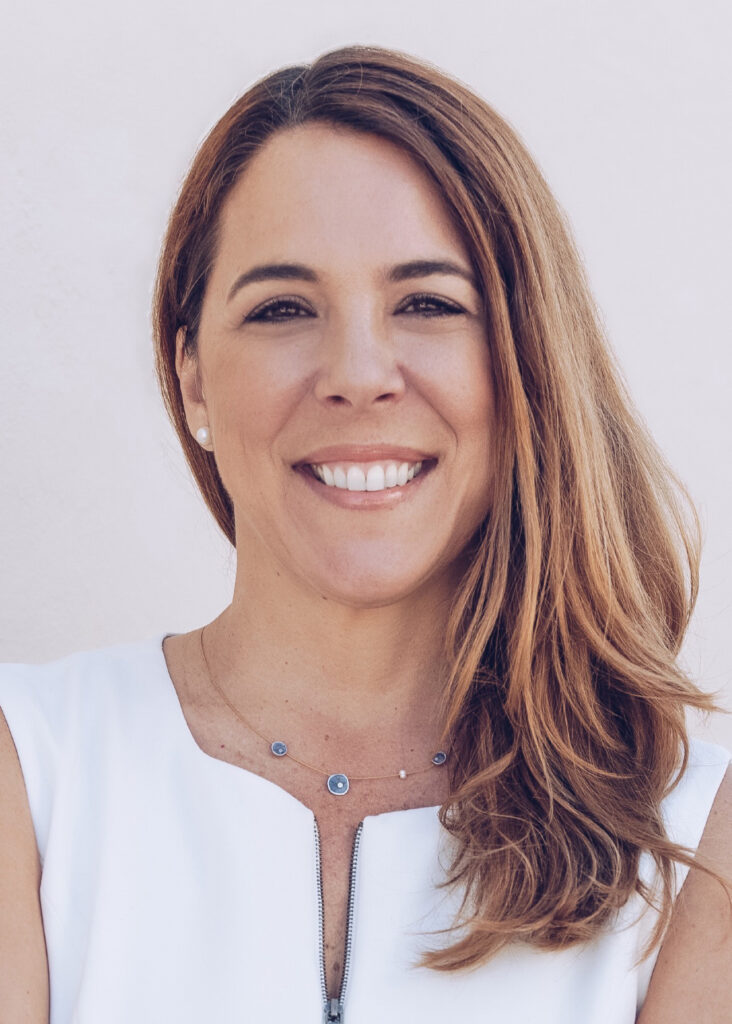
ARDITI-ROCHA: Unfortunately, last year we saw it firsthand. We lost a critical [Environmental Protection Agency] Community Change Grant that we had gotten and the EPA had awarded us with a local government partner in South Florida. The partner was Palm Beach County.
This would have delivered climate literacy and resilience training to communities facing a need. So all those funds were pulled back, and we’re talking about around $3 million for the entire length of the grant.
It’s a really clear example of how policy decisions made at the federal level are directly impacting everyday citizens and their ability to build resilience on the ground.
GREEN: Some people might not know what climate literacy is. Can you give an example of what exactly that grant would have funded?
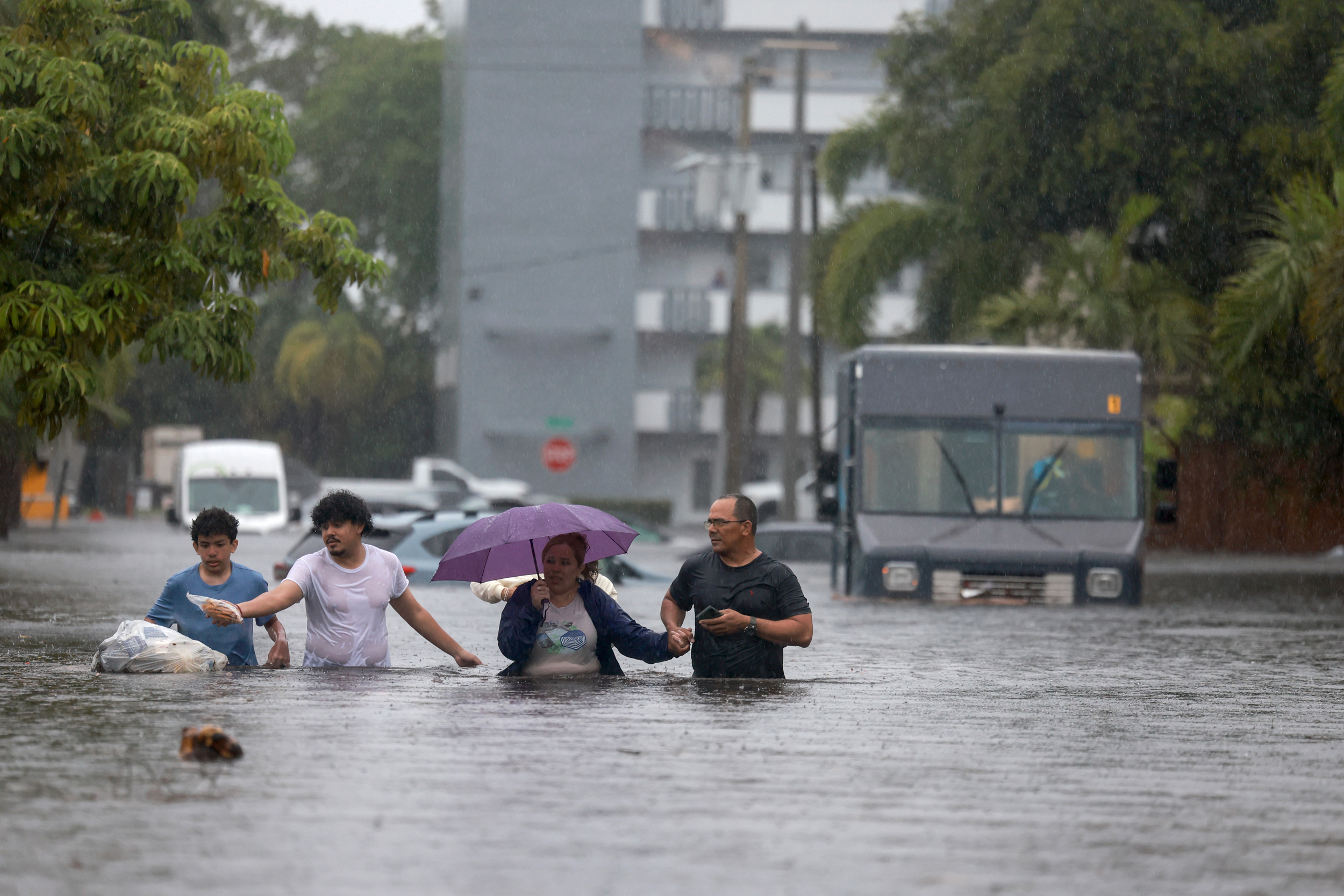
ARDITI-ROCHA: We come to a community, and we tell people why are we seeing rising temperatures? Why are we seeing extreme weather events like rain bombs becoming more and more the norm? And how to better prepare for those circumstances.
And we start by just really dissecting basic climate science. What sources of pollution are going into the atmosphere and building this layer of pollution that is warming our planet? And how that is being absorbed by the oceans. And how the melting of glaciers is raising sea levels, together with the warming of our seas and oceans.
So it’s going back to basics but connecting the dots for people to understand where is the source of the pollution, how we can tackle that, and how we can better prepare to be safer and protect people’s lives in our community.
We do it in schools. We do it in community settings. We do it virtually. We do it in person. We do it through communications campaigns. We do it multilingual. In some cases, where language is a barrier, we bring in interpreters, or we do it in the language that the community predominantly speaks. So in South Florida, we have posted these trainings in Spanish and English.
This story is funded by readers like you.
Our nonprofit newsroom provides award-winning climate coverage free of charge and advertising. We rely on donations from readers like you to keep going. Please donate now to support our work.
Donate NowGREEN: How did your organization react to the loss of that funding? Were you able to fill the gap somehow?
ARDITI-ROCHA: Unfortunately, we have not been able to fill that gap.
GREEN: When it comes to environmental justice, what is happening in Florida? What are the most pressing environmental justice issues here? Or what are the biggest environmental justice problems?
ARDITI-ROCHA: Let’s just say that when governance pulls back protections and doubles down on pollution, that doesn’t stay neutral. It is a choice about whose lives, health and futures matter most, and that is at the heart of the environmental justice movement.
When we are talking about lack of resources, the communities that are on the front lines of these issues—rising energy costs, rising extreme weather, rising insurance prices, rising food prices—communities that have been disproportionately underserved due to social, economic or racial justice issues are at the brunt of it.
In Florida, where we have a huge diaspora of many communities, particularly Latino communities from all over Latin America, Black and brown communities tend to be the most vulnerable and at the forefront of the environmental justice issue that we’re facing in Florida.
GREEN: Where do the federal changes leave the environmental justice agenda in Florida going into the midterm elections?
ARDITI-ROCHA: I think basically the entire environmental justice program at the federal level has been eradicated. Florida is not any different from any of the other states in the country that are facing climate impacts right now.
We’re seeing a perfect storm brewing. Unfortunately, the ones that caused the least of those impacts are feeling the brunt of it. But the reality is, all of us are.
GREEN: What do these environmental justice communities need from the federal government?
ARDITI-ROCHA: First of all, they need to be heard, right? We need to make sure that their voices are being heard. And one of the things that we focus on is making sure people understand that their voices and their votes are their superpower.
But year after year, disinvestments really have given a lot of our communities trauma. Right now, we are seeing a compounding of the same crises affecting people’s lives.
And so we need to start by acknowledging the decades of this disenfranchisement and segregation that have made most of our Black and brown communities in particular become even more vulnerable in the face of all these compounding crises.
GREEN: What are you focused on ahead of the midterm elections?
ARDITI-ROCHA: What is clear to me is that this issue is no longer niche. It is central. Energy cost, utility accountability and climate impacts are moving to the center of the national political conversation, and voters are feeling it. They’re starting to connect the dots.
If you remember the start of this administration, there was a push to frame the U.S. as being in some energy crisis to justify expanding fossil fuel production.
But the reality is, we didn’t have an energy crisis then. We have one now, and it’s compounded by a war, which in turn is also creating a cost-of-living crisis.
Power bills and prices are on the ballot. And going back to the climate justice issue, they’re the ones without the safety net. They’re really at the center of this storm.
About This Story
Perhaps you noticed: This story, like all the news we publish, is free to read. That’s because Inside Climate News is a 501c3 nonprofit organization. We do not charge a subscription fee, lock our news behind a paywall, or clutter our website with ads. We make our news on climate and the environment freely available to you and anyone who wants it.
That’s not all. We also share our news for free with scores of other media organizations around the country. Many of them can’t afford to do environmental journalism of their own. We’ve built bureaus from coast to coast to report local stories, collaborate with local newsrooms and co-publish articles so that this vital work is shared as widely as possible.
Two of us launched ICN in 2007. Six years later we earned a Pulitzer Prize for National Reporting, and now we run the oldest and largest dedicated climate newsroom in the nation. We tell the story in all its complexity. We hold polluters accountable. We expose environmental injustice. We debunk misinformation. We scrutinize solutions and inspire action.
Donations from readers like you fund every aspect of what we do. If you don’t already, will you support our ongoing work, our reporting on the biggest crisis facing our planet, and help us reach even more readers in more places?
Please take a moment to make a tax-deductible donation. Every one of them makes a difference.
Thank you,

Amy Green
Reporter, Florida
Amy Green covers the environment and climate change from Orlando, Florida. She is a mid-career journalist and author whose extensive reporting on the Everglades is featured in the book MOVING WATER, published by Johns Hopkins University Press, and podcast DRAINED, available wherever you get your podcasts. Amy’s work has been recognized with many awards, including a prestigious Edward R. Murrow Award and Public Media Journalists Association award.