

This story is a partnership between Inside Climate News, Grist and WBEZ, a public radio station serving the Chicago metropolitan region.
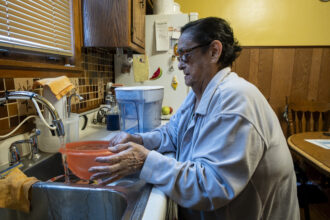
Illinois is in the midst of a public health crisis. Nearly 1.5 million service lines—the pipes that carry drinking water to homes and businesses—contain or are suspected to contain lead, a neurotoxin linked to cognitive, reproductive and cardiovascular problems.
Now, public health and workforce advocates want to turn the state’s long-overdue pipe replacement backlog into a statewide economic engine, creating up to 90,000 jobs over a decade.
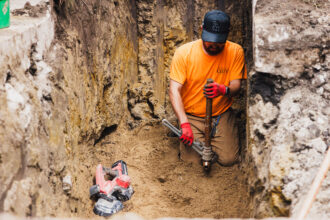
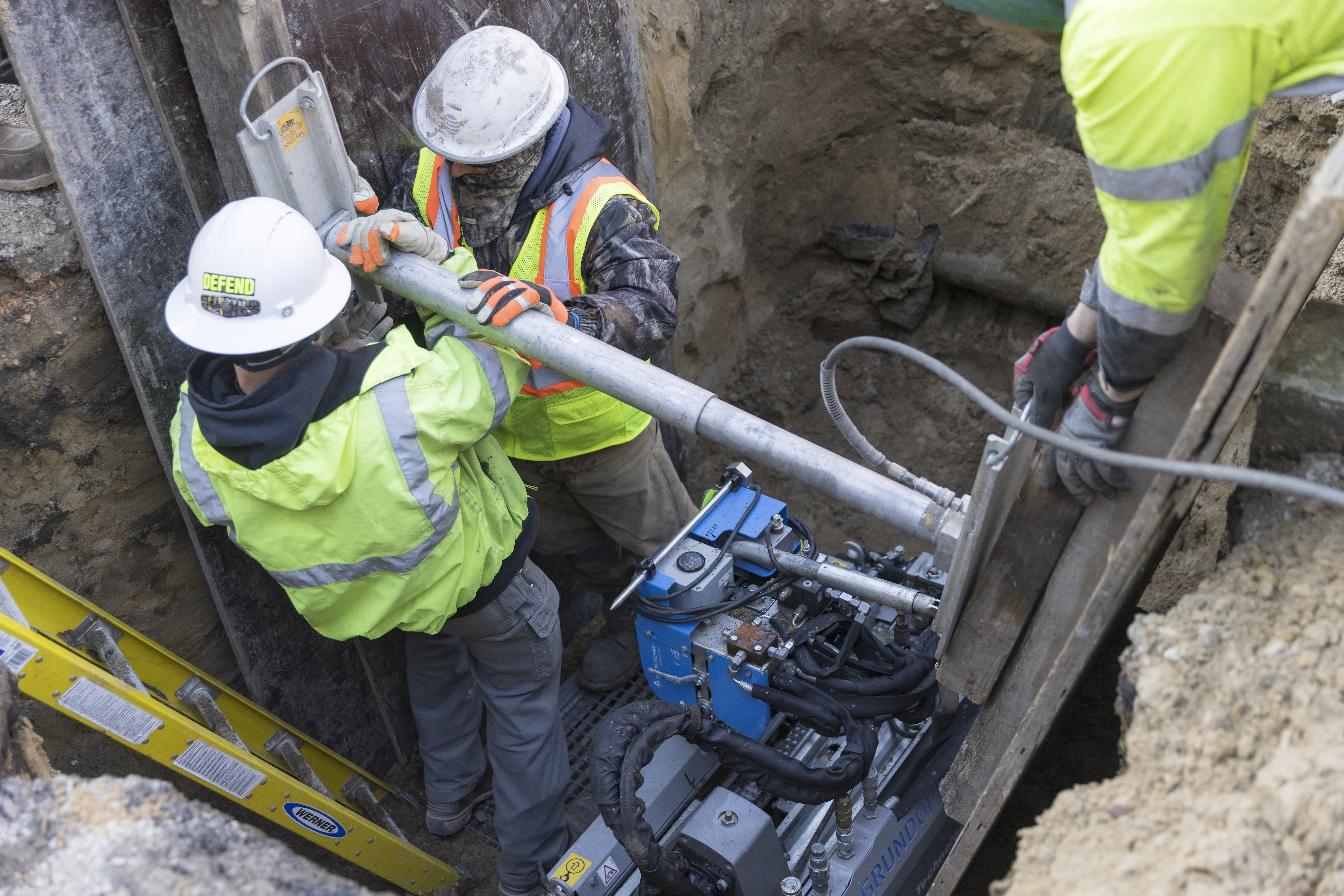
A recent report proposes a plan to replace the state’s staggering inventory of toxic lead pipes and create tens of thousands of jobs. To do so, the analysis calls on state and local officials to fast-track pipe replacements for communities that have suffered from the most lead exposure and to use the projects to build a more diverse local workforce. It also urges the Illinois General Assembly to help plug a multi-billion-dollar budget gap for lead pipe replacements.
“The longer we put off taking care of our water infrastructure, the more expensive it’s going to get, the more that we’re going to be looking at water rates increasing to deal with that and the more people are going to be in the position where they’re not going to have access to safe and clean drinking water,” said Justin Williams, a senior manager at the Metropolitan Planning Council, one of the policy think tanks that helped develop the plan. “And that’s not a situation we should be in as a state or region.”
Several other regional and national nonprofits, including Current, a water solutions hub; Elevate, an organization working on water and energy affordability issues; and HIRE360, a workforce development group, also worked on the analysis.
Illinois has the most lead pipes in the country. The state estimates it has 667,000 known lead service lines and another 820,000 suspected lines. Chicago alone accounts for nearly 30 percent of those pipes.

Replacing these service lines is expensive. In a 2022 report, the Illinois Environmental Protection Agency found that a single service line replacement can cost anywhere from $4,000 to $13,000 across the state. In Chicago, the price tag is even higher: City officials estimated that replacements cost more $30,000 per line on average.
State officials have estimated that replacing all the known or suspected lead pipes across Illinois could cost between $6 and $10 billion. The Biden-era Infrastructure Investment and Jobs Act, also known as the bipartisan infrastructure law, set aside $15 billion over five years to help states replace lead pipes. Illinois is estimated to receive about $1 billion, but given the state’s unique needs, that number “is probably on the low side,” Williams said.
Nationwide, the price to replace all lead pipes is estimated to be over $55 billion, according to the US Water Alliance’s senior director of water leadership and innovation, Emily Simonson. She adds that Illinois alone accounts for 12 percent of that total, and the Great Lakes state represents nearly half.
The report makes the case that state lawmakers must approve dedicated, sustained and predictable funding to close the multi-billion-dollar shortfall. Without long-term guarantees, replacements will likely remain inefficient and delayed.
“It’s a bit of a chicken and egg: Unless you know how much money is going to be allocated to this—how many opportunities are coming down the pipe—they’re not going to add additional people to apprenticeship programs,” said Jay Rowell, executive director at HIRE360.
Using workforce projections from the American Water Works Association and the U.S. Environmental Protection Agency, the report’s authors calculated that already allocated federal funds could generate approximately 2,000 direct jobs and 9,000 indirect jobs. If legislatures closed the multi-billion-dollar funding gap, those figures could jump substantially to 35,000 direct jobs and 55,000 indirect jobs—a total of 90,000 jobs over a decade.
“We’re calling attention not only to the problem, but also to some of the opportunities to get more candidates engaged in apprenticeships,” said Rowell. “This is a really big problem that needs very thoughtful, state-led solutions.”
A major pillar of the report is diversifying the building trades. An analysis of Chicago’s workforce found that only 3.8 percent of registered apprentices are women and just 10 percent are Black. To bridge this gap, the report advocates for requiring utilities and municipalities to include diversity and equity requirements in project contracts.
The report’s authors argue that Illinois has the rare opportunity to tackle two challenges at once: address its toxic legacy while laying the groundwork for a more inclusive economy. The financial and political hurdles remain high, but advocates say the cost of inaction is higher.
“We are the envy of the world in terms of our access to fresh drinking water,” said Williams. “We need to be really thoughtful stewards of that, and that means investing in that the same way we invest in other infrastructure.”
About This Story
Perhaps you noticed: This story, like all the news we publish, is free to read. That’s because Inside Climate News is a 501c3 nonprofit organization. We do not charge a subscription fee, lock our news behind a paywall, or clutter our website with ads. We make our news on climate and the environment freely available to you and anyone who wants it.
That’s not all. We also share our news for free with scores of other media organizations around the country. Many of them can’t afford to do environmental journalism of their own. We’ve built bureaus from coast to coast to report local stories, collaborate with local newsrooms and co-publish articles so that this vital work is shared as widely as possible.
Two of us launched ICN in 2007. Six years later we earned a Pulitzer Prize for National Reporting, and now we run the oldest and largest dedicated climate newsroom in the nation. We tell the story in all its complexity. We hold polluters accountable. We expose environmental injustice. We debunk misinformation. We scrutinize solutions and inspire action.
Donations from readers like you fund every aspect of what we do. If you don’t already, will you support our ongoing work, our reporting on the biggest crisis facing our planet, and help us reach even more readers in more places?
Please take a moment to make a tax-deductible donation. Every one of them makes a difference.
Thank you,

Juanpablo Ramirez-Franco
Contributor
Juanpablo Ramirez-Franco is the Midwest regional reporter for Grist and WBEZ Chicago.