

Just before 5 p.m. on the last day of September, Jane Sellen and her colleagues at Californians for Pesticide Reform learned that regulators had to toss out nearly nine months’ worth of air-monitoring data for two deadly fumigants.
California’s Department of Pesticide Regulation, or DPR, said the state laboratory that analyzes its samples was “recalling and voiding” all the monitoring results for 1,3-dichloropropene, or 1,3-D, and methyl bromide from Oct. 24, 2025, through June 30, due to a quality-control problem.
How can pesticide regulators say they’re protecting anyone from 1,3-D or methyl bromide if they don’t know how much of these toxic gases entered the air? asked Sellen, development director for Californians for Pesticide Reform, a statewide coalition of public-interest groups.
Methyl bromide was one of the most widely used pesticides on California farms until the Environmental Protection Agency banned it for all but “critical uses” in 2005 to protect Earth’s ozone layer. A potent neurotoxin, the gas can also cause severe neurological disease, multisystem organ failure and death. Even so, California farmers have long received a critical use exemption, and apply about 1.6 million pounds of the noxious gas each year to fields that produce nut trees, berries and other crops.
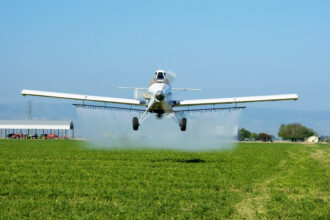
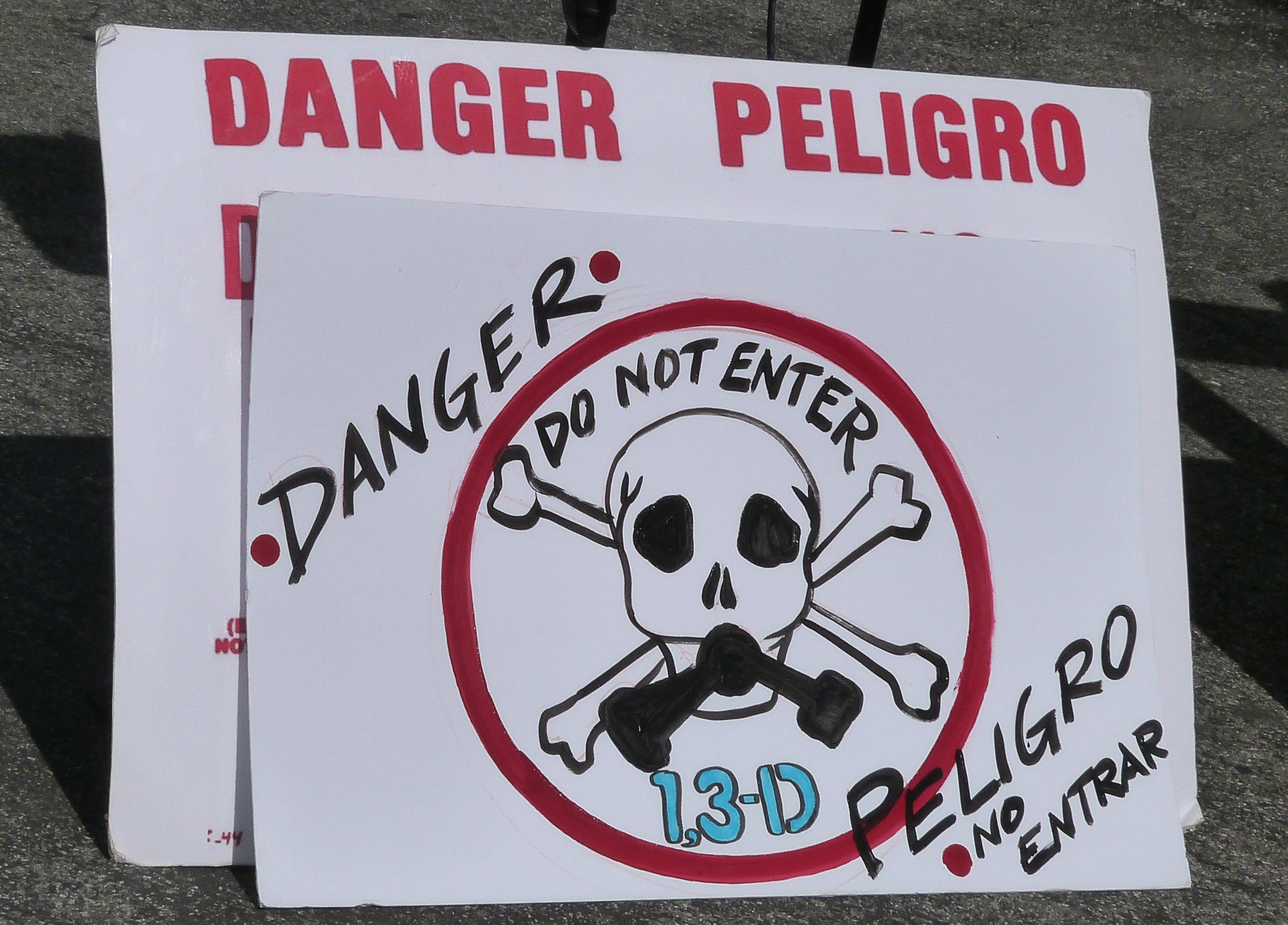
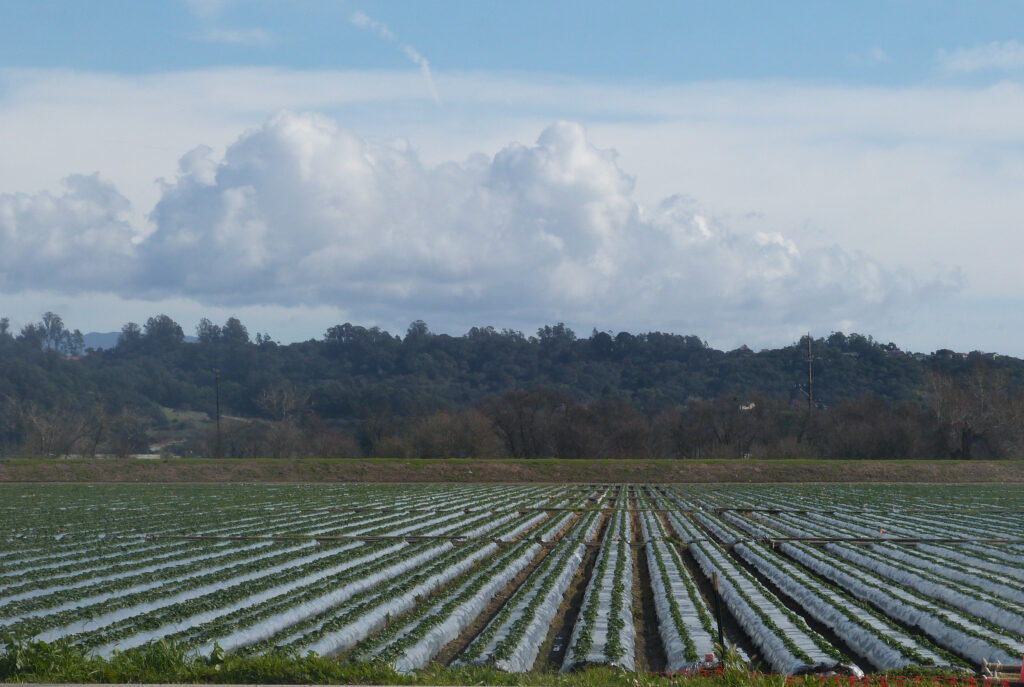
Growers also apply more than 7 million pounds of drift-prone, cancer-causing 1,3-D each year on almonds, grapes, strawberries and other billion-dollar crops. The pesticide is banned in 40 countries to protect public health and the environment.
DPR collects air-monitoring samples and sends them to a laboratory at another state agency to keep track of how much of these and other pesticides escape from treated fields. To measure concentrations in a given sample, labs rely on what’s called a reference standard, a manufacturer-certified sample of a chemical of interest used to ensure accurate readings. The reference standards for methyl bromide and 1,3-D had “significantly degraded,” between 18 percent and 96 percent, over nine months, the agencies reported.
Losing the 1,3-D data is particularly vexing for pesticide-reform advocates. They say the data is critical for gauging the effects of a new rule regulators said would limit agricultural workers’ exposure to the dangerous chemical but health and environmental advocates believe is flawed.
“DPR muscled through regulations for 1,3-D that we don’t believe adequately protect communities,” said Sellen, whose organization has gone to court four times to compel state regulators to pass rules that are “consistent and effective” at protecting workers and their communities from 1,3-D.
Sellen said her conviction that DPR’s rules aren’t effective is reflected in Californians for Pesticide Reform’s lawsuits and the lab’s failure “to actually even partially characterize what communities are being exposed to.”
Double Standards
Over the past two years, state pesticide regulators enacted two different 1,3-D regulations, one for people who live near treated fields and another for those who work near them, even though most farmhands live and work in the same region.
The rule that went into effect in January 2024 says it’s safe for residents of farming communities, who are largely low-income and Latino, to be exposed to 1,3-D air concentrations that are 14 times higher than the level experts at the Office of Environmental Health Hazard Assessment, or OEHHA, say is safe. The other rule, for workers, which went into effect in January, set a safety target five times higher than OEHHA scientists said reduces a person’s lifetime cancer risk from exposure to the pesticide.
Pesticide regulators maintain that both rules mitigate the lifetime cancer risk for people living and working near 1,3-D treated fields.
Inside Climate News asked the Department of Pesticide Regulation and the California Department of Food and Agriculture, which analyzes the air samples, how it could take so long to notice a problem with the analytical results and if any ditched data could be salvaged. DPR spokesperson Amy MacPherson deferred to CDFA to explain the lab problems but did not address whether any data could be recovered.
A CDFA spokesperson was not able to provide an immediate response because its experts were traveling or on vacation.
Sellen is upset by the loss of so much air-monitoring data, which she says is an important way to audit the regulation’s effectiveness.
She’s worried that emissions increased, like they did after the residential bystander rule went into effect in 2024. A draft 1,3-D report DPR released in October shows that after that rule was implemented, both applications and emissions of the fumigant rose following a multi-year decline.
“DPR and CDFA have agreed on additional quality-control measures to make sure future air monitoring data is not compromised by similar problems,” DPR stated when it announced the problem.
Chemist Susan Kegley said such tests should be routine.
Good laboratory practice requires knowing the standards are correct, and there are several methods for doing that, said Kegley, principal scientist and CEO of the Pesticide Research Institute, an environmental consulting firm. “Running regular quality-control tests is the centerpiece of understanding how correct your method is.”
Caroline Cox, a retired pesticide scientist and former research director at the nonprofit Center for Environmental Health, doesn’t understand how it took state officials nine months to notice a problem with the standards. “It should be something that you notice virtually right away,” Cox said.
Even under the best circumstances, the agency typically releases air-monitoring results at least six months after collecting samples, Cox said. The delay is frustrating because it means she and others have to tell people in the community about potential risks months after they happened. “That just makes people really angry,” she said, “because what can they do?”
Plus, because DPR takes just one 24-hour sample of the pesticides it monitors each week, Cox said, “we actually have no idea if the concentration was really higher or lower in the days before or after they took the sample.” That’s particularly troubling, she said, because all of the state’s air monitors at some point detect 1,3-D emissions above the level OEHHA says is safe.
This story is funded by readers like you.
Our nonprofit newsroom provides award-winning climate coverage free of charge and advertising. We rely on donations from readers like you to keep going. Please donate now to support our work.
Donate NowHandling standards for highly volatile chemicals like methyl bromide and 1,3-D is tricky, allowed Anne Katten, director of California Rural Legal Assistance Foundation’s Pesticide and Work, Health, and Safety Project. “But that’s no excuse for taking nine months to find the problem.”
DPR has proposed replacing the lost data with modeled values, which raises additional concerns, Sellen said. The methods behind the model aren’t clearly laid out, she said. And when Sellen and Cox ran the agency’s model by an independent researcher, he confirmed their concerns that it underestimates higher values.
DPR’s MacPherson said the agency’s modeling approach has been peer-reviewed and is “scientifically supported, including the level of accuracy for this type of analysis.”
But Cox believes air-monitoring data is much more important than modeled numbers. She and Katten are trying to figure out if any of the air-monitoring data can be salvaged.
Sellen sees the lab failure as one more example of regulators’ inability to safeguard communities.
“It just further undermines public confidence in DPR’s willingness to protect communities from these hazardous chemicals,” she said.
About This Story
Perhaps you noticed: This story, like all the news we publish, is free to read. That’s because Inside Climate News is a 501c3 nonprofit organization. We do not charge a subscription fee, lock our news behind a paywall, or clutter our website with ads. We make our news on climate and the environment freely available to you and anyone who wants it.
That’s not all. We also share our news for free with scores of other media organizations around the country. Many of them can’t afford to do environmental journalism of their own. We’ve built bureaus from coast to coast to report local stories, collaborate with local newsrooms and co-publish articles so that this vital work is shared as widely as possible.
Two of us launched ICN in 2007. Six years later we earned a Pulitzer Prize for National Reporting, and now we run the oldest and largest dedicated climate newsroom in the nation. We tell the story in all its complexity. We hold polluters accountable. We expose environmental injustice. We debunk misinformation. We scrutinize solutions and inspire action.
Donations from readers like you fund every aspect of what we do. If you don’t already, will you support our ongoing work, our reporting on the biggest crisis facing our planet, and help us reach even more readers in more places?
Please take a moment to make a tax-deductible donation. Every one of them makes a difference.
Thank you,

Liza Gross
Reporter, California
Liza Gross is a reporter for Inside Climate News based in Northern California. She is the author of The Science Writers’ Investigative Reporting Handbook and a contributor to The Science Writers’ Handbook, both funded by National Association of Science Writers’ Peggy Girshman Idea Grants. She has long covered science, conservation, agriculture, public and environmental health and justice with a focus on the misuse of science for private gain. Prior to joining ICN, she worked as a part-time magazine editor for the open-access journal PLOS Biology, a reporter for the Food & Environment Reporting Network and produced freelance stories for numerous national outlets, including The New York Times, The Washington Post, Discover and Mother Jones. Her work has won awards from the Association of Health Care Journalists, American Society of Journalists and Authors, Society of Professional Journalists NorCal and Association of Food Journalists.