

The Point Isabel Independent School District on Monday rejected a multi-million dollar tax break for a proposed $5.7 billion liquefied natural gas (LNG) project on the Texas Gulf Coast, finding the facility would not “align” with the community’s values or finances.
Districts in Texas have typically granted such agreements, which are meant to incentivize investment with reduced property taxes in exchange for promises of economic development.
But the school district’s board of trustees in Port Isabel, with 5,200 people tucked between nature preserves at the mouth of the Rio Grande, have rejected three similar proposals from LNG developers planning to build large industrial complexes in the area, including a previous application from the 625-acre Texas LNG project.
“We are at a loss at how school board leadership could have made such a decision,” said a spokesperson for Texas LNG project, Tim Fitzpatrick. “There is no economically rational benefit for this vote, which should be about how to benefit students.”
He said the agreement “would have delivered an additional $15 million per year to the Point Isabel ISD.”
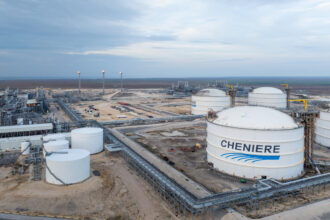
In an announcement last month, Texas LNG developer Glenfare Group said it planned to finalize financing and begin construction this year on its tract of coastal wetlands along the Brownsville Ship Channel, adjacent to the 980-acre site of Rio Grande LNG, where crews began clearing land in 2023.
Point Isabel ISD, in a press release Monday evening, said “the agreement was not in the best interest of the district and its taxpayers at this time.”
“Every decision we make reflects the long-term financial stability of our district and the values of our community,” said Heather Scott, president of the school board of trustees. “This proposed agreement did not sufficiently align with those priorities.”
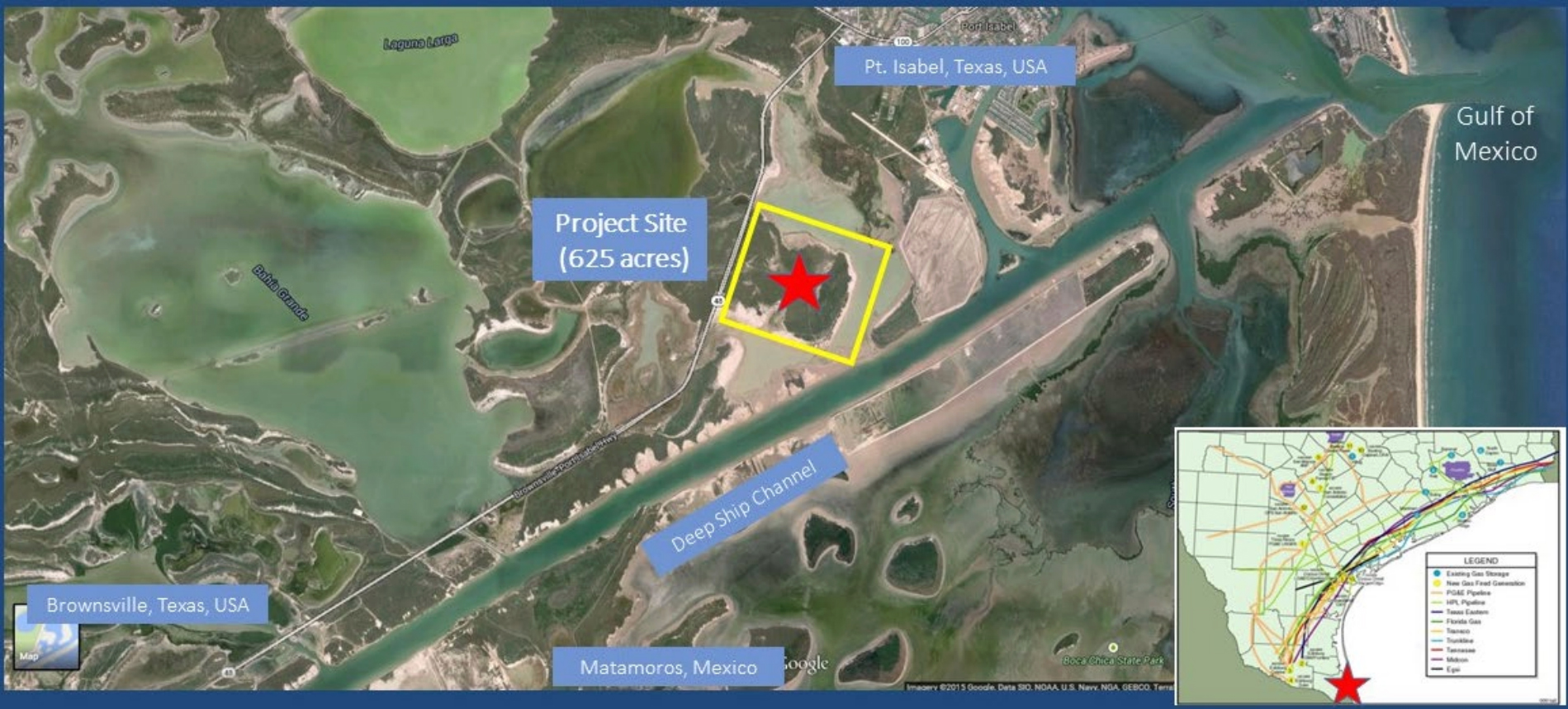
The agreement would have provided a $160 million reduction in property taxes over 10 years for Texas LNG. In exchange, according to the company’s application, Texas LNG would create 110 direct jobs, and 161 indirect jobs, at full operations starting in 2031, paying out $15.4 million per year in payroll.
“School districts have tended to approve property tax abatements,” said Dick Lavine, a former fiscal analyst with the nonprofit policy advocacy group Every Texan, who researched tax policy at the Texas Capitol for 40 years. In 2022 Texas adopted a new tax abatement program which, Lavine said, “allows school boards to make decisions based on the good of their community, rather than financial incentives.”
“I hope more communities like Point Isabel will organize to protect their environment and economies,” he said.
At the school board meeting Monday, residents expressed concerns that those jobs and income weren’t worth the damage Texas LNG would do to their eco-tourism industry or the emissions it would add to their air. The company’s air pollution permit authorizes it to emit 6 tons per year of soot, 105 tons per year of nitrogen oxides, 77 tons per year of sulfur dioxide and 2 tons per year of “hazardous air pollutants.”
Texas LNG would also demolish a Native American village site called Garcia Pasture, which the World Monuments Fund calls “one of America’s premier archaeological sites,” with signs of habitation spanning 700 years.
“This land is sacred, people were buried there and ceremonies took place there,” said Juan Mancias, chairman of the Carrizo/Comecrudo Tribe of Texas, in a statement on Tuesday. “Corporations have no respect or regard for the historical importance of the area.”
Texas LNG is one of at least 18 LNG terminal projects currently approved for construction or under construction in the U.S., most of them on the coast of Texas and Louisiana, according to the Federal Energy Regulatory Commission. The Energy Information Agency expects U.S. LNG exports to double by 2029 as more facilities come online to liquify American shale gas and load it onto tankers for consumption overseas.
LNG is expected to add tens of billions of dollars to the Texas economy, according to the state comptroller’s website. Industry groups including Texans for Natural Gas, the Texas Association of Independent Royalty Owners and Producers, and the Texas Oil and Gas Association did not respond to requests for comment.
Point Isabel ISD also rejected a tax agreement in 2015 with the since-cancelled Annova LNG project. In 2016 it rejected an agreement with Rio Grande LNG project, which began construction in 2023 and hopes to begin production next year. In 2022 the district board rejected an earlier application from Texas LNG.
The City of Port Isabel, along with the neighboring beach resort city of South Padre Island and the Laguna Madre Water District, have passed repeated resolutions in opposition to the LNG plans since 2015.
“The LNG companies will just destroy our environment and our health,” said Lupita Sanchez, a resident of nearby Brownsville and director of a group called Border Workers United. “We don’t want LNG around us.”
About This Story
Perhaps you noticed: This story, like all the news we publish, is free to read. That’s because Inside Climate News is a 501c3 nonprofit organization. We do not charge a subscription fee, lock our news behind a paywall, or clutter our website with ads. We make our news on climate and the environment freely available to you and anyone who wants it.
That’s not all. We also share our news for free with scores of other media organizations around the country. Many of them can’t afford to do environmental journalism of their own. We’ve built bureaus from coast to coast to report local stories, collaborate with local newsrooms and co-publish articles so that this vital work is shared as widely as possible.
Two of us launched ICN in 2007. Six years later we earned a Pulitzer Prize for National Reporting, and now we run the oldest and largest dedicated climate newsroom in the nation. We tell the story in all its complexity. We hold polluters accountable. We expose environmental injustice. We debunk misinformation. We scrutinize solutions and inspire action.
Donations from readers like you fund every aspect of what we do. If you don’t already, will you support our ongoing work, our reporting on the biggest crisis facing our planet, and help us reach even more readers in more places?
Please take a moment to make a tax-deductible donation. Every one of them makes a difference.
Thank you,

Dylan Baddour
Reporter, Austin
Dylan Baddour covers the energy sector and environmental justice in Texas. Born in Houston, he’s worked the business desk at the Houston Chronicle, covered the U.S.-Mexico border for international outlets and reported for several years from Colombia for media like The Washington Post, BBC News and The Atlantic. He also spent two years investigating armed groups in Latin America for the global security department at Facebook before returning to Texas journalism. Baddour holds bachelor’s degrees in journalism and Latin American studies from the University of Texas at Austin. He has lived in Argentina, Kazakhstan and Colombia and speaks fluent Spanish.