

Russia’s invasion of Ukraine set off a global energy crisis in 2022, sending prices for oil and gas skyrocketing in Europe and the U.S. for months on end. Many Americans struggled to keep up with their bills, and disconnections—when utility companies shut off power or heat because of nonpayment—spiked.
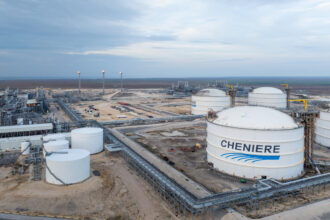
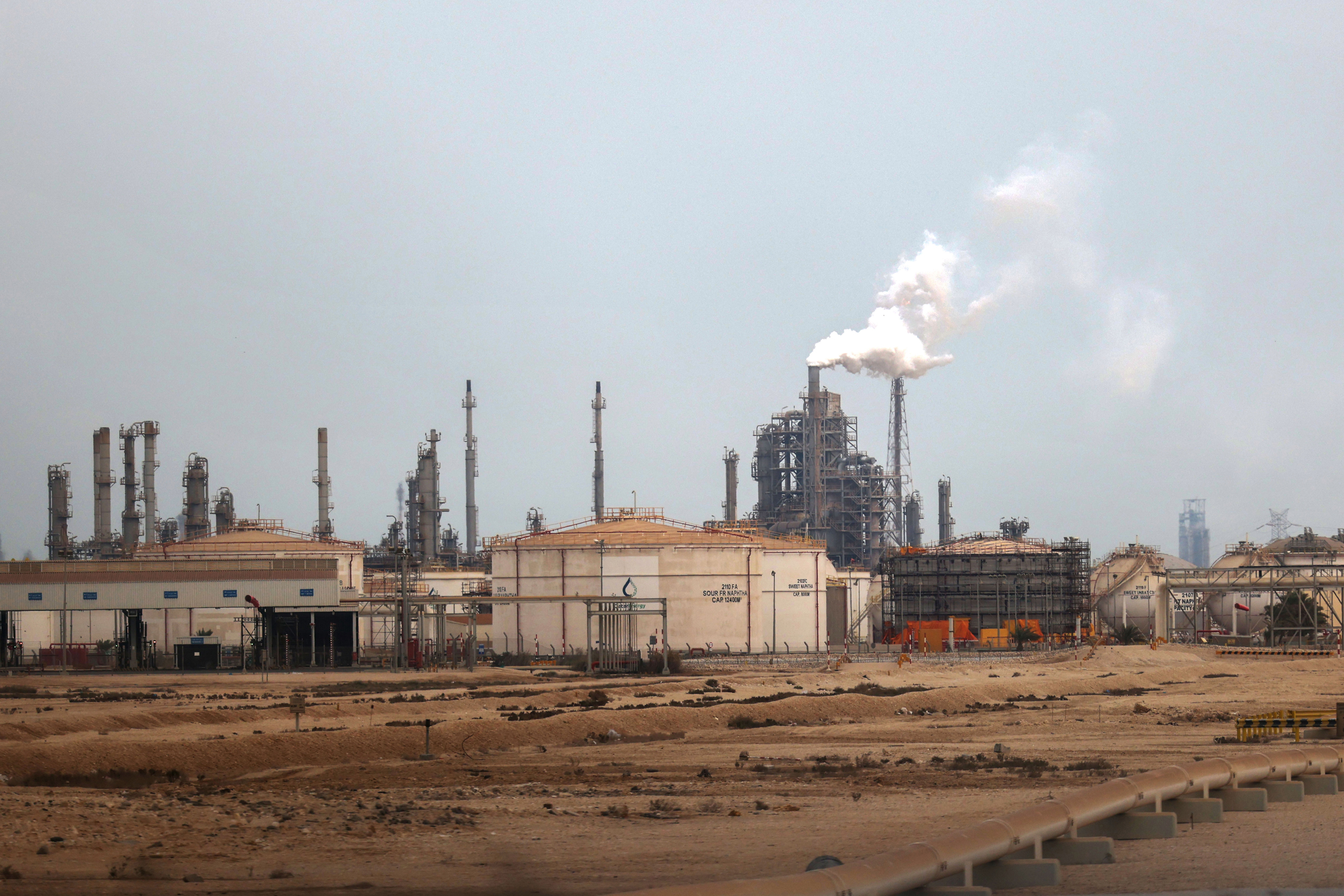
Now, energy experts fear the Trump administration’s decision to attack Iran could trigger a similar sequence of events. Qatar has shut down production at the world’s largest liquefied natural gas facility. Liquefying natural gas allows it to be stored and moved over longer distances than pipelines can accommodate. Shipments through a critical trade route, the Strait of Hormuz, have been cut off. Fifteen percent of the global oil supply and 20 percent of global LNG normally pass through this waterway.
In response, oil, gasoline and diesel prices are up, and natural gas prices in Europe are surging. The conflict is “wreaking havoc with global gas and LNG markets, even more so than oil,” according to analysts at Wood Mackenzie, the global energy and natural resources consulting firm. Asian markets “are the most exposed,” but “Europe is also in panic mode,” the analysts said.
The world hasn’t yet seen disruption on the scale of what happened at the start of Russia’s years-long attack on Ukraine, but that’s where we could be headed.
“If this continues for a full week, that’s the kind of trajectory that we might be on,” said Clark Williams-Derry, energy finance analyst for the Institute for Energy Economics and Financial Analysis. “The longer this conflict lasts, the more likely we are to see higher prices that people are paying for natural gas.”
The Ukraine war, he warned, led to “a massive transfer of wealth from ordinary households, people who are paying utility bills, to the people who are providing them with fossil fuels.”
The immediate fallout from the war with Iran illustrates the problems with ramping up U.S. exports of liquefied natural gas without any policy guardrails, he said. The more LNG that America exports, the more domestic natural gas prices are tied to swings in the global market. “It’s U.S. consumers who are bidding against global consumers for the same gas,” he said.
LNG proponents say that exports help keep American allies abroad from having to rely on countries like Russia for energy. “U.S. LNG exports strengthen energy security for allies amid growing geopolitical uncertainty,” said Rob Jennings, vice president of natural gas markets at the American Petroleum Institute. “Over the past decade, growth in America’s LNG exports has been outpaced by growth in domestic production, enabling the United States to meet rising demand at home and abroad without meaningfully impacting domestic natural gas prices.”
But even before the attack on Iran, U.S. natural gas prices were expected to rise, “driven mainly by more demand” from LNG export facilities, according to the U.S. Energy Information Administration.
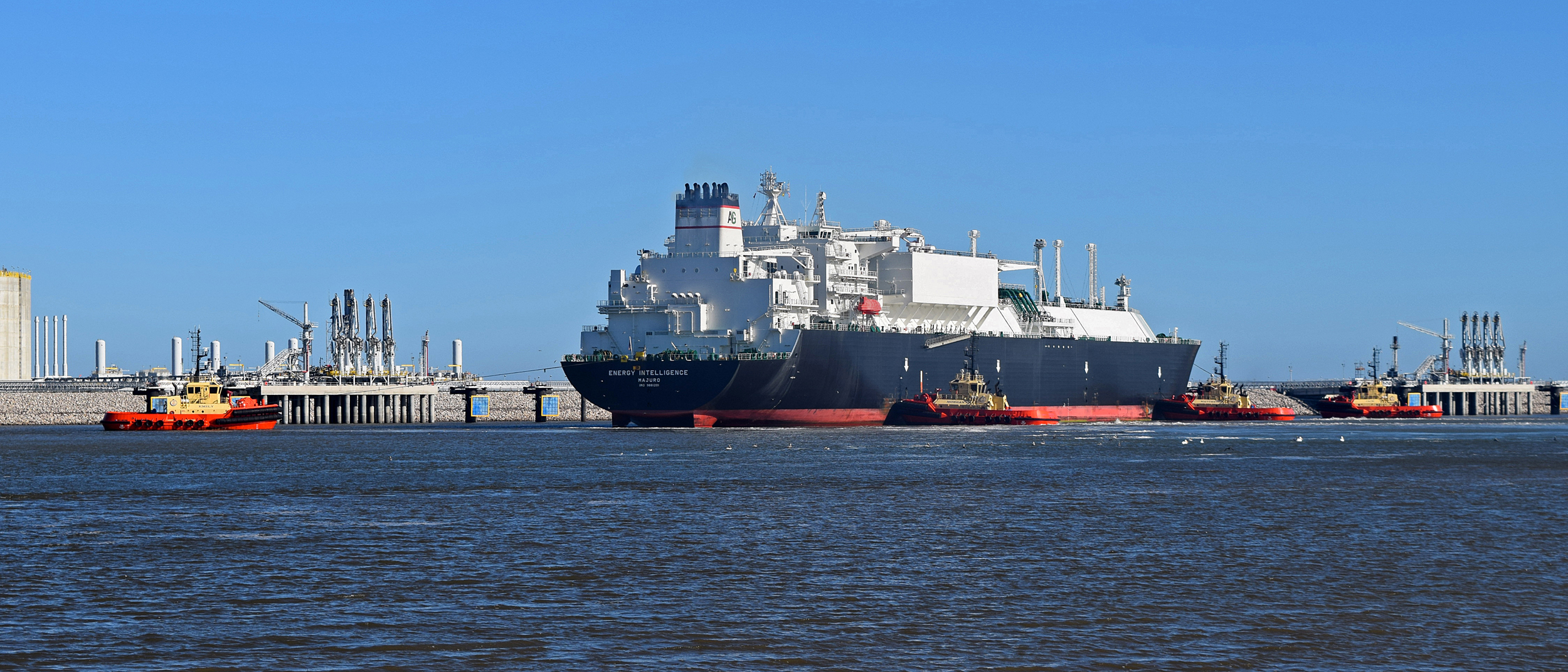
Since more than 40 percent of American electricity is generated from natural gas, that means electric bills are also affected by these fluctuations. This is especially true in states that rely more on this fuel for power, like Pennsylvania, Delaware, Mississippi, Florida and Louisiana.
U.S. LNG exports have increased enormously since 2016, with the growth fueled primarily by the fracking boom. The U.S. is now the world’s largest LNG exporter, ahead of Australia and Qatar. The second Trump administration has made increasing LNG exports a priority: One of President Donald Trump’s first acts of his second term was to reverse the Biden administration’s pause on permitting new LNG export projects. Several new LNG export facilities are scheduled to come online in the next few years, with more planned for the future.
“Last year, for the first time in history, the eight LNG export terminals consumed more gas than all 74 million households that have natural gas utility service,” said Tyson Slocum, director of the energy program at Public Citizen, a nonprofit consumer advocacy organization. Public Citizen calculated that Americans paid $12 billion more for natural gas in the first nine months of 2025 than in the same period in 2024.
In late February, to celebrate the 10th anniversary of the first LNG export from the contiguous U.S., the Department of Energy praised Trump’s leadership to “accelerate export capacity” during his first and second terms. LNG exports “support tens of thousands of high-quality, generational jobs while strengthening prosperity at home and for our allies and trading partners abroad,” the department said. Last week, Energy Secretary Chris Wright approved an export expansion at an LNG facility in Texas.
This story is funded by readers like you.
Our nonprofit newsroom provides award-winning climate coverage free of charge and advertising. We rely on donations from readers like you to keep going. Please donate now to support our work.
Donate NowA group of senators, including Elizabeth Warren and Bernie Sanders, criticized the administration’s LNG policy a day before Wright’s approval, arguing that it was “contributing to rapidly rising utility prices for American consumers.” The senators’ letter to Wright noted that some LNG companies have increased their earnings by millions of dollars in the last year.
The uncertainty caused by war with Iran comes at a time when many Americans are already struggling to pay their utility bills. An unusually cold winter in some parts of the country and the projected demand from data center projects have strained the system. Electricity rates increased by 5 percent nationwide in 2025, and in some states, the increase was much higher. In Pennsylvania, for example, rates rose almost 9 percent.
All told, Pennsylvanians were paying 46 percent more last year compared to 2018.
“We have seen a substantial increase in energy prices that are really squeezing Pennsylvanians across the board,” said Elizabeth Marx, the executive director at the Pennsylvania Utility Law Project, an advocacy group that helps people with their bills. “Families are really hurting.”
For the last three years, Pennsylvania has seen “record” numbers of utility disconnections, she said. “The last time we saw numbers anywhere in that neighborhood was during the Great Recession.”
Marx has long been concerned about the “explosion” of LNG export capacity since 2016 and the role that exports play in higher costs for Pennsylvania households. “LNG is one of the biggest drivers,” she said. “The more we export LNG, the higher our prices here in Pennsylvania go.” This is despite the fact that Pennsylvania is the second-largest producer of natural gas in the country and one of the largest exporters of electricity.
While it’s too soon to know what the long-term impacts of war with Iran will be on U.S. consumers, one winner has already emerged.
“It’s clear that the oil and gas sector in the U.S. is one of the main beneficiaries of the chaos we’re seeing in global energy markets,” Williams-Derry said.
Some LNG facilities are poised to make more money than others; it depends on how their pricing is structured. But for the companies well-positioned to make the most of suddenly rising natural gas prices, “it’s a gold rush,” Williams-Derry said.
“I’ve often described the oil and gas industry’s financial strategy as ‘pray for war,’” he said. “That is how they make money.”
About This Story
Perhaps you noticed: This story, like all the news we publish, is free to read. That’s because Inside Climate News is a 501c3 nonprofit organization. We do not charge a subscription fee, lock our news behind a paywall, or clutter our website with ads. We make our news on climate and the environment freely available to you and anyone who wants it.
That’s not all. We also share our news for free with scores of other media organizations around the country. Many of them can’t afford to do environmental journalism of their own. We’ve built bureaus from coast to coast to report local stories, collaborate with local newsrooms and co-publish articles so that this vital work is shared as widely as possible.
Two of us launched ICN in 2007. Six years later we earned a Pulitzer Prize for National Reporting, and now we run the oldest and largest dedicated climate newsroom in the nation. We tell the story in all its complexity. We hold polluters accountable. We expose environmental injustice. We debunk misinformation. We scrutinize solutions and inspire action.
Donations from readers like you fund every aspect of what we do. If you don’t already, will you support our ongoing work, our reporting on the biggest crisis facing our planet, and help us reach even more readers in more places?
Please take a moment to make a tax-deductible donation. Every one of them makes a difference.
Thank you,

Kiley Bense
Senior Editor
Kiley Bense is a senior editor at Inside Climate News. She was previously the Pennsylvania reporter, covering climate change and the environment with a focus on politics, energy, pollution and public health, and reporting on everything from fracking and steel to plastics, wildlife and extreme weather. Her past work has appeared in the New York Times, the Atlantic, Smithsonian Magazine, the Believer, and Sierra Magazine, and she holds master’s degrees in journalism and creative writing from Columbia University. She is based in Pennsylvania.