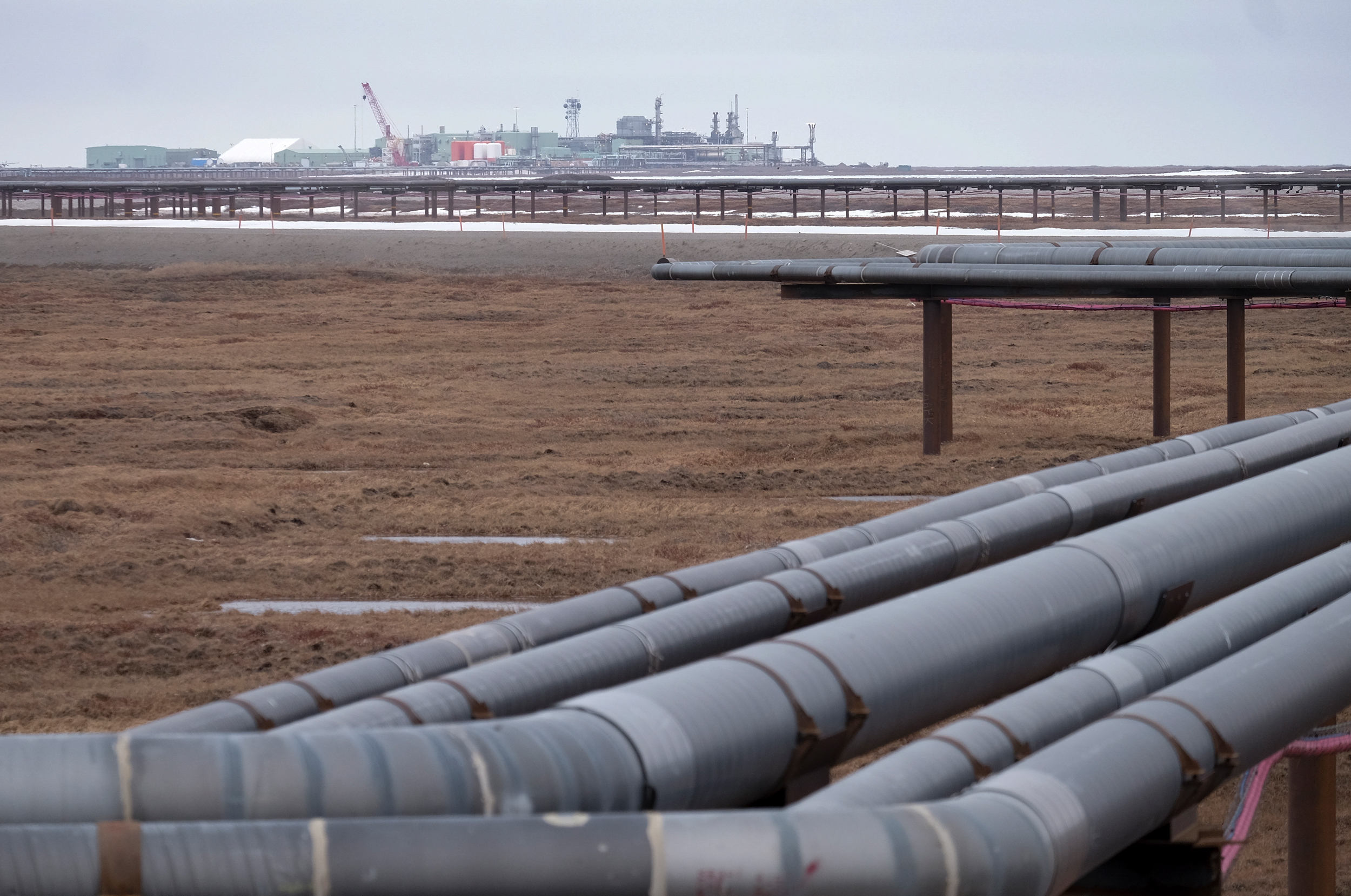


Oil companies won the right to drill on more than 1.3 million acres across the Alaskan Arctic on Wednesday, including areas that local Alaska Native leaders consider critical to wildlife and subsistence hunting and land set aside for conservation.
It was the first lease sale in the region since 2019 and marked the next phase in a sustained push by industry and the Trump administration to expand fossil fuel extraction in the rapidly warming North Slope.
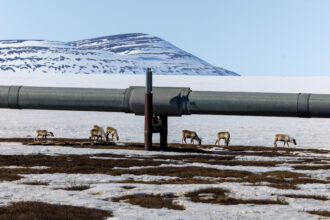
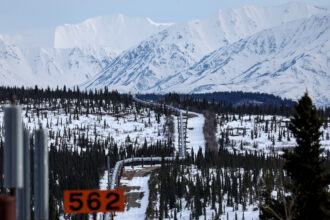
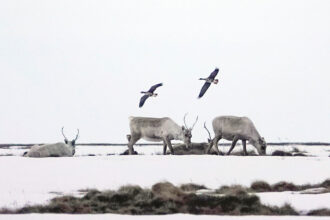
The leases are within the National Petroleum Reserve in Alaska, which, at 23 million acres, is the largest single unit of public land in the country. While Congress set it aside as an emergency oil reserve for the Navy, most of the area is undeveloped and contains some of the nation’s largest stretches of wilderness, supporting migratory birds, caribou, polar bears, Arctic foxes and other species.
Oil companies secured leases within a million-acre tract that the Bureau of Land Management, which administers the reserve, had granted in 2024 as a conservation right of way to local Alaska Native leaders, prohibiting leasing within its boundaries. The Trump administration canceled the right of way in December, but on Monday a federal judge issued a preliminary injunction reinstating the agreement pending the conclusion of a lawsuit challenging the cancellation.
Environmentalists and some Iñuit groups have fought against expanded drilling and filed lawsuits to block the lease sale.
The U.S. Department of the Interior hailed the lease sale as a landmark for the reserve, generating a record $164 million in revenue, half of which will go to the state of Alaska. The sale came as global oil prices have spiked because of disruptions from the U.S. and Israeli war against Iran. It is unclear, however, whether the current situation affected the lease sale, because leases take years to develop.
“The Reserve was created to support our nation’s energy needs, and this successful sale demonstrates what’s possible when we align responsible development with that original purpose,” said Interior Secretary Doug Burgum in a statement. “Revenues from these leases will help bolster local communities, create good‑paying jobs, and ensure that Alaska continues to be a cornerstone of America’s domestic energy production.”
Some of the area’s Alaska Native leaders support oil and gas development, and a pro-drilling group that represents several communities and Native corporations issued a statement saying the region depends on jobs and tax revenues from oil and gas.
The lease sale “proves what we have been saying for years: when there is meaningful policy in place supporting responsible onshore development, industry interest will follow,” said Nagruk Harcharek, president and chief executive of the Voice of the Arctic Iñupiat, in the statement.
But leaders in Nuiqsut, an Alaska Native community that is closest to the drilling and to many leases that were sold, have expressed concerns that oil activity in the area could threaten subsistence resources, especially a caribou herd that residents depend on.
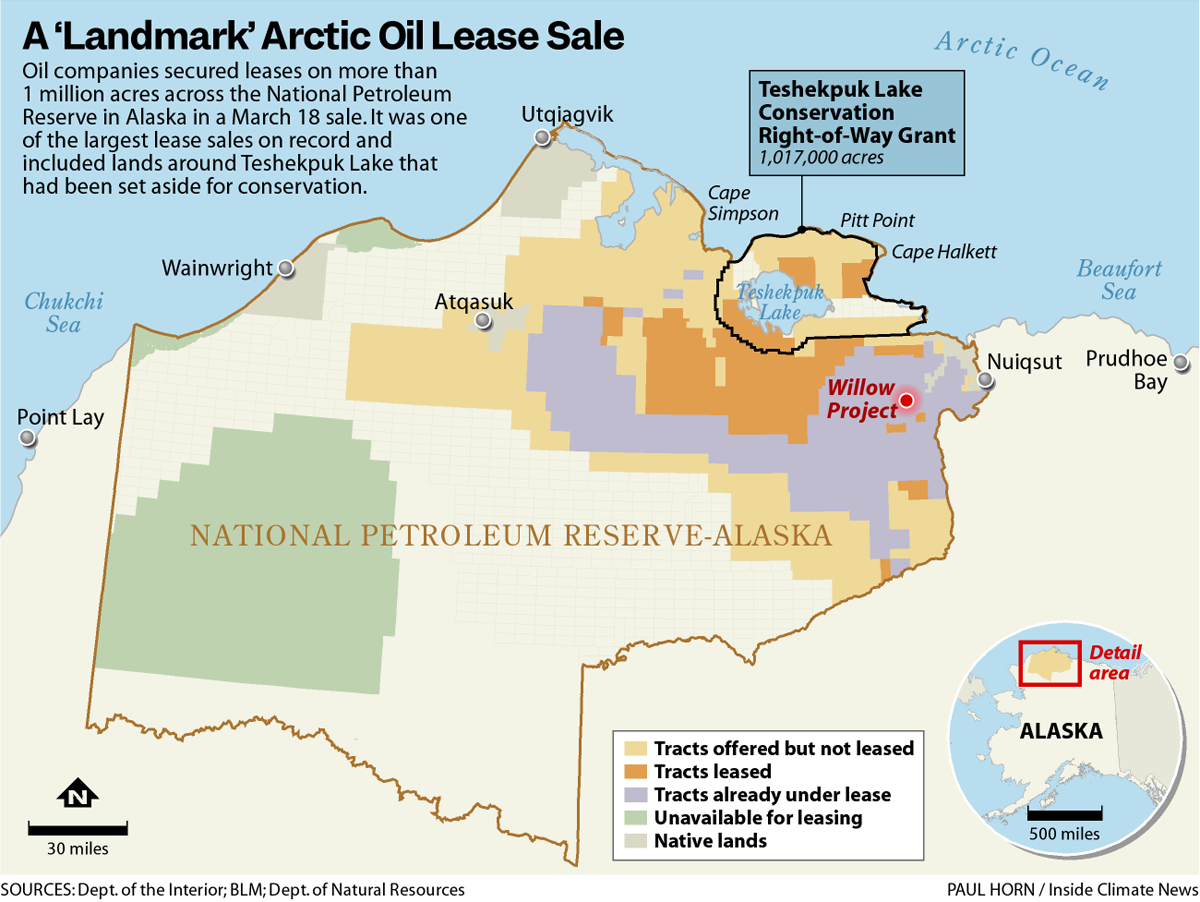
The conservation right of way was tied to the 2023 approval of ConocoPhillips’ Willow oil project, which lies within the caribou herd’s migratory route. The easement was intended to offset some of the harm caused by drilling and to ensure that calving grounds remain undisturbed. It gave control of the easement to the Nuiqsut Trilateral, a group formed of the city and tribal governments and Nuiqsut’s Native corporation.
ConocoPhillips also agreed to shrink the Willow project’s footprint as part of the approval and relinquished leases on its northern and southern edges.
On Wednesday, the oil company secured leases in those areas anew.
The right of way prohibited leasing within its boundaries unless the Trilateral approved, raising the question of whether the lease sale conflicted with the recent judicial order reinstating the easement.
The Interior Department said in a statement that “any lease issuance for tracts within the right of way will be consistent with the court’s order.”
Inside Climate News could not immediately reach any of the members of the Trilateral.
This story is funded by readers like you.
Our nonprofit newsroom provides award-winning climate coverage free of charge and advertising. We rely on donations from readers like you to keep going. Please donate now to support our work.
Donate NowThree companies secured leases that lie within the easement’s boundaries—ExxonMobil, Epoch Oil and Gas and SE Partners, which shares an address with Narwhal Exploration, an oil company that holds leases in the area.
Neither ExxonMobil nor Narwhal immediately responded to a request for comment. Inside Climate News was unable to reach Epoch Oil and Gas.
Rosemary Ahtuangaruak, a former mayor of Nuiqsut and outspoken critic of drilling, said the companies should give back the leases within the easement. Ahtuangaruak, who leads an advocacy group called Grandmothers Growing Goodness that is part of a lawsuit challenging the lease sale, said people in her community are especially concerned about leases sold between the village and Teshekpuk Lake.
Already, drilling for the Willow project has pushed some migrating caribou farther from Nuiqsut, Ahtuangaruak said. ConocoPhillips has also been exploring for oil in the area around the project this winter. In January, an oil rig toppled onto the tundra, spilling thousands of gallons of diesel fuel and hydraulic oil, while it was on its way to drill as part of that exploration program.
“This administration has proven that it’s about pushing business and all of their contracts and not concerned about the environment and the people who live where their actions are going to occur,” Ahtuangaruak said. She called on people elsewhere to stand up against efforts to open drilling, to “give our communities hopes that our life and health and safety are not being left behind in the world’s energy desires.”
The leases are sure to face litigation, and the suit that Ahtuangaruak’s group is party to is still pending.
Kristen Miller, executive director at Alaska Wilderness League, issued a statement after the sale: “The Western Arctic is not a commodity, it is one of the last truly wild places on Earth, home to millions of migrating birds, vast caribou herds, and Indigenous communities whose lives are woven into this land. We will spend every ounce of our energy making sure those leases never become drill pads.”
About This Story
Perhaps you noticed: This story, like all the news we publish, is free to read. That’s because Inside Climate News is a 501c3 nonprofit organization. We do not charge a subscription fee, lock our news behind a paywall, or clutter our website with ads. We make our news on climate and the environment freely available to you and anyone who wants it.
That’s not all. We also share our news for free with scores of other media organizations around the country. Many of them can’t afford to do environmental journalism of their own. We’ve built bureaus from coast to coast to report local stories, collaborate with local newsrooms and co-publish articles so that this vital work is shared as widely as possible.
Two of us launched ICN in 2007. Six years later we earned a Pulitzer Prize for National Reporting, and now we run the oldest and largest dedicated climate newsroom in the nation. We tell the story in all its complexity. We hold polluters accountable. We expose environmental injustice. We debunk misinformation. We scrutinize solutions and inspire action.
Donations from readers like you fund every aspect of what we do. If you don’t already, will you support our ongoing work, our reporting on the biggest crisis facing our planet, and help us reach even more readers in more places?
Please take a moment to make a tax-deductible donation. Every one of them makes a difference.
Thank you,