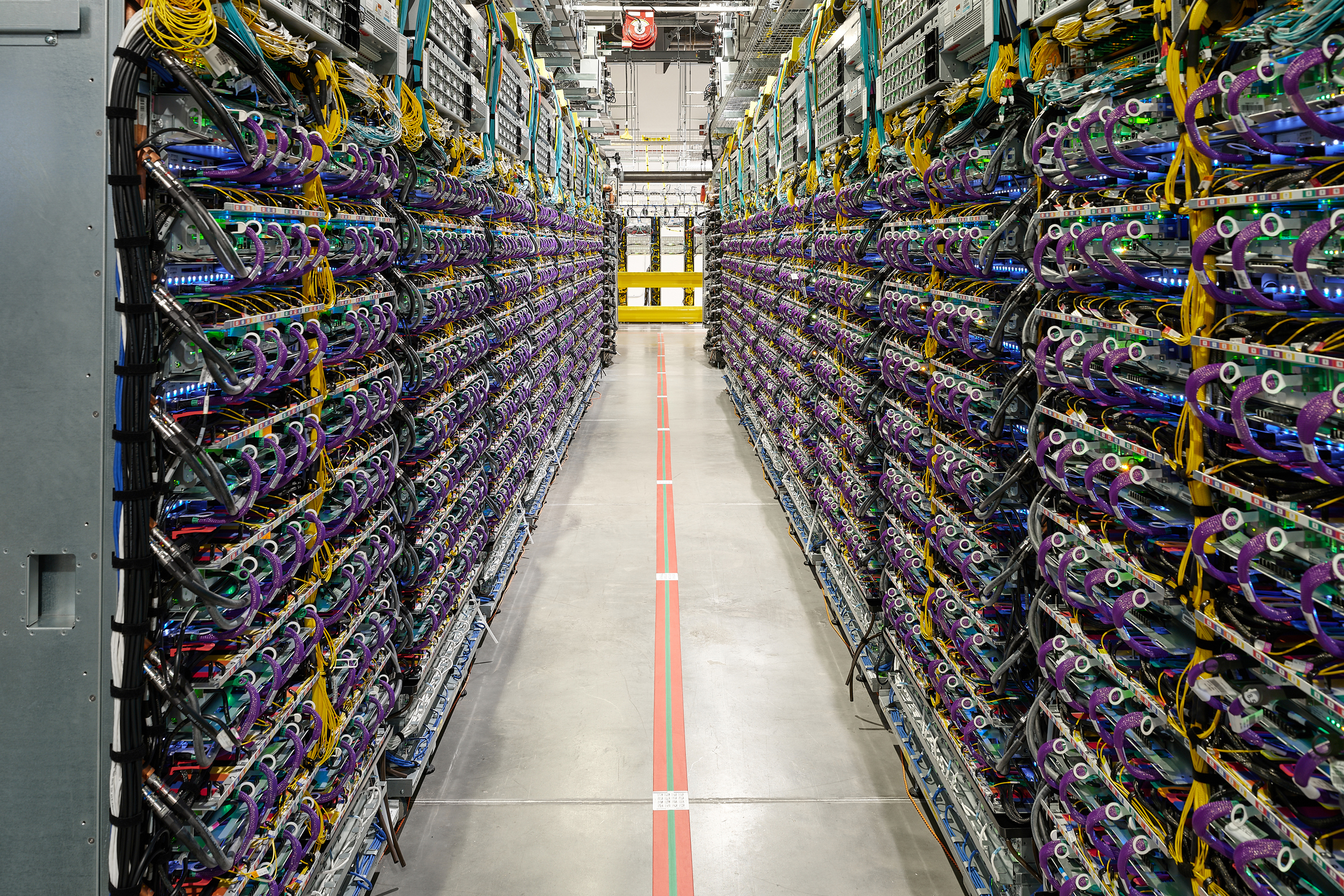


A proposed Google data center in Michigan is notable for its use of renewable energy and its ability to ramp down power use during periods of high demand.
The plan, announced last week, is a partnership with the utility DTE Energy and could serve as a model for cleanly and efficiently providing electricity to a data center.
But there are many examples of data center developers going in the opposite direction, with proposals to build giant gas-fired power plants to go along with giant data centers. The largest of these, also announced last week, is a 9,200-megawatt gas plant in southern Ohio being developed by SoftBank Group Corp. of Japan and its subsidiary SB Energy.
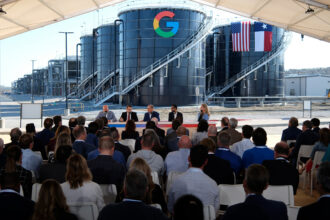
I attended the ribbon cutting in Piketon, Ohio, a campaign-style event with Trump administration officials, loud music and hundreds of local workers in yellow safety vests.
The Google rollout was quiet, revealed in a blog post and a state regulatory filing.
The Ohio and Michigan projects and their hype—or lack thereof—highlight a contrast in choices about whether to emphasize cleaner energy sources or rely on fossil fuels.
“It’s a fork in the road,” said Forest Bradley-Wright, state and utility director for the American Council for an Energy-Efficient Economy, or ACEEE, a research and advocacy group.
He said Google’s announcement is an “important first step” in figuring out how data centers can manage electricity demand.
ACEEE works with data center companies, utilities and regulators to emphasize energy conservation and flexibility. The organization issued a report in February outlining opportunities for financial savings when data centers use cleaner and more efficient approaches rather than building fossil-fuel power plants.
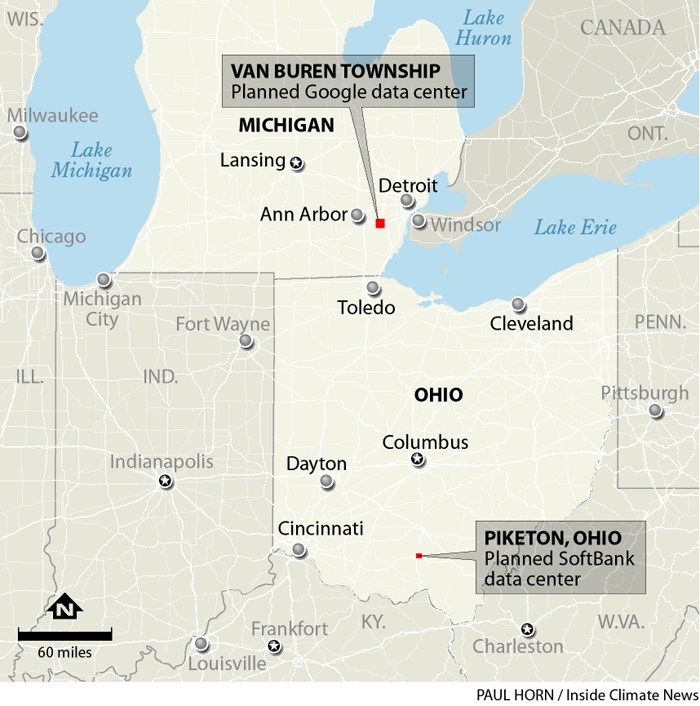
Google is looking at sites in Van Buren Township near Detroit to build a data center with 1,000 megawatts of electricity demand. According to the regulatory filing, DTE is proposing a 20-year contract with Google in which the utility would build 1,600 megawatts of renewable energy projects, 480 megawatts of energy storage and 300 megawatts of “zonal resource credits” to have additional grid capacity available from Midcontinent Independent System Operator, the regional grid manager.
Google said its plan in Michigan and four other projects across the country have a total of 1,000 megawatts of “demand response” at data centers. Demand response is a term for programs in which a grid operator or utility can signal to a customer to ramp down electricity use during periods of high demand.
In addition to DTE’s plan in Michigan, Google said it has demand response agreements with Entergy Arkansas; Indiana Michigan Power, a subsidiary of American Electric Power; Minnesota Power, a subsidiary of Allete Inc.; and the Tennessee Valley Authority.
Bradley-Wright explained that 1,000 megawatts of demand response is a significant number, the “equivalent of avoiding the need to build two to three new gas plants that cost billions of dollars.”
I asked Google for a breakdown of the 1,000 megawatts of demand response by utility territory, and for an estimate of the total capacity of its data centers. A spokeswoman said, “We don’t have those numbers to share.”
To get a sense of how much energy savings are possible, I spoke with Ayse Coskun, a professor at Boston University and chief scientist at Emerald AI, a maker of a software platform that helps manage electricity demand in data centers.
Coskun said a data center can reduce its power demand by up to 25 percent and still perform essential functions. It can reduce demand by even more if needed, she said, but this becomes more challenging for performance after a few hours.
Reducing demand is often a matter of prioritizing the tasks at a data center, allowing some processes to slow down or pause if they aren’t time-sensitive, she said. Another way to reduce power use is to shift some computing functions to other locations when a company has multiple sites across different grid regions.
Google’s initiatives, Coskun said, are “an important step towards a new paradigm when data centers are not just large energy consumers, but they are active participants in power grid management, so they become helpful, they become assets to the grid.”
I should specify that Google is deeply involved in demand-response research and services and has indirect connections to the people I interviewed. The company is listed as a “corporate ally” by ACEEE and some people affiliated with Google are among Emerald AI’s investors. That said, Bradley-Wright and Coskun are not involved with Google’s demand response proposal in Michigan.
On March 20, three days after Google’s Michigan announcement, I went to Piketon, Ohio, a short drive south of my home in Columbus, for the SoftBank groundbreaking.
Secretary of Commerce Howard Lutnick and Secretary of Energy Chris Wright were the main Trump administration officials, joined by Masayoshi Son, founder and CEO of SoftBank Group.
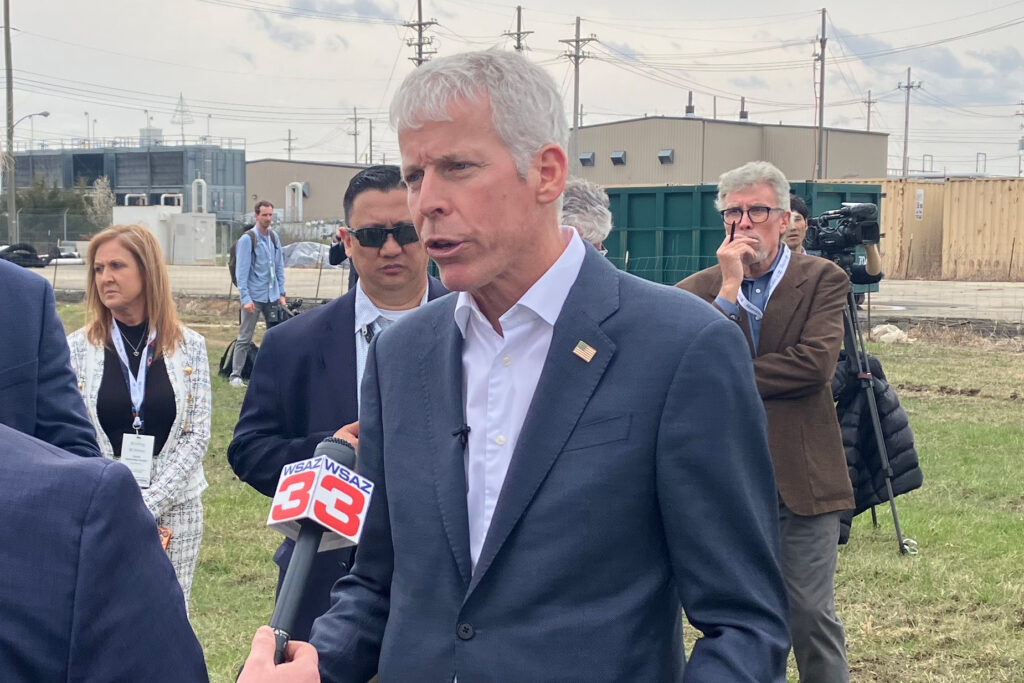
The U.S. Department of Energy and SoftBank announced the project, which is tied to the Trump administration’s tariff negotiations last year with Japan’s government. The Trump administration agreed to reduce tariffs on imports from Japan in exchange for concessions, including a Japanese commitment to invest $550 billion in projects in the United States.
The largest of those projects is the one in Piketon, which the company said is a 9,200-megawatt gas plant that will supply power to a 10,000-megawatt data center. The initiative is called PORTS Technology Campus, and it’s located on federally owned land that houses the Portsmouth Gaseous Diffusion Plant, a facility that enriched uranium for nuclear weapons during the Cold War and ceased operations in 2001. The U.S. government has spent decades remediating the vast site and exploring redevelopment options.
I emailed SoftBank’s SB Energy to ask whether any renewable energy, energy storage or demand response is planned for the Piketon project, but didn’t get an immediate response. The company has experience with developing solar and energy storage projects.
This story is funded by readers like you.
Our nonprofit newsroom provides award-winning climate coverage free of charge and advertising. We rely on donations from readers like you to keep going. Please donate now to support our work.
Donate NowSpeakers onstage described the power plant as the largest in the country and potentially the largest in the world.
“President Trump’s agenda is in this room,” Wright said. “It’s in your hearts. It’s in your souls. It’s in your community to believe in an America that’s greater for our children, for our grandchildren, that has better job opportunities, more affordability, more optimism, more security, more belief in our future. America has to stand up again. We have to believe in ourselves. We have to invest largely and build big things again.”
Bruce Springsteen’s “Born in the USA” played as Wright walked onto the stage and he left to Kid Rock’s “American Rock ‘n Roll.”
One word not said by any speaker was “Iran” at a time when the United States was several weeks into a war with that country, with implications for global and local oil and gas markets.
Building a 9,200-megawatt power plant that runs on natural gas ties the project’s financial future to the availability and market price of gas. Ohio, West Virginia and Pennsylvania have a large supply of gas from the Utica and Marcellus shale formations, but it’s unclear if the region can increase production enough to meet demand from a new wave of power plants and avoid price spikes.
And, this is before considering the environmental and climate harm of burning gas and the possibility of future regulations.
Geopolitical, financial and environmental risks are much lower for projects that minimize reliance on fossil fuels.
“We have better options,” Bradley-Wright said. “At a time when it’s obvious that we need all options on the table, it will be more expensive and a greater risk to put all of our eggs in that one basket.”
Other stories about the energy transition to take note of this week:
US Offshore Wind Had a Week of Wild Ups and Downs: On the same day the Trump administration finalized a deal to pay an offshore wind developer to abandon its plans, the country’s largest offshore wind farm began producing electricity, as Ben Storrow reports for E&E News. The events are both important and represent the full spectrum of good and bad news for offshore wind. The Trump administration agreement with TotalEnergies gives the company $928 million, essentially tied to offshore wind leases it had obtained, and says the company will now use this money to develop a liquified natural gas terminal. Meanwhile, the 2.6-gigawatt Coastal Virginia Offshore Wind project energized the first of its 176 turbines, an indication that offshore wind is moving forward despite opposition from the Trump administration.
Toyota Goes Against the Grain and Increases Investment in US Electric Vehicle Production: Toyota said this week that it will invest an additional $1 billion in Kentucky and Indiana to increase production, including EV production, as Suvrat Kothari reports for InsideEVs. Most of the money will be used at the plant in Georgetown, Kentucky, to manufacture an undisclosed new EV and to expand production of two gasoline models. Toyota’s increase in EV spending is happening at the same time that other large automakers are pulling back in response to hostile policies from the Trump administration.
A Huge Solar Project Grows in California: Developers are looking to build 21 gigawatts of solar power plus batteries in California’s Central Valley, as Jeff St. John reports for Canary Media. The project is on a scale unlike any other in the country, but it’s still just a portion of what the state will need to meet its targets for carbon-free electricity.
Inside Clean Energy is ICN’s weekly bulletin of news and analysis about the energy transition. Send news tips and questions to [email protected].
About This Story
Perhaps you noticed: This story, like all the news we publish, is free to read. That’s because Inside Climate News is a 501c3 nonprofit organization. We do not charge a subscription fee, lock our news behind a paywall, or clutter our website with ads. We make our news on climate and the environment freely available to you and anyone who wants it.
That’s not all. We also share our news for free with scores of other media organizations around the country. Many of them can’t afford to do environmental journalism of their own. We’ve built bureaus from coast to coast to report local stories, collaborate with local newsrooms and co-publish articles so that this vital work is shared as widely as possible.
Two of us launched ICN in 2007. Six years later we earned a Pulitzer Prize for National Reporting, and now we run the oldest and largest dedicated climate newsroom in the nation. We tell the story in all its complexity. We hold polluters accountable. We expose environmental injustice. We debunk misinformation. We scrutinize solutions and inspire action.
Donations from readers like you fund every aspect of what we do. If you don’t already, will you support our ongoing work, our reporting on the biggest crisis facing our planet, and help us reach even more readers in more places?
Please take a moment to make a tax-deductible donation. Every one of them makes a difference.
Thank you,

Dan Gearino
Reporter, Clean Energy
Dan Gearino covers the business and policy of renewable energy and utilities, often with an emphasis on the midwestern United States. He is the main author of ICN’s Inside Clean Energy newsletter. He came to ICN in 2018 after a nine-year tenure at The Columbus Dispatch, where he covered the business of energy. Before that, he covered politics and business in Iowa and in New Hampshire. He grew up in Warren County, Iowa, just south of Des Moines, and lives in Columbus, Ohio.