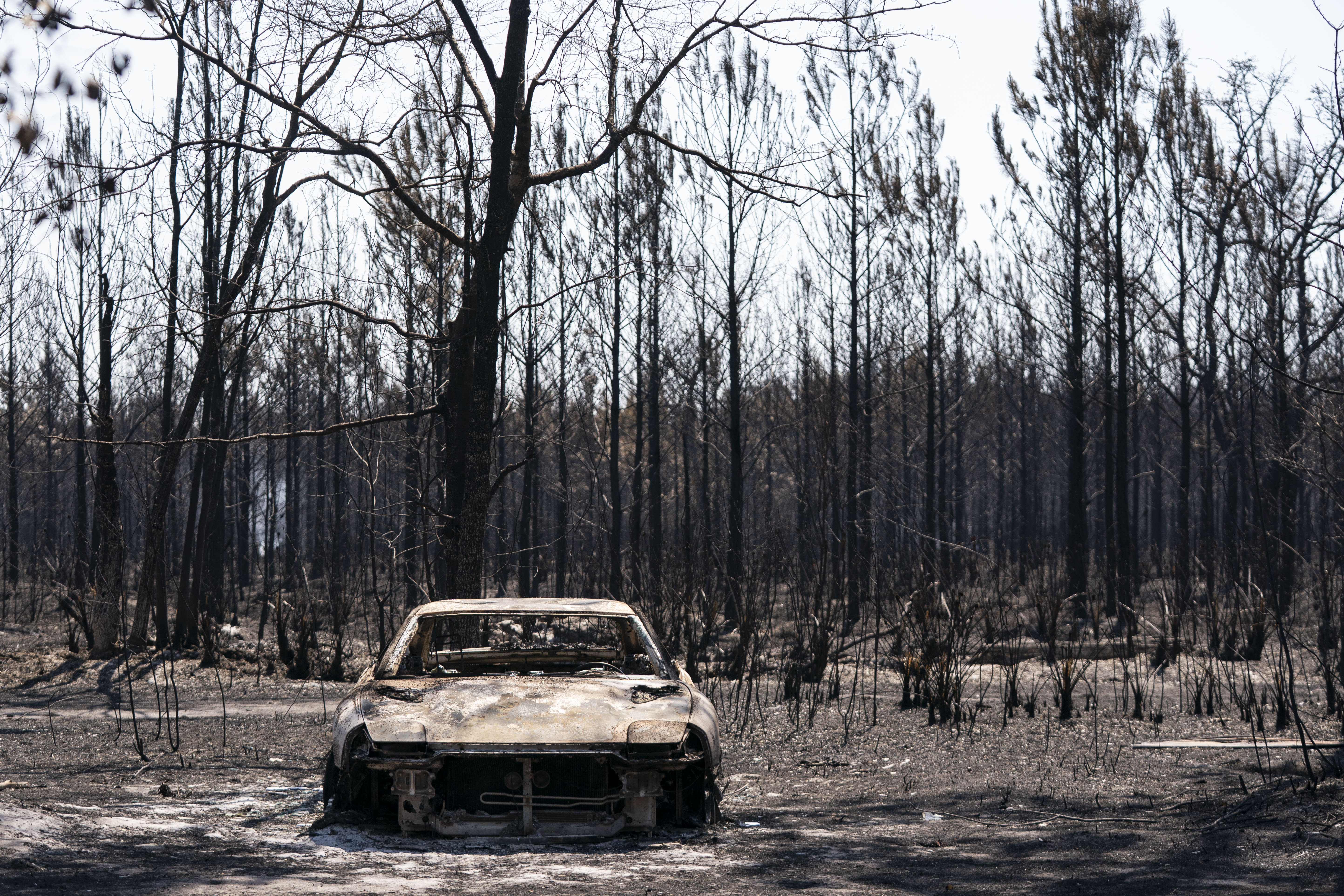


Drought and fire are a dangerous duo. The Southeastern United States is witnessing this firsthand as several major blazes burn tens of thousands of acres across the parched region, destroying homes and prompting evacuations in some areas. Florida and Georgia have been particularly hard hit, and strong winds and unusually low humidity have made it difficult to combat the flames.
With much of the Southeast in a long-standing drought since July 2025, dried-out vegetation has provided ample fuel for wildfires to spread the minute they spark. That can even be something as small as a balloon hitting a power line, which is likely what ignited one of the largest fires tearing through Georgia this month, officials say.
Typically, forest managers ignite planned, controlled fires known as prescribed burns earlier in the season to clear this brittle brush. But this technique was on hold in certain areas amid the drought over concerns that small burns could quickly get out of control. Among this dried-out vegetation are the felled trees and branches left behind by Hurricane Helene in 2024, showing the lingering and compounding risks of climate disasters, experts say.
A Drought-Stricken ‘Tinderbox’
Throughout March, I reported on the widespread drought afflicting the Western U.S., which experts say could ramp up fire risk throughout the summer.
The situation in the Southeast is proof of that risk. Overall, fire is not uncommon during spring in the region, which technically has more blazes than any other part of the country in a given year, though many are small or planned for agriculture or prescribed burns. However, the current spate of wildfires stands out, experts say.
“It’s unusual to see this level of wildfire activity across the Southeast in April. Widespread drought has left fuels extremely dry. Drought is the driving force behind this fire risk,” said AccuWeather meteorologist Brandon Buckingham.
In Florida, fires have burned through nearly 120,000 acres so far this year after the “intensity and extent of the drought ratcheted up starting in January 2026,” according to NASA. Meanwhile, Georgia Gov. Brian Kemp declared a state of emergency last week for much of the southern part of the state, where just two large fires have scorched more than 50,000 acres. One of them has become the most destructive wildfire in the state’s history, CBS News reports.
Despite days of firefighting and a short rain spell over the weekend, the flames are far from fully contained. Smaller, scattered fires burn in other states such as South Carolina and North Carolina, where statewide burn bans remain in place.
“The fact that you have all this vegetation here in North Carolina or across the Southeast U.S., and in a drought, it gets very dry and that becomes material that can become fuel for the wildfires,” Lauren Lowman, an associate professor in environmental engineering at Wake Forest University, told me on Monday.
I spoke to Lowman last March about wildfires in the Southeastern U.S., when she first explained to me the interplay between hurricane damage and wildfire. In September 2024, Hurricane Helene passed through millions of acres of forestland in Florida, North Carolina and Georgia, leaving a graveyard of downed trees that dried out and provided ample kindling for wildfires. Two years later, much of the wood debris remains in parts of the forest—as does the fire risk.
“There’s a ton of old Hurricane Helene debris down in the woods,” Seth Hawkins, a Georgia Forestry Commission spokesperson, told the Current GA. “It’s lying around, and it’s just a tinderbox out there.”
Vegetation Whiplash
As climate change accelerates, droughts in the Southeastern U.S. are expected to become more common, research shows. These warming and increasingly dry conditions “could reduce the window of time each year when forest managers can safely implement prescribed fire,” according to a 2025 report by the U.S. Forest Service.
Shifts from severe rain to drought can lead to rapid swings in extremes known as “weather whiplash.” This dynamic, in turn, can fuel a response from plants on the ground—what Lowman calls “vegetation whiplash.”
“You’ll get more plants growing after these hurricanes, and a lot of water, and so they become lusher and greener,” Lowman said. “And if that’s followed by an extreme drought, and, you know, conditions dry out, and then you’re left with even more wildfire fuel [and] potential to burn afterwards.”
At the same time, people are increasingly moving closer to this vegetation at the wildland-urban interface, where homes start to overlap with undeveloped land and forests. Given that humans cause the vast majority of wildland fires in the U.S. (remember the balloon?), their presence increases the likelihood of ignitions.
As the Southeast contends with wildfires raging through the region, communities out West are preparing for their own fire season after an historic snow drought. Though it’s difficult to flesh out the global warming connection with a single fire season, research shows it’s clear that compounding climate risks are setting the stage for more frequent and severe wildfires to burn in many areas.
“That’s the thing that stands out when you’re thinking about climate change, is just seeing year after year, or day after day, in some cases, records being broken,” Lowman said. “If you’re going to say, like, what’s normal? It’s not normal to see records broken consistently.”
More Top Climate News
A recent UN report stressed that extreme heat is threatening global food systems, and current emissions reductions and adaptation measures aren’t happening fast enough to prevent it. The report outlines the myriad ways high temperatures are decimating crops—from sugarcane in Brazil to raspberries in the U.S. Pacific Northwest—but largely overlooks the impact of heat on the agricultural workforce, Ayurella Horn-Muller reports for Grist.
“The workers are present in the diagnosis, but they’re largely absent in the prescription,” Naia Ormaza Zulueta, a postdoctoral researcher at the University of British Columbia, told Grist. “It’s a little sad, to be honest with you. It almost feels like the human dimension is missing, and everything that comes with it.”
A new study found that nearly 4.4 million New York City residents live in areas that are at risk of “extreme” flood damage, Adam Kovac reports for Scientific American. While the city has the largest flood-vulnerable population in the U.S., the researchers found that New Orleans has the greatest proportion, with nearly every resident at risk of some kind of flooding. Both cities share a common theme: The populations most under threat are part of marginalized communities and living below the poverty line.
Some good news: A critically endangered Sumatran orangutan in Indonesia was filmed for the first time using a rope bridge to cross a forest, Isaaq Tomkins reports for The Guardian. While this may not seem like that big of a deal, it certainly is to local conservationists in the area who installed the bridge to help animals remain connected across forests fragmented by rampant development and deforestation. They have been waiting to spot the animal crossing for around two years.
Postcard From … North Carolina
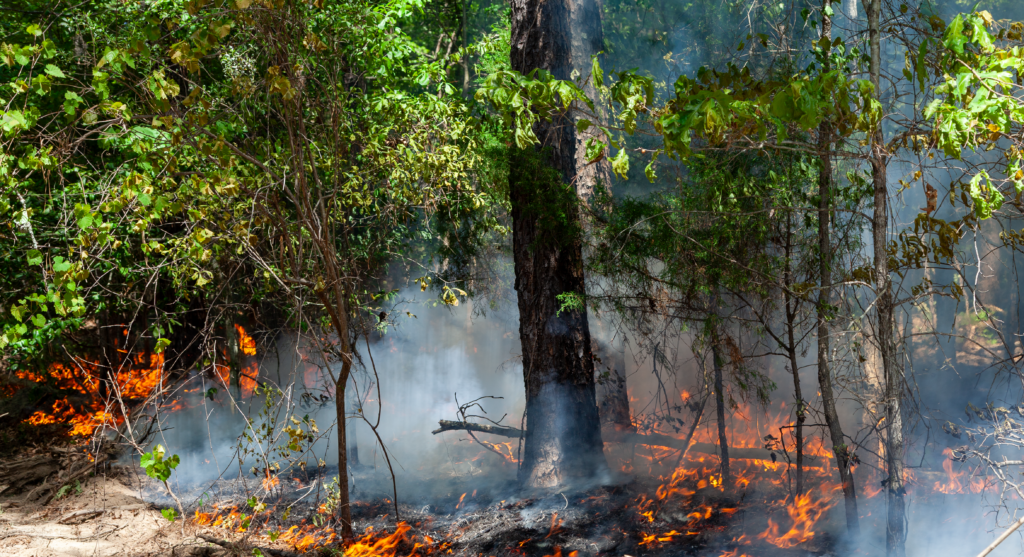
This installment of “Postcards From” is courtesy of ICN’s North Carolina reporter Lisa Sorg, who recently witnessed a fire firsthand.
“On an unseasonably hot day in late April, the sweet scent of honeysuckle segued to the stinging smell of smoke on the White Oak Greenway in Cary, N.C.,” Lisa said. “Fire lit up a patch of woods. The charred ground radiated heat. Stiff winds blew ash in the air, and with every breath, my lungs burned. This fire was just one of the 1,030 that have broken out in North Carolina this month, as the state’s historic drought has deepened. It rained three days later, but the quarter-inch barely wet the topsoil.”
About This Story
Perhaps you noticed: This story, like all the news we publish, is free to read. That’s because Inside Climate News is a 501c3 nonprofit organization. We do not charge a subscription fee, lock our news behind a paywall, or clutter our website with ads. We make our news on climate and the environment freely available to you and anyone who wants it.
That’s not all. We also share our news for free with scores of other media organizations around the country. Many of them can’t afford to do environmental journalism of their own. We’ve built bureaus from coast to coast to report local stories, collaborate with local newsrooms and co-publish articles so that this vital work is shared as widely as possible.
Two of us launched ICN in 2007. Six years later we earned a Pulitzer Prize for National Reporting, and now we run the oldest and largest dedicated climate newsroom in the nation. We tell the story in all its complexity. We hold polluters accountable. We expose environmental injustice. We debunk misinformation. We scrutinize solutions and inspire action.
Donations from readers like you fund every aspect of what we do. If you don’t already, will you support our ongoing work, our reporting on the biggest crisis facing our planet, and help us reach even more readers in more places?
Please take a moment to make a tax-deductible donation. Every one of them makes a difference.
Thank you,

Kiley Price
Reporter
Kiley Price is a reporter at Inside Climate News, with a particular interest in wildlife, ocean health, food systems and climate change. She writes ICN’s “Today’s Climate” newsletter, which covers the most pressing environmental news each week.
She earned her master’s degree in science journalism at New York University, and her bachelor’s degree in biology at Wake Forest University. Her work has appeared in National Geographic, Time, Scientific American and more. She is a former Pulitzer Reporting Fellow, during which she spent a month in Thailand covering the intersection between Buddhism and the country’s environmental movement.