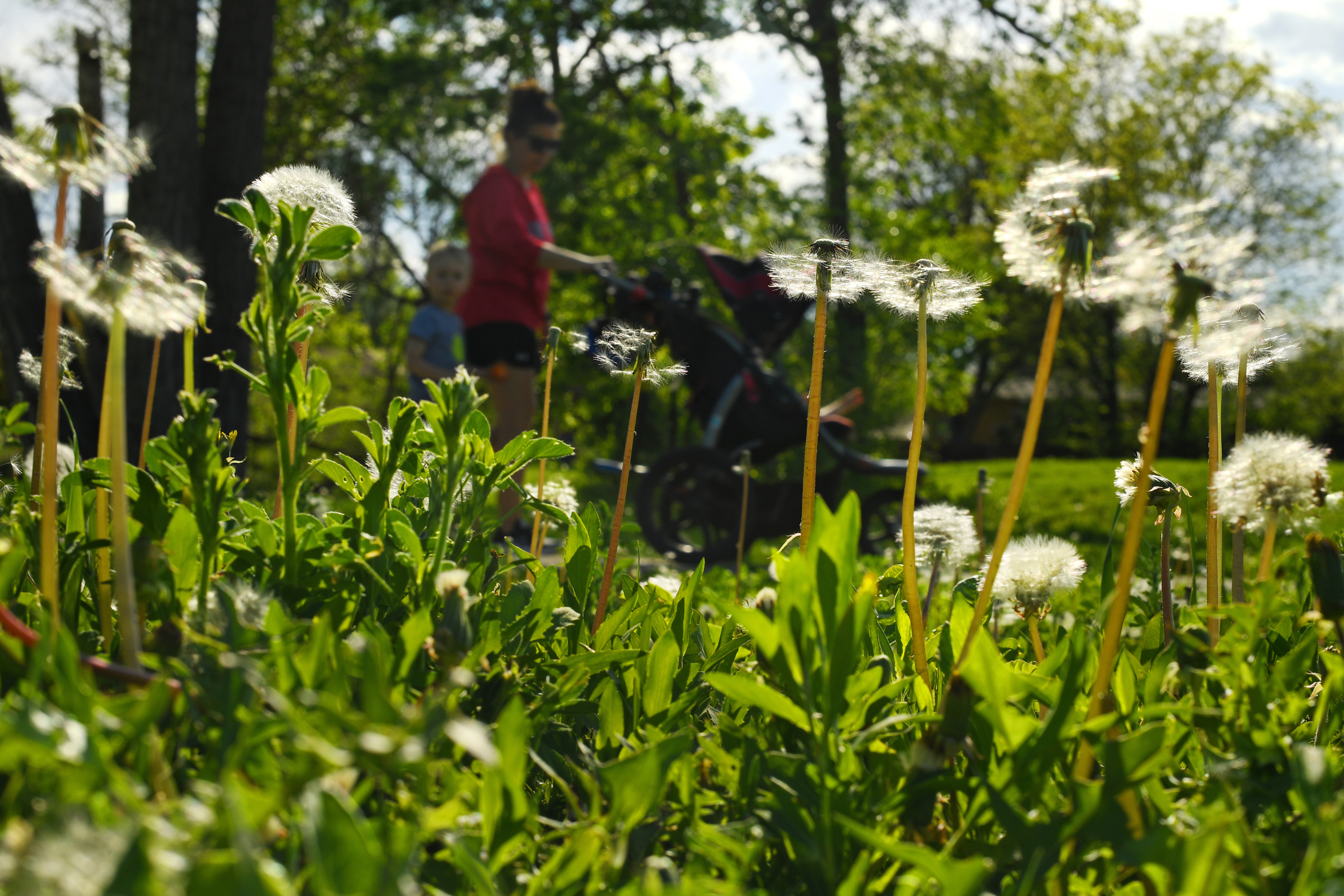


It’s not in your head.
Climate change is contributing to longer and more severe pollen seasons across the Northern Hemisphere. Dr. Neelima Tummala, an ear, nose and throat doctor at NYU Langone Health, said her patients tell her every year that their allergies are the worst they’ve ever been—and they might be right.
About a quarter of U.S. adults and 1 in 5 children have seasonal allergies. For those millions of Americans, spring weather brings sniffles, itchy eyes, asthma exacerbation and other miseries, with effects ranging from mild symptoms to serious medical emergencies.
Now, rising temperatures and carbon dioxide pollution are contributing to worsened pollen seasons across the country. Climate-change-driven heat waves, air pollution and natural disasters can exacerbate allergy symptoms, too.
Although experts say it’s too early to fully tell how the 2026 pollen season will compare to past years, the trend over recent decades is clear, and evidence so far points to another tough year for the allergy-prone.
According to the USA National Phenology Network—a group focused on data and research concerning the seasonal patterns of plants and animals—spring bloom arrived early across much of the country.
AccuWeather meteorologists say this year’s trends fit into the overall pattern of an extending allergy season due to climate change.
They predict high tree pollen levels in the Ohio River Valley and parts of the Pacific Northwest this spring, and say the Northern Plains and the Great Lakes could see early spikes in grass pollen in June and July, due to a combination of high rainfall and warmer weather. The Rockies can expect an intense weed pollen season, while New England and parts of the Gulf South might see lower than usual tree pollen levels, due to a cooler spring and less rain, they said.
Climate Change and Pollen
As global warming brings shorter winters and earlier thaws, trees start flowering—and therefore producing pollen—earlier in the spring.
A 2021 study found that human-caused climate change is worsening North American pollen seasons. And Climate Central found that between 1970 and 2025, the “freeze-free growing season” lengthened in the lion’s share of 198 U.S. cities the group analyzed, with an average increase of 21 days. The Northwest and Southwest saw the largest average increases.
“It’s the same symptoms, just more intense.”
— Moshe Ben-Shoshan, Montreal Children’s Hospital
High levels of carbon dioxide also boost pollen production directly, and could amp it up as much as 200 percent by the end of the century, according to a 2022 study published in Nature Communications.
Pollen counts are rising globally, but are particularly well studied across North America and northern Europe, said Moshe Ben-Shoshan, a pediatric allergist at the Montreal Children’s Hospital.
Some of Ben-Shoshan’s patients are experiencing stronger symptoms than they have in the past, and they can’t control them with treatments like antihistamines or nasal sprays that used to work.
“It’s the same symptoms, just more intense,” he said.
As climate change delays the first winter frosts across much of North America, summer ragweed also keeps flowering longer, extending the latter part of pollen season into the fall, said David Wees, a faculty lecturer in horticulture at McGill University in Montreal.
This story is funded by readers like you.
Our nonprofit newsroom provides award-winning climate coverage free of charge and advertising. We rely on donations from readers like you to keep going. Please donate now to support our work.
Donate NowWees himself suffers from seasonal allergies, and he’s noticed them starting earlier and lasting longer.
“There’s a couple birch trees outside my office,” he said. “I know it because my nose feels stuffy and my eyes feel itchy.”
Pollen isn’t the only allergen impacted by climate change. Increased humidity, heat and flooding also create ideal conditions for mold to flourish in places where it was previously rare.
That can cause mold allergies to flare up, especially in the aftermath of climate-driven disasters like hurricanes, or for patients living in older buildings, basement units or other homes without proper ventilation, Tummala said.
Pollen Piles On
For many people, seasonal allergies are mainly a nuisance: itchy eyes, runny noses and a seemingly never-ending cold. But pollen also messes with sleep, ups the risk of sinus infections, causes people to miss school and work and can pose more serious dangers. A 2024 study based in Texas found that it can account for a significant portion of emergency department visits for asthma attacks during periods of high pollen counts.

People with allergies are also sensitive to other respiratory triggers, such as heat waves and increased air pollution, Tummala said.
On days with heavy wildfire smoke from Canada, Tummala said her patients experience the miserable effects of multiple respiratory stressors. During one such period last summer, a patient told her they were afraid to go outside.
“That’s just really sad,” Tummala said. “That’s not how you should live your life.”
Drought is another climate-intensified problem. Rain typically washes pollen out of the air. Without it, the fine powder can blow around for weeks without relief, Wees said.
For Tummala, the connection between seasonal allergies and growing climate hazards further illustrates the already pressing need for action to mitigate global warming.
“It’s a modifiable risk factor,” she said. “Climate change is something we can do something about.”
About This Story
Perhaps you noticed: This story, like all the news we publish, is free to read. That’s because Inside Climate News is a 501c3 nonprofit organization. We do not charge a subscription fee, lock our news behind a paywall, or clutter our website with ads. We make our news on climate and the environment freely available to you and anyone who wants it.
That’s not all. We also share our news for free with scores of other media organizations around the country. Many of them can’t afford to do environmental journalism of their own. We’ve built bureaus from coast to coast to report local stories, collaborate with local newsrooms and co-publish articles so that this vital work is shared as widely as possible.
Two of us launched ICN in 2007. Six years later we earned a Pulitzer Prize for National Reporting, and now we run the oldest and largest dedicated climate newsroom in the nation. We tell the story in all its complexity. We hold polluters accountable. We expose environmental injustice. We debunk misinformation. We scrutinize solutions and inspire action.
Donations from readers like you fund every aspect of what we do. If you don’t already, will you support our ongoing work, our reporting on the biggest crisis facing our planet, and help us reach even more readers in more places?
Please take a moment to make a tax-deductible donation. Every one of them makes a difference.
Thank you,

Keerti Gopal
Reporter, Health and Justice
Keerti Gopal covers intersections between climate change, public health and environmental justice at Inside Climate News. Previously, she covered climate activism and movement repression. She is a National Geographic Explorer and has received fellowships from Fulbright, the Solutions Journalism Network, The Lever, and the National Press Foundation.