

DES MOINES, Iowa—In a press conference at the state capitol on Friday, Gov. Kim Reynolds announced a “comprehensive legislative package” that will boost funding for utilities struggling to meet federal drinking water standards and combat high nitrate pollution from agriculture.
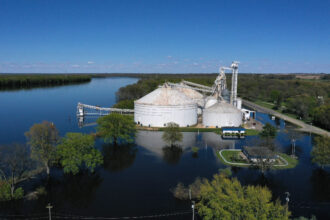
The plan would have the state spend more than $100 million on water treatment infrastructure over the next decade, including a one-time $25 million investment to expand the Central Iowa Water Works nitrate removal facility, which serves more than 600,000 residents in the state’s largest metropolitan area.
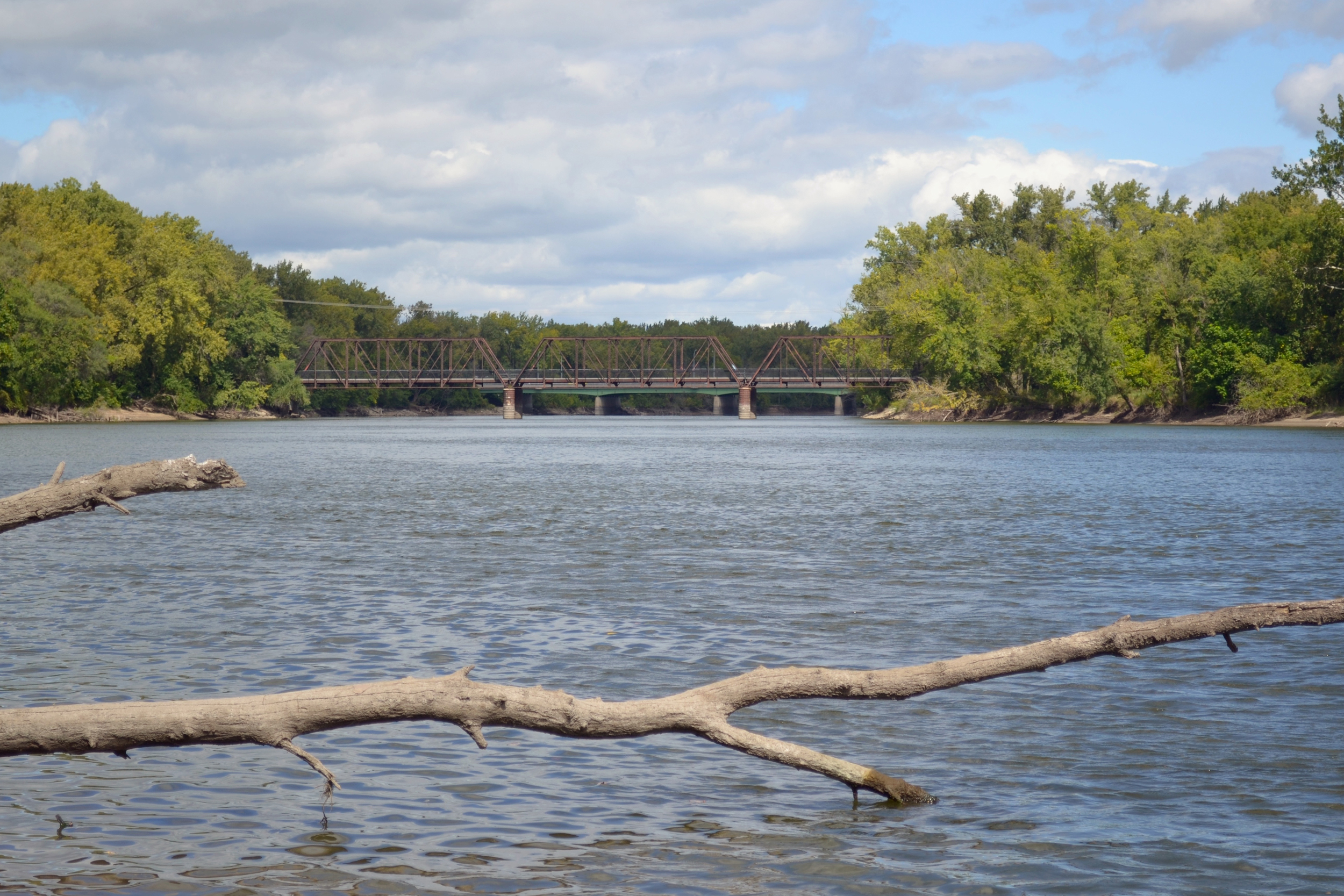
The state-of-the-art removal facility has operated for more than 100 days in 2026 so far, as the Des Moines and Raccoon rivers reach near-record levels of nitrates that exceed the U.S. Environmental Protection Agency’s legal limit of 10 milligrams per liter. Research has linked long-term exposure to nitrates in drinking water, even at low levels, to various cancers and serious health risks for infants.
And while nitrate contamination of surface water is not limited to central Iowa, many of the state’s smaller communities lack the infrastructure to remove the pollution.
Since the start of 2024, public water supplies for at least seven communities have exceeded the EPA’s maximum contaminant level, according to documents maintained by the Iowa Department of Natural Resources.
The water package announced by Reynolds, a Republican, allocates $76 million to grant and loan programs to help Iowa’s rural communities upgrade their water treatment facilities.
The investments in water treatment systems “shift money to the most urgent needs and most effective programs,” Reynolds said. “Water quality isn’t a farm issue, it isn’t a city issue, and it isn’t a political issue, but it absolutely is non-negotiable.”
Critics say that Reynolds’ plan does little to address the sources of pollution in waterways.
The Central Iowa Source Water Resource Assessment, a two-year-long scientific study released last summer, attributed 80 percent of the nitrogen in central Iowa’s watersheds to agricultural activity.
Large amounts of synthetic fertilizer and hog and poultry manure are applied to Iowa cropland to fuel corn and soybean growth, and any phosphorus and nitrogen not taken up by crops can leach out of the soil and into waterways to fuel algal and bacterial blooms or yield dangerously high nitrate levels.
Reynolds’ water quality proposal “ignores the root causes of pollution” and is “too little too late,” said Jennifer Breon, a senior organizer in Iowa for Food & Water Action, in a statement released by the political and lobbying arm of the environmental watchdog group Food & Water Watch.
The state will boost funding for water conservation efforts on farms in the Des Moines watershed, Iowa Agriculture Secretary Mike Naig announced at Friday’s press conference. The Iowa Department of Agriculture and Land Stewardship will receive an additional $52 million to expand the adoption of cover crops, no-till and strip-till farming and nitrate-reducing wetlands in the region.
But all of that is voluntary.
“Binding regulations are the only way to ensure water quality improvements, and they are extremely popular,” said Breon, referencing polling led by Food & Water Action in February, which reported that 79 percent of Iowa voters support mandatory requirements for industrial agriculture to reduce pollution.
Advocates also argued that Reynolds’ decision to exclude the Iowa Water Quality Information System from the funding proposal undermines critical water monitoring efforts. The network of more than 60 continuous water quality monitors, operated by the University of Iowa, lost state funding in 2023.
Citizens and environmental organizations have lobbied the Legislature to reinstate permanent funding for the network this year, stressing that it plays a crucial role in providing Iowans with real-time water quality information.
Reynolds’ plan instead allocates an additional $500,000 each year to the state Department of Natural Resources’ ambient water quality monitoring program. That program conducts sampling once a month at 60 stream sites across the state.
The DNR program cannot provide minute-to-minute data in the way that the University of Iowa sensor network does, Colleen Fowle, director of the Iowa Environmental Council’s water program, told Iowa Farmers Union members in March.
Since 2023, the network has relied on grant funding that is set to expire at the end of July. The loss of the network would be a massive blow to a state struggling to provide its residents with clean water, said Fowle.
In a statement released by the Iowa Environmental Council, which describes Reynolds’ package as a “small first step,” Fowle also noted that the proposal emphasizes funding for central Iowa, while many of the communities facing the highest year-round nitrate levels fall outside that region.
“Nitrate contamination is a statewide crisis,” Fowle said. “And a statewide crisis demands a statewide solution.”
About This Story
Perhaps you noticed: This story, like all the news we publish, is free to read. That’s because Inside Climate News is a 501c3 nonprofit organization. We do not charge a subscription fee, lock our news behind a paywall, or clutter our website with ads. We make our news on climate and the environment freely available to you and anyone who wants it.
That’s not all. We also share our news for free with scores of other media organizations around the country. Many of them can’t afford to do environmental journalism of their own. We’ve built bureaus from coast to coast to report local stories, collaborate with local newsrooms and co-publish articles so that this vital work is shared as widely as possible.
Two of us launched ICN in 2007. Six years later we earned a Pulitzer Prize for National Reporting, and now we run the oldest and largest dedicated climate newsroom in the nation. We tell the story in all its complexity. We hold polluters accountable. We expose environmental injustice. We debunk misinformation. We scrutinize solutions and inspire action.
Donations from readers like you fund every aspect of what we do. If you don’t already, will you support our ongoing work, our reporting on the biggest crisis facing our planet, and help us reach even more readers in more places?
Please take a moment to make a tax-deductible donation. Every one of them makes a difference.
Thank you,

Anika Jane Beamer
Reporter, Iowa
Anika Jane Beamer covers the environment and climate change in Iowa, with a particular focus on water, soil and CAFOs. A lifelong Midwesterner, she writes about changing ecosystems from one of the most transformed landscapes on the continent. She holds a master’s degree in science writing from the Massachusetts Institute of Technology as well as a bachelor’s degree in biology and Spanish from Grinnell College. She is a former Outrider Fellow at Inside Climate News and was named a Taylor-Blakeslee Graduate Fellow by the Council for the Advancement of Science Writing.