

Florida’s gubernatorial race features two candidates with very different views on the environment and climate: One largely supports maintaining the status quo in state policy while the other advocates for renewing a climate change and clean energy strategy in the state.
Both candidates spent time in the House of Representatives before running for the Sunshine State’s top job. Republican Byron Donalds, 48, is running against Democrat David Jolly, 54, to replace Gov. Ron DeSantis, a term-limited Republican. In his two terms as governor, DeSantis dismissed the role of climate change in intensifying hurricanes and flooding and did little to address the emissions exacerbating the problem or hold polluters accountable. He focused his environmental policy instead on the Everglades and water quality.
Donalds, who currently represents the 19th district in southwest Florida, is endorsed by DeSantis and President Donald Trump. If he wins, he would be the first Black governor elected in Florida and first Black Republican governor in the nation, said Aubrey Jewett, associate director of the School of Politics, Security and International Affairs at the University of Central Florida.
“It would be a historic milestone to show how far the state has come,” Jewett said, “from being a Confederate state that left the Union to defend slavery and then had 90 years of Jim Crow laws.”
Jolly represented the 13th district in Pinellas County as a Republican from 2014 to 2017, but changed his party registration and has become a TV analyst and outspoken critic of Trump in the years since. Recent polls show he has a shot at winning in this red state, even though he has raised a fraction of what his opponent has raised. Donalds’ campaign has amassed roughly $141 million, compared with Jolly’s $19 million, according to an Inside Climate News analysis of state campaign finance activity. Neither campaign provided comment for this article.
In Florida, Republicans hold every statewide elected office, control the Legislature and boast 1.5 million more registered voters than Democrats. But for many years Florida was a must-win swing state, opting six times in a row for the prevailing presidential candidate, from Bill Clinton in 1996 to Trump in 2016. For much of the 20th century Democrats ruled the state.
“For Florida voters, if they like what has been happening in the country and in the state under President Trump and under Gov. DeSantis, then a vote for Byron Donalds would be a vote to mostly continue what has been happening. If they think the country and the state are moving in the wrong direction, then this is the opportunity to try to change directions, by voting for David Jolly,” Jewett said.
“If the environment and global warming are a big issue for a Florida voter, it’s a pretty easy and clear distinction between these candidates: Byron Donalds, who doesn’t even think the science is settled on global warming and global climate change. And you’ve got David Jolly, who thinks the science is settled and we ought to do something about it.”
Among the biggest issues in the race are skyrocketing home insurance rates in Florida. Jolly cites climate change and intensifying hurricane risk as part of the problem. To control costs, he has proposed establishing a state-backed hurricane fund that would assume this risk, relieving Floridians of the most expensive aspect of their insurance policies. Insurers would support the fund by paying “taxes they currently avoid,” according to the campaign. Jewett said the concept has been brought up a few times before in the Republican-led Legislature.
Jolly says the fund would not create a “hurricane tax,” as Donalds has claimed in campaign ads. For his part, Donalds, whose professional background is in finance and insurance, has supported state legislative reforms in recent years aimed at addressing a tide of litigation against insurers. Insurers blame the litigation for pushing rates higher, but the reforms have faced criticism from those who believe the changes benefited insurers more than homeowners.
Some argue the reforms emboldened insurance companies to deny more claims, generating more lawsuits. Others say the changes helped attract new insurers to the state, boosting competition and stabilizing rates.
“I haven’t seen him come up with anything new or innovative to bring down property insurance rates,” Jewett said of Donalds. “He seems to be just backing what the governor and what the Legislature have already done.”
This story is funded by readers like you.
Our nonprofit newsroom provides award-winning climate coverage free of charge and advertising. We rely on donations from readers like you to keep going. Please donate now to support our work.
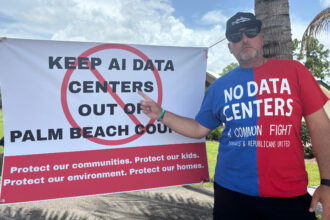
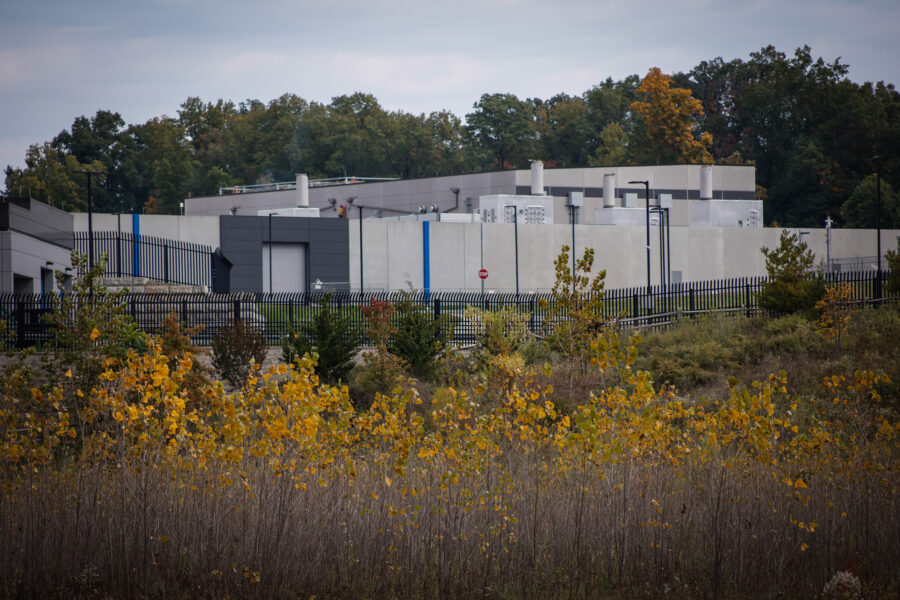
Donate NowThe candidates’ stances also differ on hyperscale data centers, which have generated concerns in Florida as proposals circulate throughout the state. The facilities require exorbitant amounts of water and electricity, even as there is overwhelming scientific consensus about the need to conserve energy and stem the fossil fuel emissions that have accelerated the planet’s warming. Jolly has proposed an immediate moratorium on the data centers, while Donalds supports legislation approved earlier this year aimed at protecting Floridians from their associated electricity costs. Susannah Randolph, director of the Florida chapter of the Sierra Club, which has endorsed Jolly, characterized the issue as a defining one.
“It’s really become the issue where people are deciding on whether or not they are going to support the gubernatorial candidate, from what we have seen. People do not want hyperscale data centers in this state,” she said. “From an environmental perspective, it’s not often we see an environmental issue be so high on the list of what voters are thinking, but it is this year.”
Jolly intends to enhance clean energy use in the state by pushing for more renewable energy and stronger net metering rules, to encourage more rooftop solar. He also aims to fortify vulnerable coasts with resiliency efforts such as raised infrastructure and beach renourishment projects.
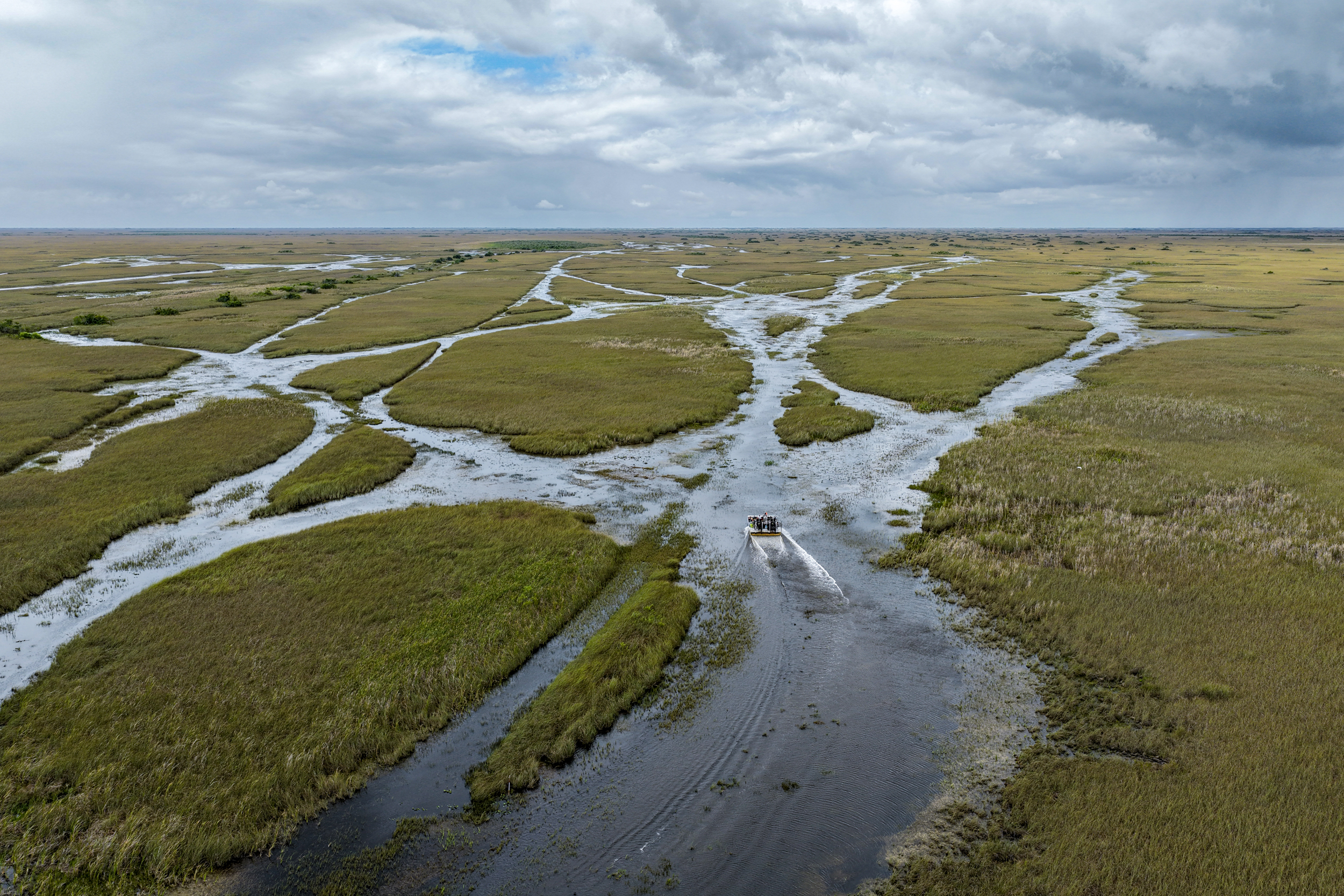
Donalds has vowed to finish the monumental task of Everglades restoration and apply the model to other ailing ecosystems in the state, such as the Indian River Lagoon. He also plans to establish a Florida Coastal Corridor, modeled after the Florida Wildlife Corridor, to protect the state’s coastlines and strengthen them to better withstand damaging storms. Anna Upton, chief executive officer at the Everglades Trust, which has endorsed Donalds, said at a recent campaign event he was the best choice to carry on DeSantis’ legacy.
“Byron Donalds has the relationships with state legislators, members of Congress and the federal administration,” she said, “to ensure that Everglades restoration advances and we get the funding that we need from Washington and Tallahassee.”
About This Story
Perhaps you noticed: This story, like all the news we publish, is free to read. That’s because Inside Climate News is a 501c3 nonprofit organization. We do not charge a subscription fee, lock our news behind a paywall, or clutter our website with ads. We make our news on climate and the environment freely available to you and anyone who wants it.
That’s not all. We also share our news for free with scores of other media organizations around the country. Many of them can’t afford to do environmental journalism of their own. We’ve built bureaus from coast to coast to report local stories, collaborate with local newsrooms and co-publish articles so that this vital work is shared as widely as possible.
Two of us launched ICN in 2007. Six years later we earned a Pulitzer Prize for National Reporting, and now we run the oldest and largest dedicated climate newsroom in the nation. We tell the story in all its complexity. We hold polluters accountable. We expose environmental injustice. We debunk misinformation. We scrutinize solutions and inspire action.
Donations from readers like you fund every aspect of what we do. If you don’t already, will you support our ongoing work, our reporting on the biggest crisis facing our planet, and help us reach even more readers in more places?
Please take a moment to make a tax-deductible donation. Every one of them makes a difference.
Thank you,

Amy Green
Reporter, Florida
Amy Green covers the environment and climate change from Orlando, Florida. She is a mid-career journalist and author whose extensive reporting on the Everglades is featured in the book MOVING WATER, published by Johns Hopkins University Press, and podcast DRAINED, available wherever you get your podcasts. Amy’s work has been recognized with many awards, including a prestigious Edward R. Murrow Award and Public Media Journalists Association award.