

Many of our impact case studies cover ongoing stories that Inside Climate News continues to actively cover. The impact reflected here is current as of publication and may be updated as the situation develops.
Tesla opened the first North American lithium refinery in Robstown, Texas, in January 2026, in an effort to onshore the supply chain of electric vehicle batteries. Elon Musk, the company’s CEO and the richest man in the world, touted the facility near Corpus Christi in Nueces County as the cleanest operation of its kind.
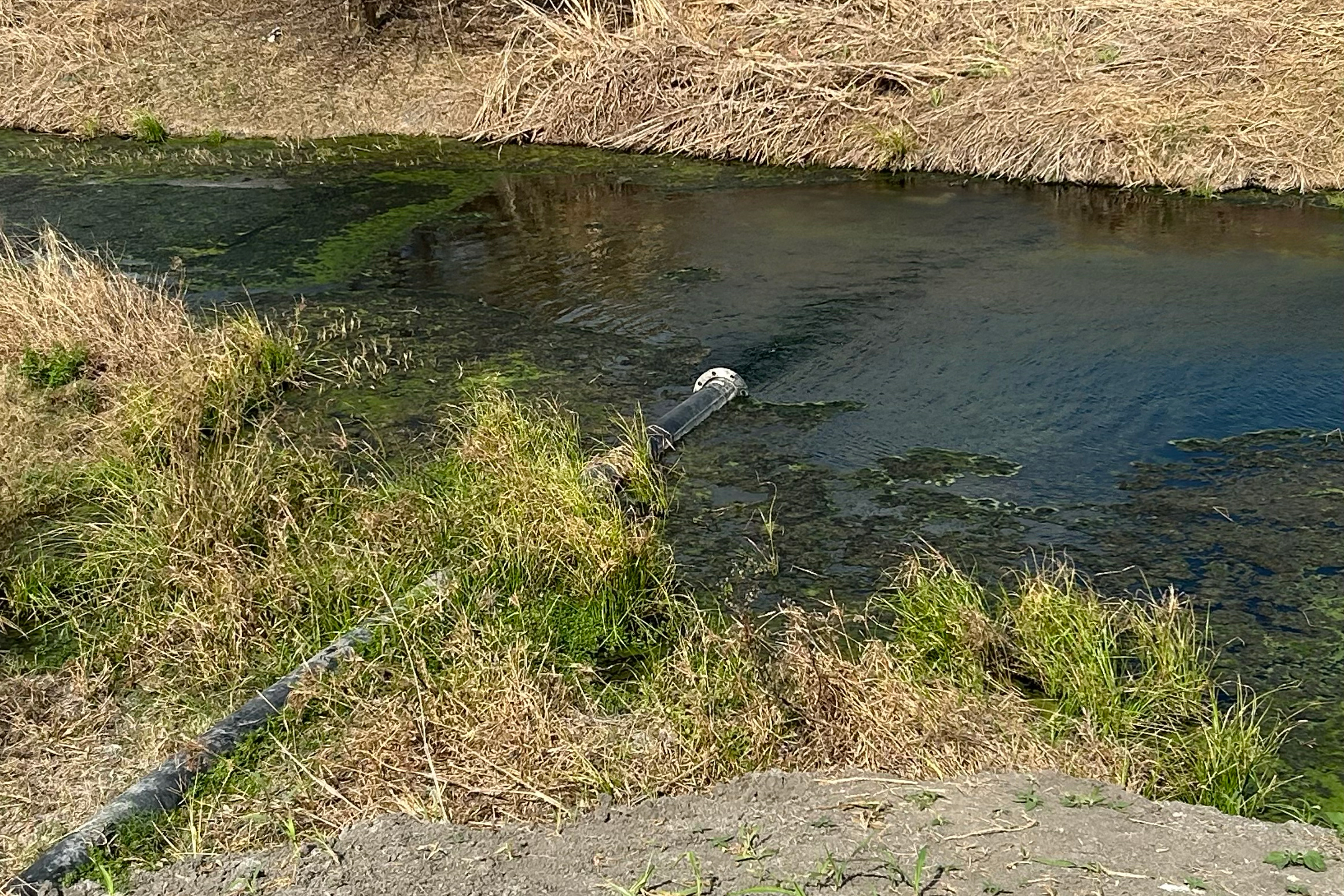
Within the first month of the plant operating, Nueces County drainage district workers found a pipe releasing black liquid from the refinery into a ditch. There was another surprise: Tesla was permitted by the Texas Commission on Environmental Quality (TCEQ) to discharge its refinery wastewater into that ditch, which the drainage district manages.
I first heard about this oddity through a report by KRIS 6 News, a local TV station, and was intrigued. How could the drainage district not know the state had permitted Tesla to dump lithium refinery wastewater in its ditch? What did Tesla’s permit allow? How could the drainage district be adamant the refinery effluent was black, while Tesla reported it was clear liquid?
When I asked the TCEQ how could the drainage district not know about Tesla’s discharge permit, a TCEQ spokesperson told me the agency does not communicate directly with local drainage districts as part of the wastewater permitting process.
After the local drainage district complained to the TCEQ about the black liquid, the state environmental regulator investigated and concluded Tesla wasn’t violating its permit. But then, I received the results of independent water testing commissioned by the local drainage district which revealed two toxic metals, lithium and other contaminants in the ditch water. Tesla and the TCEQ dispute the validity of the third-party lab results.
A water engineer volunteering with the Nueces County Drainage District said certain pollutants in the water sample, like lithium, serve as a fingerprint at a crime scene. In addition, the metals and pollutants found in the lab results aren’t allowed under Tesla’s wastewater permit. The drainage district issued a cease-and-desist request to Tesla on April 15.
The results of the independent testing call into question the efficacy of the state’s oversight measures—and industry’s compliance on environmental rules.
Among the concerns are that the toxic metals and chemicals found in the third-party lab results could erode the drainage ditch’s infrastructure and increase flood risk. The wastewater from Tesla’s lithium refinery is not meant to reach the county’s dwindling drinking supply but it does flow, eventually, into a creek and then to a sensitive bay, which has long served as a fishing destination spot. Eating fish contaminated with lithium and other toxic metals would be a risk for human consumption.
My stories on Tesla’s Robstown facility have been republished by numerous trade publications and news organizations across the state, including The Texas Tribune, San Antonio Express-News, and Chron. I have appeared on Austin’s local TV station, KXAN, to explain the dispute between state and local water regulators and the revelations about Tesla’s permit. Social media posts about ICN’s reporting have racked up thousands of views and comments. On the Inside Climate News website, the first of the two stories in our coverage broke records for pageviews.
My reporting showcases the state environmental regulator’s lenient permitting and investigations for industrial wastewater discharge in ecologically sensitive areas.
Within weeks of my story, a spokesperson with the drainage district said that Tesla agreed to meet with the drainage district to chart a path forward. Local law firms are now looking at whether legal action will be necessary to protect South Texas communities and the state’s natural resources from such industrial developers.
The implications of this story are crucial. Texas relies on the TCEQ to protect public health and natural resources, especially as water reserves dwindle in South Texas and as the United States seeks to bolster renewable energy and electric vehicle supply chains. The revelations about Tesla’s facility come as the largest city in the same county, Corpus Christi, faces a water crisis and prepares to impose a 25 percent restriction on water use from all of its customers at the end of the year unless weather patterns dramatically shift.
Tesla’s original permit request was questioned by residents who submitted formal comments of concern about the environmental and health impacts this refinery could have. TCEQ’s executive director responded then that the wastewater wasn’t expected to contain any residual lithium, chemical runoff or other harmful pollutants.
Through ICN reporting, residents as well as local regulators found out the refinery that marketed itself as the cleanest of its kind contaminated waterways in a county that soon could run out of water.
About This Story
Perhaps you noticed: This story, like all the news we publish, is free to read. That’s because Inside Climate News is a 501c3 nonprofit organization. We do not charge a subscription fee, lock our news behind a paywall, or clutter our website with ads. We make our news on climate and the environment freely available to you and anyone who wants it.
That’s not all. We also share our news for free with scores of other media organizations around the country. Many of them can’t afford to do environmental journalism of their own. We’ve built bureaus from coast to coast to report local stories, collaborate with local newsrooms and co-publish articles so that this vital work is shared as widely as possible.
Two of us launched ICN in 2007. Six years later we earned a Pulitzer Prize for National Reporting, and now we run the oldest and largest dedicated climate newsroom in the nation. We tell the story in all its complexity. We hold polluters accountable. We expose environmental injustice. We debunk misinformation. We scrutinize solutions and inspire action.
Donations from readers like you fund every aspect of what we do. If you don’t already, will you support our ongoing work, our reporting on the biggest crisis facing our planet, and help us reach even more readers in more places?
Please take a moment to make a tax-deductible donation. Every one of them makes a difference.
Thank you,