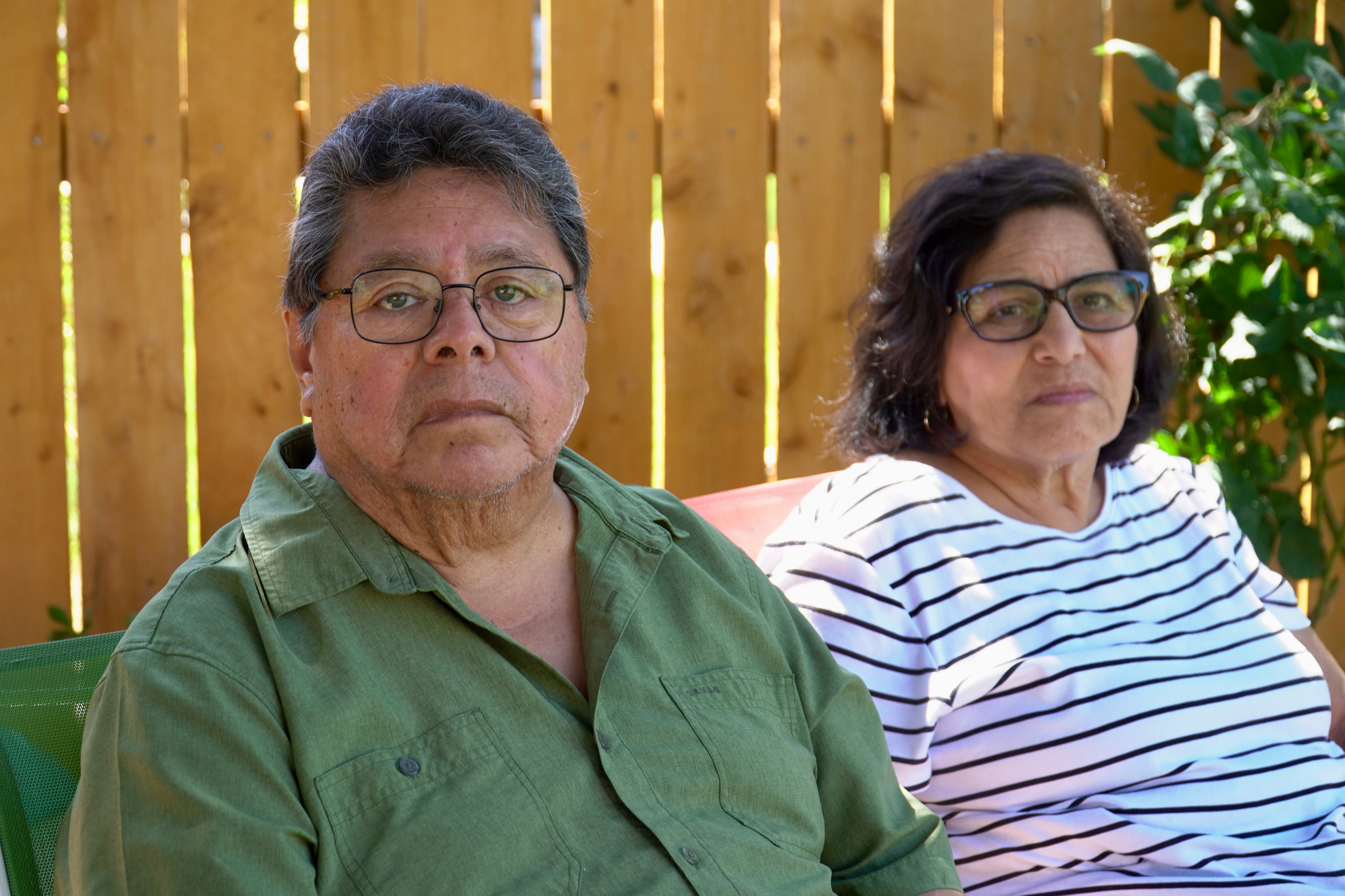


PLANADA, Calif.—David Rodriguez learned to swim in the canals near his childhood home in the 1960s, back when orchards of figs, peaches and almonds encircled his neighborhood. Before the area around the small community of Planada exploded with dairy farms, he trusted the water that came out of his faucets.
“Me and my friends would go out there. No odors, no smells,” Rodriguez, who is 71 and previously worked for Merced City schools, told Inside Climate News from his kitchen table. “I considered this a little piece of heaven before the dairies arrived.”
Families say local waterways are not a source of joy anymore, and blistering hot summer days can be hellish, as foul smells escape so steadily from local farms that people can’t open their windows to cool off.
Today, the Leadership Counsel for Justice & Accountability, an advocacy group, says families in the region are in years-long conflict with dairies, and each herd represents another battle front.
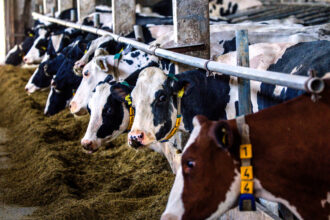
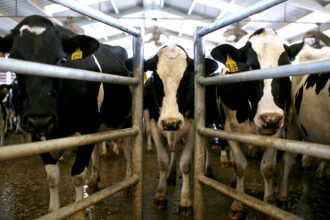
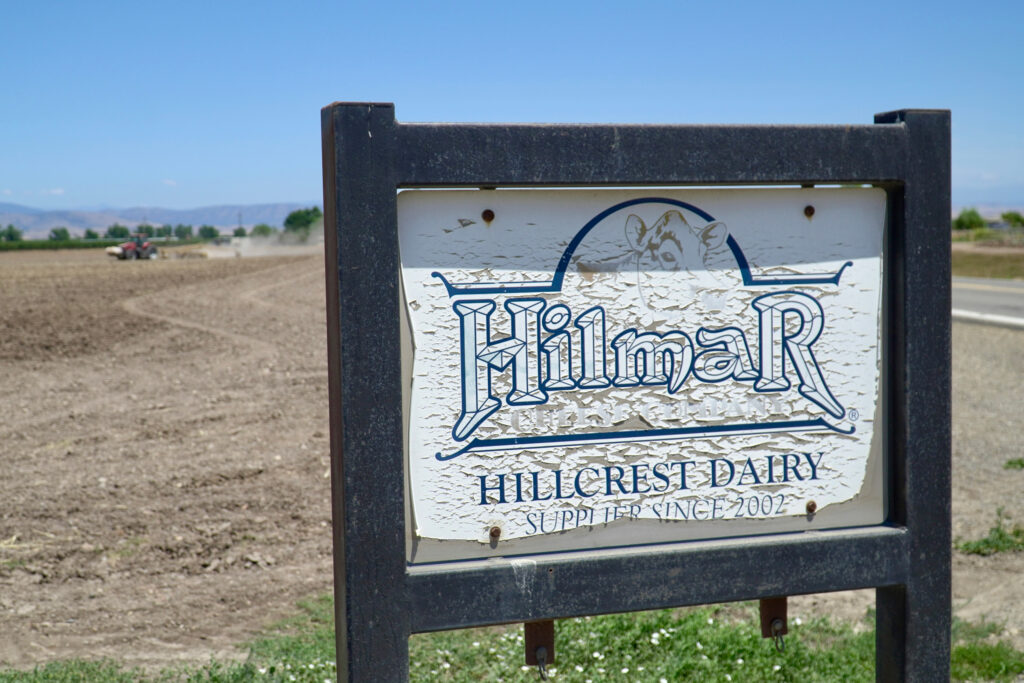
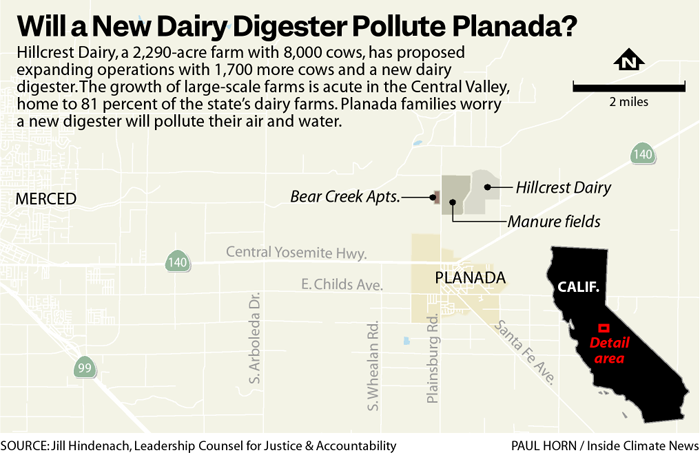
One is Hillcrest Dairy, a decades-old farm in Le Grand, next door to Planada, with around 8,000 cows located about a four-minute drive from Rodriguez’s home. The dairy has applied to expand its operations to about 1,700 more cows and at least half a dozen new buildings, including a 50,000 square-foot barn.
At the same dairy, Merced County has approved the construction of a new digester that would convert cow manure into biogas, a county spokesperson confirmed. Dairy owners argue that turning their livestock’s waste into fuel with these digesters is an environmental benefit that cuts down on the amount of manure they must dispose of. The cow’s waste would otherwise be left to decompose in open lagoons or sent to another facility for use as fertilizer.
People who live nearby beg to differ. Residents and environmental groups say the technology has the potential to leak contaminants into air, water and soils, entrench large-scale herds and could lead farms to expand. (The state claims digesters are not leading dairy farms to grow their herds).
Regardless, Hillcrest Dairy in Merced County has pushed ahead with its plans to expand and possibly build a digester.
And it’s not alone.
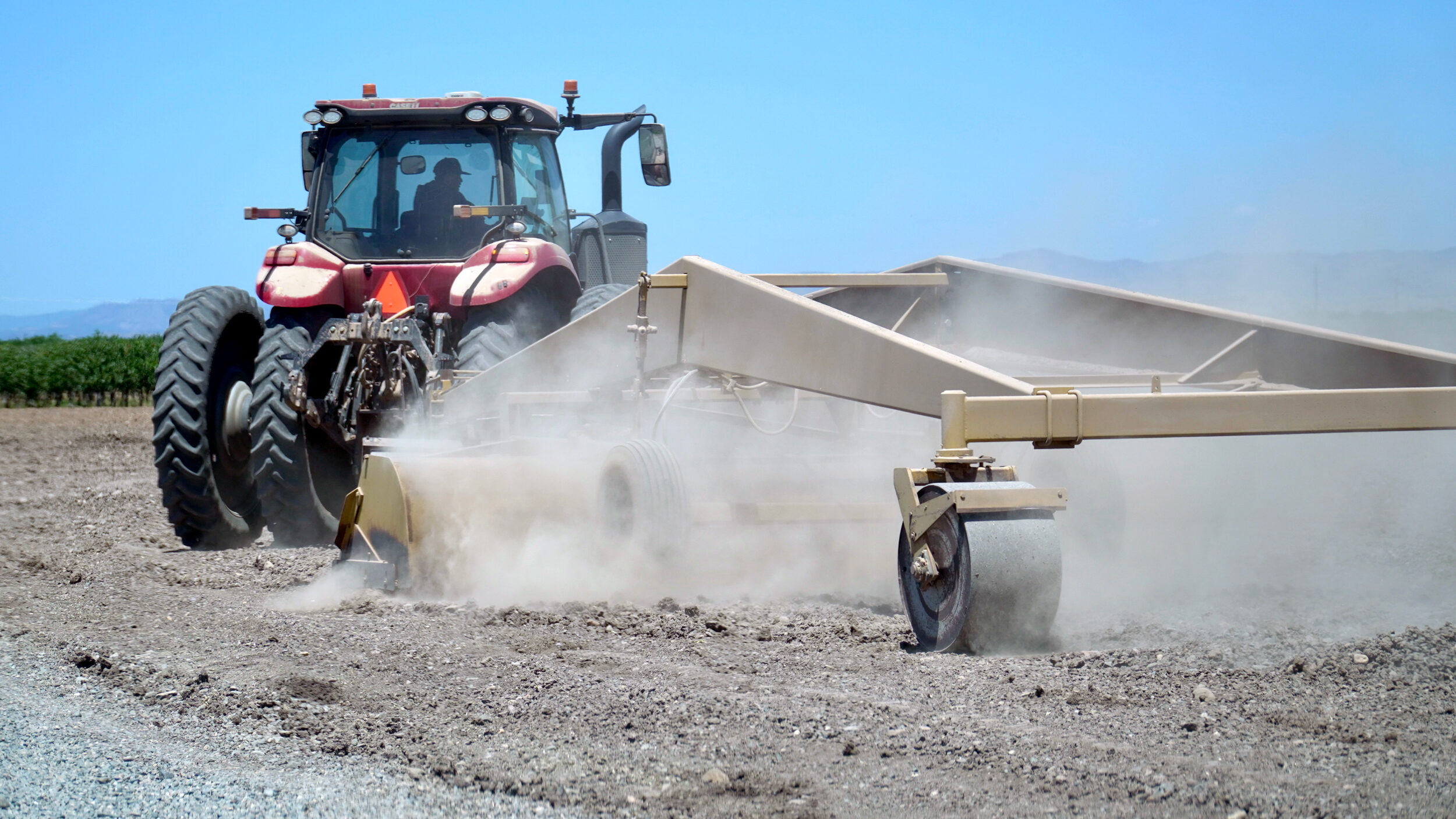
Despite fierce opposition from some dairy communities and organizations, farms statewide have in many instances gotten bigger and installed digesters. Across California, there are more than 160 manure digesters operating at dairy farms and dozens of others under construction, according to experts and the industry group, Dairy Cares.
There’s the potential for many more.
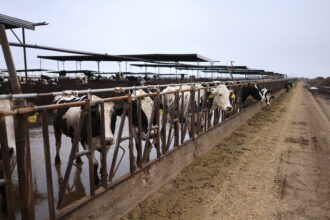
By the Environmental Protection Agency’s count, over 1,000 concentrated animal feeding operations—CAFOs—operate across swaths of California. Experts, some who include smaller facilities in their tallies than the EPA counts, believe the state holds many more CAFOs, including dairies, than the federal agency lists.
Planada, with a population of 4,000 that is 98 percent Hispanic, sits in the heart of California’s Central Valley, which is particularly dense with CAFOs. The valley, which includes Merced County, is home to 89 percent of the state’s cows and 81 percent of the state’s dairy farms, according to Stanford University data. All but four of the 165 digesters identified by Stanford are in, or partially in, the Central Valley.
Residents say the political system is set up to advance dairy projects quickly. Rodriguez also pointed out that three of the Merced County Board of Supervisors’ current members, who oversee dairy applications, have past ties to the dairy industry.
“Over the last decade, California has created policies that favor large-scale industrial dairies over smaller operations and lock in the most environmentally harmful practices that disproportionately impact low-income communities of color,” said Jamie Zweifler-Katz, a senior staff attorney at the Leadership Counsel for Justice & Accountability.
“Merced County is an unfortunate example of the effect that these incentives have on expanding dairy operations.”
According to Zweifler-Katz, Merced County has permitted or is in the process of permitting two biogas pipeline and infrastructure projects serving milk cow manure digesters, as well as about ten dairy expansions. The county did not comment on these figures.
The dairy farm proposals, she noted, could mean as many as 46,148 more dairy cows and other cattle countywide.
Closed Windows and Bottled Water
People in Merced County are known to shut themselves indoors and use bottled water or Brita filters out of their concern over dairy operations’ contamination of air and water, residents told Inside Climate News.
“We don’t drink that water. I don’t use it for cooking,” said David Rodriguez’s wife, Rita, a former public health department worker.
David, who has health problems and wants to avoid the fetid odors from dairies, no longer spends much time in the backyard of his two-story Planada home, which he bought about three decades ago. The couple avoids having family over for outdoor movie screenings, once a tradition in their sizable backyard. Rita describes the overpowering smell of manure from dairies like being in a porta-potty that surrounds her home.
David’s friend Leonard Moreno protects his porch with fly traps that quickly fill up with the carcasses of insects drawn to cows when temperatures are high.
“Once the summer is full bore, they’ll come out again,” says Moreno, who loses count of how many $5 fly traps he goes through.
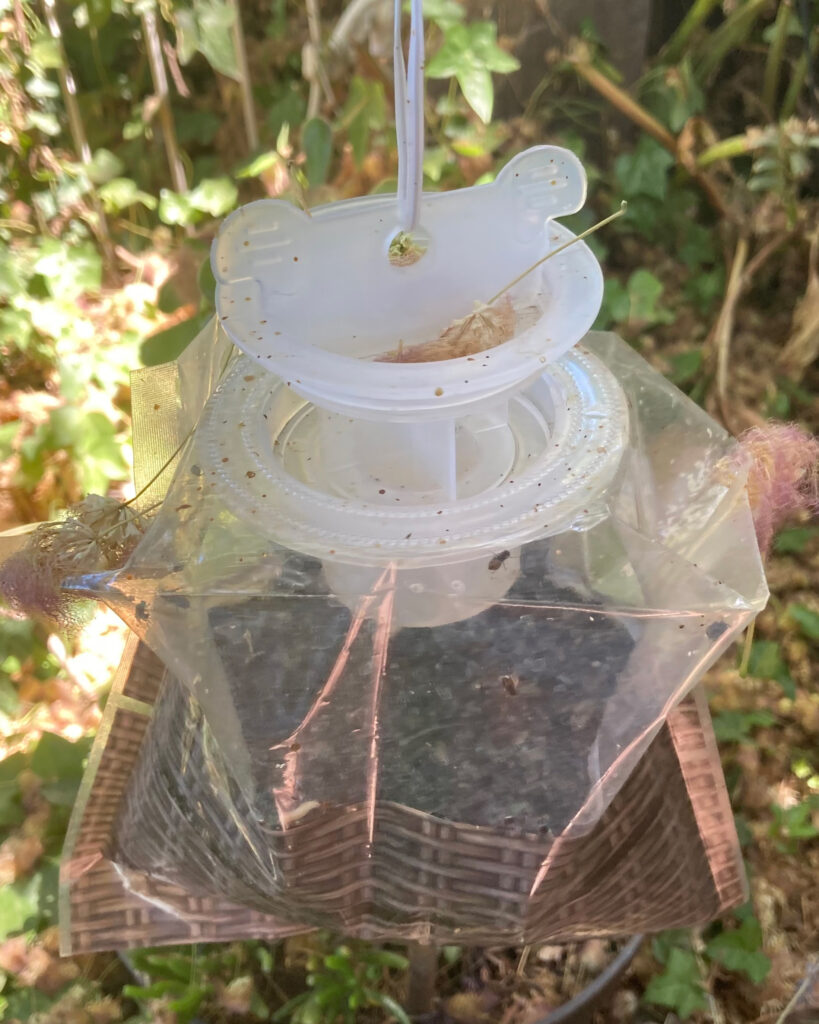

Leonard Moreno says the fly traps in his backyard fill quickly in the hot summer due to dairy farm operations. Credits: Courtesy of Leonard Moreno and Steven Rodas/Inside Climate News
California is the top milk producer in the U.S., with more than 1.7 million cows generating over $8 billion worth of milk, according to the latest state tally, in 2024.
But residents in Merced County say that windfall comes at a cost that’s difficult to quantify. Families say dairies are not required to strictly monitor the air nearby. Instead, air quality concerns are handled based on complaints to local agencies and self-monitoring practices. Documentation of negative impacts to water quality depends on when inspections occur and how dairies report waste discharges, so incremental impacts to drinking water remain opaque, residents complain.
Planada families worry that more dairy lands will encroach upon neighborhoods, bringing even more cows and emissions from milking operations, manure and digesters if large-scale farms are allowed to continue operating as they have for decades.
“We don’t drink that water. I don’t use it for cooking.”
— Rita Rodriguez, a former public health department worker
Outreach to communities by dairies that are developing projects has been insufficient and under-resourced, they say. An example families pointed to: Few community engagement efforts by farms have language assistance for residents who primarily speak Spanish.
The situation in Planada is not an anomaly, the Rodriguez family said.
Lower Emissions but New Challenges?
Farm owners in California and nationwide—who have suffered financially from rising costs and the COVID-19 pandemic—say their facilities remain vital economic assets for their communities and states.
With that in mind, dairies argue they have taken steps to be better neighbors and safeguard communities by improving their management of emissions and being smarter about where they dispose of their waste. Dairy digesters are an increasingly popular solution to those challenges.
In a statement, the California Air Resources Board (CARB) said the number of dairy cattle in the state declined from 1,780,000 in 2012 to 1,720,000 in 2023-24. CARB also called manure digesters a “viable and effective greenhouse gas reduction tool.”
Still, regional regulators have not shied away about what dairy farms can mean for nearby communities.
Runoff from large-scale farms “can impair both surface and ground water beneficial uses” by producing “significant amounts of coliform, ammonia, nitrate and total dissolved solids contamination,” the Central Valley Regional Water Quality Control Board wrote in a 2019 water quality control plan.
Animal waste can enter the water supply due to facilities’ “inappropriate application of wastewater and manure” to croplands, the board wrote.
While there hasn’t been a full accounting of the impact CAFOs and runoff from dairy facilities has had on the health of Californians, a recent county level analysis in three states, including California, found higher rates of cancer near concentrated animal operations. A review published in 2015 found families near CAFOs experience stress, cognitive problems, asthma and impaired lung function, among other health issues.
“Dairy digesters are an integral part of California’s comprehensive climate-smart approach to dairy methane reduction,” Michael Boccadoro, executive director of the California trade group Dairy Cares, told Inside Climate News.
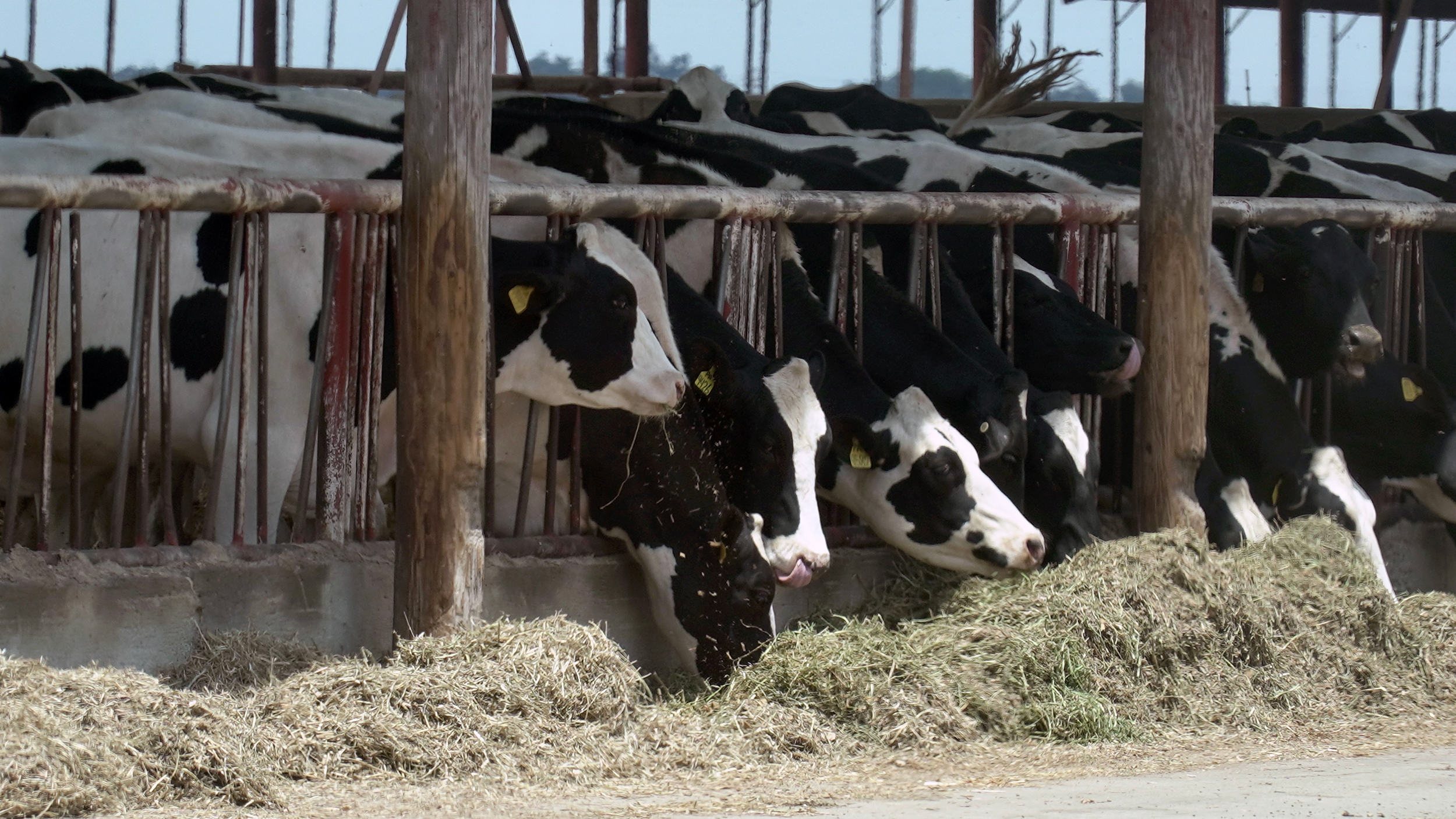
Better manure management practices and the use of digesters has significantly reduced emissions from dairies, Boccadoro said.
“Methane emissions from manure management have declined to 9.9 million metric tons by 2023—about 17 percent—from a peak of 12 million metric tons in 2012,” said Dave Clegern, a spokesman for the California Air Resources Board. A study also found digesters may reduce manure systems’ greenhouse gas emissions by between 58 and 80 percent.
In a June 11 statement, the American Biogas Council reported that nearly 500 American dairies capture energy from their manure using anaerobic digestion. The industry group noted that nearly 3,000 more dairy farms could support new systems too.
Dairy Cares recently responded to the CARB’s request for feedback on ways to meet the requirements of Senate Bill 1383, a 2016 law that commits the state to reduce its methane emissions 40 percent from 2013 levels by 2030. The group’s comments, which took up 26 pages, detailed digester-use as a way to achieve that reduction.
California has supported the technology through the California Department of Food and Agriculture’s Dairy Digester Research and Development Program, which provides grants that are funded through the state’s cap-and-invest program. CARB’s low-carbon-fuel-standard provides credits to farmers for fuel the digesters produce, but the program is facing a legal challenge by several environmental groups claiming it incentivizes pollution by propping up the biogas industry.
This story is funded by readers like you.
Our nonprofit newsroom provides award-winning climate coverage free of charge and advertising. We rely on donations from readers like you to keep going. Please donate now to support our work.
Donate NowEnvironmental groups and families in communities near the operations note that the tarp-covered lagoon digesters that are most common in California can leak and present their own health problems, such as impacts to air quality.
Some agriculture experts and environmental justice organizations argue that California’s support for digesters incentivizes dairies in the state to expand their herds. Industry groups counter that farms are not certain to grow due to wider digester implementation, and California officials have disputed that digesters are a factor accelerating herd growth at dairy farms.
From Planada to Pixley
Local residents and California advocates say the lack of clarity over how Hillcrest Dairy has expanded in the past—or could expand in the future—speaks to larger issues surrounding oversight of the industry.
In 2022, Eddie Hoekstra, Hillcrest’s owner, submitted a proposal to the county to increase the number of cows housed on-site by about 1,700, to a total of nearly 10,000, and build additional stalls and support buildings on the farm’s existing footprint.
Hoekstra currently manages about 8,000 cows on the 2,290-acre rural tract in eastern Merced County, according to county records and annual reports from the Regional Water Quality Control Board that oversees the Central Valley. When it first opened in 2002, his farm was approved for just shy of 4,000 cows, according to the county.
A list of project applications to the California Department of Food and Agriculture for its Dairy Digester Research and Development Program includes “The Promus Hillcrest Digester LLC.”
The digester would capture methane, hydrogen sulfide, odor and other pollutants and produce biogas that would generate 1-megawatt of electricity for electric vehicle charging stations, according to the state application.
“Overall, the digester project will greatly reduce emissions compared to current operations, reduce manure odor, and clean up wastewater. The project will also produce the lowest carbon intensity power available for zero emission vehicles that will replace vehicles burning diesel and gasoline, further improving air quality,” a portion of the application reads.
A 2022 environmental impact report on the Hillcrest Dairy expansion proposal noted solid manure exported from the dairy would increase from 19,998 to 33,198 tons if the expansion were to take place. That manure would be applied to off-site agricultural fields not owned by the applicant, officials added. No other specifics on manure disposal were disclosed. The Hillcrest proposal also includes the potential for adding a digester to the operation.
The state’s food and agriculture department reported Tuesday that it did not give Hillcrest Dairy a digester grant through its program, which is popular and only has funding to support a limited number of projects.
None of Merced County’s five board members responded to Inside Climate News’ inquiries regarding Hillcrest Dairy.
A Merced County spokesperson only briefly addressed the expansion in an email, which stated expansion “projects of this nature can take time due to state regulatory requirements.” The spokesperson noted the digester project was approved in July 2024.
However, it appears the digester has yet to be built. Hillcrest Dairy was not on the list of farms with manure digesters in Stanford University’s Central Valley data, and a digester was not visible on-site in mid-May. Hoekstra, the owner, was not available during that visit to comment for this story and, in a June email, declined to be interviewed.
Debate over the Le Grand dairy comes after years of similar battles in Pixley, in the San Joaquin Valley, over digesters, and as the State Water Board releases a long overdue draft order that outlines how water pollution from dairy farms is overseen. That order is open for public comment until July 30.
Industry, environmental groups and regulators agree that nitrogen from dairy cow manure can pose a health threat to people. Excess nitrogen from dairies increases nitrate in soils, waterways and groundwater, and has contaminated drinking water in the Central Valley.
In some valley counties, 40 percent of drinking wells are above the safe nitrate limit established by the federal EPA, posing health risks like miscarriages and infant mortality.
And the groundwater basins area residents rely on for their water have already been deemed critically overdrafted.
What happens next in Merced County remains unclear.
In 2021, a county official reviewing the Hillcrest Dairy expansion proposal wrote that “the proposed project may have a significant effect on the environment, and an environmental impact report is required.”
In an environmental analysis a year later, the Merced County Community and Economic Development office said that after off-site disposal of solid wastes, the expansion project would meet the legal requirements for protecting groundwater from nitrogen loading. The county ultimately found the project was consistent with Merced County land-use policies, including standards for CAFOs.
David Rodriguez worries that dairy farms will continue to operate as they have, with unclear testing to deem water and air safe. All the while dairies keep expanding, and digesters continue to spring up, he said.
In May, Merced County was considering allowing a dairy less than an hour away in Gustine to add more than 4,000 more cows. And one of the largest dairies in the San Joaquin Valley is applying for a permit for a biogas project to participate in the state’s low carbon fuel standard program.
Rodriguez wonders when the Hillcrest Dairy expansion will happen.
“I’ll continue to fight,” he said. “Even in my 80s and 90s. If I live that long.”
About This Story
Perhaps you noticed: This story, like all the news we publish, is free to read. That’s because Inside Climate News is a 501c3 nonprofit organization. We do not charge a subscription fee, lock our news behind a paywall, or clutter our website with ads. We make our news on climate and the environment freely available to you and anyone who wants it.
That’s not all. We also share our news for free with scores of other media organizations around the country. Many of them can’t afford to do environmental journalism of their own. We’ve built bureaus from coast to coast to report local stories, collaborate with local newsrooms and co-publish articles so that this vital work is shared as widely as possible.
Two of us launched ICN in 2007. Six years later we earned a Pulitzer Prize for National Reporting, and now we run the oldest and largest dedicated climate newsroom in the nation. We tell the story in all its complexity. We hold polluters accountable. We expose environmental injustice. We debunk misinformation. We scrutinize solutions and inspire action.
Donations from readers like you fund every aspect of what we do. If you don’t already, will you support our ongoing work, our reporting on the biggest crisis facing our planet, and help us reach even more readers in more places?
Please take a moment to make a tax-deductible donation. Every one of them makes a difference.
Thank you,

Steven Rodas
Reporter, California
Steven Rodas covers water, wildfires and agriculture throughout California for Inside Climate News. Based in Los Angeles, he previously reported on the environment in New Jersey, covering energy, pollution, wildlife and development. Steven’s work has appeared in the San Francisco Chronicle, NJ.com/The Star Ledger and Grist. He worked as a copywriter at Google. Steven has a master’s degree from Syracuse University’s S.I. Newhouse School Of Public Communications. He is fluent in English and Spanish (and welcomes your tips).