

PHILADELPHIA—To Eric Klinenberg, a packed stadium in 101-degree heat offering limited water access for fans was a “formula for disaster.”
This was the scene that met the sociologist, who wrote an acclaimed book about Chicago’s deadly 1995 heat wave, when he attended the World Cup France-Paraguay match at Philadelphia’s Lincoln Financial Field last Saturday. “It was dangerously mishandled,” Klinenberg said. He witnessed two people receiving medical treatment at the game, and the city reported 18 people were treated by medics at the game and at the FIFA Fan Festival in Fairmount Park on July 4. Five more people were transported to nearby hospitals.
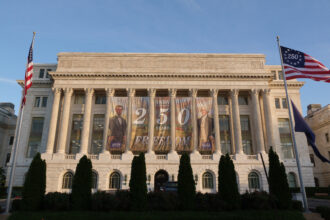
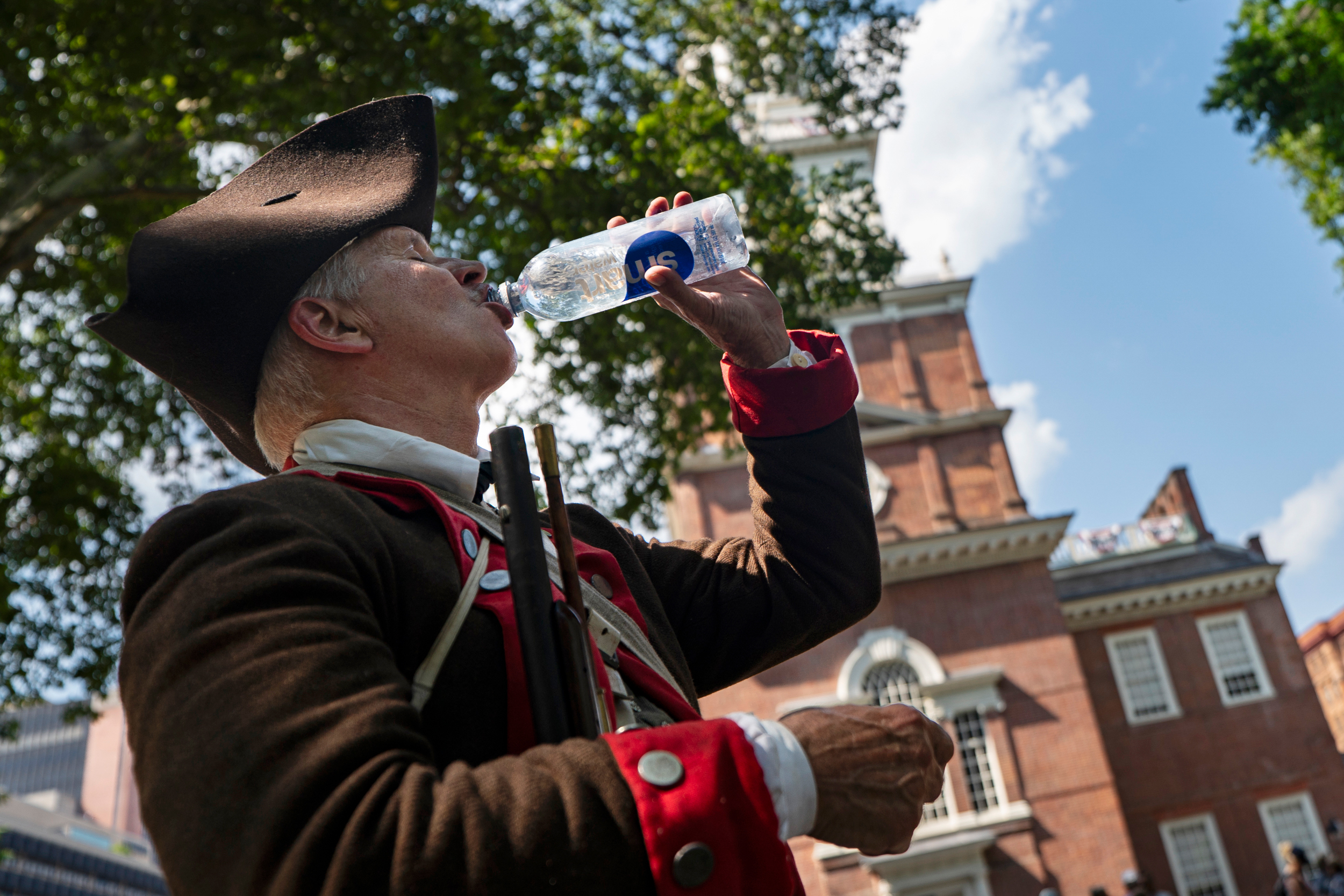
The game took place during a record-breaking weekend—Philadelphia’s first-ever three-day stretch of temperatures of at least 101 degrees, a major test of the city’s emergency response capacity. More than 68,000 spectators attended the game, but it wasn’t the only high-stakes event that day, as the birthplace of the nation celebrated America’s 250th anniversary. Thousands of people took in concerts and visited historical attractions and museums across the city.
According to the scientific group World Weather Attribution, the broader heat dome over the Northeast that caused this streak would have been “virtually impossible” if not for global warming. As climate change accelerates, city officials are working to prepare for a future that’s forecasted to keep getting hotter. This means making resources accessible to everyone—whether for sports fans at high-profile games or for residents in neighborhoods farther from the spotlight.
Heat is the deadliest weather event, but Klinenberg said that it doesn’t often get the attention that other disasters draw because of property damage and dramatic visuals. Heat-related death tolls are also often underreported.
Extreme temperatures can trigger underlying medical problems and pose a threat even for people who are not members of vulnerable populations, said Dr. Elizabeth Cerceo, executive director of climate health at Cooper Medical School of Rowan University. “There are young, healthy people that die of heat stroke every year,” she said. “You can be optimally hydrated, in perfect shape, like training for a triathlon, and you can still die of heat stroke.”
Seven people died due to heat-related causes in the first week of July, according to the Philadelphia Health Department.
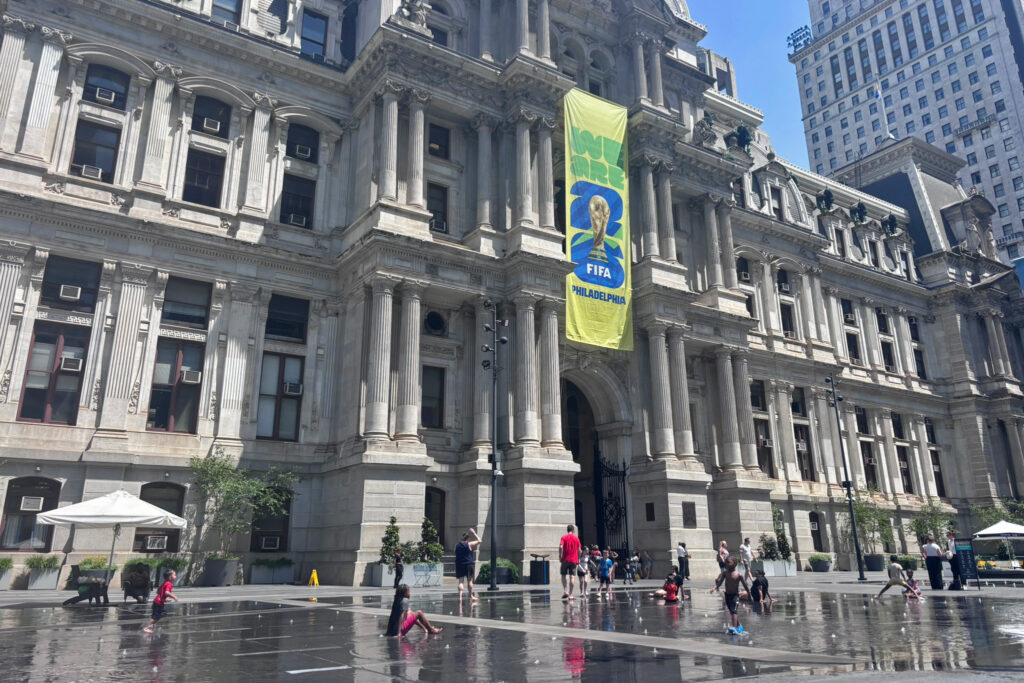
After years of preparation, the city’s Independence Day parade was canceled, a ceremony for Pope Leo XIV was moved indoors, and the FIFA Fan Festival altered the schedule for its outdoor viewing party due to dangerous heat. At the One Philly: Unity Concert for America—the main event of the city’s celebrations and a key priority for Mayor Cherelle Parker—the heat and a thunderstorm warning delayed and then cut some of the show while people sought shelter.
At Love Park, Hagan Werner, an ambassador in a Visit Philly tent tasked with helping visitors navigate the city, said on Thursday that the heat had become a focus of concern. Werner said that while the city had many cooling resources that he could direct people to, guidance for FIFA’s events was more difficult to provide. “FIFA doesn’t give us a lot of information. I mean, we had to look up the policies for the game and for Fan Fest,” he said.
Klinenberg said he saw long lines to buy expensive water bottles at the game, and there was only one fountain for every several thousand fans. Security confiscated a friend’s water bottle because he had opened it before entering the stadium, he said.
“It’s so hypocritical,” Klinenberg said in an email. “FIFA is changing the rules of the game to give the athletes water breaks, but then FIFA or the stadium operators are depriving spectators of access to water at the same time, for the simple reason that they want to sell more of it and make more money. It led to unnecessary illness, lots of dehydration, and even more miserably uncomfortable people.”
In response, a FIFA spokesperson told Inside Climate News that “FIFA is committed to protecting the health and safety of all players, referees, fans, volunteers and staff.” A FIFA statement said event leaders collaborated with the city and emergency management on heat mitigation measures. It also added that complimentary water bottles and misting fans were available along the mile leading up to the stadium and said the stadium had cooling tents available for fans.
A “Right to Cooling”
The city declared a heat health emergency on July 1, rolling out sprinklers, water stations, cooling centers and a hotline for heat-related concerns. But experts worried public safety messages didn’t reach enough people, and cooling sites weren’t open long enough. And they expressed concern about those living alone or in neighborhoods shaped by systemic disadvantages—who are the most at risk.
Mathy Stanislaus, executive director of Drexel University’s Environmental Collaboratory, said there was inadequate accessibility and notification surrounding the cooling centers. On June 1, the Philadelphia Climate Justice Collective, which includes the Environmental Collaboratory, published an op-ed that advocated for extended hours and more messaging for cooling center locations as part of a broader “Right to Cooling” framework.
The city opened over 50 centers for the emergency, many of which stayed open through the evening. According to Deputy Health Commissioner James Garrow, the cooling centers were part of the “most robust collection of nationally-renowned heat response activities that the City has ever engaged in.” But he acknowledged some residents may not have opted-in to the emergency text network or followed local news about the heat wave and wrote in a statement to Inside Climate News: “We always strive to improve those messages and it is already on the agenda for the City’s upcoming after-action review.”
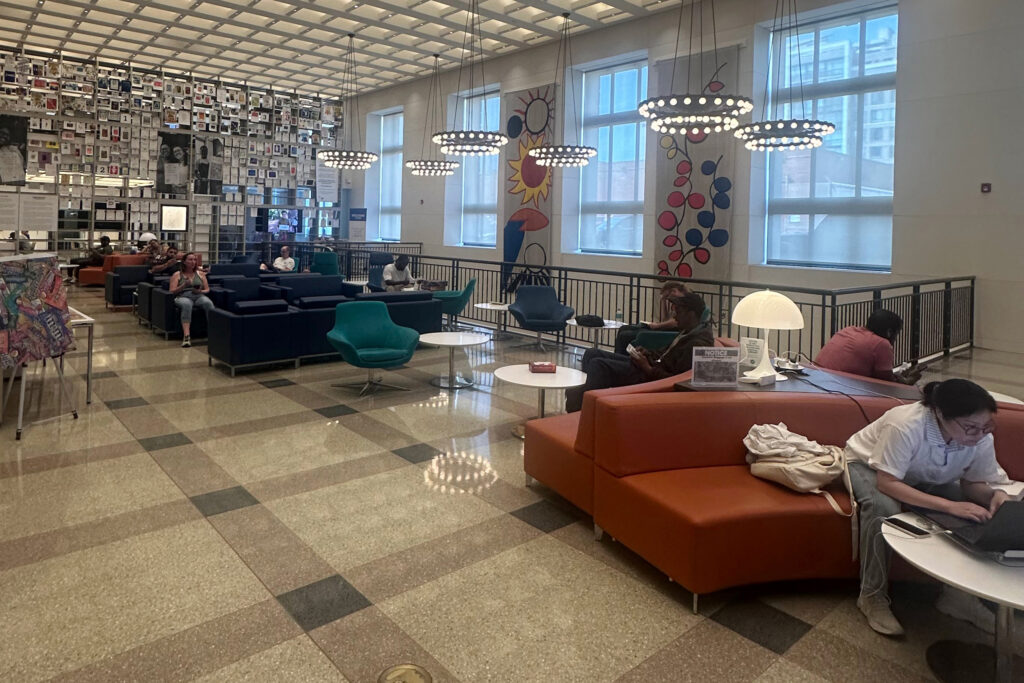
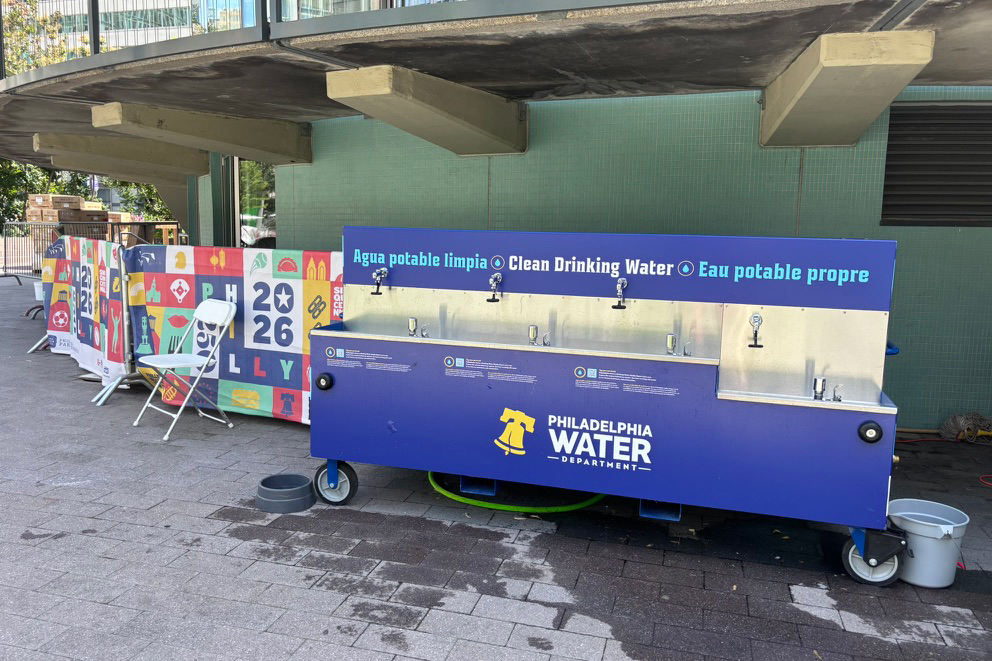
“I give the city credit for recognizing the extreme need, but we just need multiple methods of getting a message out and protecting people at this moment,” Stanislaus said. “I used to run emergency response for the country at the U.S. EPA for eight years, and we need the same level, if not more investment in infrastructure and investment in resources [for heat], as we do for a hurricane.” This investment, he added, would be part of an “all-of-society” response to the climate crisis, which is already having disproportionate impacts on marginalized communities.
In Philadelphia and elsewhere, where you live can affect how hot it is. Researchers have found that temperatures in some neighborhoods can be as much as 20 degrees higher than others within the same city, due to differences in infrastructure, tree canopy and street layout.
“If you have a city like Philadelphia that’s organized around racial segregation and class segregation, it’s pretty easy to figure out which neighborhoods are most likely to fare poorly in a heat wave,” Klinenberg said. And, skyrocketing energy costs are making air conditioning harder to afford.
This story is funded by readers like you.
Our nonprofit newsroom provides award-winning climate coverage free of charge and advertising. We rely on donations from readers like you to keep going. Please donate now to support our work.
Donate NowWhile physical infrastructure often impacts the temperatures that neighborhoods experience, Klinenberg also emphasized what he calls “social infrastructure.” These are community ties that emerge when people can spend time on park benches, porches, and third spaces, and that can save lives during heat waves. Residents in some neighborhoods might be less able to form those ties because of physical, political and economic factors that contribute to phenomena like empty and abandoned lots, broken sidewalks and a lack of community organizations—all characteristics of the Chicago neighborhoods that Klinenberg noted had the highest death rates during the 1995 heat wave.
Stanislaus, Klinenberg and Cerceo all highlighted the risk of isolation during heat emergencies. They said that communication for and about emergency services has to extend to trusted community partners on the ground in neighborhoods. Abby Sullivan, chief resilience officer for Philadelphia’s Office of Sustainability, said the office just launched a “Be A Buddy” initiative in Strawberry Mansion, where ambassadors check on residents in the heat-vulnerable neighborhood.
The city’s work on heat response dates back to a 1993 disaster that prompted the adoption of a leading heat emergency management system. This includes the current Heat Health Emergency protocol in place, which the city designed after seeing morbidity and mortality increase at certain temperatures.
Over the past two years, the Office of Sustainability has been working to update its climate resilience plan. This entails using climate change models and assessments of where people struggle with cooling to better equip the city to withstand heat. Potential measures include providing more shade at playgrounds and bus stops, looking into cooler pavement and roofing materials and increasing tree cover in every neighborhood by 30 percent, according to Sullivan.
Meanwhile, health activists are requesting more funding for the offices that can help address climate change as a public health emergency. While Sullivan said her team was resourceful and well supported by the city, proper long-term planning will require a huge investment. “We have really tight budgets and a lot of deferred maintenance across the city, so it’s really hard to be forward-looking,” she said.
Still, an extreme heat event taking place during a high-profile summer could bring the issue more attention. While it was hard to say whether that would prove true, “across the board, you do see a lot of places take action once there’s a big event and there’s kind of some political pressure,” Sullivan said.
About This Story
Perhaps you noticed: This story, like all the news we publish, is free to read. That’s because Inside Climate News is a 501c3 nonprofit organization. We do not charge a subscription fee, lock our news behind a paywall, or clutter our website with ads. We make our news on climate and the environment freely available to you and anyone who wants it.
That’s not all. We also share our news for free with scores of other media organizations around the country. Many of them can’t afford to do environmental journalism of their own. We’ve built bureaus from coast to coast to report local stories, collaborate with local newsrooms and co-publish articles so that this vital work is shared as widely as possible.
Two of us launched ICN in 2007. Six years later we earned a Pulitzer Prize for National Reporting, and now we run the oldest and largest dedicated climate newsroom in the nation. We tell the story in all its complexity. We hold polluters accountable. We expose environmental injustice. We debunk misinformation. We scrutinize solutions and inspire action.
Donations from readers like you fund every aspect of what we do. If you don’t already, will you support our ongoing work, our reporting on the biggest crisis facing our planet, and help us reach even more readers in more places?
Please take a moment to make a tax-deductible donation. Every one of them makes a difference.
Thank you,

Nina Sablan
Fellow
Nina Sablan is a Pennsylvania-based fellow at Inside Climate News with a passion for local journalism, and environmental justice and law. She was previously a reporting intern for Seven Days in Vermont and is a current student at Swarthmore College, majoring in philosophy and minoring in peace and conflict studies in the honors program. Her work has appeared in The Philadelphia Inquirer, as well as campus publications at Oxford University and Swarthmore College.

Daniel Perrin
Fellow
Daniel Perrin is a Philadelphia-based fellow at Inside Climate News, covering urban environmental issues. He is a rising senior at Swarthmore College, where he studies economics, literature, and history. He just finished serving as Editor-in-Chief of The Swarthmore Phoenix, overseeing the campus paper and reporting on trends within higher education, economic policy, sustainability, transportation, and governance at all levels. Having grown up in Chapel Hill, NC, before moving to Baltimore, he is especially interested in how large political and economic developments ripple through the built environment of local communities.