

A new assessment from the United States’ most influential science advisory panel says climate attribution science has moved beyond asking whether human-caused global warming is driving deadly heat waves, floods and wildfires. The focus is now on how severe future impacts will become as extreme events increasingly overlap.
“As the frequencies of multiple types of climate extremes have increased, the likelihood of them co-occurring simultaneously or in close succession, in the same location or across regions, has increased,” the 14 authors wrote in the extreme weather attribution report produced by the National Academy of Sciences, Engineering and Medicine, a congressionally charted independent organization that advises the U.S. government on science and technology.
The trend toward “more compounding, cascading, and record-breaking events” challenges existing attribution research methods aimed at finding a climate fingerprint for acute events in a limited geographic area, the scientists wrote. They also argued that more attribution research can help communities adapt to intensifying extremes.
Attribution science measures how much human-caused global warming loaded the dice for an extreme weather event, making it more likely or more intense. Recent research shows climate extremes, like the deadly 2021 heat dome over the Pacific Northwest and this summer’s early heat wave in Europe that killed more than 5,000 people, would have been impossible without human-caused warming.
To determine how global warming affects an extreme event, researchers compare its intensity and likelihood in the current climate with the same event modeled in a world without human-caused emissions. A combination of observational data, weather and climate models and statistical models help quantify the effect of human-caused warming on the extreme event.
In the report, the authors wrote that attribution scientists should develop shared standards for studying extreme events so different research groups can more easily compare and verify one another’s results. It also recommended regularly reviewing the rapid attribution studies now issued within days of major disasters to ensure the methods keep pace with advances in climate science.
The report says the next big advances will come from more powerful climate models that can better simulate localized extremes such as severe thunderstorms and hail, along with improved weather and impact data, especially in parts of the world where observations remain limited. It also urges scientists to work more closely with local officials and communities so attribution studies can better inform disaster planning, recovery and estimates of climate-related losses.
During a webinar Thursday, atmospheric scientist James Hurrell, the chair of the report panel, said the field of extreme event attribution has surged since 2016, when the NAS released its last report on the topic. Improved climate models and a more complete record of climate measurements on Earth and from satellites help put extremes into historical context, said Hurrell, a professor and Scott Presidential Chair in Environmental Science and Engineering at Colorado State University.
“A human influence has now been clearly detected in several important categories of extremes, including extreme heat, heavy precipitation and compound hot and dry events,” he said.
He said the panel was careful to distinguish between areas where confidence in extreme event attribution is high: heat waves, extreme precipitation, tropical storm intensity and dangerous wildfire weather, and small-scale events like severe thunderstorms and hail storms that are difficult to model and for which the observational record is limited.
“Recognizing these limitations is not a weakness of attribution science; it is one of its strengths,” he said, adding that the attribution research community has become “increasingly transparent” about where confidence is high and where further advances are needed.
Attribution science “helps improve public understanding by connecting global climate change with local experiences,” he said. It also helps governments and business better understand emerging risks. And he said attribution studies also increasingly fit into policy, regulatory and legal contexts.
The 2026 report shows scientists are much more confident than they were a decade ago in pinpointing how human-caused warming influences hurricanes and other tropical weather systems.
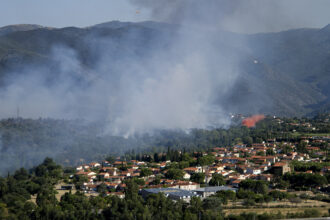
The report from 10 years ago described wildfires as one of the hardest hazards to attribute because fire depends on a complex mix of weather, vegetation and other factors. But now, the panel concluded that scientists can confidently attribute the more frequent hot, dry fire weather that drives large wildfires.
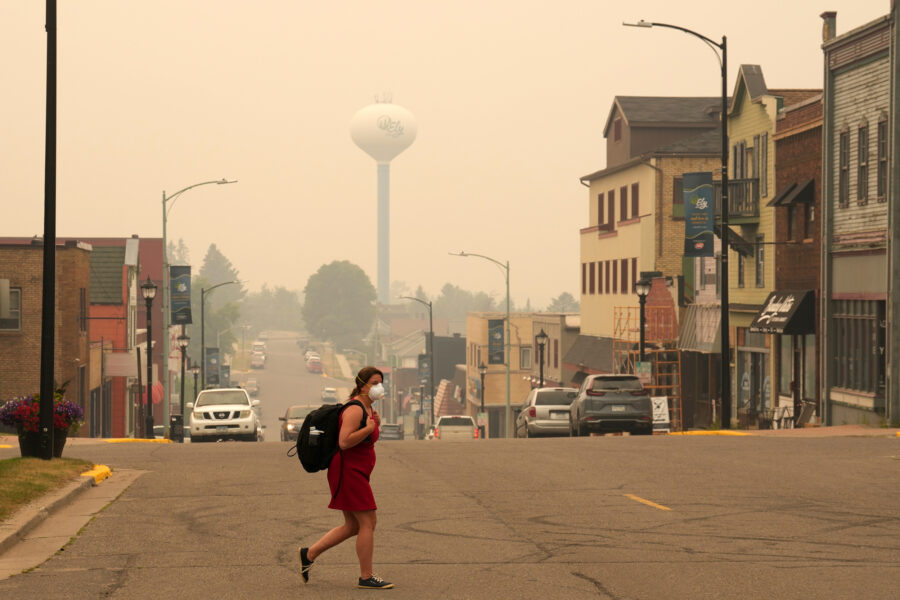
The report acknowledges that the behavior of individual fires is still complex and hard to attribute, but identifies wildfires as a hallmark of the compound disasters that are increasing in a warming climate, with heat and drought fueling fires that trigger cascading impacts like smoke pollution, flooding and landslides.
“A Clear Statement”
University of Pennsylvania climate scientist Michael Mann said the new report stands as “a clear, affirmative statement that human-caused climate change is indeed impacting the occurrence and intensity of extreme weather events.” It acknowledges that scientific advances have increased confidence in the results of attribution studies and refutes “the dismissive claims made by fossil fuel groups and right-wing think tanks,” he said.
Mann noted a passage in the report that acknowledges “structural and observational” limitations in the attribution modeling and said those weaknesses “almost certainly are leading to the models underestimating the impact climate change is having on persistent summer weather extremes.”
This story is funded by readers like you.
Our nonprofit newsroom provides award-winning climate coverage free of charge and advertising. We rely on donations from readers like you to keep going. Please donate now to support our work.
Donate NowHe said that oversight can be at least partly attributed “to the overly conservative approach of the NAS when it comes to tackling these contentious topics, especially given the toxic political atmosphere that exists in the U.S. where climate science is actively attacked by a climate-denying president and cabinet and a fossil-fueled Republican Congress.”
The report says the field has expanded to examining the human and economic consequences of extreme weather, including deaths and financial losses.
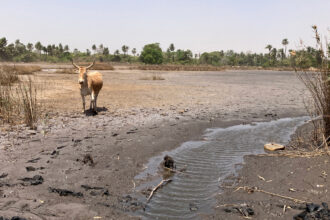
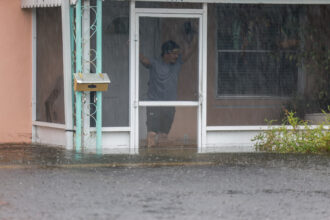
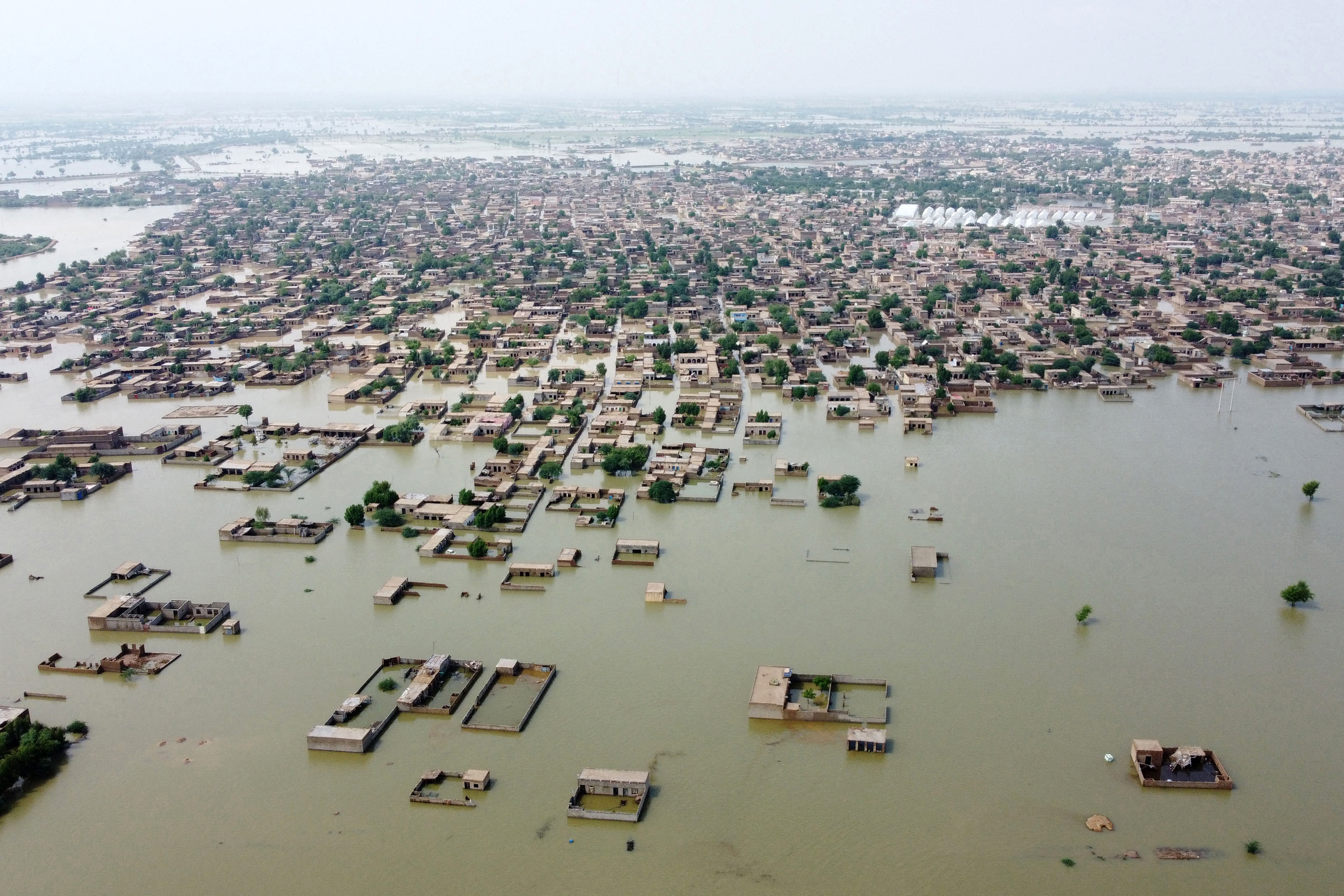
It’s an area that has “garnered large amounts of scientific and public attention in recent years due to the substantial societal impacts of events such as Hurricane Helene in 2024, the 2022 Pakistan floods, the 2020-23 East African Drought. By attributing extreme events and their impacts to climate change, scientists can provide additional information that helps to inform decision-makers and communities to better manage and respond to climate risks through planning, policy, and adaptation,” the authors wrote.
The new report highlights how much attribution science has matured in the last 10 years, said Davide Faranda, research director in climate physics at France’s National Center for Scientific Research, who studies the attribution of extreme weather, including clear air turbulence that’s dangerous for air traffic. He also recently co-authored a study on links between global warming and extreme hailstorms.
Attribution research no longer relies on modeling alone, he said. Researchers now combine models with long-term observations and other evidence, enabling them to test the same event using independent methods. When those approaches produce similar results, confidence in the findings grows.
Platforms such as World Weather Attribution, Climate Central and ClimaMeter are using those tools to provide “scientifically robust information within days of an event, and forecast-based attribution is beginning to extend this capability even before an event fully unfolds,” he added.
The next frontier in the field is attributing highly localized hazards such as severe thunderstorms, he said. Recent experimental studies combining atmospheric circulation models with detailed measurements from weather instruments and “physics-informed AI” suggest this is becoming feasible and “could eventually help support adaptation, preparedness and climate risk management at the local scale,” he added.
He said the evolution of attribution science from a retrospective scientific exercise toward practical capabilities will ultimately “support early warning systems, adaptation planning and climate risk management.”
About This Story
Perhaps you noticed: This story, like all the news we publish, is free to read. That’s because Inside Climate News is a 501c3 nonprofit organization. We do not charge a subscription fee, lock our news behind a paywall, or clutter our website with ads. We make our news on climate and the environment freely available to you and anyone who wants it.
That’s not all. We also share our news for free with scores of other media organizations around the country. Many of them can’t afford to do environmental journalism of their own. We’ve built bureaus from coast to coast to report local stories, collaborate with local newsrooms and co-publish articles so that this vital work is shared as widely as possible.
Two of us launched ICN in 2007. Six years later we earned a Pulitzer Prize for National Reporting, and now we run the oldest and largest dedicated climate newsroom in the nation. We tell the story in all its complexity. We hold polluters accountable. We expose environmental injustice. We debunk misinformation. We scrutinize solutions and inspire action.
Donations from readers like you fund every aspect of what we do. If you don’t already, will you support our ongoing work, our reporting on the biggest crisis facing our planet, and help us reach even more readers in more places?
Please take a moment to make a tax-deductible donation. Every one of them makes a difference.
Thank you,

Bob Berwyn
Reporter, Austria
Bob Berwyn is an Austria-based reporter who has covered climate science and international climate policy for more than a decade. Previously, he reported on the environment, endangered species and public lands for several Colorado newspapers, and also worked as editor and assistant editor at community newspapers in the Colorado Rockies.