

Forever War: This is part of a series about the PFAS crisis in North Carolina.
CUMBERLAND COUNTY, N.C.—Mike Watters was running on two hours of sleep and one cup of coffee as he drove home to Grays Creek from the federal courthouse in Raleigh.
Watters is among 2,658 plaintiffs suing Chemours, a chemical manufacturer near Fayetteville, North Carolina, for releasing toxic GenX and other PFAS into the Cape Fear River and surrounding air, soil, groundwater and drinking water wells—including the Watters family’s.
By the time he arrived in Raleigh for opening arguments in the lawsuit, he had waited eight years for his day in court.
But Watters and the other plaintiffs won’t get to see a trial this week. He learned this morning that both sides had agreed to settle out of court.
“I wanted to see it go to trial,” Watters said. “I would have liked to have seen how a jury would have handled it.”
Attorneys have yet to disclose details of the settlement, which affects all of the plaintiffs.
“We are pleased to report that we have made significant progress in resolving our clients’ claims in a way that will compensate them for the impact of PFAS chemicals from the Fayetteville Works Plant to their lives and property,” the plaintiffs’ attorneys, Brett Land and Cary McDougal, of the Baron & Budd law firm, said. “We believe this is an extremely positive and successful outcome on behalf of our clients.”
A Chemours spokesperson said the company had no comment on the case.
GenX is one of roughly 15,000 types of PFAS, also known as forever chemicals, because they persist in the environment for hundreds of years. They are used to manufacture Teflon coatings, stain-, grease- and water-resistant materials, and other consumer products.
Scientific studies have linked PFAS to higher rates of testicular and kidney cancer, thyroid disorders, reproductive problems, low birth weight and a depressed immune system.
Chemours has disputed the link between the chemicals and these health effects. The Chemours plant was owned by DuPont, also named in the lawsuit, until 2015.
The plaintiffs were seeking compensation for their diminished home values, the inability to fully enjoy and use their property and emotional distress about their health.

Had the trial gone forward, Watters would have finally heard Chemours’ officials testify. If called to the witness stand, Watters could have looked at them while he told his story of how the contamination nearly ruined his life.
Bellwether trials such as this one serve as test cases, whose jury verdicts can portend the outcome of future litigation with the remaining plaintiffs. Sometimes, to avoid costly and protracted litigation, the parties settle the cases out of court. That’s what happened in this case.
The plaintiffs’ attorneys told Inside Climate News they could not disclose who initiated the settlement.
Chemours has faced lawsuits in multiple states, including New Jersey and Ohio. The company has accrued $361 million in PFAS-related litigation liabilities, according to the company’s December 2025 filings with the Securities and Exchange Commission.
How To Comment on the EPA-Chemours Settlement
The Environmental Protection Agency has proposed a settlement agreement with Chemours to resolve violations of clean water, toxic substances and hazardous waste laws related to PFAS. The proposed settlement would affect three states—North Carolina, West Virginia and New Jersey.
The agreement is worth $450 million, but most of those costs are related to alternative water supplies and other mitigation measures outside of North Carolina. The fine itself would be $22.5 million, which the EPA says it calculated based on Chemours’ ability to pay. Half of the money will go to West Virginia.
The rest of the money would cover pollution controls and other remediation projects in the three states, albeit with a financial cap and the potential for Chemours to earn financial credits.
The agreement is contingent on a federal court’s approval.
The public can comment on the proposed settlement through July 29.
By email: [email protected]
By postal mail: Assistant Attorney General, U.S. DOJ—ENRD, P.O. Box 7611, Washington, DC 20044–7611
The litigation was among several lawsuits against Chemours and its predecessor, DuPont. Three North Carolina public water utilities affected by the contamination are also suing the companies; one case is scheduled for state court next month.
These legal proceedings are happening in the broader context of the Environmental Protection Agency’s erosion of PFAS regulations. The court system is one of the few places where plaintiffs feel they can bring polluters to heel.
Under EPA Administrator Lee Zeldin, an appointee of President Trump, the agency has proposed rescinding drinking water standards for GenX and two other forever chemicals, which were established under the Biden Administration. The rollback is expected to be finalized this year.
In April, Zeldin appointed two Chemours officials, Shawn Gannon and Sean Uhl, to the EPA’s Science Advisory Board, which will “provide Gold Standard scientific advice” to the agency, according to the EPA website.
Both Gannon and Uhl were involved in projects at Fayetteville Works and are quoted in court documents unsealed earlier this year related to the public utilities’ lawsuits against the company.
In a separate legal case from the litigation involved Mike Watters, the EPA in late June announced a proposed $450 million settlement agreement with Chemours to resolve a raft of environmental violations involving GenX, PFOA and other forever chemicals at plants in West Virginia and New Jersey, and at Fayetteville Works in North Carolina.
Critics say the proposed settlement agreement contains so many loopholes it would do little to protect communities near the New Jersey and West Virginia plants and would accomplish even less for North Carolina.
This story is funded by readers like you.
Our nonprofit newsroom provides award-winning climate coverage free of charge and advertising. We rely on donations from readers like you to keep going. Please donate now to support our work.
Donate NowNorth Carolina Attorney General Jeff Jackson, who says the EPA didn’t consult with state officials about the settlement, even as a courtesy, called it “an insult to the people of eastern North Carolina. Our state is ground zero for GenX contamination, but this deal does practically nothing to clean up our water.”
Chemours denies that it violated the laws enumerated in the settlement but agreed to its terms. Those include the EPA’s waiver of any future legal action against Chemours for the violations listed in the agreement. That would prevent the EPA from reopening those cases in the future, even under different leadership.
The EPA referred Inside Climate News to the U.S. Department of Justice, which issued a statement:
“Through this commitment, Chemours will better control PFAS at its plants, allowing the company to continue its manufacturing operations while protecting communities in North Carolina, West Virginia, and New Jersey from PFAS exposure,” said Principal Deputy Assistant Attorney General Adam Gustafson of the Justice Department’s Environment and Natural Resources Division. “This agreement ensures that the company will manufacture these critical materials in a responsible manner.”
The agreement covers only a few of the 15,000-plus types of PFAS, including GenX and its predecessor, PFOA, which is no longer manufactured. Sampling by North Carolina environmental regulators, public utilities and Chemours has found dozens of PFAS compounds in discharges from the plant, public water supplies and private drinking water wells.
The lawsuit covered 17 types of chemicals that have been detected in neighbors’ wells.
According to previously sealed court records released earlier this year by U.S. Magistrate Robert Numbers II, in 2002 DuPont also failed to disclose the presence of fluoromalonate, which is not a type of PFAS but nonetheless a “toxic compound of concern” in the plant’s wastewater.
Nor did the company, in 2008, include all information to the EPA about environmental releases of GenX and workers’ exposure to the compound, according to the agency’s complaint.
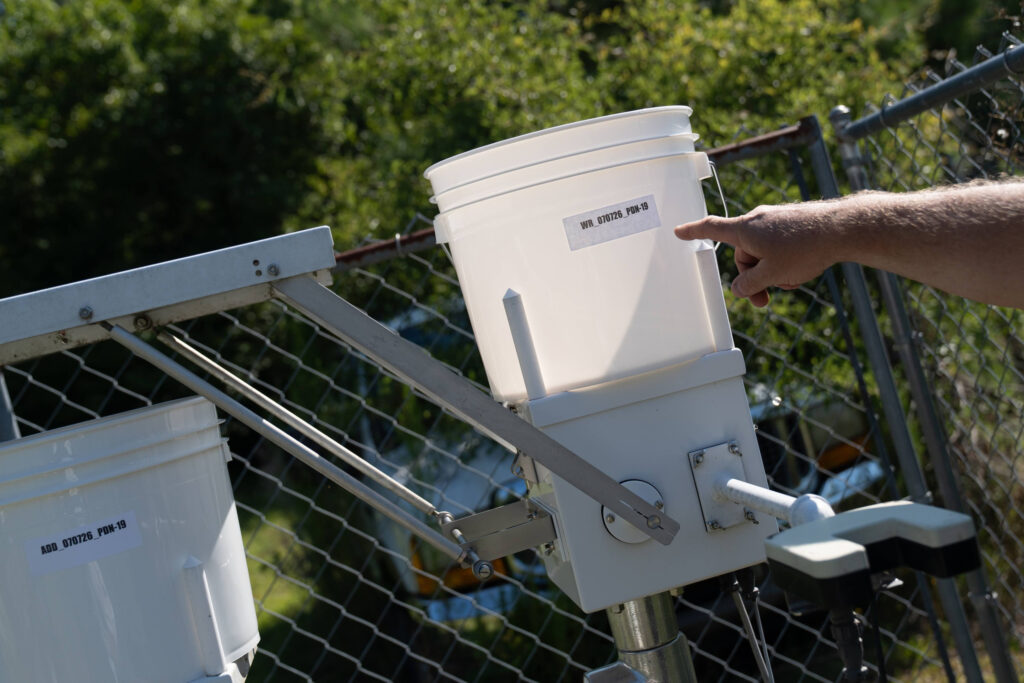
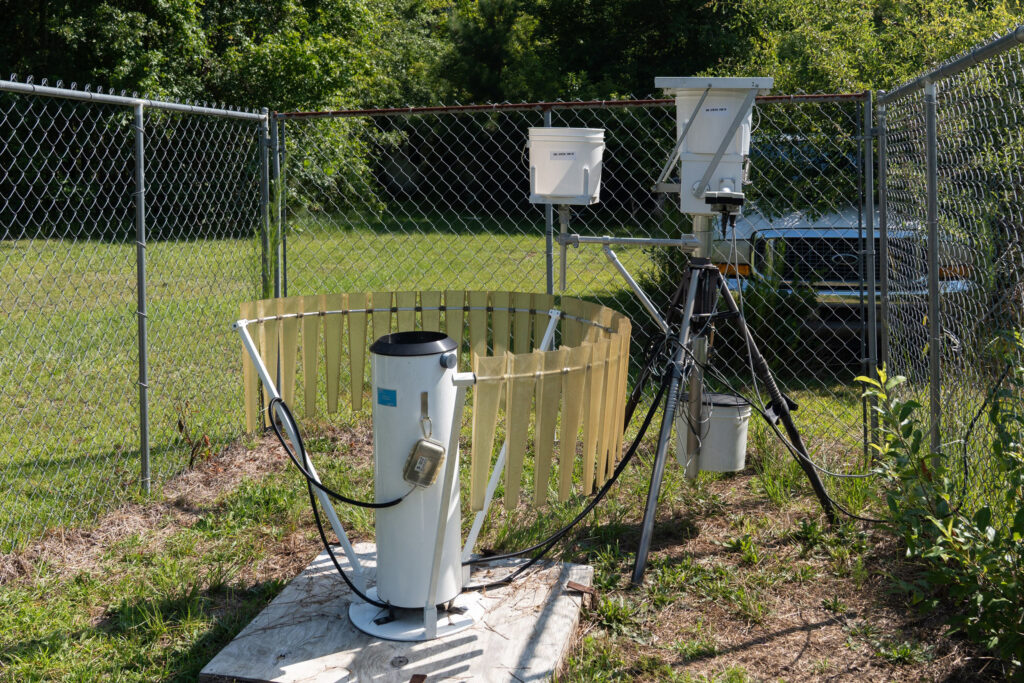
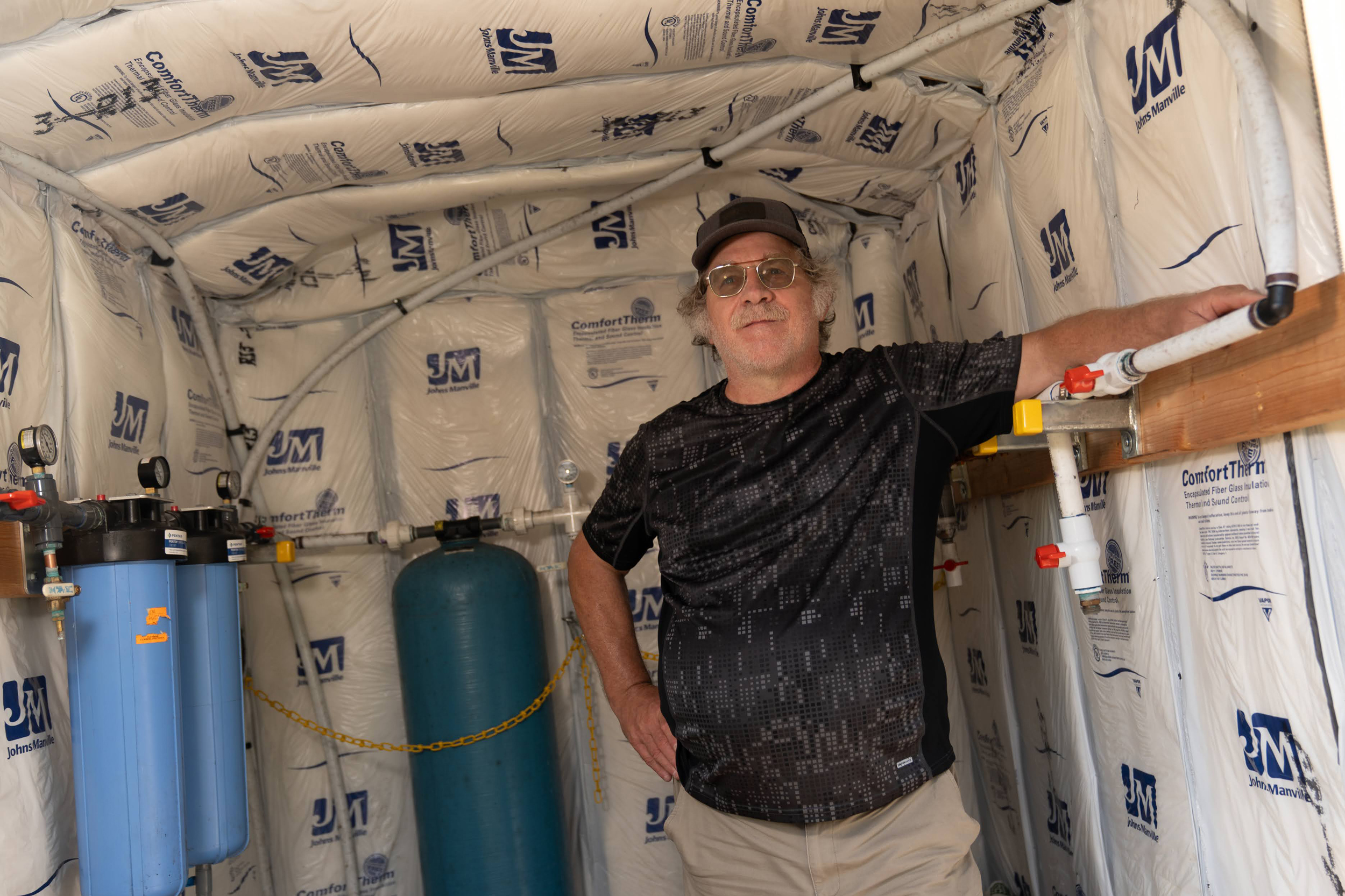
An air and rainwater sampling station installed by NC DEQ at Mike Watters’ home in Grays Creek. Credit: Mehmet Demirci/Inside Climate News
Meanwhile, the company was also allegedly misleading DEQ by reassuring the agency that it would not release GenX from a specific manufacturing area of Fayetteville Works, court documents show.
That was partially true, but DuPont later admitted that it had not disclosed it was releasing GenX and its precursors—chemicals that under some conditions can become GenX—from a different part of the plant into the Cape Fear River and the air through the stacks.
From the stacks, those chemicals mixed with atmospheric moisture, became GenX and contaminated the drinking water wells of thousands of people, state environmental regulators found, including the plaintiffs in the lawsuit.
“I know the chemicals affected more than just my property,” said Watters, who has participated in studies to measure PFAS in his blood. “I know what’s in my body, and the bodies of my wife, dog and son.”
“The communities that have been impacted by this company’s toxic pollution should be infuriated that Chemours is getting away with this,” said Jean Zhuang, senior attorney with the Southern Environmental Law Center. “After decades of research on how much they’ve destroyed the air and drinking water and soil and rivers and all of these communities, the company is fighting tooth and nail to shield itself. It has no intent to protect the community.”
This article was updated on July 13, 2026, to correct a statement about the type of lawsuit filed against Chemours and DuPont. It was not a class-action but a consolidated action.
About This Story
Perhaps you noticed: This story, like all the news we publish, is free to read. That’s because Inside Climate News is a 501c3 nonprofit organization. We do not charge a subscription fee, lock our news behind a paywall, or clutter our website with ads. We make our news on climate and the environment freely available to you and anyone who wants it.
That’s not all. We also share our news for free with scores of other media organizations around the country. Many of them can’t afford to do environmental journalism of their own. We’ve built bureaus from coast to coast to report local stories, collaborate with local newsrooms and co-publish articles so that this vital work is shared as widely as possible.
Two of us launched ICN in 2007. Six years later we earned a Pulitzer Prize for National Reporting, and now we run the oldest and largest dedicated climate newsroom in the nation. We tell the story in all its complexity. We hold polluters accountable. We expose environmental injustice. We debunk misinformation. We scrutinize solutions and inspire action.
Donations from readers like you fund every aspect of what we do. If you don’t already, will you support our ongoing work, our reporting on the biggest crisis facing our planet, and help us reach even more readers in more places?
Please take a moment to make a tax-deductible donation. Every one of them makes a difference.
Thank you,

Lisa Sorg
Reporter, North Carolina
Lisa Sorg is the North Carolina reporter for Inside Climate News. A journalist for 30 years, Sorg covers energy, climate environment and agriculture, as well as the social justice impacts of pollution and corporate malfeasance.
She has won dozens of awards for her news, public service and investigative reporting. In 2022, she received the Stokes Award from the National Press Foundation for her two-part story about the environmental damage from a former missile plant on a Black and Latinx neighborhood in Burlington. Sorg was previously an environmental investigative reporter at NC Newsline, a nonprofit media outlet based in Raleigh. She has also worked at alt-weeklies, dailies and magazines. Originally from rural Indiana, she lives in Durham, N.C.