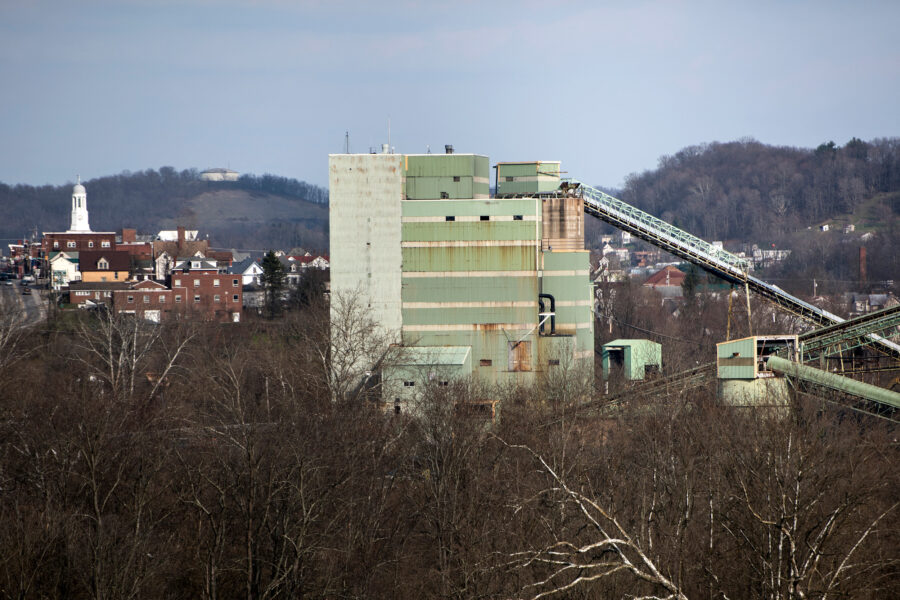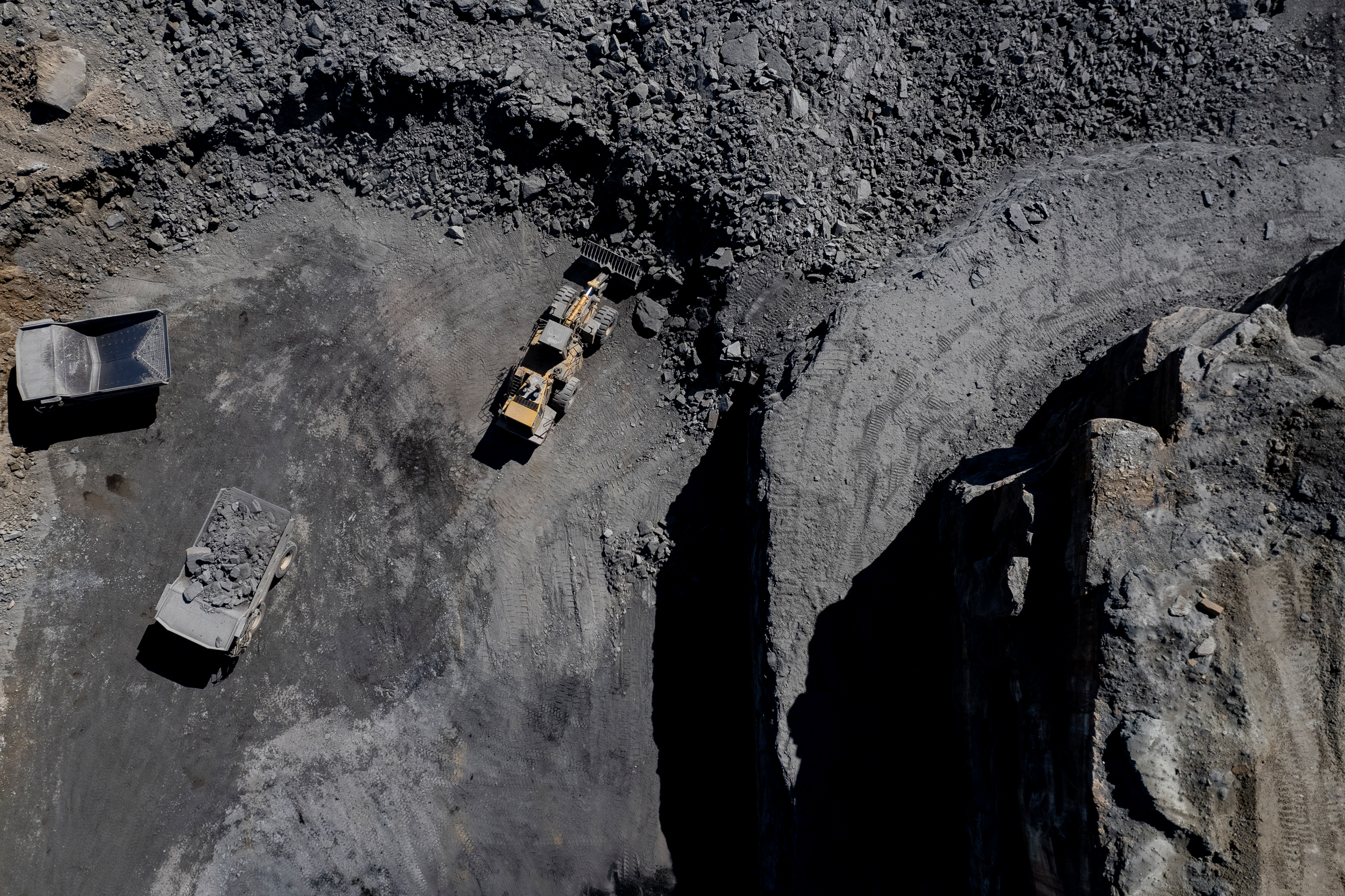


More than 356 billion tons of coal resources lie beneath federally owned land in the contiguous United States, according to a government report, whose new and comprehensive findings could escalate mining in those areas, most of them in the West.
The U.S. Geological Survey (USGS) issued the report, which estimated an additional 4.2 billion tons of coal reserves are already within a mining area and could be profitably extracted in the lower 48 states.
Alaska has at least 140 billion tons of available coal and could contain as much as 5.5 trillion tons, the report said. There are currently 34 active coal mines on federal lands.
“American Energy Dominance is more important than ever, and so is beautiful clean coal’s role in the production of electricity needed to fuel our future prosperity,” Secretary of the Interior Doug Burgum said in a press release. “Thanks to the USGS’s rigorous and independent assessment, we’re better equipped to manage America’s vast public lands responsibly while supporting energy security and economic opportunity.” The press release estimated that the coal reserves under federal lands “would be enough coal to supply all the nation’s needs for at least 600 years at the current rate of consumption.”
The environmental consequences of coal mining have been well-documented over many decades. Across the country, mining practices have polluted waterways with heavy metals and changed how water flows. Coal mining and abandoned mines have also caused subsidence, sinkholes and underground fires. A 2021 report from the nonprofit Appalachian Voices estimated the true cost to clean up and remediate the damage caused by coal mining in seven eastern states could be as much as $9.8 billion.
Worldwide, emissions from coal-fired power plants are the main driver of climate change. Global levels of carbon dioxide have dramatically increased, especially since the mid-20th century, and have warmed the planet, raised sea levels and destabilized weather patterns, causing droughts, heat waves and unprecedented flooding.
In 2025, President Donald Trump signed an executive order requiring several federal agencies to report on coal resources and reserves on lands owned by the U.S. government. The Department of the Interior, which manages federally owned lands, could then use that data to fulfill the other tenets of the executive order to revitalize the declining coal industry: expediting coal leasing, eliminating or weakening environmental regulations and ramping up coal exports.
This year, the Department of Energy allocated a half billion dollars to retrofitting or restarting 10 coal-fired power plants in the U.S. and Puerto Rico. At a National Coal Council meeting this week, EPA Administrator Lee Zeldin told members that “many of the items that were on your wish list are now done.” Earlier this year, coal industry leaders presented Trump with a trophy reading “Undisputed Champion of Beautiful Clean Coal.”
The USGS report focuses on the Mountain West and Alabama, the latter of which has three mines whose coal is used for making steel. However, Alaska, where the U.S. government owns 61 percent of the state’s 224 million acres, could be the next frontier for mining on federal lands. Because of Alaska’s remoteness and difficult terrain, its coal supply has been understudied. Only one mine is operating in the state, and it is on private property.
The Sierra Club Wyoming Chapter criticized the Trump administration’s plans to resurrect coal. “We’ve already seen the federal government try and fail to prop up coal mining on public lands, as we’ve seen from its failed bids across Wyoming and Montana,” said Acting Chapter Director for the Sierra Club in Wyoming Kelsey Yarzab Yates in a statement to Inside Climate News. “The reality is that demand for coal is declining, and no amount of political pressure will reverse the direction of the market. Is it really worth continuing to sacrifice our public lands and health to boost coal company profits?”
U.S. coal production has fallen by 56 percent since 2008, its peak year, according to the latest figures from the U.S. Energy Information Administration. The EIA cited a number of factors in the industry’s downturn: rising mining costs, increasingly stringent environmental regulations and competition from other sources of electric power generation.
Between 2011 and 2019, utility companies nationwide replaced or converted more than 100 coal-fired power plants with natural gas, the EIA reported.
About This Story
Perhaps you noticed: This story, like all the news we publish, is free to read. That’s because Inside Climate News is a 501c3 nonprofit organization. We do not charge a subscription fee, lock our news behind a paywall, or clutter our website with ads. We make our news on climate and the environment freely available to you and anyone who wants it.
That’s not all. We also share our news for free with scores of other media organizations around the country. Many of them can’t afford to do environmental journalism of their own. We’ve built bureaus from coast to coast to report local stories, collaborate with local newsrooms and co-publish articles so that this vital work is shared as widely as possible.
Two of us launched ICN in 2007. Six years later we earned a Pulitzer Prize for National Reporting, and now we run the oldest and largest dedicated climate newsroom in the nation. We tell the story in all its complexity. We hold polluters accountable. We expose environmental injustice. We debunk misinformation. We scrutinize solutions and inspire action.
Donations from readers like you fund every aspect of what we do. If you don’t already, will you support our ongoing work, our reporting on the biggest crisis facing our planet, and help us reach even more readers in more places?
Please take a moment to make a tax-deductible donation. Every one of them makes a difference.
Thank you,

Lisa Sorg
Reporter, North Carolina
Lisa Sorg is the North Carolina reporter for Inside Climate News. A journalist for 30 years, Sorg covers energy, climate environment and agriculture, as well as the social justice impacts of pollution and corporate malfeasance.
She has won dozens of awards for her news, public service and investigative reporting. In 2022, she received the Stokes Award from the National Press Foundation for her two-part story about the environmental damage from a former missile plant on a Black and Latinx neighborhood in Burlington. Sorg was previously an environmental investigative reporter at NC Newsline, a nonprofit media outlet based in Raleigh. She has also worked at alt-weeklies, dailies and magazines. Originally from rural Indiana, she lives in Durham, N.C.