


For generations, summer in Montana has meant long days outdoors. Children spent afternoons riding bicycles through quiet neighborhoods, swimming in lakes and rivers, hiking forest trails and playing baseball past sunset. Families planned camping trips months in advance, doublechecking that they had all the fishing, paddling and tenting gear they needed to sleep in cool mountain air under clear skies.
Today, many parents instead check the Environmental Protection Agency’s Air Quality Index before deciding whether their children can play outside at all.
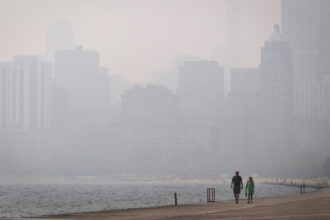
As wildfire season becomes longer and more severe across the American West, smoky skies have become an increasingly familiar part of summer. In Montana, where wildfire has always been part of the landscape, summer now includes days or even weeks when children are advised to stay indoors because the air outside is unhealthy.
Scientists have documented the growing health risks of wildfire smoke, particularly for children whose lungs are still developing.
But pediatricians and researchers say the consequences extend beyond children’s lungs. A 2024 UNICEF report found that wildfire smoke affects not only children’s respiratory health but also their learning, mental well-being and opportunities for play, warning that repeated smoke exposure can shape childhood in lasting ways.
Repeated smoke events are changing children’s daily routines, limiting opportunities for outdoor play and social interaction and reshaping how many families experience summer. Schools are investing in better air filtration systems as communities rethink how school buildings should function in a changing climate.
“I remember being stuck inside because of the smoke,” said Melody Irvine, who grew up in western Montana with asthma.
During smoky summers, outdoor activities that many children took for granted often disappeared for Irvine. Today, as a student at the University of Montana studying environmental science and social work, Irvine sees those childhood memories differently.
“When I was younger, it felt like something unusual,” she said. “Now it seems like smoky summers are becoming expected.”
A Threat to Physical, Mental and Emotional Development
Smoke’s shift from an occasional disruption to a recurring part of childhood is increasingly drawing the attention of public health experts.
“Kids typically spend more time outdoors, and they’re usually running around, increasing their breathing rate and their exposure to wildfire smoke,” said Kerri Mueller, an air quality specialist with the Missoula City-County Health Department.
Smoke exposure can trigger headaches, itchy eyes, sore throats, coughing, wheezing and asthma flare-ups, while repeated exposure may reduce lung function.
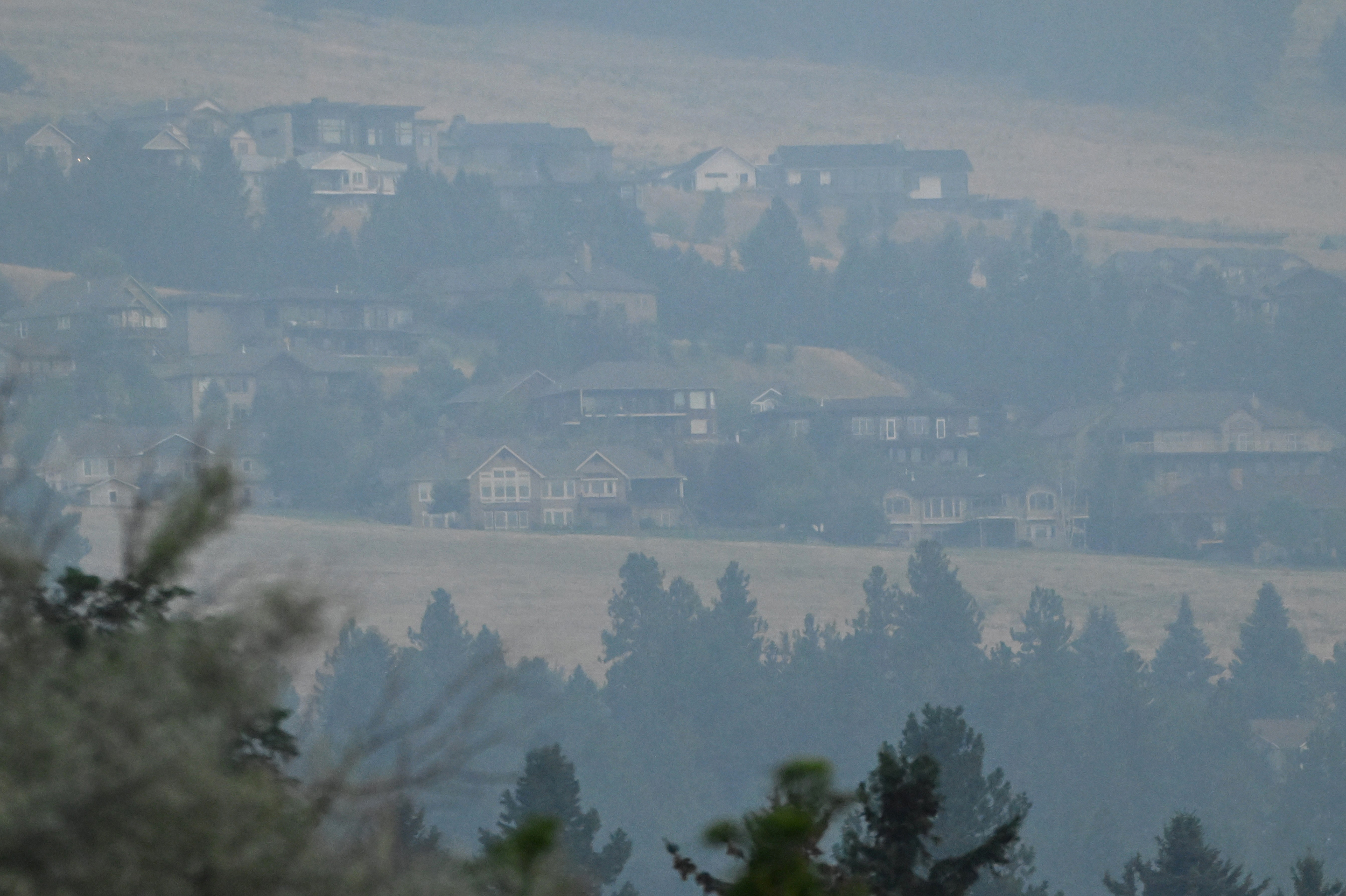
Wildfire smoke contains tiny particles known as PM2.5, which can travel deep into the lungs and enter the bloodstream. Studies in the Journal of Exposure Science & Environmental Epidemiology have linked exposure to wildfire smoke with asthma attacks, respiratory infections and emergency department visits, particularly among children.
“Children face greater risks from wildfire smoke because their lungs are still developing, especially during the first several years of life, and they breathe more air relative to their body weight than adults,” said Dr. Lori Byron, a pediatrician and chair of the nonprofit Montana Health and Climate. “We also know much more now about particulate matter from wildfire smoke. Those particles can get into our brains and even reach unborn babies.”
“We’re only beginning to understand the full extent of the harm they can cause,” said Byron.
Although Montana lacks statewide pediatric hospitalization data linking wildfire smoke directly to children’s illnesses, pediatricians say they routinely see more children with asthma attacks and other respiratory problems during smoke events. National studies show increases in emergency department visits among children during periods of heavy wildfire smoke, Byron said.
During smoke season, many parents begin each morning by checking not only the weather forecast but also the Air Quality Index, which can determine not only if their children can play outside, but if it is safe to open the windows to cool their home.
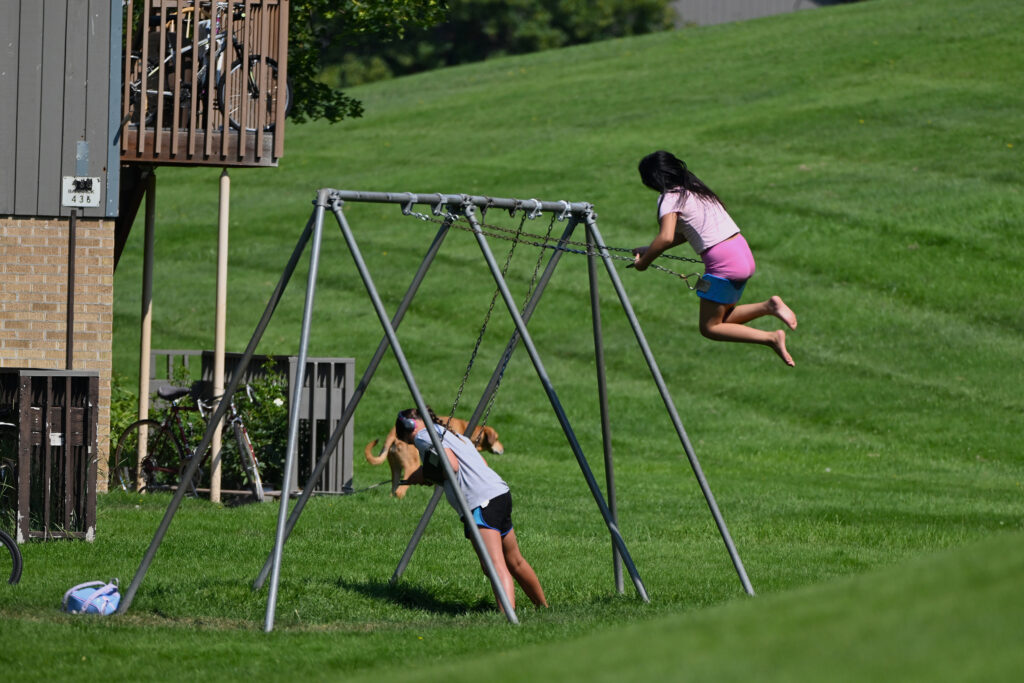
When wildfire smoke blankets a community for days or weeks, childhood routines begin to disappear. Soccer practices are canceled. Playgrounds sit empty. Summer camps move indoors or suspend programming. Even simple activities like walking a dog or riding a bicycle become difficult when air quality reaches unhealthy levels.
Such outdoor play is not a luxury, according to experts, but essential to healthy child development. Running across a field, playing with friends, climbing trees or just loitering outdoors are far more than physical exercise for children, a September 2018 study from the American Academy of Pediatrics reported. These experiences build social skills, confidence, emotional resilience and overall well-being. Mental health experts say repeated disruptions to those routines can also leave children feeling apprehensive and uncertain.
For children, repeated cancellations and long periods indoors can create more than disappointment. When familiar routines, social activities and opportunities for independent play repeatedly disappear, children may begin to feel that their environment is unpredictable or unsafe. Experts say that loss of stability can heighten stress, particularly for younger children who may not fully understand why smoke keeps disrupting their lives.
A 2023 report in Current Psychiatry Reports found that children exposed to wildfire disasters are at greater risk of anxiety, stress, depression and post-traumatic stress symptoms, underscoring that the impacts of wildfires extend well beyond physical illness.
The emotional disruption of repeatedly losing normal childhood experiences may leave effects as lasting as the asthma attacks and respiratory problems pediatricians routinely see during smoke events, Byron said.
This story is funded by readers like you.
Our nonprofit newsroom provides award-winning climate coverage free of charge and advertising. We rely on donations from readers like you to keep going. Please donate now to support our work.
Donate NowAnd while the interruptions may be temporary, experts say their repeated incidence can lead their effects to accumulate over time.
A recent brief from Harvard University’s Center on the Developing Child argues that repeated smoke exposure during early childhood can affect the environments and experiences that shape children’s brain development, learning and emotional well-being.
“Kids don’t understand why the world suddenly isn’t stable or why they can’t do what was planned,” Byron said. “It kind of undermines a child’s faith in the world.”
Family Pressures
Wildfire smoke also leaves parents dealing with new concerns.
“The summer I was pregnant with my daughter was especially hot and smoky,” said Sarah Lundquist, executive director of Montana based non profit Families for a Livable Climate. “After experiencing heat-related fainting spells, we bought portable air conditioners and air purifiers just to keep our home safe. That experience has stayed with me. Now, as a mother of two young children, I check the air quality almost every day before deciding whether it’s safe for them to play outside. Something as simple and joyful as an afternoon at the park has become a health calculation.”
Children sense their parents’ anxiety, psychologists note, and often begin to feel less secure themselves.
Researchers who study children’s mental health have found that environmental disasters can affect families collectively.
Parents often have to rearrange work schedules, cancel summer plans and keep children indoors for days at a time. As familiar routines disappear, families are left trying to substitute indoor activities that cannot fully replicate children’s need for exercise, social interaction and unstructured play.
“Wildfire smoke really throws a wrench into families’ lives,” Byron said.
Pediatric experts say indoor activities can help pass the time, easing the stress both the children and their parents feel, but they cannot fully replace the physical, social and developmental benefits of outdoor play.
While research directly linking wildfire smoke to increased screen time remains limited, many families say digital devices become children’s primary source of entertainment when smoke keeps them indoors. And while computers, tablets and smartphones might provide some distraction when a smoke wave keeps kids housebound, they may also compound the mental and emotional challenges the lack of time outside is already imposing.
A 2022 systematic review and meta-analysis published in JAMA Psychiatry found that greater screen time was associated with more anxiety, depression, attention problems and other behavioral difficulties in children.
Ann Bates, a Missoula resident who occasionally works as a volunteer with children at a summer camp and does fundraising for children’s programs, believes governments need to do more to protect young people from the growing impacts of wildfire smoke.
“I’m a mother, so I know how stressful wildfire days can be,” she said. “I was always checking on my daughter wondering what she was doing and how she would get to and from school safely. She is in college now, but when I see young children struggling at school because of the smoke, sometimes with tears in their eyes, it breaks my heart. It makes me cry because they shouldn’t have to grow up like this.”
Smoked Out Schools
Smoke has become a routine consideration in Missoula County Public Schools during late summer and early fall, facilities director Burley McWilliams said in an interview, and keeping outdoor smoke from entering school buildings is far more difficult than many people realize.
High schools, for example, serve hundreds of students who move between classrooms, cafeterias and outdoor spaces. Doors open constantly throughout the day, allowing smoke to enter even when ventilation systems are operating.
“Our high school has about 1,200 students,” McWilliams said. “They’re going in and out of the building all day long. Every time those doors open, smoke comes inside.”
Heat compounds the challenge.
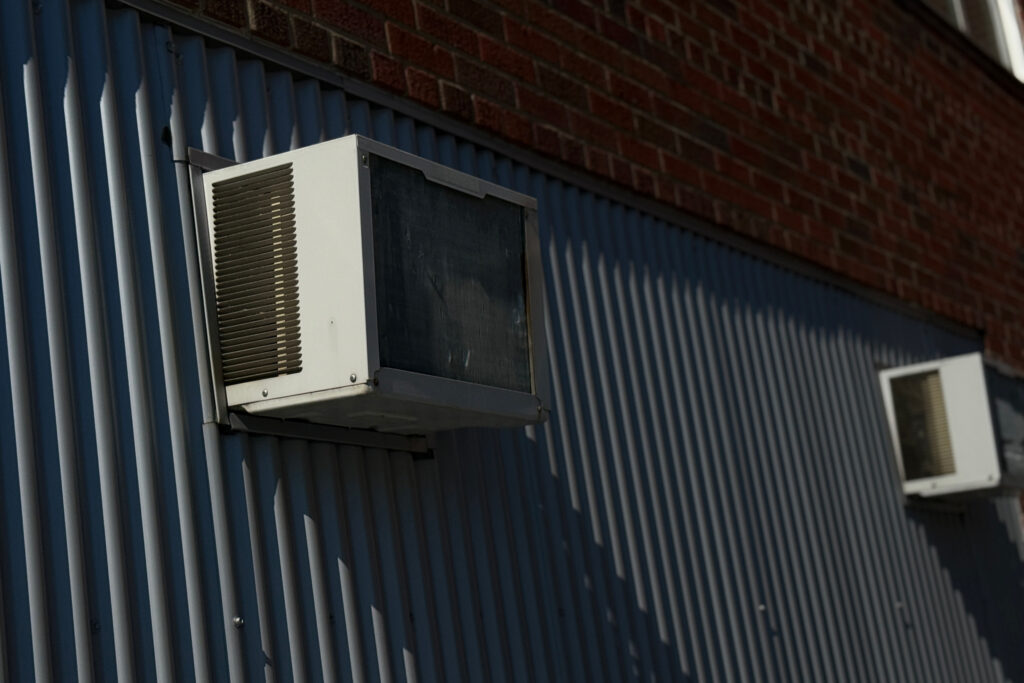
Many Montana schools were constructed decades ago, before prolonged heat waves became common. As temperatures rise, classrooms without air conditioning become increasingly difficult to cool, particularly if smoke outside prevents opening windows, affecting both students and teachers.
A study of California public schools found that between 2002 and 2019, wildfire and smoke accounted for nearly two-thirds of all weather-related school closure days. After the Los Angeles wildfires of January 2025, school closures, relocations and poor air quality disrupted learning for more than 700,000 students for months.
Researchers at Stanford University have also found that wildfire smoke can reduce students’ academic performance, suggesting that the educational costs of smoke extend well beyond the days when schools are forced to close.
Many educators must now consider wildfire smoke in their plans for instruction, student health and school operations.
As hotter summers, longer wildfire seasons and more frequent smoke events become an expected part of life in western Montana, schools are increasingly being designed to protect children’s health during climate emergencies by keeping classrooms cool during heat waves, filtering smoke-filled air and, when necessary, serving as clean-air shelters for surrounding communities.
That reality has inspired Montana’s Climate Ready Schools initiative. Missoula County Public Schools is working together with partner organizations to redesign schools so they can better withstand the challenges of a changing climate.
The plans include upgraded HVAC systems, HEPA air filtration, more shaded playgrounds and energy-efficient buildings.
CIS, an environmental and climate resilience infrastructure company, is primarily doing the planning, technical assistance, community engagement and resilience design for the initiative.
“School buildings must now be designed with climate change in mind,” said Sarah Dobie, a project manager with CIS.
Funding, however, remains an obstacle. “Making just three schools climate resilient is expected to cost about $30 million, an investment that is difficult for most local school districts to afford,” she said.
That leaves most families on their own to figure out how to live with smoke as increasingly hazy skies become a normal part of childhood.
About This Story
Perhaps you noticed: This story, like all the news we publish, is free to read. That’s because Inside Climate News is a 501c3 nonprofit organization. We do not charge a subscription fee, lock our news behind a paywall, or clutter our website with ads. We make our news on climate and the environment freely available to you and anyone who wants it.
That’s not all. We also share our news for free with scores of other media organizations around the country. Many of them can’t afford to do environmental journalism of their own. We’ve built bureaus from coast to coast to report local stories, collaborate with local newsrooms and co-publish articles so that this vital work is shared as widely as possible.
Two of us launched ICN in 2007. Six years later we earned a Pulitzer Prize for National Reporting, and now we run the oldest and largest dedicated climate newsroom in the nation. We tell the story in all its complexity. We hold polluters accountable. We expose environmental injustice. We debunk misinformation. We scrutinize solutions and inspire action.
Donations from readers like you fund every aspect of what we do. If you don’t already, will you support our ongoing work, our reporting on the biggest crisis facing our planet, and help us reach even more readers in more places?
Please take a moment to make a tax-deductible donation. Every one of them makes a difference.
Thank you,

Mosabber Hossain
Fellow
Mosabber Hossain is an Inside Climate News Fellow and an award-winning climate and environmental investigative journalist from Bangladesh. His reporting focuses on climate change, biodiversity, environmental justice, adaptation and corruption. His work with Reuters and other international outlets has been republished globally, and some of his reporting contributed to discussions featured on the agenda of the World Economic Forum. Mosabber is a graduate student at the University of Montana studying environmental science and natural resource journalism. Previously, he was a fellow with the Institute for Journalism and Natural Resources and Investigative Reporters and Editors. He is a recipient of the South Asian Investigative Journalism Award from the Thomson Foundation and was featured among eight journalists during the organization’s 60th anniversary for the impact of his investigative reporting. Mosabber is also a wildlife and nature photographer whose work has been published internationally.