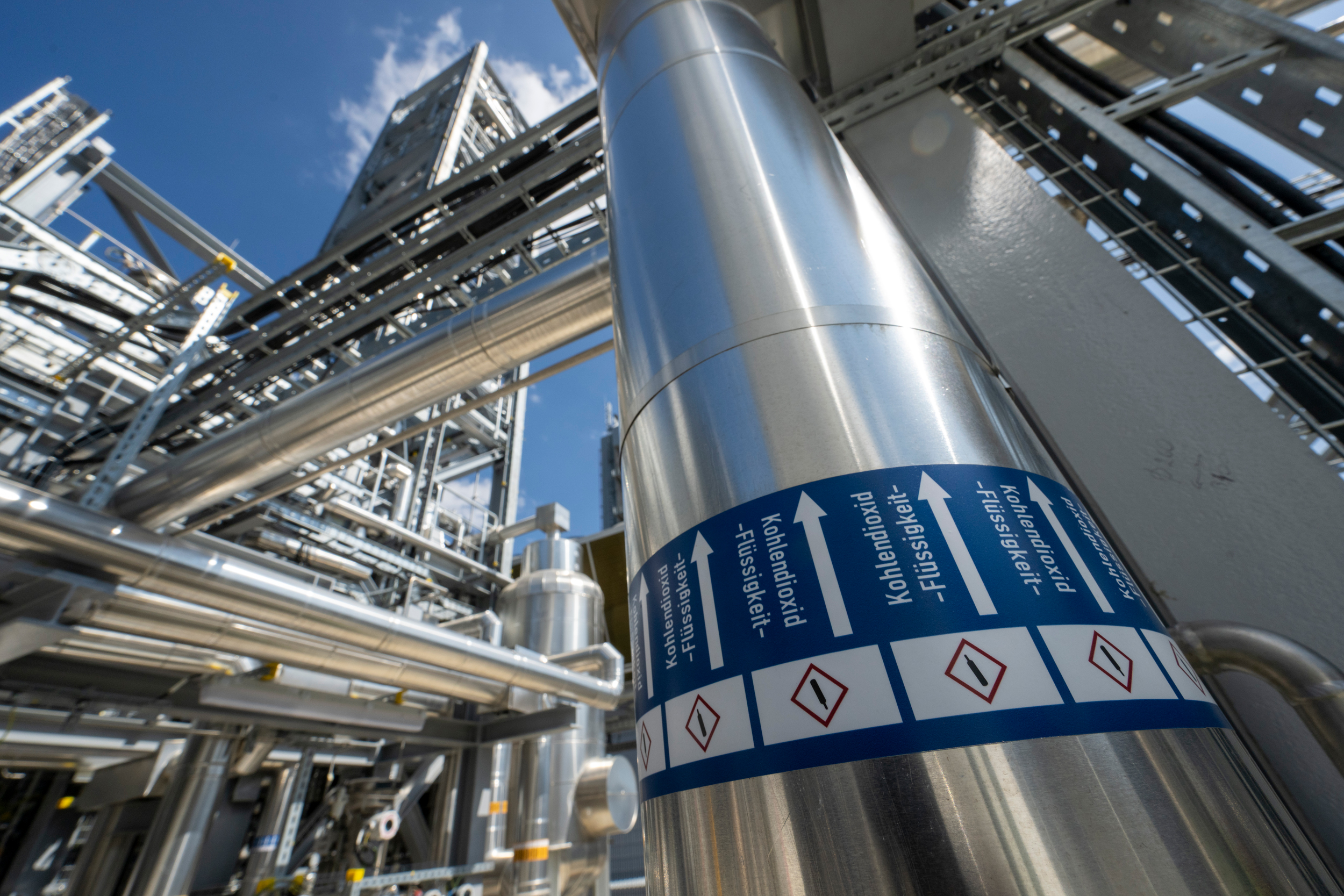


ExxonMobil is striking back against a European Union climate rule built around carbon capture and storage, a technology the oil giant has promoted as a way to address global warming.
The company’s affiliates filed a notice of dispute under the Energy Charter Treaty, according to the arbitration industry publication Investment Arbitration Reporter. That treaty is a 1990s-era investment agreement that gives corporations the right to sue governments before arbitration panels when they believe new policies harm their profits.
The process, known as investor-state dispute settlement, or ISDS, has become a flashpoint in debates over governments’ ability to address climate change and enact environmental and public health protections.
At the center of Exxon’s challenge is the European Union’s 2024 Net-Zero Industry Act, which sets a goal for injecting carbon dioxide deep underground to prevent it from warming the climate. Exxon affiliates are among the companies required to help the bloc be able to sequester 50 million metric tons of CO2 annually by 2030.
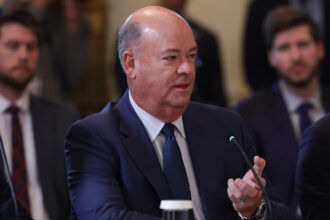
Exxon did not respond to Inside Climate News’ requests for comment but told IAReporter that the carbon capture rule is an example of the European Commission legislating “based on ideology instead of logic” and that the rule would disadvantage businesses.
“This dispute is as much about saving Europe from itself as it is about the oil and gas industry fighting yet another irrational law from Brussels,” the company’s statement said.
The new claim comes as historic wildfires rip through France and Spain, forcing more than 300,000 people to evacuate their homes. Scientists have found that climate change exacerbates hot, dry conditions that make fires more severe.

A spokesperson for the European Commission, the European Union’s executive arm, said in a written statement to Inside Climate News that it received a notice of dispute under the Energy Charter Treaty from petrochemical and energy companies incorporated in Belgium, Luxembourg and the United Kingdom. Exxon has affiliates in those three countries.
“We are confident that the measures adopted by the EU comply with the Energy Charter Treaty and any other applicable rules of international law,” the spokesperson said.
The challenge is the latest ISDS claim by a fossil fuel company to contest climate and environmental policies. In one case, the United States narrowly avoided a $15 billion claim over a canceled oil pipeline. Exxon and Shell have also brought claims against the Netherlands after the government closed a gas field where drilling operations induced damaging earthquakes. A Dutch parliamentary investigation found that the companies and government had prioritized revenue over the safety of residents in the region.
Exxon’s claim against the European Union comes two years after the bloc moved to withdraw from the Energy Charter Treaty, citing ISDS’ chilling effect on climate change policies.
But the company can still bring a dispute because of the treaty’s “sunset clause,” a provision common in ISDS treaties and contracts that allows companies to file claims for years—or even decades—after a government withdraws from a treaty. Bolivia, for instance, began terminating its ISDS treaties in 2007, but its exposure won’t end until 2035.
At least 10 countries have withdrawn from the Energy Charter Treaty, many citing its incompatibility with climate goals. Multiple international and national courts have recognized that governments have binding legal obligations to address climate change. Many legal scholars say ISDS conflicts with those duties by leaving governments exposed to costly arbitrations, which are ultimately paid for by taxpayers.
Researchers analyzing publicly available ISDS cases found that fossil fuel companies have won at least $82.8 billion in awards from governments. They say that figure is a significant underestimate because many cases remain confidential.
Because Exxon’s new notice of dispute against the European Union is not public, it is unclear when it was filed or how much money the company may be seeking.
Under the Energy Charter Treaty, a notice of dispute triggers a three-month period during which the parties are encouraged to settle. If not, the company can take its claim to arbitration.
This story is funded by readers like you.
Our nonprofit newsroom provides award-winning climate coverage free of charge and advertising. We rely on donations from readers like you to keep going. Please donate now to support our work.
Donate NowHuman rights and environmental advocates have sharply criticized the Energy Charter Treaty and the broader ISDS system, made up of thousands of treaties and contracts. Advocates argue these agreements can deter governments from enacting measures to protect the environment and public health and have allowed corporations to win billions of dollars in awards even when they pollute the environment or violate human rights.
Wall Street firms, recognizing how lucrative the system can be for corporations, have begun funding some companies’ claims in exchange for a cut of the awards. An Inside Climate News investigation into the ISDS system found that those investors are profiting off a system weighted in favor of corporations and may be increasing the number of claims.
Supporters of ISDS argue it promotes foreign investment, though there is limited evidence that is the case. They also say it protects investors from unfair or inadequate judicial systems.
But while ISDS allows corporations to bypass national courts, communities affected by those companies typically are left to seek remedies through the very courts that companies criticize as unreliable. Legal experts say that asymmetry deepens the already existing imbalance of power between foreign companies and local communities.
Lukas Schaugg, a policy advisor at the International Institute for Sustainable Development, a think tank focused on the environment and related economic issues, said in a written statement to Inside Climate News that the carbon capture rule invoked in Exxon’s notice of dispute is a “modest” imposition on the company.
The dispute isn’t the first time fossil fuel companies have challenged European Union climate policies, he said, pointing to the bloc’s 2022 windfall tax on fossil fuel producers, which drew an ISDS claim from an oil refiner. That arbitration is pending. Exxon also challenged the tax in a European court. Italy and Germany have faced ISDS claims and threats of claims over their fossil fuel regulations and phase-out policies.
“[T]he message to governments is that no climate obligation on this industry survives contact with investment arbitration,” Schaugg said.
About This Story
Perhaps you noticed: This story, like all the news we publish, is free to read. That’s because Inside Climate News is a 501c3 nonprofit organization. We do not charge a subscription fee, lock our news behind a paywall, or clutter our website with ads. We make our news on climate and the environment freely available to you and anyone who wants it.
That’s not all. We also share our news for free with scores of other media organizations around the country. Many of them can’t afford to do environmental journalism of their own. We’ve built bureaus from coast to coast to report local stories, collaborate with local newsrooms and co-publish articles so that this vital work is shared as widely as possible.
Two of us launched ICN in 2007. Six years later we earned a Pulitzer Prize for National Reporting, and now we run the oldest and largest dedicated climate newsroom in the nation. We tell the story in all its complexity. We hold polluters accountable. We expose environmental injustice. We debunk misinformation. We scrutinize solutions and inspire action.
Donations from readers like you fund every aspect of what we do. If you don’t already, will you support our ongoing work, our reporting on the biggest crisis facing our planet, and help us reach even more readers in more places?
Please take a moment to make a tax-deductible donation. Every one of them makes a difference.
Thank you,

Katie Surma
Reporter, Pittsburgh