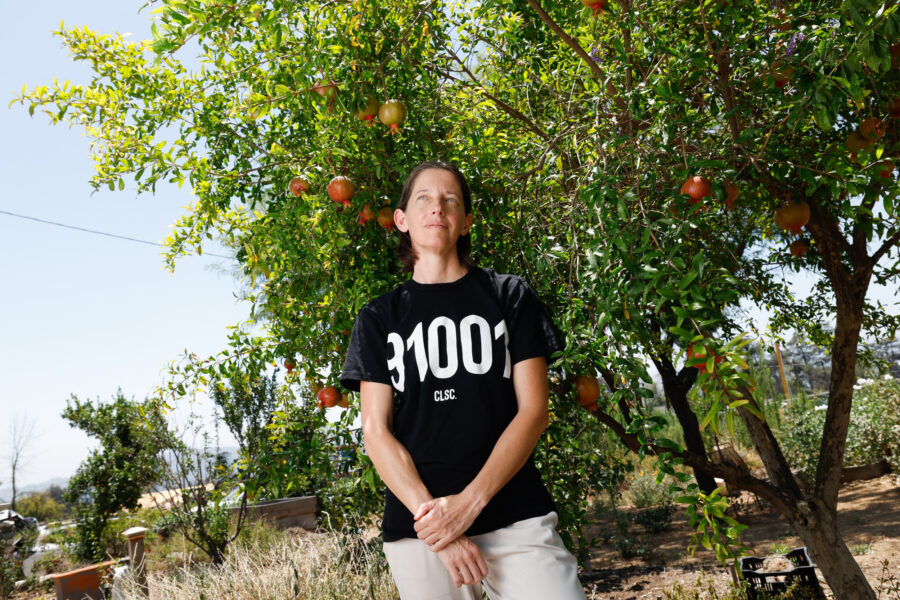


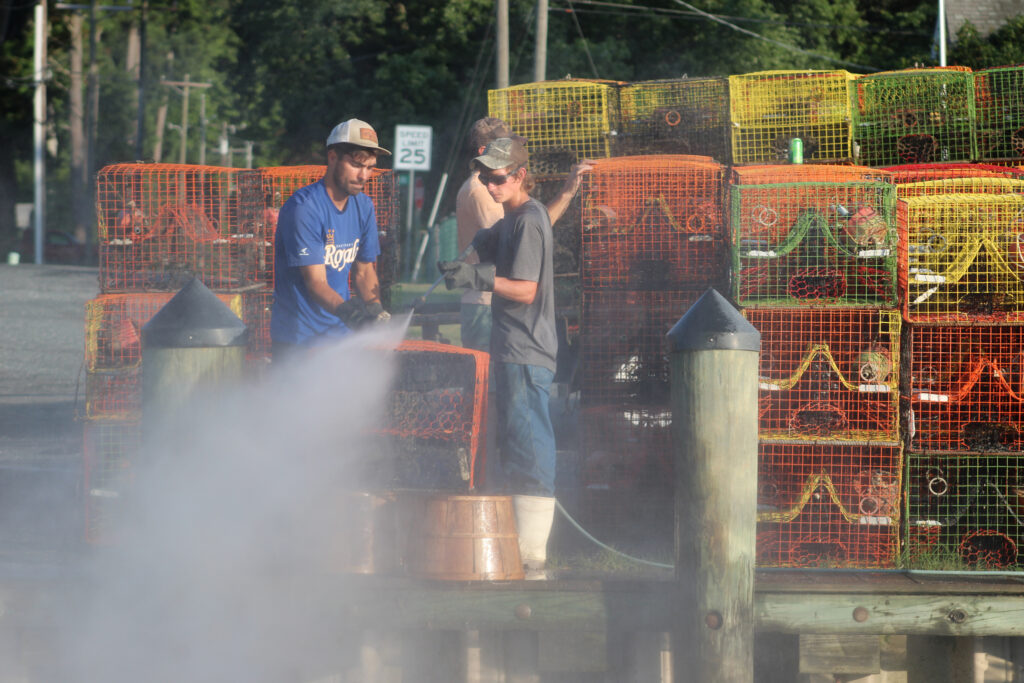
When Katie Dawson’s deckmates measure a black sea bass that’s too small, she asks to return it.
“If you don’t take care of them properly, you’re just wasting it,” said Dawson. “And I don’t want to do that because that’s not only my future, but that’s my son’s future.”
Dawson has cared for the black sea bass, and the broader ecosystem they’re a part of in coastal Virginia, for 40 years. She runs a commercial fishing business with her husband on a vessel named Salacia, the name of the Roman goddess of saltwater.
She’s worried that the ecosystem that supports her livelihood could be in jeopardy: A company wants to mine almost 2,500 square miles of the seafloor, an area larger than Delaware, between three and 64 miles east of the Delmarva Peninsula and just south of Dawson’s home.
“It totally destroys a way of life that we depend on,” she said.
The company, Odyssey Marine Exploration, is seeking a lease in order to mine the area’s heavy mineral sands. The sands could contain titanium, used in paints and toothpaste; zirconium, used in computing and for defense weapons; and phosphates, used in fertilizers. The company has said it would use the separated sand on beaches for projects that combat land losses.
Odyssey did not respond to requests for comment for this story. But in a 2025 press release about the project, the company said it had “carefully selected the proposed lease area to avoid sensitive habitats, marine protected areas, and active maritime zones.”
The proposal comes after President Donald Trump’s push to increase the domestic supply of critical minerals to bolster economic and national security interests. His executive order, “Unleashing America’s Offshore Critical Minerals and Resources,” signed in April 2025, states that “Vast offshore seabed areas hold critical minerals and energy resources.” Odyssey CEO Mark Gordon said in the release that the proposed project would “power our economy, strengthen our defenses, and support American jobs.”
Matt Giacona, acting director of the Bureau of Ocean Energy Management, which is reviewing the proposal, said in a news release, “Virginia’s offshore mineral resources present a pathway to lessen foreign dependence and reinforce America’s strategic position by establishing secure domestic supply chains.”
A different process than deep-sea mining, shallow seabed mining is still unproven in the U.S. or anywhere else in the world. Odyssey’s plan is one of three proposals in the U.S. Tentative projects in Namibia, Baja, Mexico, and New Zealand have been paused, yet to start and rejected, respectively.
Dawson said she voted for Trump, but she’s disheartened by his administration’s advancement of offshore mining.
“It’s very disappointing because I know he was very against the windmills. He had the fisherman’s vote with the fact that he was against the windmills,” said Dawson. “To support something that’s so much more destructive is just mind-boggling.”
In November, Odyssey submitted a request for a lease sale to mine the area to the Bureau of Ocean Energy Management. On June 23, the agency announced a 30-day public comment period for the project, which was recently extended through Aug. 22.
If BOEM determines there is “sufficient interest” for the sale, it will then identify the exact area to be leased, conduct a National Environmental Policy Act review, announce a proposed notice of a lease sale and then hold the sale.
Dawson is not alone in her worries. Along with concerns over how mining would affect the coasts’ natural habitat, residents, environmental groups and local governments have submitted comments about the need to protect Virginia’s seafood economy, which generated $1.3 billion and supported roughly 7,200 jobs in 2023.
The counties of Accomack and Northampton, the Accomack-Northampton Planning District Commission, the city of Virginia Beach and the town of Ocean City, Maryland, are among those weighing in with concerns. The Virginia Maritime Association wrote to BOEM that it wants to make sure the lease avoids conflicts with NASA’s Wallops Island flight facility and the heavy vessel traffic around the Norfolk naval base and Virginia’s port.
Joseph Grist, commissioner at the Virginia Marine Resources Commission, which regulates the state’s coastal waters, wrote in a letter to BOEM that he has “critical concerns” over impacts to fish, the seafood industry and other businesses reliant on the coast.
“Any proposed mining activities in these waters must be accompanied with robust mitigation measures to address the concerns described above,” Grist wrote.
BOEM declined to comment. In an earlier statement, BOEM’s Giacona said the agency’s evaluation “is designed to identify locations where responsible marine minerals development can advance innovation, support production growth, and sustain future progress.”
How Many Minerals?
Odyssey wants to mine an area just beyond Virginia’s jurisdiction in coastal waters on the Outer Continental shelf with depths of 15 to 330 feet. About 140 miles further east is the continental slope, where the floor plunges to depths of 10,000 feet.
It’s not clear exactly how many minerals are there—or where they are.
Sampling of select areas by the Virginia Department of Energy found the highest concentrations of heavy mineral sands at the southern tip of the Delmarva peninsula. Virginia Energy also used X-ray technology in the Sandbridge area on the other side of the Chesapeake Bay, east of Virginia Beach.
This story is funded by readers like you.
Our nonprofit newsroom provides award-winning climate coverage free of charge and advertising. We rely on donations from readers like you to keep going. Please donate now to support our work.
Donate NowSeparating out 310,000 cubic yards of sand could generate $1 million in economic value, Virginia Energy found. That doesn’t factor in logistics and processing costs.
While acknowledging the presence of the minerals, David Hawkins, a geologist with Virginia Energy, said at a May conference that some “hot spots” are “anomalies,” and they were discovered during dated research from the 1980s and ’90s.
“Maybe we should do a little more follow-up to really understand everything that’s there,” Hawkins said.
Odyssey, in its lease request, stated it “is confident it can define and develop mineral resources identified in leased areas,” but redacted figures on the quantities of minerals it expects to find. The company also did not clarify if the minerals would be separated from the sand offshore or onshore, which alters the cost of the operation. Odyssey is requesting a minimum 20-year lease, according to its comments.
Dylan Mason, public policy manager with the environmental nonprofit Lynnhaven River NOW, said how much sand would need to be harvested is “a huge question.”
“You might really need to get a lot of sand sucked up before this can be commercially viable and an economically viable product,” Mason said.
The Foundation for Marine Biodiversity
To suck up the minerals from the seafloor, Odyssey wants to use a trailing suction hopper dredge, which involves a vessel dragging a vacuum along the seafloor, digging almost 10 feet into it. The material is sucked up and piped into the hopper of the vessel, where it’s stored for processing. The water is filtered out and returned to where it came from.
The U.S. Army Corps of Engineers uses this technology to clear navigational channels. But those are localized projects not carried out at the scale of Odyssey’s proposals, Mason said. The dredge can create a plume of sediment that can be fatal for marine organisms.
“We’re talking a much bigger scar that is left,” Mason said. “We don’t know, how long does it take for that to sort of fill back in and for things to resume in that benthic habitat the way that it was before?”
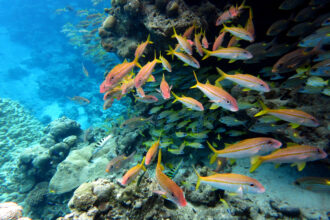
The ecosystem targeted by the company is diverse. The leasing area’s east edge is near the Norfolk Canyon, a chasm in the seafloor that is home to corals.
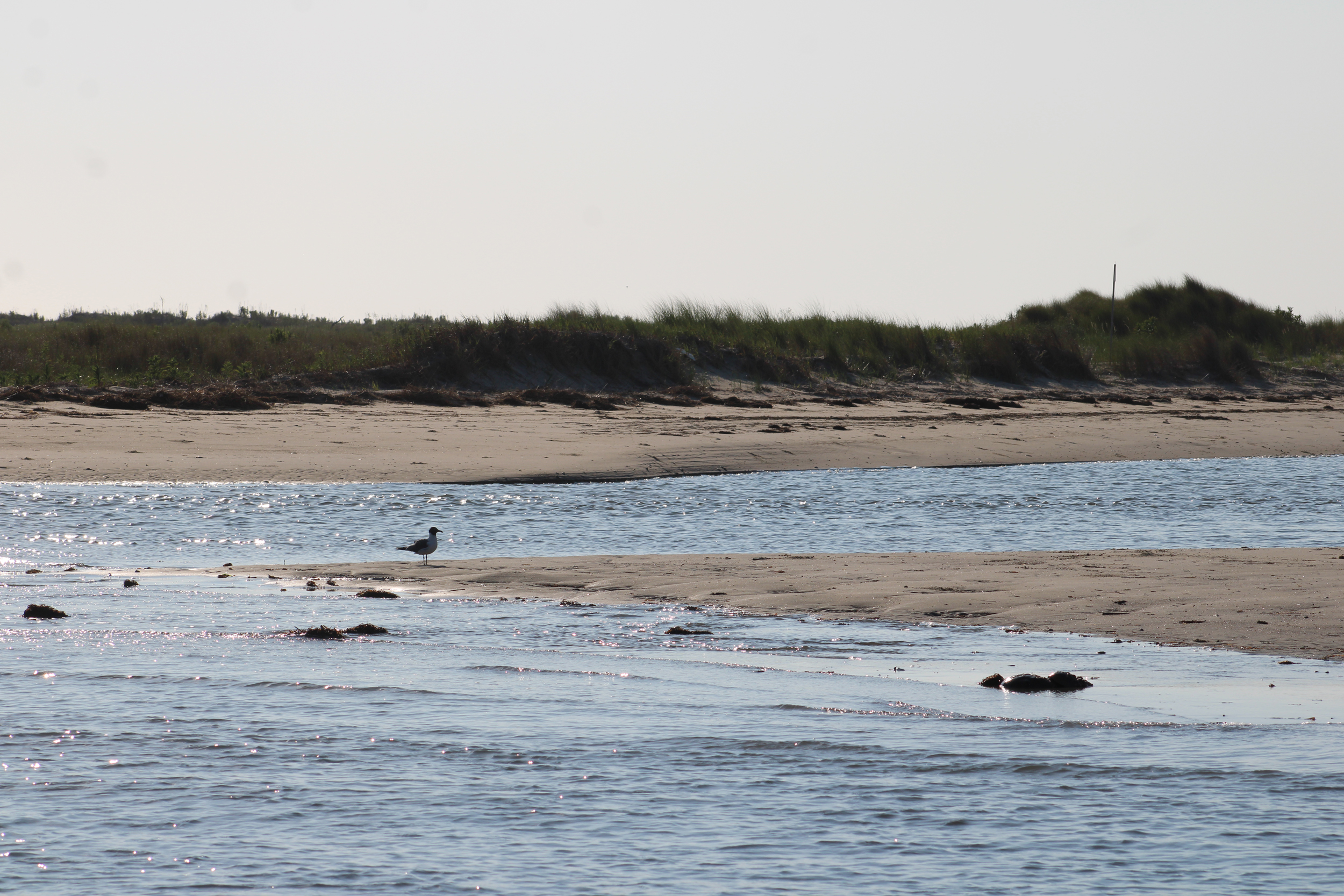
There’s also the Virginia Coastal Reserve, a collection of barrier islands up and down the Eastern Shore’s coast crucial to diffusing wave energy as a natural way to combat land loss. On those islands are migratory birds, like the whimbrel, which need the breaking area to refuel.
In the water, the Nature Conservancy has restored seagrass to bring back scallops. Menhaden, a keystone fish species and forage fish for striped bass, osprey and a fishery, migrate in and out of the Chesapeake Bay.
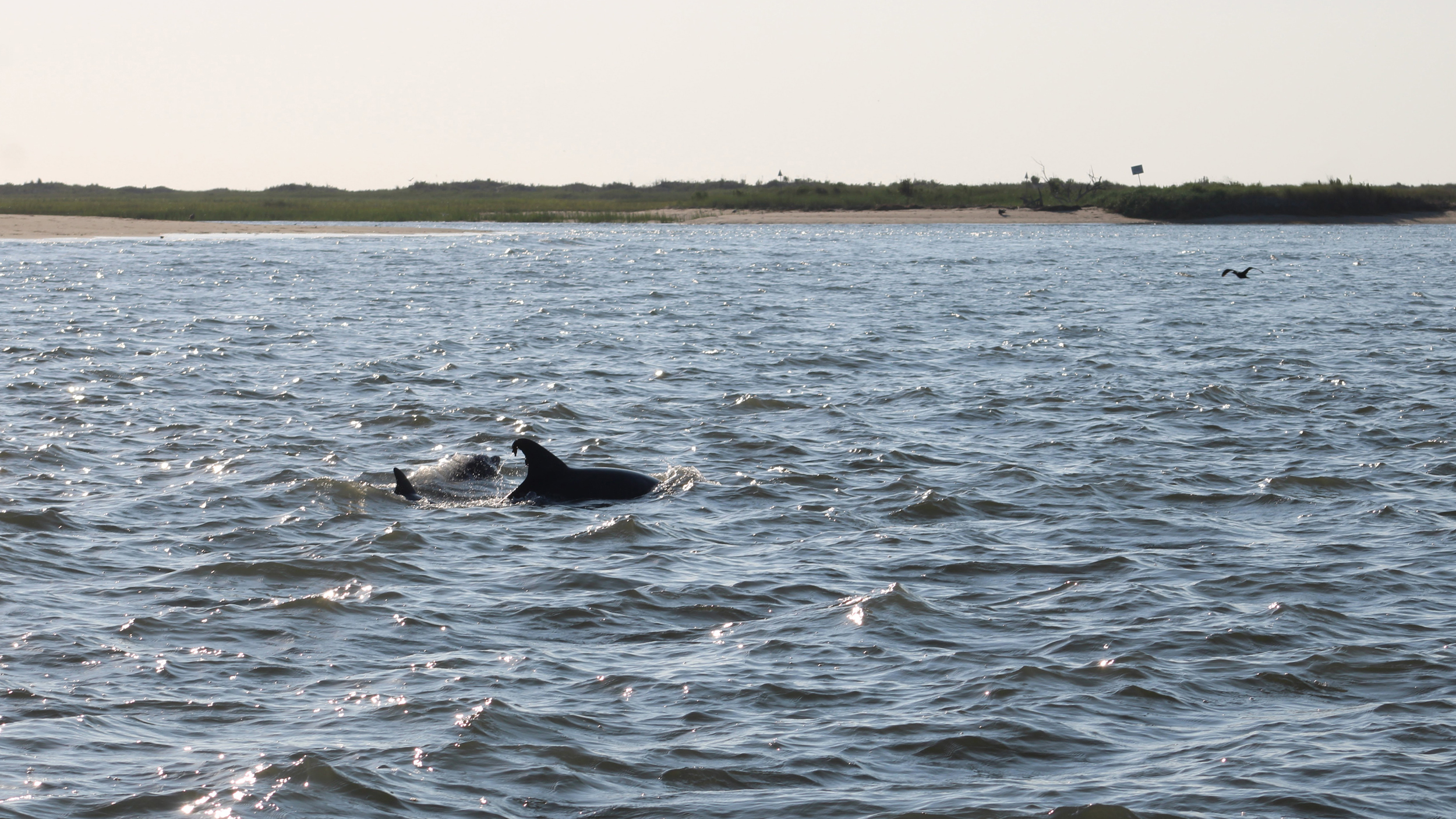
Atlantic bluefin tuna and dolphins also splash around. The seafloor is crucial to it all, said Megan Hinkle Huynh, senior attorney with the Southern Environmental Law Center.
“That’s really the foundation of the food chain. As you destroy the bottom habitat, those effects cascade upward to all of the different species in the ocean,” said Hinkle Huynh. She’s worried about not only the harm “inside of the mining area, but the impacts that travel beyond the footprint.”
There are endangered and threatened species in the region, too, including the North Atlantic right whale, the Loggerhead sea turtle and Atlantic sturgeon.
“This type of mining is really concerning for the environment,” said Elly Wilson, state director for Environment Virginia, a branch of Environment America.
From Shipwrecks to Mining
Odyssey began as a shipwreck discovery company. In 2007 it found the Nuestra Señora de las Mercedes, a 19-century Spanish vessel with millions of dollars worth of silver and gold coins onboard. Odyssey tried to claim the treasure, but Spain intervened.
In 2009, U.S. District Court Judge Steven Merryday ordered the company to return the treasure and then later to pay about $1 million to Spain for its legal fees.
In a 2025 annual report to the U.S. Securities and Exchange Commission, the company wrote it “may not become profitable for the long term, or even for any quarter.” Referencing a report from independent auditor Grant Thornton, the company stated its losses and need for funding “raise substantial doubt about our ability to continue as a going concern.”
Dawson, the commercial fisherwoman, called the company’s proposal an attempt at a “money grab.”
“They want to spend our money for nothing, at our expense, all the way around,” she said.
About This Story
Perhaps you noticed: This story, like all the news we publish, is free to read. That’s because Inside Climate News is a 501c3 nonprofit organization. We do not charge a subscription fee, lock our news behind a paywall, or clutter our website with ads. We make our news on climate and the environment freely available to you and anyone who wants it.
That’s not all. We also share our news for free with scores of other media organizations around the country. Many of them can’t afford to do environmental journalism of their own. We’ve built bureaus from coast to coast to report local stories, collaborate with local newsrooms and co-publish articles so that this vital work is shared as widely as possible.
Two of us launched ICN in 2007. Six years later we earned a Pulitzer Prize for National Reporting, and now we run the oldest and largest dedicated climate newsroom in the nation. We tell the story in all its complexity. We hold polluters accountable. We expose environmental injustice. We debunk misinformation. We scrutinize solutions and inspire action.
Donations from readers like you fund every aspect of what we do. If you don’t already, will you support our ongoing work, our reporting on the biggest crisis facing our planet, and help us reach even more readers in more places?
Please take a moment to make a tax-deductible donation. Every one of them makes a difference.
Thank you,

Charles Paullin
Charles Paullin is a Richmond, Virginia-based reporter focusing on energy and environment issues. He’s won several awards for his previous work covering state policy with the Virginia Mercury and local news with the Northern Virginia Daily in the Northern Shenandoah Valley. His first reporting gig was with the New Britain Herald in Connecticut, a couple years after attending the University of Hartford, where he first studied sports journalism.