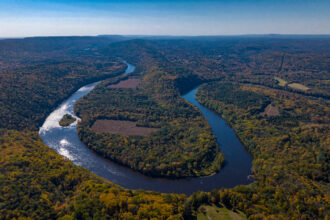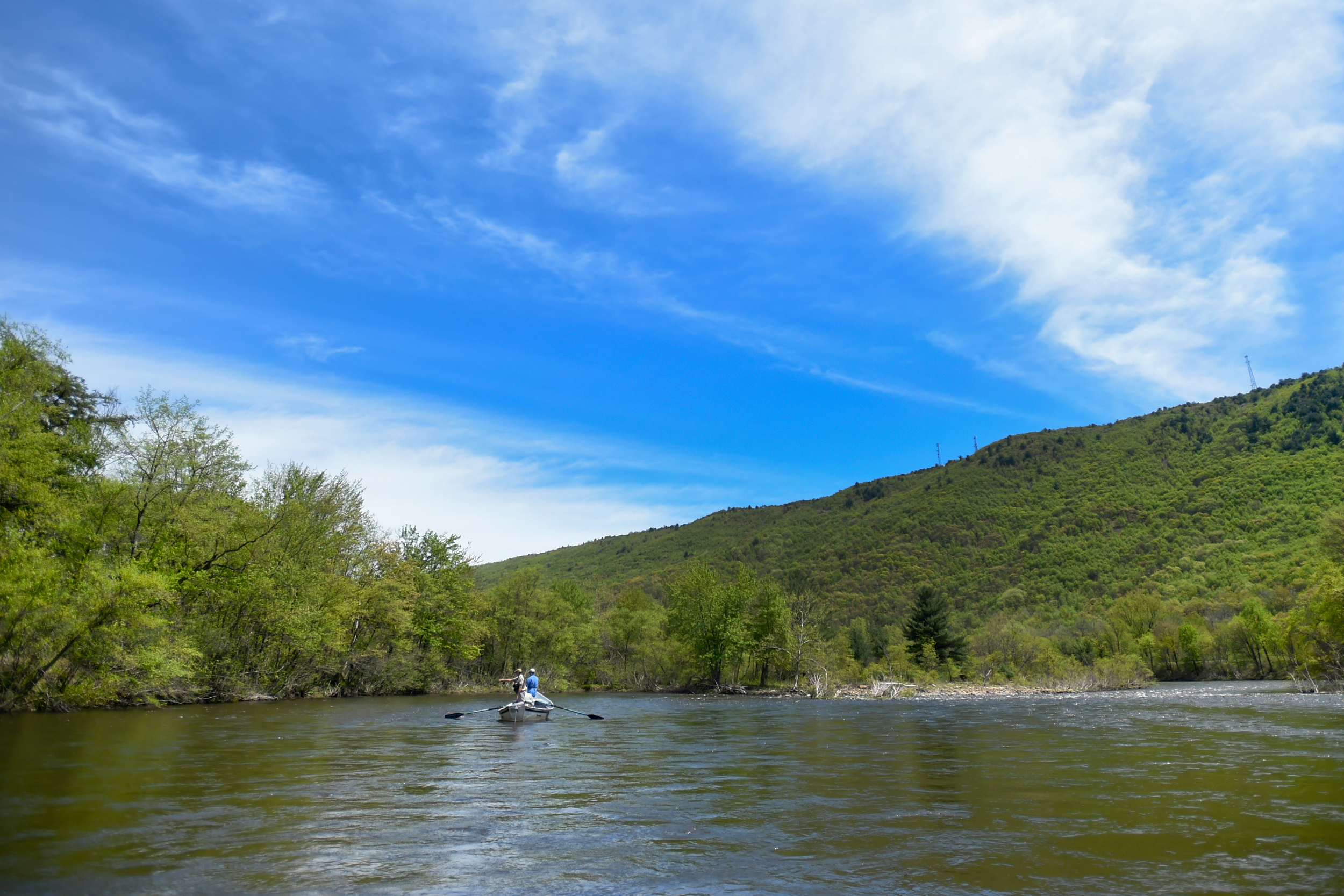


TOBYHANNA, Pa.—Rich Troscianecki spent a decade searching for a slice of paradise. After raising a family in a sprawling New Jersey suburb, he and his wife craved a more peaceful place with lots of woods and a water view. They finally found the perfect spot deep in the Pocono Mountains, an ecotourism mecca known for fishing, hiking and some of the purest waters in all of Pennsylvania.
But after 10 years enjoying their bucolic retreat along the Lehigh River, Troscianecki worries that the region’s environmental health—as well as his own tranquility—are now at risk. His home is a half mile from a site being considered for a data center, one of roughly two dozen proposed in this region of northeastern Pennsylvania about 90 miles west of New York City. Now he is among hundreds of residents fighting to prevent them.
“This isn’t the spot for it,” he said recently, looking out on the lush green forest near the site. He worries about the drone of generators, diminishing water levels and the huge amount of power usage—not to mention how the boxy centers would disrupt the picturesque landscape. “Can you imagine cutting down all these trees?”

Data centers are being proposed near some of Pennsylvania’s most treasured natural spaces. They are planned on land next to state parks and nature preserves and near lakes, streams and rivers that are considered of “exceptional value”—a gold-star designation given by the state to only the purest waterways and wetlands. About 80 percent of the exceptional value water bodies in the state are in the Poconos.
Some of the proposed data-center sites are also near popular tourist areas: Just outside the historic town of Jim Thorpe, known for weekend getaways, whitewater rafting and a scenic railway tourist train. Behind a big resort and water park. Down the road from a ski resort. Next to a scenic vista that was once a gathering place for Native American tribal leaders.
“They have been targeting some of our most beautiful places,” said Ginny Marcille-Kerslake, an organizer with the Pennsylvania team of Food & Water Watch, an environmental advocacy group.
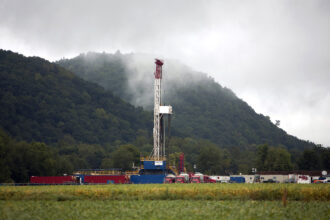
Developers have been on the hunt for large parcels of land that are near adequate power supplies or in places that would allow them to build their own power source—as well as near water, which is needed to cool the vast computer systems. They are finding all of that in the Poconos.
The data centers will help facilitate the expansion of artificial intelligence. Proponents say the centers will bring construction jobs and increase tax revenue. But there are costs too: the vast quantities of power and water needed and the potential impacts on the environment and nearby residents. That’s especially true in ecologically valuable areas like the Poconos.
“It does not make sense to put them on top of sensitive ecosystems,” said Daniel C. Esty, a law professor and director of the Yale Center for Environmental Law and Policy. He said developers should slow down and pay closer attention to the sites being chosen and the impact that will have on local communities.
Esty said developers should figure out how to come up with the power needed and propose projects that rely on clean energy rather than fossil fuels.
“That requires some careful thinking,” he said. “The bottom line here is that this is an important balancing act to get right because there are big upsides but the downsides are real.”
A Local-Level Fight
Tourism is crucial to the local economy, said Chris Barrett, the president and CEO of the Pocono Mountains Visitors Bureau.
“The beauty of the Pocono Mountains is why people visit here,” said Barrett, adding that protecting that environment and the region’s landscape is crucial.
But the downside to having so much open space, he said, is that the region’s tax base could use a boost—and data centers could generate tax revenue and other benefits to the local economy.
“My point is that where is the tax base going to come from? You have to have development somewhere, but it has to be smart development,” said Barrett.
Some of the projects have been proposed by big tech companies such as Amazon. Others are being pushed by local developers who have bought out landowners, including many farms, to accommodate construction of these facilities. Some plans include proposals for expansive complexes of buildings. Residents complain that the details are often murky.
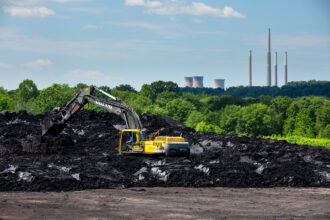
In Archbald, a town at the edge of the northern Poconos known for its history of coal mining, three different projects that collectively call for construction of 50 buildings, each the size of a Walmart superstore. Residents are livid, fearing the development will forever alter the community’s small-town feel. The prospect of these massive complexes comes as the town, like many places in Pennsylvania’s coal region, has fought for decades to recover from the impacts of mining—and are now facing a new land-use quagmire.
In the Poconos, the fight is playing out mostly at the municipal level, where developers are seeking zoning and other municipal clearances. Supervisors are racing to adopt or amend local zoning laws even as plans come in for new projects.
Faced with opposition, Gov. Josh Shapiro, a Democrat and proponent of data centers, has said that developers must agree to transparency and community engagement, hire and train Pennsylvania workers for jobs, protect the environment and come up with ways to supply their own power with either new electricity generation or paying entirely for the energy they will need. Critics feel the governor’s voluntary standards are not enough.
Residents are turning out by the hundreds at municipal meetings. On local Facebook pages, people complain bitterly about being surprised by project proposals and frustrated by the challenge of fighting companies and their lawyers. They worry about the impact on property values, the water supply and the local environment.
At a municipal meeting earlier this month in Smithfield Township in Monroe County, Lauren Jones-Rabbitt urged township supervisors to reject an updated ordinance determining where such centers can be located.
“Fight like hell for life, for our children, for the animals,” said Jones-Rabbitt, who is active with a group opposing the centers. “This is it. This is the last push. … We have to fight. There’s no other way.”
In a phone interview the next day, she said there has been widespread opposition “across so many political spectrums” to a proposed center with two buildings on 91 acres of land behind a local medical complex in a township considered a gateway to the Poconos. Residents are hoping to kill the plan, she said, but not feeling especially confident in what will happen.
“There’s not a whole lot of faith in government,” she said.
Pennsylvania, with 67 counties and lots of open space, has nearly 70 projects with at least preliminary activity, such as zoning applications, including approximately 24 in the Poconos, according to the Data Center Proposal Tracker, a citizen-run database that tracks projects across multiple states.
On the map, activity is clustered in the northeastern part of the state, where the Pocono Mountains region is located, in the southeast around Philadelphia and around Pittsburgh. In the western region, proposals can also be found near environmental or tourism sites: a hyperscale campus next to the Pittsburgh International Race Complex and one overlooking the popular Hoodlebug bike trail, about an hour northeast of Pittsburgh.
“We’ve seen just a real onslaught of data center development within the Commonwealth,” said Patrick McDonnell, president of PennFuture, an environmental advocacy organization that is urging municipalities to update and tighten zoning regulations.
He said large data center complexes will almost certainly change the visual landscape in rural areas and hurt the local economy, which is so dependent on the influx of tourists who come for outdoor enjoyment.
“The view from the backyard or the cabin may be irrevocably impacted,” McDonnell said.
This story is funded by readers like you.
Our nonprofit newsroom provides award-winning climate coverage free of charge and advertising. We rely on donations from readers like you to keep going. Please donate now to support our work.
Donate NowTowns like Jim Thorpe, known for its small-town charm, shops, restaurants and nearby outdoor recreation, may not draw so many visitors, he said, if a data center mars the view. “It will absolutely have an impact on people’s desire to participate in those activities,” he said.
Visitors to the Poconos spent $7.2 billion in 2024 and supported more than a third of the region’s jobs, a state economic report concluded.
Barrett, with the Pocono Mountains Visitors Bureau, notes that it’s not clear how many of the proposed data centers will ultimately be built as developers buy up land in hopes of future construction. “There’s a lot of gold-rush mentality,” he said. “I am not saying we should dot the landscape” with data centers, he added.
Data Center Opponents Look to the Constitution
Opponents are hoping that the state has an effective weapon right in its Constitution: the Environmental Rights Amendment, which names clean air and water as fundamental rights. The amendment also guarantees the right to “the preservation of the natural, scenic, historic and esthetic values of the environment.”
“The ERA is kind of the underpinning for all of our environmental laws in the Commonwealth,” said McDonnell, adding that it has proven to be “an incredibly meaningful thing for us to have as we have seen in any number of court cases.”
Marcille-Kerslake said residents invariably bring it up when they speak at the podium at municipal meetings.
Maya van Rossum, the longtime Delaware Riverkeeper, who also heads a coalition to promote the passage of environmental rights amendments in other states, said the data centers could be a big test for the strength of Pennsylvania’s amendment. It might take several years for legal challenges to work through the state court system.
“There’s incredible power at the state and local level if we grab hold of it,” van Rossum said.
She said it has been heartbreaking to listen to residents who grew up in rural areas worried that their bucolic natural areas are “being ripped away” by the explosion of data center proposals.
“The ramifications to our environment, to our health, to our safety, to hotels and beds and breakfasts … are devastating for an entire community. Nobody gets left untouched,” van Rossum said. “It really brings tears to your eyes.”
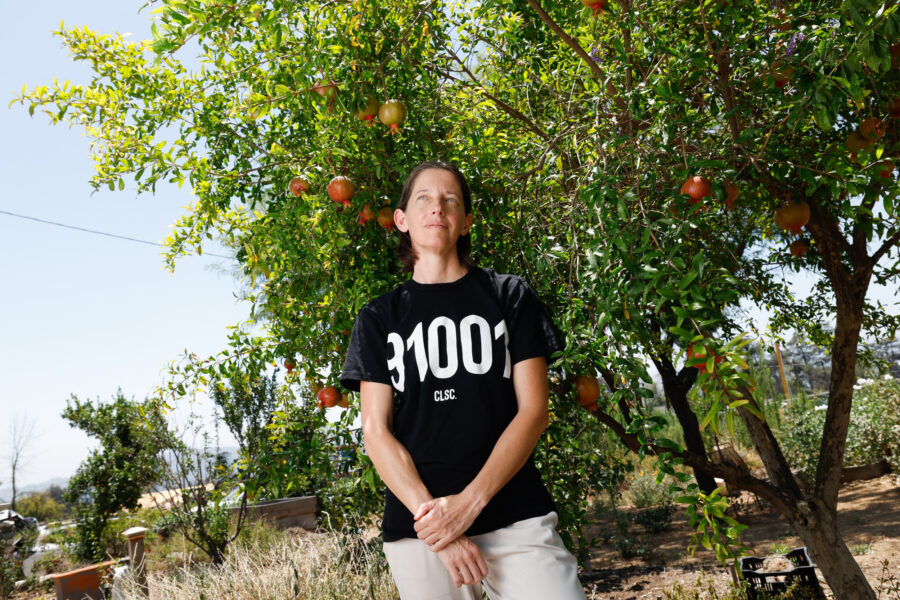
Troscianecki, who retired after a career in technology for a Fortune 500 company, is a committed environmentalist who is active in several conservation groups and part of the effort to stop data centers in the Poconos.
His primary objection, he said, is that so many centers are planned near environmentally sensitive areas. “It’s going to throw everything off,” said Troscianecki, questioning how wildlife and people will adapt. “This is all just rural around here.”
Tobyhanna Township has adopted new zoning ordinances allowing data centers in two parts of the township—the 530-acre parcel of land near his home and at the site of another proposed data center complex behind a resort and water park.
The 530-acre parcel, which most recently was a quarry, is next to the Thomas Darling Preserve, 2,500 acres of forest, glacial wetlands and meadows shaped by the last ice age.
But it has other features that make it appealing for a data center site. Raymond Rinaldi, an attorney for the corporate entity that owns the land, told the township supervisors in October that “infrastructure, power lines and gas lines are in close proximity to the property,” and that “they believe this property is well-suited for redevelopment of a data center.” He also noted that the land is more than 1,000 yards from the nearest residence.
The landowner had sought the zoning change, and the township approved it, but a group of township residents appealed that approval. They contend the change creates industrial zoning in a rural residential district and ignores the negative impacts on local health, safety and the environment.
Under Pennsylvania law, municipalities cannot exclude a legitimate land use and efforts to do so are generally viewed as unconstitutional by state courts. But municipalities can try to restrict where data centers can locate within their borders and require other measures—such as restricting height and proximity to residential areas.
Ted Wolski, the chair of the Tobyhanna Township board of supervisors, said the board has tried to balance the interests of residents, the landowner and the environment. “We have to be careful. We have to walk a fine line,” he said. “We have to work within the framework of the law.”
Misinformation and a lack of information has made the situation even more complex, he said, with local residents thinking the supervisors can deny all requests for data centers. “It’s very difficult,” said Wolski. “You can’t just say no.”
While the dispute plays out, Troscianecki and his wife are still enjoying their piece of paradise, which these days often means tubing in the Lehigh River along their property. The river at that point is considered an exceptional value waterway. The river otters and beavers co-exist nearby, and an eagle occasionally flies overhead.
“It’s just breathtaking to me,” Troscianecki said. “This is Americana.”
He believes all the data centers that are getting built in this rush to expand may soon be obsolete as technology advances in the coming years. He thinks the best strategy is to continue to fight—and run out the clock.
“I think we outwait them,” he said. “We cause delay after delay after delay. And the bubble’s going to burst.”
About This Story
Perhaps you noticed: This story, like all the news we publish, is free to read. That’s because Inside Climate News is a 501c3 nonprofit organization. We do not charge a subscription fee, lock our news behind a paywall, or clutter our website with ads. We make our news on climate and the environment freely available to you and anyone who wants it.
That’s not all. We also share our news for free with scores of other media organizations around the country. Many of them can’t afford to do environmental journalism of their own. We’ve built bureaus from coast to coast to report local stories, collaborate with local newsrooms and co-publish articles so that this vital work is shared as widely as possible.
Two of us launched ICN in 2007. Six years later we earned a Pulitzer Prize for National Reporting, and now we run the oldest and largest dedicated climate newsroom in the nation. We tell the story in all its complexity. We hold polluters accountable. We expose environmental injustice. We debunk misinformation. We scrutinize solutions and inspire action.
Donations from readers like you fund every aspect of what we do. If you don’t already, will you support our ongoing work, our reporting on the biggest crisis facing our planet, and help us reach even more readers in more places?
Please take a moment to make a tax-deductible donation. Every one of them makes a difference.
Thank you,