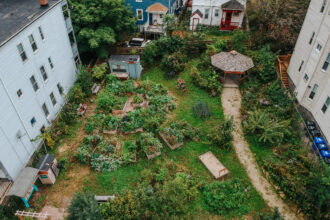
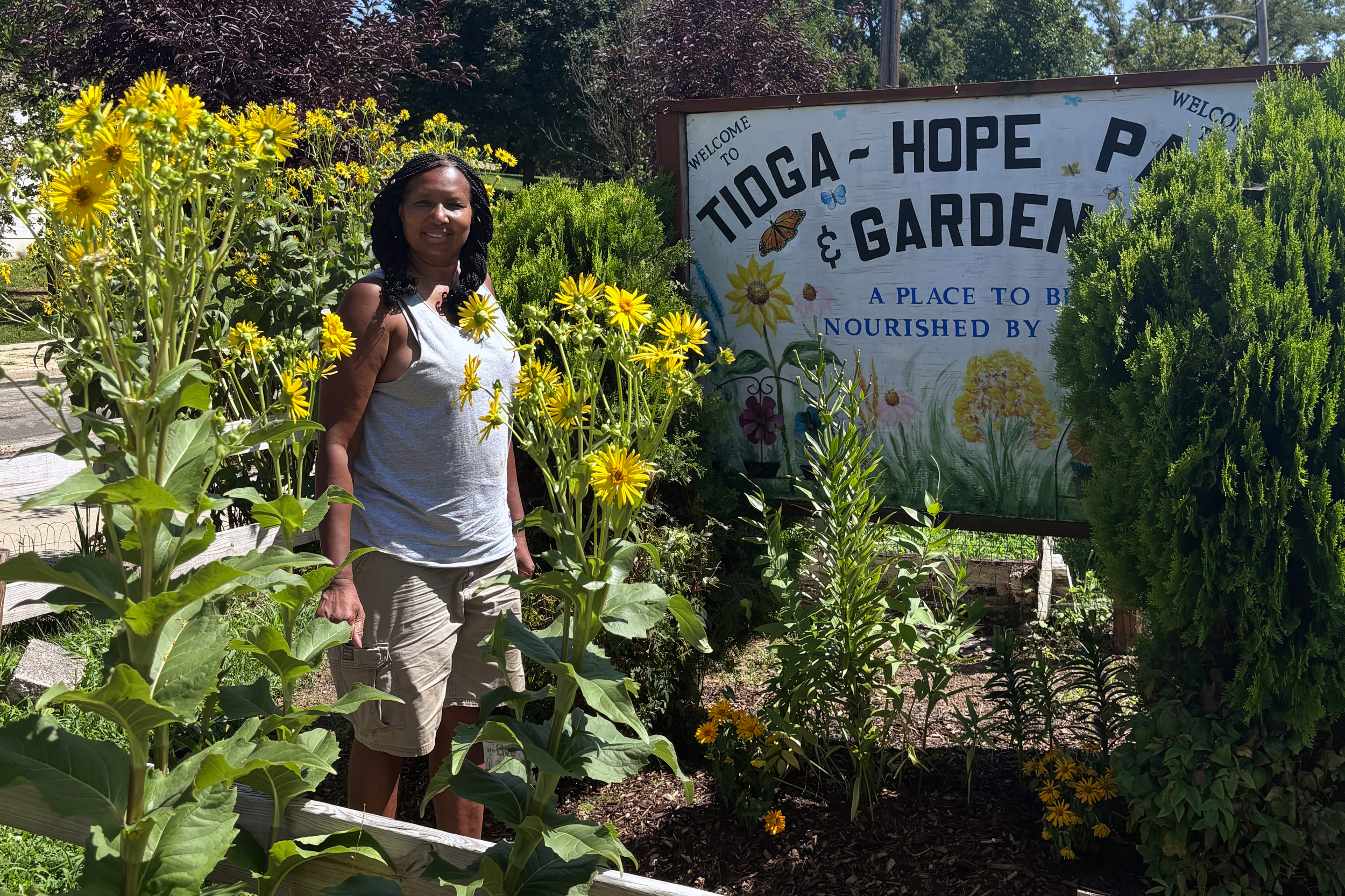


In the concrete jungle of North Philadelphia, a garden blooms in vivid color. Flowers, vegetable beds and fruit trees thrive on a quiet street corner where the rattle of trains passing overhead or music escaping from a car’s open window are the only disruptions to the chatter of songbirds that flit between the trees.
Estelle Vaughn can hear them through the windows of her house overlooking the Tioga-Hope Park and Garden, which she has tended for over 25 years.
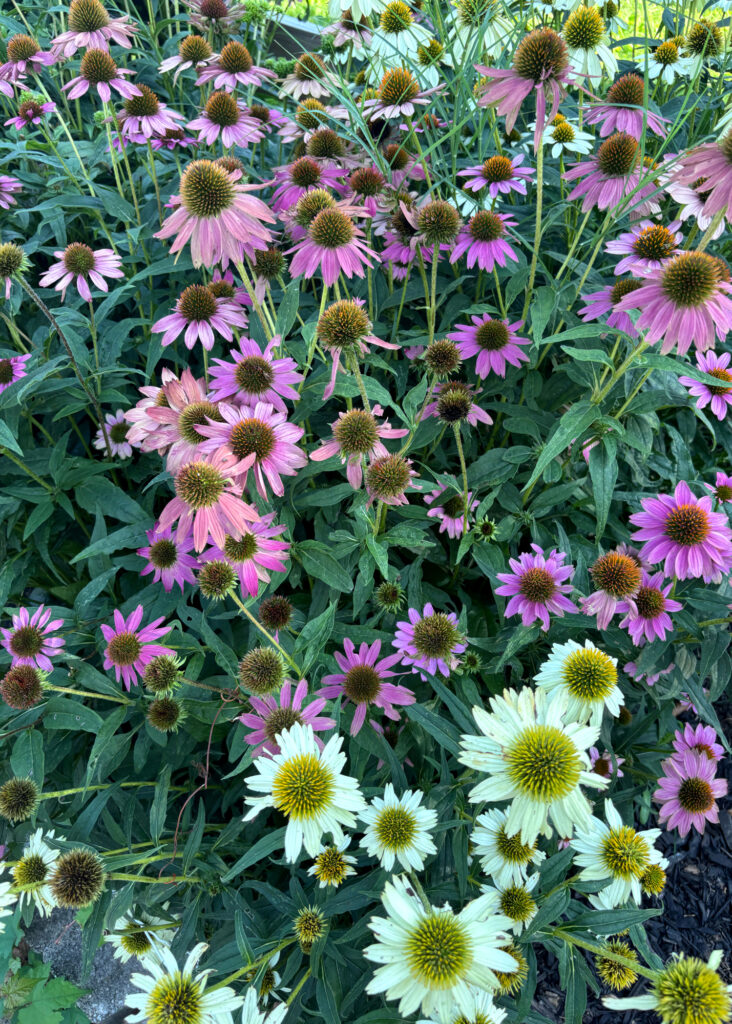
The small trees that were growing in front of the house during her childhood now have thick trunks, and their branches reach above the three-story home. In the summertime they cast a leafy shade over her front yard, where her cats wander between clay flower pots. Past them, pink and purple buds bloom at the feet of the trees in their small squares of exposed dirt along the sidewalk, leading to the community garden.
This urban oasis is more than ornamental—it constantly works to cool the environment, reduces community health risks and serves as social infrastructure, all of which help to prevent deaths during heat waves becoming more frequent because of climate change.
Creating more spaces like the Tioga-Hope garden is at the core of the Pennsylvania Horticultural Society’s mission. Each year, the group partners with the city and local volunteers to plant thousands of trees and transform hundreds of vacant lots into maintained green spaces.
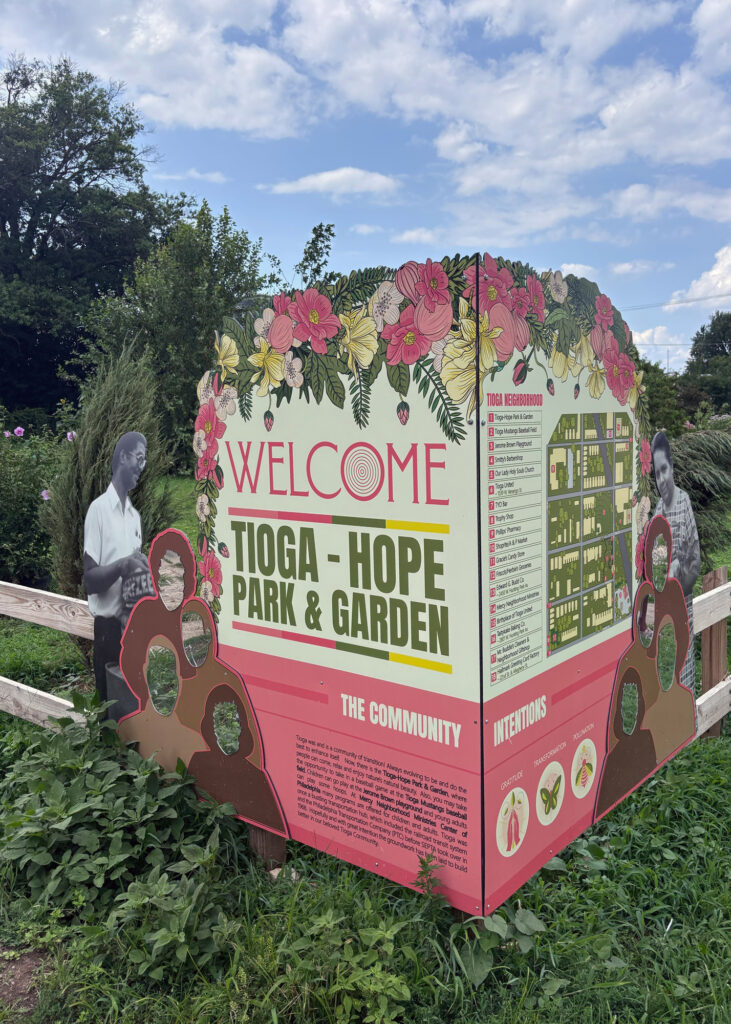
Since 2015, the society has worked with the Tioga-Hope garden to support the efforts of neighbors like Vaughn to beautify and nourish the community.
As climate change accelerates, green infrastructure like this is one means of fostering both healing and survival in communities that face disproportionate risks from heat and air pollution.
Heat waves are the most deadly weather events in the United States, according to the National Weather Service. Seven people died during the record-breaking event Philadelphia saw in July.
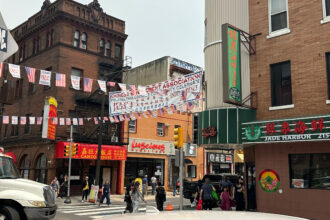
In cities, asphalt, concrete and closely clustered tall buildings trap heat and ramp up temperatures, creating a “heat island effect” that means urban areas tend to be hotter than rural ones.
“Rather than reflect it back to the atmosphere and space … they absorb the solar radiation, store it in them, and then they re-radiate that heat on people walking around,” said Dorit Aviv, who leads the Thermal Architecture Lab at the University of Pennsylvania.
Not all neighborhoods endure heat the same way. Some are up to 22 degrees hotter than others in Philadelphia, the city says. Social and economic inequities shape that reality.
Historical segregation in the U.S. correlates with environmental risk. Neighborhoods that faced redlining correspond with places most in need of trees. According to a 2021 study, the government-imposed barriers to home ownership and generational wealth made it more difficult for residents to invest in local tree cover.
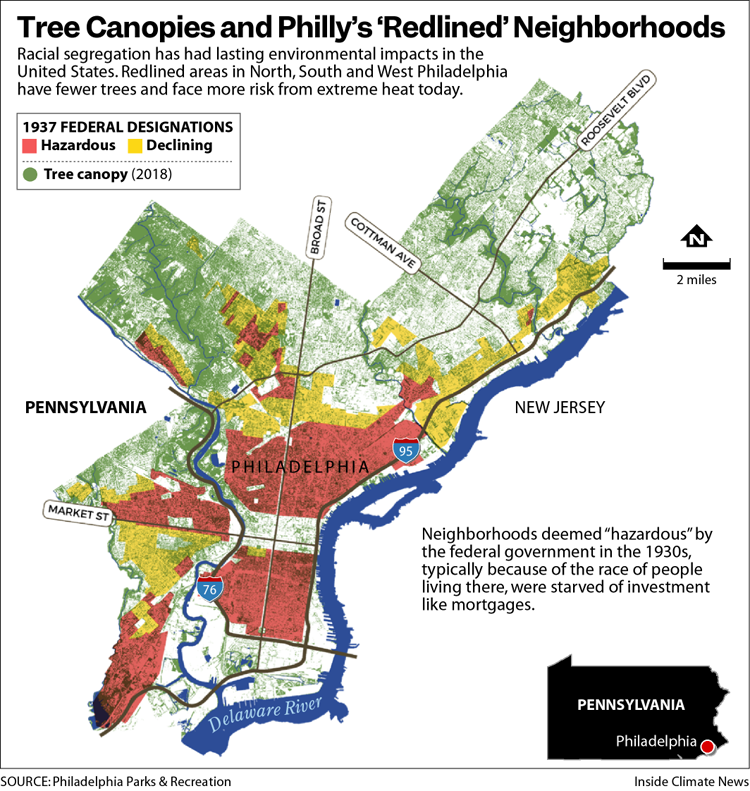
In a newsletter, The Environmental Collaboratory at Drexel University said the increasingly life-threatening hotter temperatures in formerly redlined neighborhoods “is not a coincidence. It is the direct and traceable consequence of policy decisions in zoning, lending, and infrastructure investment that concentrates environmental risk in communities … least equipped to absorb it.”
A February memo from the Philadelphia Climate Justice Collective, which the collaboratory facilitates, warns that environmental heat risk is being exacerbated today by high energy costs. For some low-income households, air conditioning is out of reach.
Philadelphia neighborhoods also face the issue of trash dumping on vacant land that has fallen into disrepair and often makes the heat worse. “Empty lots are a lot of times just covered with concrete or asphalt, so that’s just a huge unshaded surface that absorbs heat and emits it to people around it,” Aviv said.
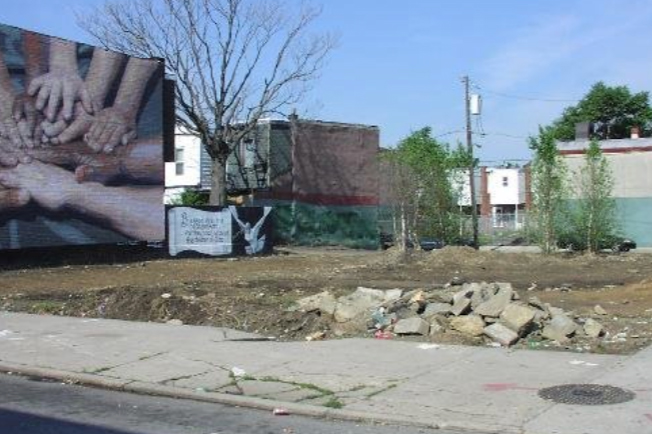
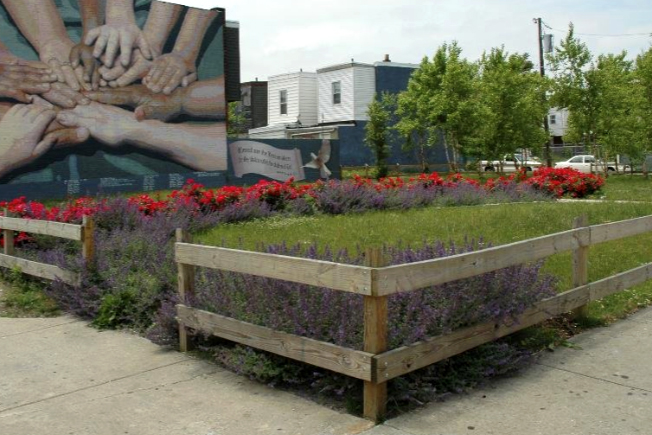
Before and after photos of a vacant lot that was transformed through the LandCare program. Credit: Courtesy of the Pennsylvania Horticultural Society
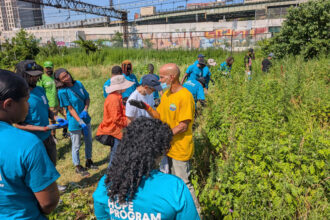
These lots are the focus of the Pennsylvania Horticultural Society’s LandCare Program which locates lots every spring and fall to turn into green spaces or assets that the surrounding community wants, hiring local businesses to transform them. Launched in 1999, the program now maintains 12,000 of the city’s estimated 40,000 vacant lots. The process includes removing trash, planting grass, building low-lying fences, lawn mowing and in some cases planting trees or pollinator gardens.
Nicetown-Tioga, the area surrounding the Tioga-Hope garden, is one of the neighborhoods with hotter temperatures and lower household incomes. The area scores “very high” on the city’s Heat Vulnerability Index, with 42 percent of residents living below the poverty line and a high number of older adults living alone, all risk factors.
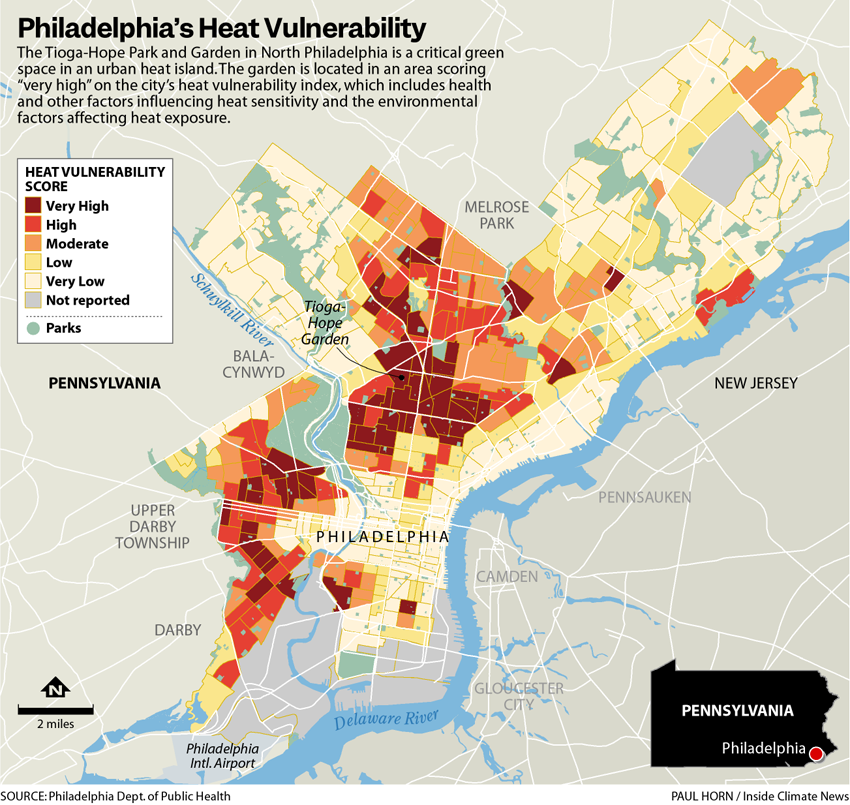
Temperatures in the surrounding area are hotter than in parts of the city with more tree shade. However, the garden is an outlier in North Philadelphia, as its trees and open lawn work together to create a cooler “microclimate” and vibrant social space.
As a nurse, Vaughn is familiar with the acute risk that heat waves pose to health. She remembers treating a young man in the hospital with a temperature of 107 who had been riding a bike during a heat wave and was found lying against a building.
The garden beside her home makes hot summer days not only tolerable but enjoyable. A breeze blows under a golden shade sail and through a wooden pergola, carrying with it the smell of lavender and roses growing nearby. On the hottest days, Vaughn gardens in the morning and spends the afternoon under the London plane trees in front of her house, where the green canopy keeps her cool.
This story is funded by readers like you.
Our nonprofit newsroom provides award-winning climate coverage free of charge and advertising. We rely on donations from readers like you to keep going. Please donate now to support our work.
Donate NowThis was where she sat last month, when drifting Canadian wildfire smoke turned the Philadelphia skyline a hazy yellow. After seeing the smoke in Center City that day, Vaughn noticed that near the garden, the air was cleaner and more bearable.
In addition to filtering the air, mature trees like the London planes combat the heat with both their shade and water they release into the air, an evaporative cooling process known as “tree sweat.” Unlike air conditioners, which move heat from indoors to outdoors, contributing to climate change with their energy use, trees cool the environment while absorbing carbon and sequestering it from the atmosphere.
Down the street from the London planes is a stretch of sidewalk bare of trees that extends to the end of the block. Vaughn remembers a time when more trees lined the road, but they either died or her neighbors removed them after the pavement buckled from their overgrown roots.
While resilient, London planes are often a bad fit for small spaces, and were planted around a century ago when people were less knowledgeable about the best trees for tight urban settings. Now, backed by the city and U.S. Forest Service researchers, the Pennsylvania Horticultural Society, Vaughn and neighborhood partners are working together to plant and care for more suitable tree species.
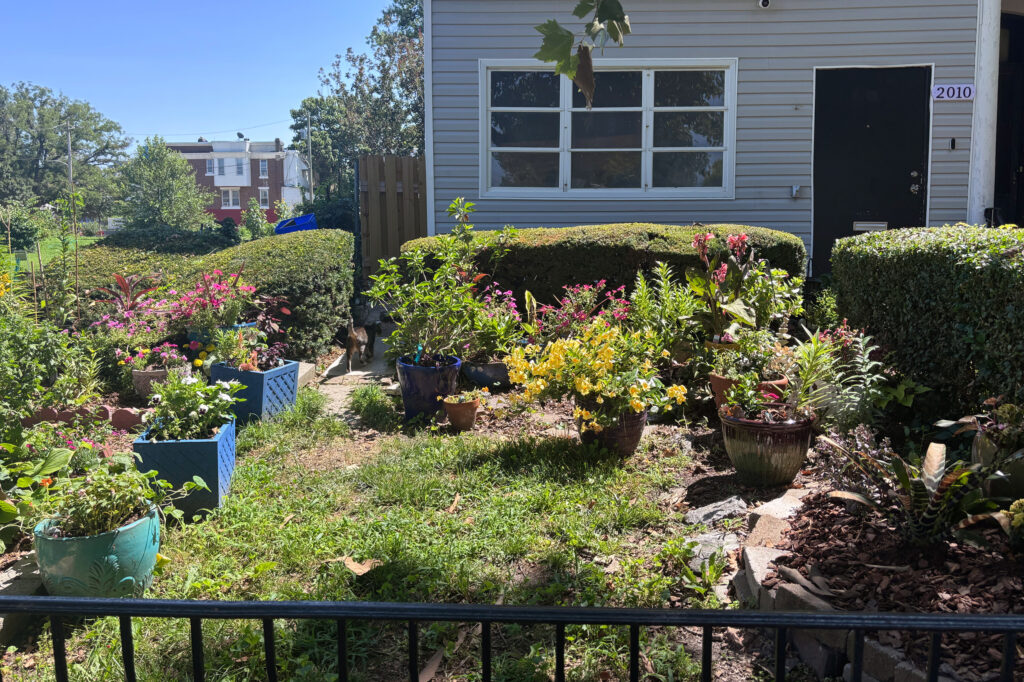
Beyond Vaughn’s yard, the garden has smaller fig, pear, plum and peach trees and a walking path that cuts through the short grass, an open expanse where sunflowers grow and dragonflies weave back and forth.
“One of the older men actually said, ‘This park just feels safe,’ and I think that’s because it is so open,” Vaughn said.
Unlike playgrounds, basketball courts or other public places designed for certain groups of people, a park is for anyone. She’s noticed passersby stopping to enjoy the space. Couples sit on benches reading books. Over the years, it has held jazz shows, block parties and wedding receptions.
Vaughn is 63 now and planning for retirement. Sitting in front of the house where she has lived since she was born, she can’t help but notice the streets she and her friends would fill each summer with hopscotch and jump rope growing up are emptier now. The bar that stood where the garden now grows was once a gathering place for people after work.
Vaughn worries that her community is growing disconnected, with residents spending time on screens rather than outside exercising, socializing and de-stressing. She’s seen the results in the hospital. The garden stands in contrast to that, a healthful place that brings people together.
In 2023, then-U.S. Surgeon General Vivek Murthy warned of a rise of isolation and social disconnection that directly contributes to bad health outcomes. The report called for investment in “social infrastructure” such as parks and gardens.
Murthy visited the Tioga-Hope garden in June as part of a listening tour for a project to spark community connection. Such spaces came up in the conversation as a solution to a growing loneliness epidemic.
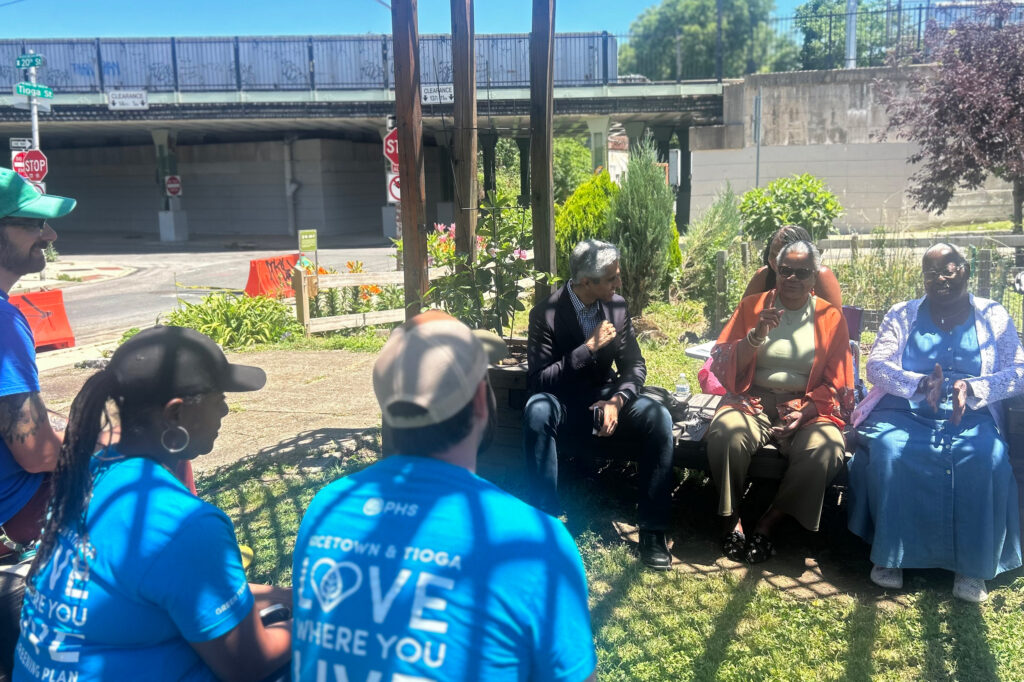
It’s not just green spaces and trees that cities need as they face the climate crisis, but also the community they build. It can be a key factor in preventing deaths during heat waves—helping people connect so they check in with each other during emergencies.
Eric Klinenberg, a sociologist at New York University, found that neighborhoods with the most heat deaths in the catastrophic 1995 Chicago heat wave were marked with abandoned buildings, broken sidewalks and empty lots that increased community isolation.
A 2018 study found a 29 percent reduction in gun violence and 13 percent decrease in overall crime in the Philadelphia areas surrounding transformed lots. The people living nearby reported that they were less afraid of going outside due to safety concerns and much more likely to use outdoor spaces to socialize.
“You’ll see barbecues, you’ll see chairs, you’ll see people socializing, you’ll see kids playing, and you just observe that this land that had been a detriment to neighborhood vitality and quality of life is now a contributor to people coming together,” said Matt Rader, president of the Pennsylvania Horticultural Society.
Rader and Dr. Eugenia South, an author of the 2018 study and faculty director for the University of Pennsylvania’s Center for Health Justice, are among those pushing for a societal shift to recognize parks and trees as necessary infrastructure in cities. Government, Rader said, should treat that as “basic expectations for any urban neighborhood.”
“If I have an issue, I have a problem, and I sit right here and I see the clouds and I hear the birds and I feel a breeze that comes or I take a walk,” Vaughn said of her neighborhood garden, “it heals.”
About This Story
Perhaps you noticed: This story, like all the news we publish, is free to read. That’s because Inside Climate News is a 501c3 nonprofit organization. We do not charge a subscription fee, lock our news behind a paywall, or clutter our website with ads. We make our news on climate and the environment freely available to you and anyone who wants it.
That’s not all. We also share our news for free with scores of other media organizations around the country. Many of them can’t afford to do environmental journalism of their own. We’ve built bureaus from coast to coast to report local stories, collaborate with local newsrooms and co-publish articles so that this vital work is shared as widely as possible.
Two of us launched ICN in 2007. Six years later we earned a Pulitzer Prize for National Reporting, and now we run the oldest and largest dedicated climate newsroom in the nation. We tell the story in all its complexity. We hold polluters accountable. We expose environmental injustice. We debunk misinformation. We scrutinize solutions and inspire action.
Donations from readers like you fund every aspect of what we do. If you don’t already, will you support our ongoing work, our reporting on the biggest crisis facing our planet, and help us reach even more readers in more places?
Please take a moment to make a tax-deductible donation. Every one of them makes a difference.
Thank you,

Nina Sablan
Fellow
Nina Sablan is a Pennsylvania-based fellow at Inside Climate News with a passion for local journalism, and environmental justice and law. She was previously a reporting intern for Seven Days in Vermont and is a current student at Swarthmore College, majoring in philosophy and minoring in peace and conflict studies in the honors program. Her work has appeared in The Philadelphia Inquirer, as well as campus publications at Oxford University and Swarthmore College.