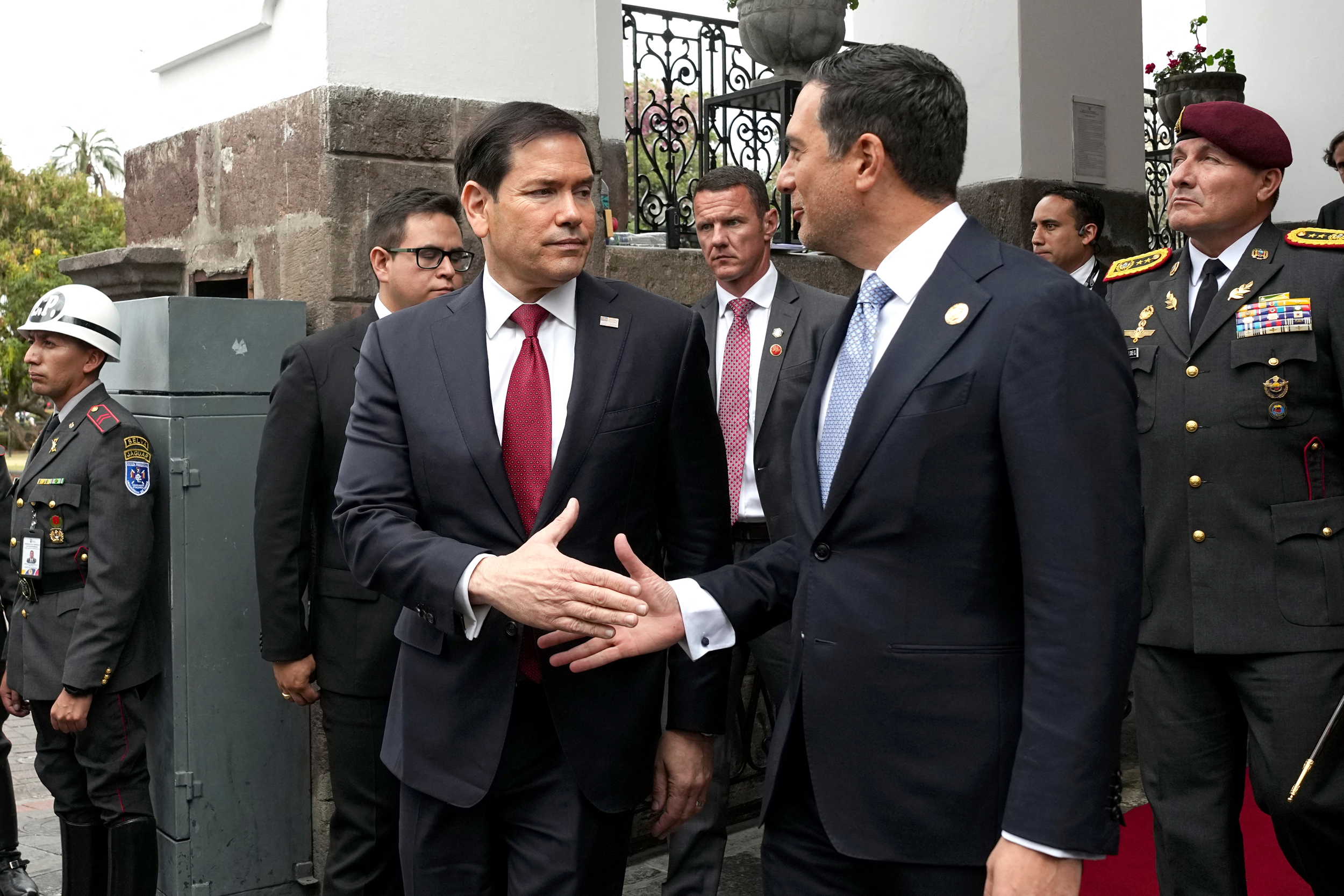


When Secretary of State Marco Rubio arrived in South America this week, he carried a familiar message: The United States wants access to minerals and an expanded military presence in the region.
That agenda is being welcomed by newly elected right-wing governments in Colombia, Ecuador and Peru that rose to power on hard-line security platforms aimed at taking on transnational criminal organizations.
But on the ground in the Amazon, other forests, high-altitude páramos grasslands and additional areas targeted for mining, those policies are sparking fears of worsening violence. Mining has repeatedly been ranked as the sector most linked to the killings of environmental defenders, people who act peacefully to protect nature and their homelands.
Rubio began his three-country tour in Colombia on Tuesday, where he met with President Abelardo de la Espriella, a former criminal lawyer who calls himself “The Tiger.” The two governments signed an agreement on minerals and civil nuclear cooperation, presenting the pacts as part of a broader effort to strengthen economic and security ties.
According to the state department, the minerals agreement calls for the two countries to finance mining and processing projects within six months. It also says the governments will commit to supporting those projects through loans, insurance, equity investments, “regulatory facilitation,” “streamlined permitting” and “market-protective” mechanisms such as national security reviews.
The Trump administration has repeatedly framed mining—and the acquisition of minerals it designates as “critical,” such as silver and copper—as a national security imperative to counter China’s critical-mineral dominance.
The U.S. Department of State did not release the agreement and did not respond to questions about whether it includes commitments to respect human rights, including Indigenous peoples’ internationally recognized right to free, prior and informed consent about projects that impact their lands—or if it accounts for the rights of nature, which courts in Colombia, Peru and Ecuador have recognized.
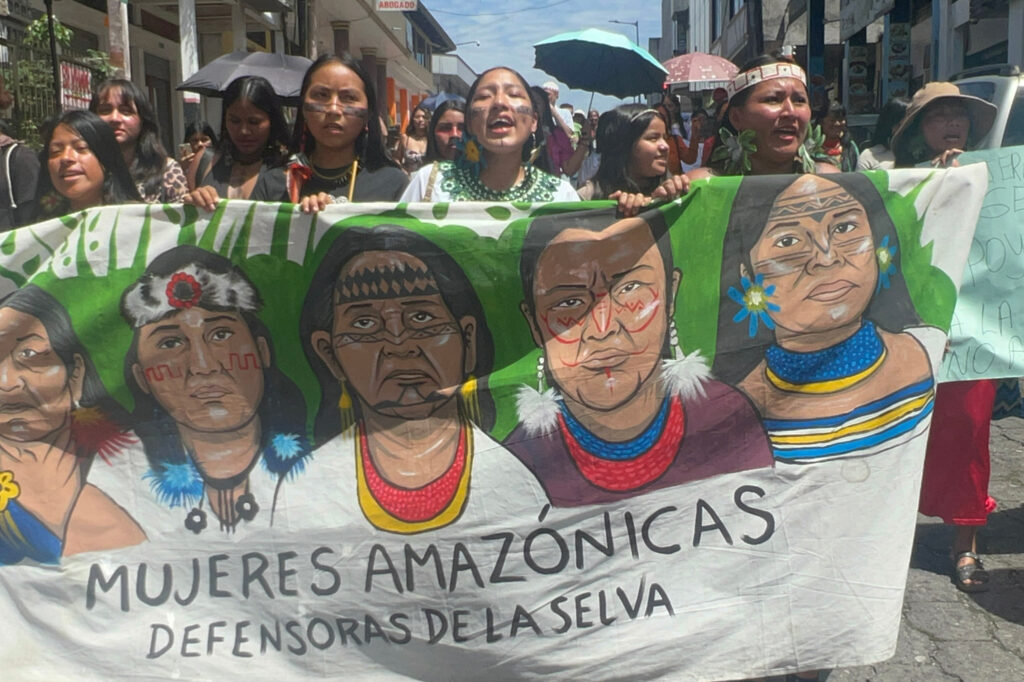
Last year, the State Department erased criticism of Indigenous rights abuses from its annual human rights reports, according to an original analysis by Inside Climate News.
For many Colombian Indigenous communities, mining is expanding into territories already destabilized by armed groups. Mario Erazo Yaiguaje, an Indigenous leader of the Siona people and governor of the Siona Buenavista Reservation in Colombia, said in a written statement in Spanish that Indigenous guards—community groups formed to protect land in light of government inaction—have been crucial in combating illegal mining.
“We Indigenous peoples have raised our voices in defense of our autonomy,” Erazo Yaiguaje said.
Often, land disputes, extractive industries and organized crime converge in the same territories.
Colombia has long been the most deadly country for environmental defenders. People resisting the imposition of mining, oil, industrial agriculture and logging have faced threats, assaults and killings by criminal organizations and, in some cases, state forces, according to watchdog groups. One such group, Global Witness, verified the killings of 48 environmental defenders in Colombia in 2024.
The Trump administration’s dismantling of the U.S. Agency for International Development ended programs that funded efforts in Colombia to bolster protection networks for environmental defenders.
“The risk is that there are now three Trump-aligned presidents in the upper Amazon and Secretary of State, Marco Rubio, is flying around trying to cut reckless deals which are essentially about the wholesale extraction of minerals from the largest rainforest on earth, home to millions of Indigenous peoples, a cradle of biodiversity, and one of the last hopes for stemming the climate crisis,” Mitch Anderson, executive director of Amazon Frontlines, a nonprofit focused on Indigenous rights and conservation, said in a written statement.
He added: “For the Trump administration the Amazon is just some green space on a map they’d like to rename Jungle of America and then proceed to drain and clear cut and destroy.”
During a press conference on Wednesday, de la Espriella said Colombia wants investment in the energy and infrastructure sectors and would do what is needed “regarding fiscal discipline, the legal certainty, efficiency, expanding better investment conditions.”
The statement is an apparent reference to the investor-state dispute settlement system, or ISDS, which provides controversial protections for multinational corporations and has allowed those companies to force major payouts from governments. De la Espriella’s predecessor, together with the Biden administration, had taken steps to limit protections for investors between the two countries. Oil, gas and mining companies have already extracted more in ISDS awards from governments than any other industry.
De la Espriella is also seeking an expanded security partnership with Washington. He asked Rubio for aircraft, drones, radar, intelligence and other tools to combat armed groups.
The combination of accelerated mining development and expanded military involvement has alarmed civil society organizations that work with communities on the front lines of extraction. They argue that such policies make it more likely that environmental defenders will become targets—especially when governments label mining a national security imperative.
Ecuador, where Rubio landed on Wednesday, is a clear example, according to human rights groups.
This story is funded by readers like you.
Our nonprofit newsroom provides award-winning climate coverage free of charge and advertising. We rely on donations from readers like you to keep going. Please donate now to support our work.
Donate NowPresident Daniel Noboa made a militarized approach to combating organized crime a central part of his 2025 election campaign. His government has also pursued constitutional and other legal changes to fast track mining and allow deployment of the military to protect those projects. That includes replacing environmental licensing with more permissive blanket mining authorizations; moving the environmental ministry within the Ministry of Energy and Mines; and passing legislation to deploy troops in strategic mining zones.
Those policies have unfolded alongside a crackdown on protesters and anti-mining leaders.
During a military response to a nationwide strike led by Indigenous organizations in 2025, at least three people were killed, including one Indigenous land defender.
The Noboa administration has also opened criminal investigations into dozens of the country’s leading environmental and Indigenous activists, freezing the bank accounts of 61 of those leaders. That’s made it nearly impossible for some conservation groups to do business.
On Tuesday, Rubio called Ecuador one of the United States’ closest security partners in the region. “I think there’s more we can do with them,” Rubio said, pointing to economic as well as military opportunities.
In March, the U.S. military and Ecuadorian forces jointly bombed what they called a narco-trafficking camp near the Colombian border. Locals and human rights groups have said the target was actually a dairy farm. The U.S. military has also sunk vessels off the Ecuadorian coast that it says are involved in drug trafficking—part of broader U.S. military operations across the Caribbean and Pacific Ocean that have resulted in at least 227 deaths. Lawyers specializing in the laws of war have called the deaths extrajudicial killings, occurring outside the realm of armed conflict.
A spokesperson for the Pentagon said in a written statement, “We have no knowledge of, nor were U.S. Southern Command forces involved in,” the strikes. A joint Pentagon and State Department Inspector General report released earlier this year documented some of the killings.
“U.S. Southern Command conducts maritime operations under established legal authorities and holds its forces to the highest standards of professionalism, safety, and compliance with U.S. and international law,” the spokesperson added in the statement.
Of the deepening of the U.S.-Ecuadorian military partnership, Human Rights Watch has said that both countries “have engaged in serious human rights violations fueled by their insistence on framing their confrontations with organized crime groups as a kind of war.”
Over the past 18 years, Ecuadorians have pioneered groundbreaking ecological laws and policies, enshrining the rights of nature in their 2008 Constitution and voting in landslide referendums to end oil operations in part of the Amazon rainforest and ban mining near Quito. Indigenous communities have been at the forefront of those developments.
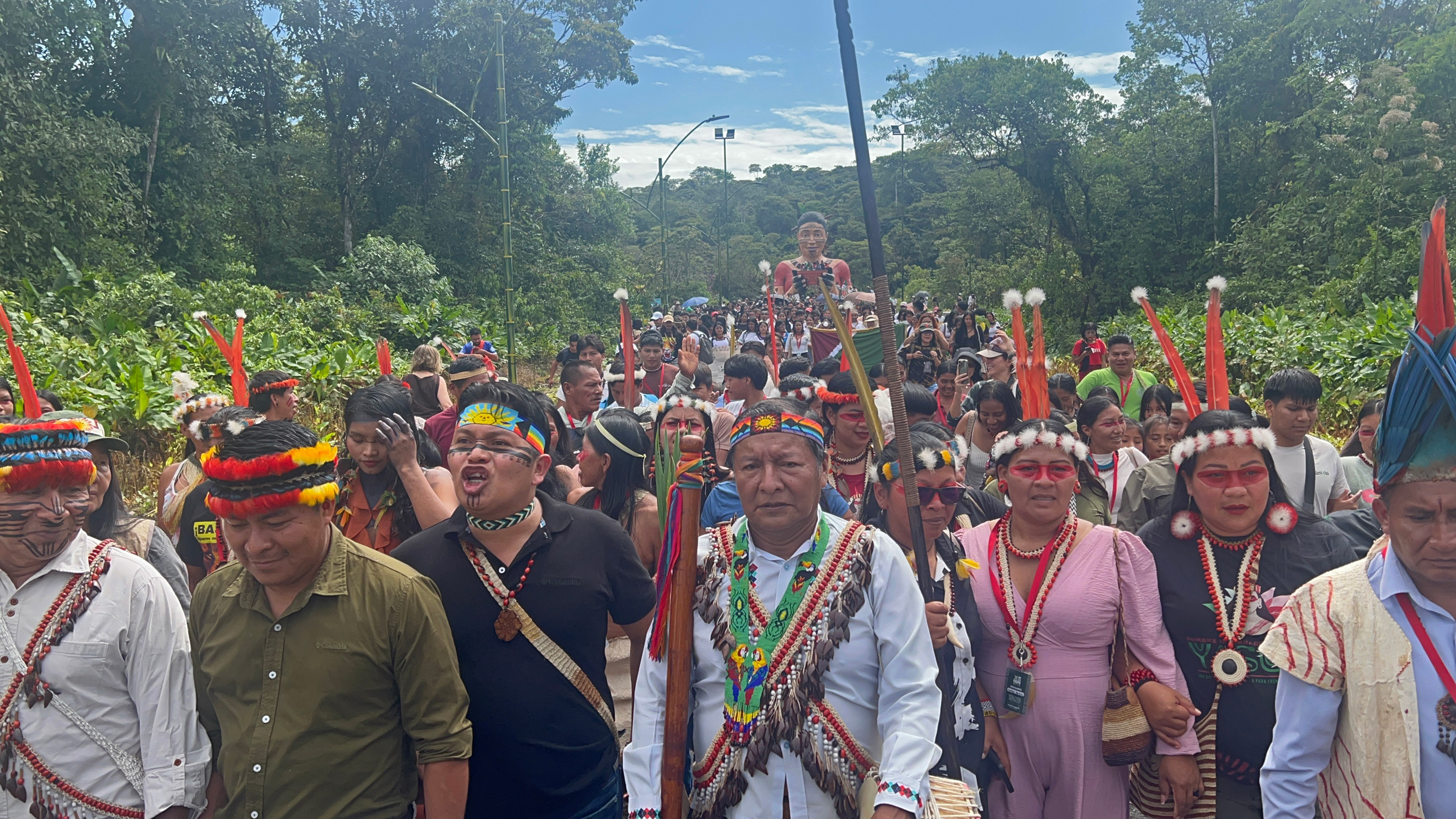
“We, as the Kichwa Nation of Pastaza, have declared in our statute that our territory is sacred—as kawsak sacha, a living territory, a living being with consciousness and as a subject of rights—free from all forms of extractivism, including mining, oil extraction, and others,” Luis Canelos, president of that Indigenous nation in Ecuador, said in a written statement in Spanish.
Asked during a press conference on Tuesday in Colombia about perceptions that the U.S. government’s interests lie in extracting resources and sending troops to Latin America, Rubio said the region is “much better off partnering with the United States” than China, Russia or Iran.
On Thursday, Rubio will visit Peru and is expected to discuss security cooperation with President Keiko Fujimori, whose government has also emphasized a hard-line response to organized crime.
Daniela Andrade, Peru coordinator for Amazon Frontlines, said in a written statement in Spanish that local communities in the country are facing a government seeking to expand and legalize mining, roll back environmental protections and water down consultation processes with Indigenous communities.
“We are experiencing an invasion of illegal mining, with an increasing number of emergency hotspots,” Andrade said. “Nearly all river basins in Loreto are red zones rife with violence, deforestation, human trafficking, and the persecution of defenders of nature and local territories.”
Miners, she added, operate with little accountability, benefiting from “collusion with the powers that be at all levels.”
About This Story
Perhaps you noticed: This story, like all the news we publish, is free to read. That’s because Inside Climate News is a 501c3 nonprofit organization. We do not charge a subscription fee, lock our news behind a paywall, or clutter our website with ads. We make our news on climate and the environment freely available to you and anyone who wants it.
That’s not all. We also share our news for free with scores of other media organizations around the country. Many of them can’t afford to do environmental journalism of their own. We’ve built bureaus from coast to coast to report local stories, collaborate with local newsrooms and co-publish articles so that this vital work is shared as widely as possible.
Two of us launched ICN in 2007. Six years later we earned a Pulitzer Prize for National Reporting, and now we run the oldest and largest dedicated climate newsroom in the nation. We tell the story in all its complexity. We hold polluters accountable. We expose environmental injustice. We debunk misinformation. We scrutinize solutions and inspire action.
Donations from readers like you fund every aspect of what we do. If you don’t already, will you support our ongoing work, our reporting on the biggest crisis facing our planet, and help us reach even more readers in more places?
Please take a moment to make a tax-deductible donation. Every one of them makes a difference.
Thank you,