

From our collaborating partner “Living on Earth,” public radio’s environmental news magazine, an interview by host Steve Curwood with climate scientist Michael Mann.
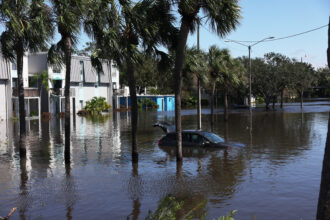
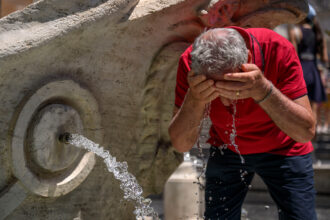
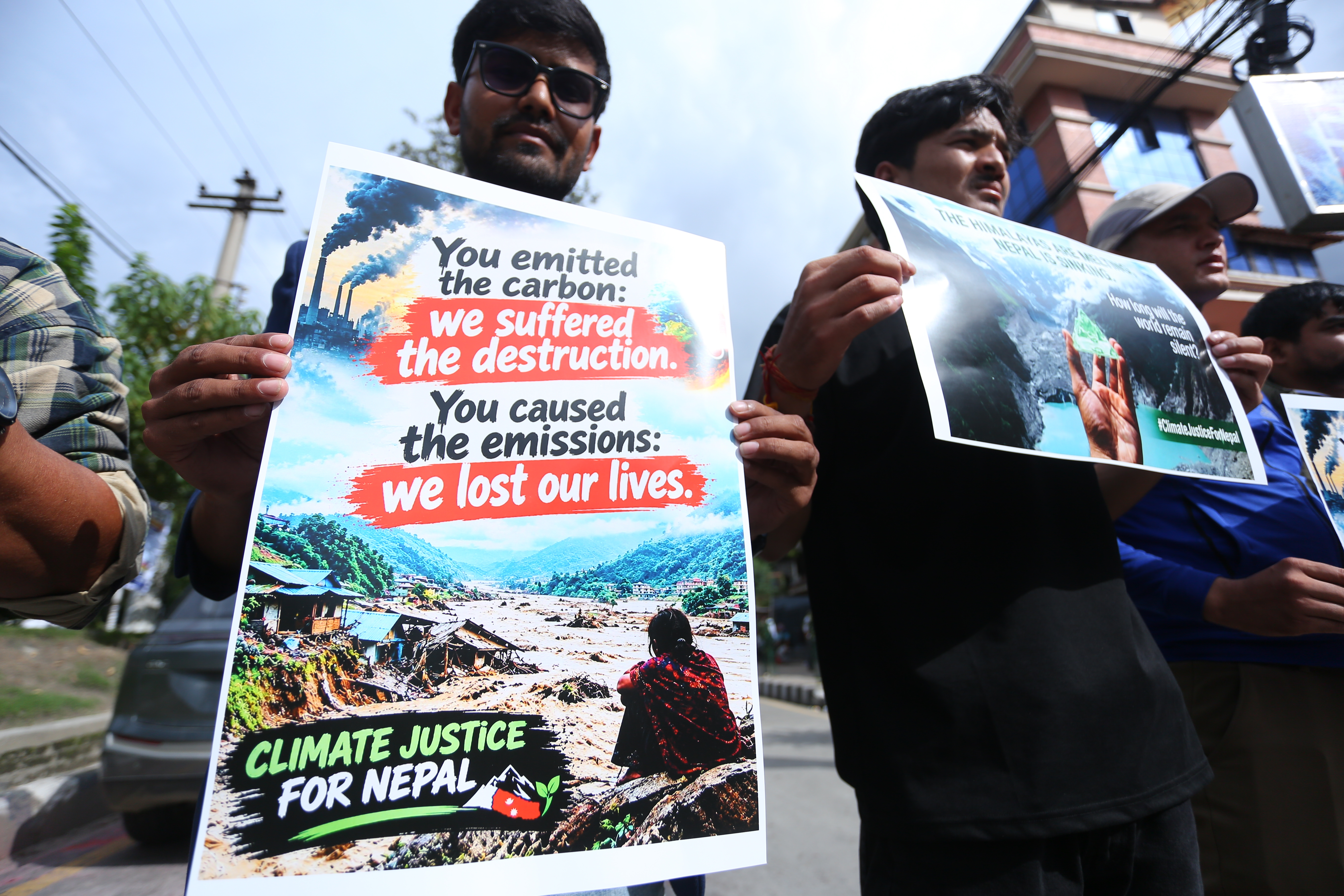
As the United Nations prepares to hold a climate summit in late September, it’s warning that current climate policies will lead to at least 1.8 degrees Celsius of global warming, well beyond the 1.5 degrees of the Paris Agreement. This year recorded one of the hottest summers globally, with deadly heat waves in Europe and catastrophic floods in Nepal, and July became the single-hottest month ever recorded in the U.S. Despite the evidence of growing danger, the Trump administration is moving to dismantle regulations that constrain warming emissions from power plants and other sources.
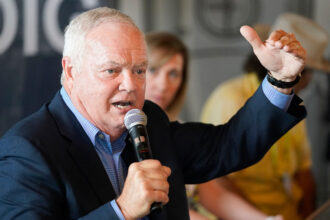
Michael Mann is the presidential distinguished professor of Earth and Environmental Science and director of the Penn Center for Science, Sustainability, and the Media at the University of Pennsylvania, and author of the book “Science Under Siege.” He recently shared his assessment of where we stand in the climate emergency, and what the newest numbers mean. This interview has been edited for length and clarity. The full interview can be heard on Living on Earth.
STEVE CURWOOD: One and a half degrees centigrade above pre-industrial levels is the number that many in the climate space are quite familiar with, especially in association with the Paris Agreement. Keeping the average rise in global temperatures ideally at that level or at least below two degrees centigrade is what we’re hoping for. What’s the harm of going above those numbers?
MICHAEL MANN: It might sound like a small amount of warming, right? But when the human body warms up that much, it’s called a pretty serious fever. Even though you’re only talking about a couple degrees on the thermometer, you know what the consequences of that fever are. Coughing, difficulty breathing, you’re delirious. You’re suffering all sorts of health consequences, and in a sense, that’s the same thing here.
That thermometer scale is telling us that Earth is running a fever, and we’re seeing the consequence of that fever in terms of the heat domes, the wildfires, the floods and all of the impacts that it’s already having. We’re not even at 1.5 Celsius yet—3 degrees Fahrenheit, basically—and already we’re seeing dangerous climate change. At this point, it’s not like we’re going to avoid dangerous climate change. It’s here, and it’s a matter of limiting it as much as we can.
“When you put all that together, the climate crisis and fossil fuel dependence is more deadly than the deadliest pandemic that we’ve experienced yet.”
We may miss the 1.5 degrees Celsius exit; it looks very likely that will happen now, especially because of two years of inaction here in the U.S. with the current administration. That next exit, 1.8 degrees Celsius, would be a whole lot better than two, and it’s still absolutely achievable … We can get there.
CURWOOD: Talk to me about the health and social implications of increases at this scale in climate disruption.
MANN: Extreme heat is a killer, and thousands of people are dying from just extreme heat events here in the United States that have been made more extreme because of human-caused warming; you have dangerous and deadly flood events, superstorms. We saw several thousand with that Tibetan flood, that glacial collapse, and we can say that was caused by climate change. Those floods were directly related to the melting of a glacier that only happened because of human-caused warming of this planet. That’s not even getting into all of the wildfires and the extreme heat events that we saw this summer; thousands of people died in Europe because of extreme heat.
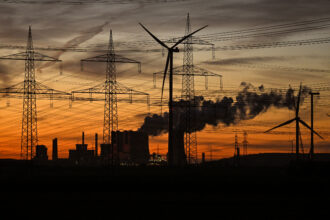
Now, when you take into account the health consequences of fossil fuel extraction and processing, I think the estimate is that 20 percent of all excess mortality today can be tied to air and water pollution that’s linked to fossil fuels. When you put all that together, the climate crisis and fossil fuel dependence is more deadly than the deadliest pandemic that we’ve experienced yet.
CURWOOD: To what extent is the planet warming faster than many scientists had predicted?
MANN: There’s a lot of misinformation out there about this, and there are some scientists who are making extravagant claims that I would argue don’t actually match the evidence. The planet’s average temperature right now has increased almost exactly as much as the models said it would, given our continued burning of fossil fuels. If you look at the global average temperature record, along with the spread among the models that the Intergovernmental Panel on Climate Change used in their last assessment, the observations are right in the center of those model simulations. I like to say, “The truth is bad enough.” We don’t have to exaggerate that. The reality is that the planet is warming up exactly as we said it would, and those models tell us it will continue to warm more if we continue to burn fossil fuels. The models have gotten right the overall warming of the planet.
CURWOOD: To what extent are the impacts coming faster than what science had predicted? What about the impacts of the glaciers cutting loose, these heat waves and fires? To what extent did science predict that?
MANN: That’s exactly right; many of these impacts are actually happening earlier, or the magnitude of the impact is greater than what we predicted. The planet is warming up as much as we expected, and the consequences of that warming are worse than expected with regard to extreme weather events, the disintegration of ice sheets, sea level rise and any array of impacts.
CURWOOD: What do you think it would take to get the public level of concern about the climate to equal what’s being said loudly about artificial intelligence risks?
MANN: It’s sort of ironic, isn’t it, that here we’ve been yelling at the top of our lungs, we climate scientists—for decades now—that we’ve got an existential planetary crisis. It is jarring to see so much public concern about a potential threat that isn’t nearly as far along at this point.
This story is funded by readers like you.
Our nonprofit newsroom provides award-winning climate coverage free of charge and advertising. We rely on donations from readers like you to keep going. Please donate now to support our work.
Donate NowWhy is that? My theory is that it aligns with some of the dystopian narratives that we’ve been fed. You know, “The Terminator,” “The Matrix” … People have been served warnings through these dystopian Hollywood narratives for a number of years now, and when things happen in the real world that start to align with those narratives, it understandably causes great concern.
Maybe the entertainment community and our friends in the world of communication haven’t done as good a job in portraying the climate crisis as the existential threat that it is. It’s sort of there in the background, in films like “Avatar,” which are actually premised on environmental destruction, but it’s sort of in the background. It’s not really platformed in the narrative, so I think that’s part of it. The public has been led to be concerned about dystopian narratives that look like what’s happening in the AI space, but they haven’t been as well prepared to see the climate crisis as the existential crisis that it is.
CURWOOD: So the most recent U.N. report is saying, “Look, we’re on our way to 1.8 degrees centigrade, largely tied to greenhouse gases we’re emitting.” How inevitable is this? How reversible is this? What can be done at this point if people were to get quite alarmed about this?
MANN: The good news is that we know that the surface warming ends almost immediately when we bring carbon emissions down to zero. The surface temperature remains where it was when you stopped emitting carbon.
The bad news is that the surface temperature remains where it is when you stop emitting carbon. It means it’s elevated at that level for perpetuity, and we’re already seeing very harmful impacts of less than 1.5 degrees warming. You can imagine how bad it looks if we even elevate temperatures at 1.8 for decades into the future.
When you’re in a climate hole, you’ve got to stop digging fossil fuels. We’ve got to prevent it from getting worse. We’ve got to decarbonize as quickly as we can. That’s task one. That’s where our primary focus needs to be. Yes, we may decide that we need to use technology that isn’t available at scale now. It may be available at scale decades from now, to actually bring those carbon dioxide levels back down, so that we can maybe start to cool the planet back down, bring it back to 1.5 or somewhere low enough that it remains more within our adaptive capacity.
If we go with just current policies into the future, the planet will warm up more than 3 degrees Celsius (6 degrees Fahrenheit) later this century. That would be catastrophic, where we start to use words like civilization-ending, where we can no longer envision meeting the needs of more than 8 billion people on this planet with diminished food and water and space.
About This Story
Perhaps you noticed: This story, like all the news we publish, is free to read. That’s because Inside Climate News is a 501c3 nonprofit organization. We do not charge a subscription fee, lock our news behind a paywall, or clutter our website with ads. We make our news on climate and the environment freely available to you and anyone who wants it.
That’s not all. We also share our news for free with scores of other media organizations around the country. Many of them can’t afford to do environmental journalism of their own. We’ve built bureaus from coast to coast to report local stories, collaborate with local newsrooms and co-publish articles so that this vital work is shared as widely as possible.
Two of us launched ICN in 2007. Six years later we earned a Pulitzer Prize for National Reporting, and now we run the oldest and largest dedicated climate newsroom in the nation. We tell the story in all its complexity. We hold polluters accountable. We expose environmental injustice. We debunk misinformation. We scrutinize solutions and inspire action.
Donations from readers like you fund every aspect of what we do. If you don’t already, will you support our ongoing work, our reporting on the biggest crisis facing our planet, and help us reach even more readers in more places?
Please take a moment to make a tax-deductible donation. Every one of them makes a difference.
Thank you,