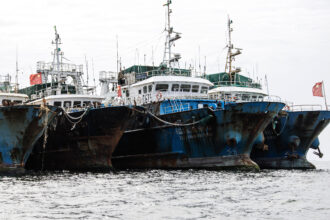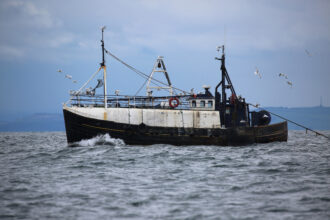


For Europe’s fishing industry, it turns out size does matter.
Of 60,000 European-flagged fishing boats, just 638 are responsible for most of the harm, according to a new report by French non-profit BLOOM. The largest in the fleet, at 108 feet or longer, pose the greatest threat to food security, cost taxpayers the most and cause unparalleled environmental harms.
As the European Union decides how to spend its almost $8 billion fisheries budget for 2028-2034, environmentalists are calling for the dismantling of these “mega-industrial” ships.
“They’re one percent of the fleet, and they threaten 99 percent of fishers,” said Claire Nouvian, founder and director of BLOOM. “They’re a zombie industry in the sense they’re actually creating death, creating misery, creating pillage and creating injustice.”
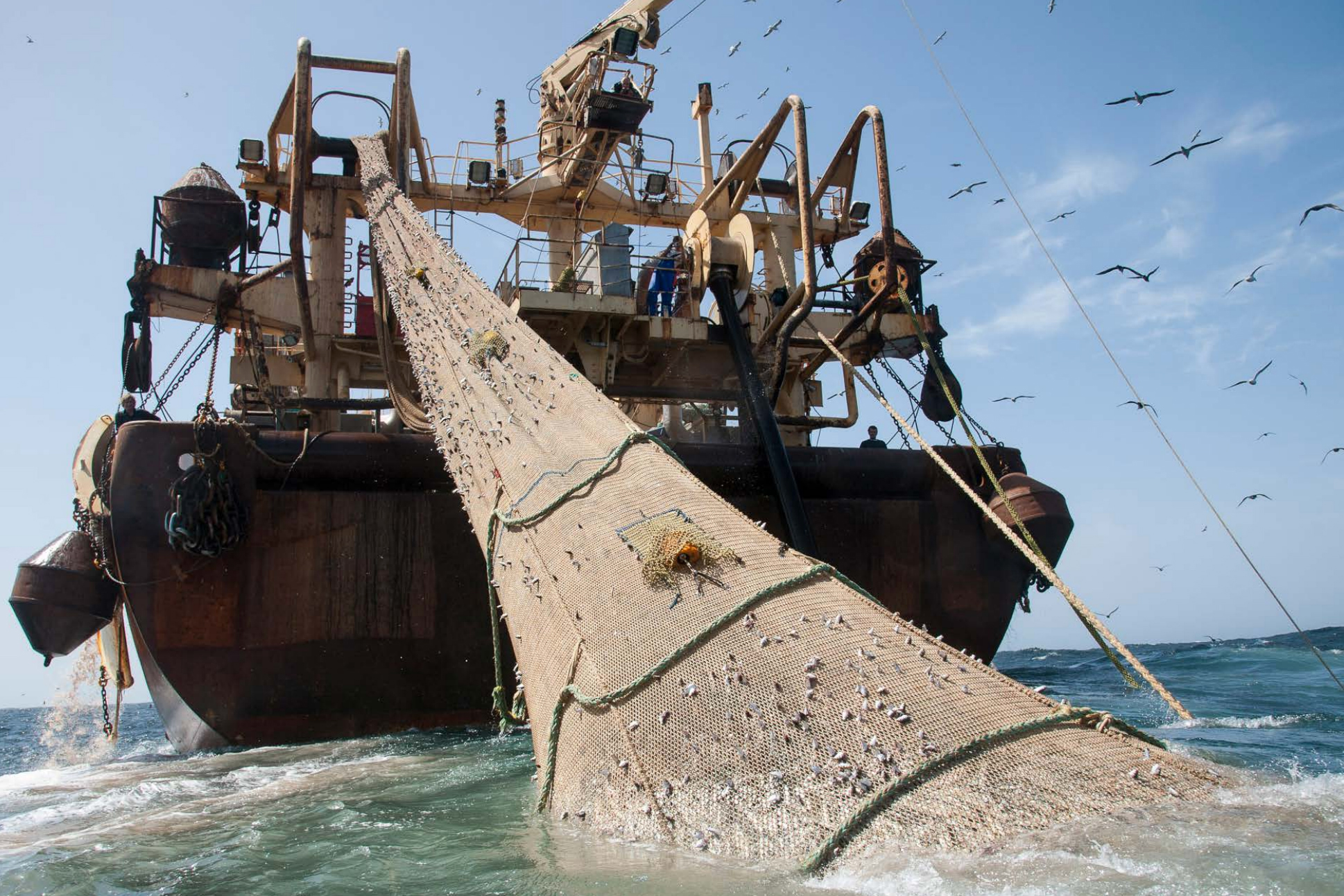
These floating factories, capable of catching and processing hundreds of tons of fish each trip, account for 55 percent of the fish caught by European vessels. And they do so with disproportionately more ecologically impactful gear.
Indeed, 84 percent of these vessels used “towed” gear, such as bottom trawling nets or demersal seines that ensnare marine life indiscriminately, resulting in high volumes of unwanted bycatch.
“Bottom trawlers are linked to seabed abrasion, destruction of bottom habitats and the disruption of the food web,” said Léna Fréjaville, BLOOM’s head of fisheries and the report’s lead author. “There is a link between the size, the extraction capacity and the gear used,” added Fréjaville, highlighting that below 108 feet only about 17 percent of boats use this type of gear, with the vast majority of smaller vessels instead using lower-impact, passive equipment.
“Trawling has wiped out habitats for animals to feed and sleep and reproduce, and now you’ve got gravel and rubble at the bottom of the ocean,” said Nouvian, who has termed the activities of these mega-ships as “counter-fishing” because of their longer-term ecological damage.
The ships also operate outside E.U. waters, harvesting marine life, on average, 2,600 miles from their home port. With European coasts unable to sate their voracious appetite, the E.U. pays over $100 million annually for fishing rights in other nations’ coastal waters.
Often, they’re no longer fishing to feed humans: “They’re catching anything that moves to transform into money and feed,” said Nouvian, pointing to the ever-growing fishmeal and fish oil industry that depends on “absolutely pillaging [African] waters.”
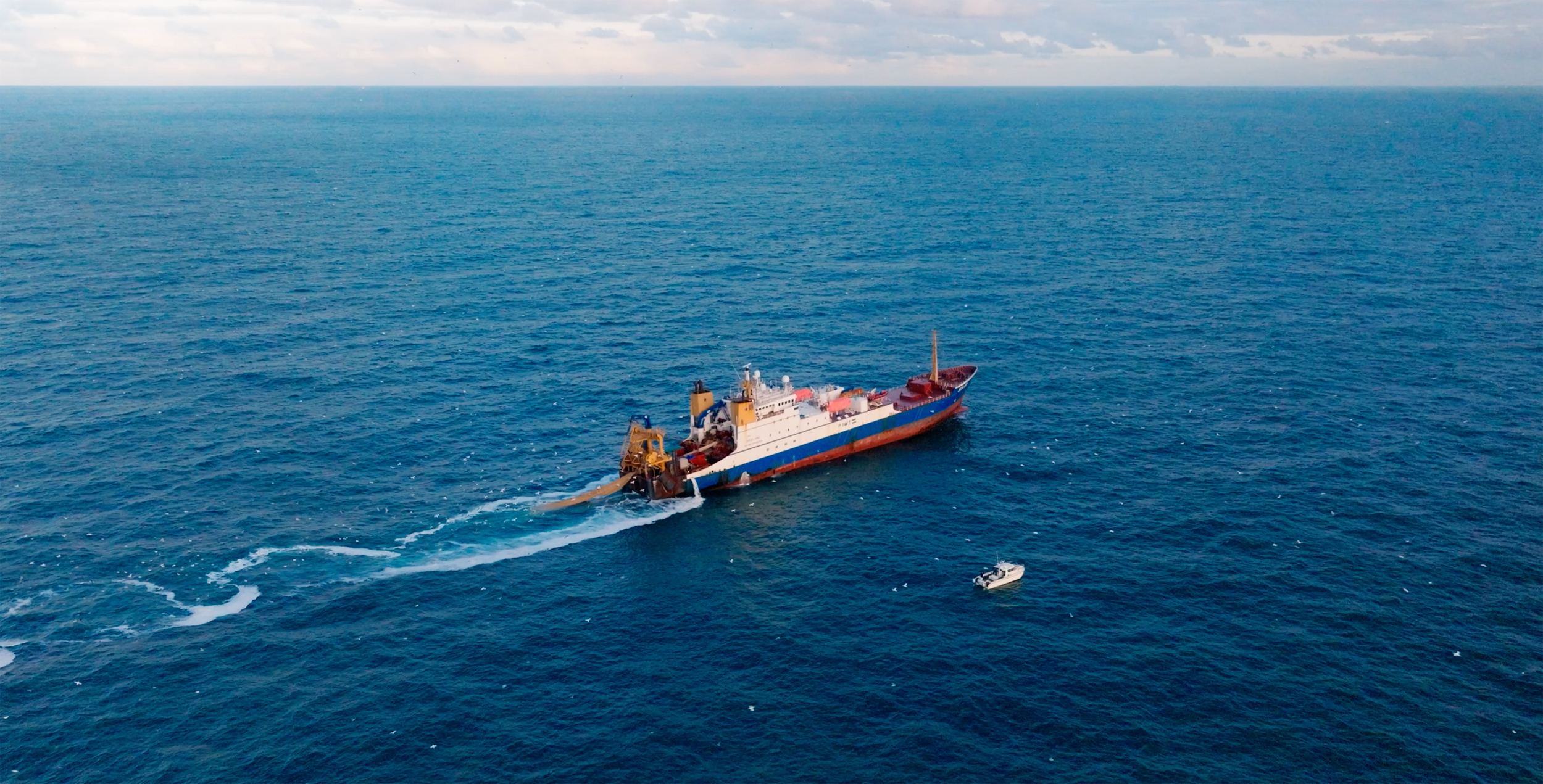
Industry players have historically pushed back on these claims. The Pelagic Freezer Trawler Association—which represents eight fishing companies and at least 18 vessels ranging from 180 to 470 feet—maintains the larger vessel size is environmentally advantageous.
“The size of our freezer trawlers makes them enormously efficient and therefore sustainable for fishing. Big is therefore not always bad,” the association argues on their website. “Not the size of the vessel, but scientifically derived quotas determine how much freezer trawlers can fish,” the association added, noting that 70 percent of a ship’s capacity is usually reserved for sorting, processing and storage.
These sizable steel ships however, are also accused of squeezing small-scale fishing.
In France, artisanal fishing generates ten times more jobs than mega-trawlers when you compare them pound for pound of fish caught. Yet, over the last two decades, 80 percent of European fisheries funding has gone to industrial fleets while small-scale coastal fishers have received just one percent of the budget.
“You see the despair in ports,” said Nouvian. “Small-scale fishers are desperate. They’re really hopeless and want these boats out of their waters.”
There are now calls for the European Parliament to spend $3 billion to dismantle these boats by 2035 and refit them for other purposes, such as goods transportation. With just 2.7 percent of fisheries subsidies allocated to ocean protection since 1994, BLOOM is calling for an equal split of the remaining budget between conservation and small-scale fisheries.
Establishing a “maximum tolerable length” of 108 feet would alleviate the pressure currently placed on stocks and allow for a more equitable redistribution of quotas to coastal fishers, according to Nouvian: “Transitioning away from mega-industrial counter-fisheries towards small-scale can revitalize the ocean’s health, repopulate the ocean and increase the fish catch in the long run.”
About This Story
Perhaps you noticed: This story, like all the news we publish, is free to read. That’s because Inside Climate News is a 501c3 nonprofit organization. We do not charge a subscription fee, lock our news behind a paywall, or clutter our website with ads. We make our news on climate and the environment freely available to you and anyone who wants it.
That’s not all. We also share our news for free with scores of other media organizations around the country. Many of them can’t afford to do environmental journalism of their own. We’ve built bureaus from coast to coast to report local stories, collaborate with local newsrooms and co-publish articles so that this vital work is shared as widely as possible.
Two of us launched ICN in 2007. Six years later we earned a Pulitzer Prize for National Reporting, and now we run the oldest and largest dedicated climate newsroom in the nation. We tell the story in all its complexity. We hold polluters accountable. We expose environmental injustice. We debunk misinformation. We scrutinize solutions and inspire action.
Donations from readers like you fund every aspect of what we do. If you don’t already, will you support our ongoing work, our reporting on the biggest crisis facing our planet, and help us reach even more readers in more places?
Please take a moment to make a tax-deductible donation. Every one of them makes a difference.
Thank you,

Johnny Sturgeon
Fisheries Reporter
Johnny Sturgeon is a London-based reporter covering fisheries and aquaculture. Joining us from the Outlaw Ocean Project, he has experience producing in-depth maritime investigations for nonprofit newsrooms. A former boatbuilder, he holds a B.A. in History & Politics from the University of Oxford, and an M.S. from Columbia Journalism School.