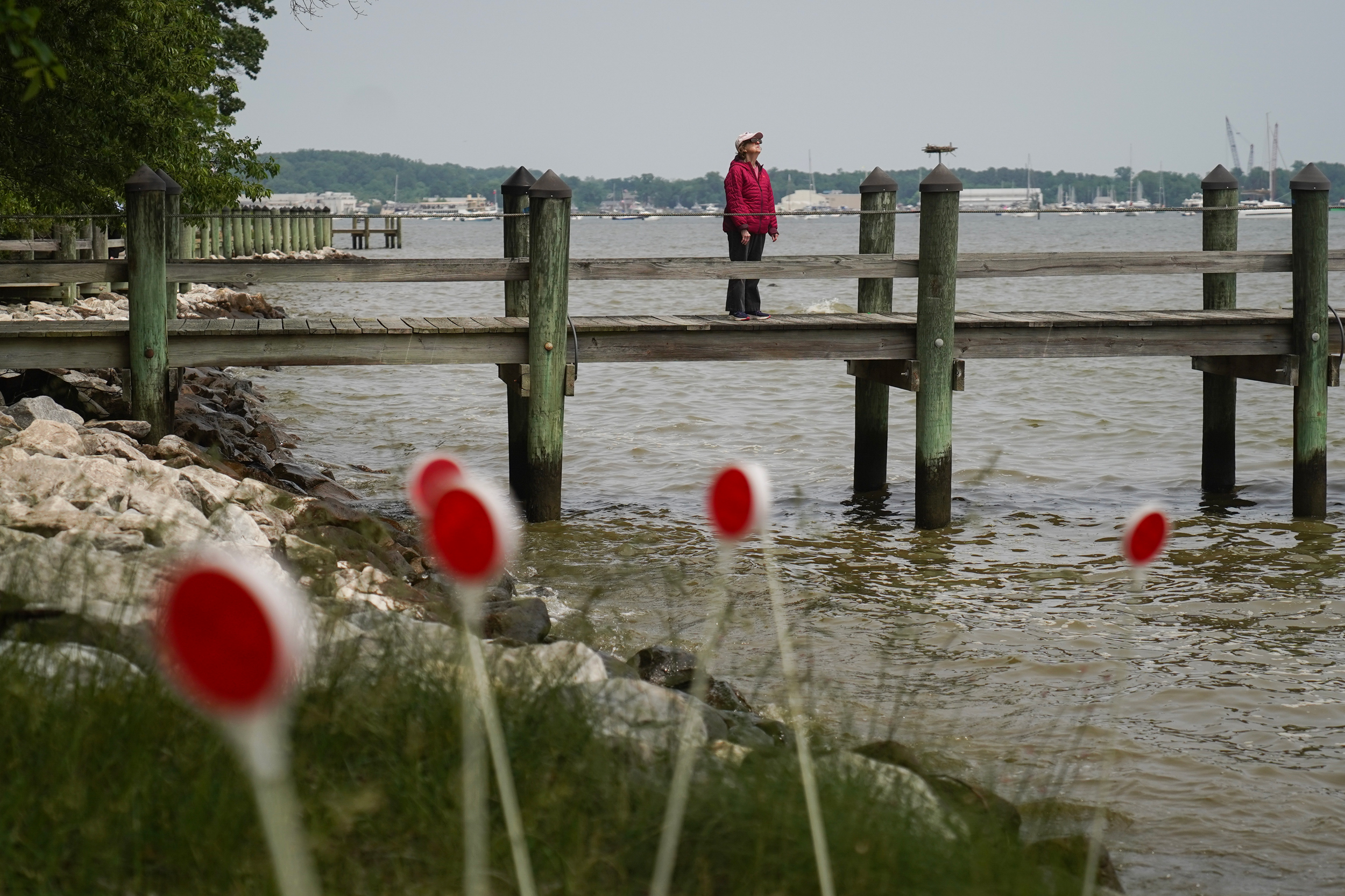


Two major challenges could complicate efforts to restore the Chesapeake Bay.
First, a new executive order from President Donald Trump revoked the longstanding framework for coordinating federal efforts to protect the bay. Second, seven Virginia tribes withdrew from formal participation after the Chesapeake Bay Program partnership denied them the signatory status they sought.
The new executive order replaces an Obama administration directive that created a broad federal framework for protecting and restoring the Chesapeake Bay. It named the U.S. Environmental Protection Agency as the lead agency for coordinating and overseeing federal efforts, and gave specific responsibilities to other participating federal agencies.
The new directive is narrower in scope. It directs federal agencies to focus funding and staff on projects that produce measurable improvements in water quality, particularly reductions in nutrient and sediment runoff. It argues that the previous order lacked clarity on implementation, citing stormwater management fees as an example of policies that placed an undue burden on residents and provided little or no benefit to the Bay’s environmental health.
The directive comes at a crucial moment for the Bay program and its partners. At its December 2025 meeting, the partnership approved a revised Bay Watershed Agreement that extended the region’s long-delayed pollution cleanup deadline to 2040.
At the meeting, the Chesapeake Executive Council, which makes policy decisions for the partnership between federal and state governments, and the District of Columbia, also directed staff to work with the Indigenous Conservation Council to bring tribal nations into the partnership.
Alison Prost, senior vice president for advocacy and restoration of the nonprofit Chesapeake Bay Foundation, said the 2009 order provided a clear roadmap by instructing agencies to develop strategic plans on bay restoration.
“The Trump executive order creates confusion,” Prost said, adding that “we need to figure out what the executive order means moving forward.”
In a statement, Maryland’s congressional delegation reacted sharply to the development, calling it “shortsighted and harmful” to the Bay communities. The statement said that removing that federal support could undermine the health of the Bay and the businesses and communities that depend on it. “Make no mistake: the Chesapeake Bay is a national treasure. And we will continue to fight for it.”.
Leila Duman, the Maryland Department of Natural Resources’ Chesapeake and Coastal Bays restoration officer, said the Clean Water Act, Chesapeake Bay Watershed Agreement and various Chesapeake Bay Program decisions and frameworks established over the last 17 years remain unchanged by Trump’s executive order. As a result, she said, the order should not affect Maryland’s restoration funding, planning or pollution reduction targets.
Jon Mueller, former vice president for litigation at the Chesapeake Bay Foundation, said Obama’s order gave the EPA responsibility for overseeing federal agencies’ plans to meet the Bay’s pollution limits. Mueller warned that rescinding Obama’s order could eliminate federal coordination and accountability and undermine climate-adaptation planning and implementation.
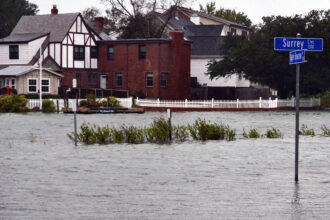
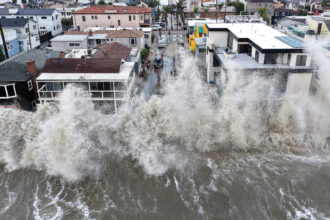
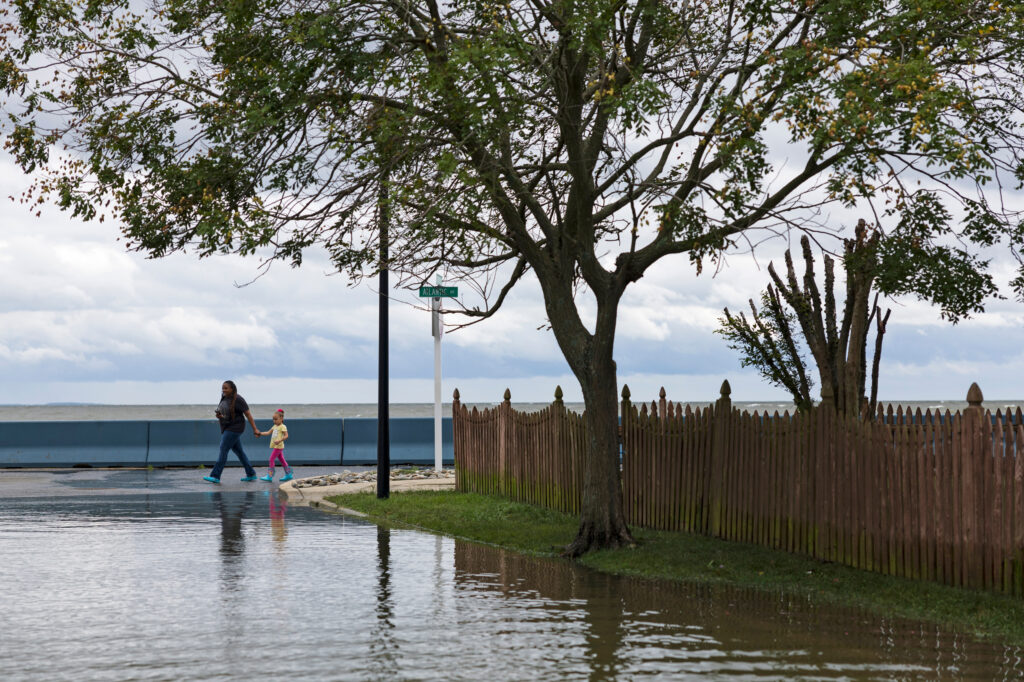
Mueller said that eliminating stormwater fees, also known as “rain taxes,” would leave local governments hard-pressed to fund runoff-control measures while meeting their legal obligation to reduce pollution. Failure to meet those requirements “exposes them to enforcement actions by EPA, the state and citizens,” he said. Losing that funding would also leave communities more vulnerable to heavier rainfall driven by climate change, with more homes and businesses flooded and streets closed.
The EPA defended the order, saying it would focus federal efforts on measurable water-quality improvements while maintaining the agency’s obligations under the Clean Water Act.
But the agency did not specify whether the Federal Leadership Committee, annual action plans and progress reports would continue under another authority or be replaced. It also did not explain how agencies would decide which programs qualify for continued support or whether they would disclose funding and staffing decisions publicly.
Separately, the partnership faces a breakdown in its relationship with seven federally recognized Virginia tribes, whose representatives have withdrawn from formal engagement after negotiations failed to deliver the full partner status they asked for.
At a 2025 meeting, the Chesapeake Executive Council, the Chesapeake Bay Program’s decision-making body, committed to bringing tribes into the Bay partnership and directed staff to develop a roadmap for including tribal nations in future agreements.
Those recommendations, including pathways for formally including tribes as signatories to future Bay agreements, were due by July 1. But the program leadership missed the deadline and pushed the question to December. Instead, the negotiations came to a head unexpectedly in an early September meeting.
This story is funded by readers like you.
Our nonprofit newsroom provides award-winning climate coverage free of charge and advertising. We rely on donations from readers like you to keep going. Please donate now to support our work.
Donate NowAfter about two hours of discussing how the partnership might operate, a Bay Program representative announced that signatory status would not be approved while representatives from Virginia, Maryland, Pennsylvania and West Virginia were present, said Anne Richardson, chief of the Rappahannock Tribe and chair of the Indigenous Conservation Council.
Richardson said she felt “the door was slammed in our face” after more than a year of work, including efforts to bring Indigenous knowledge into the program. She left the meeting without learning about the specific reason for denial because Bay Program representatives just told the tribal leaders they were “not privileged to say anything about what the concerns were.”
The resistance could stem from politics, funding concerns, misunderstandings about tribal sovereignty or uncertainty over existing structures. The tribes had sought a single shared decision-making seat representing all seven tribes as sovereign nations. Regardless of the outcome, they would continue restoration work with partners willing to work with them, Richardson said.
The Indigenous Conservation Council later issued a public statement confirming that tribal leaders were not informed of the reasons for denial.
In an interview, Melissa Ann Ehrenreich, the council’s executive director, said the tribes sought full partner status but the partnership offered options such as working groups and goal teams, which did not meet that requirement.
The tribes would not let the refusal halt their work, Ehrenreich said, and instead plan to launch and fund Indigenous Guardians programs in the Chesapeake. The tribes remain open to returning to the table, she added, but not without the “basic requirement” of respecting tribal sovereignty.
The Chesapeake Bay Program did not respond to questions about why it denied the tribal request for full partner status, but issued a statement confirming that it “did not extend an option for adding signatories” to the tribes. “The partnership remains committed to working with Tribes, to the extent that they would want to engage,” the statement added.
Neither the Maryland Department of Natural Resources, which previously told Inside Climate News that it supports tribal inclusion in the Bay partnership, nor the EPA directly addressed its position on tribal signatory status.
Bill Dennison, provost and vice president for academic affairs for the University of Maryland Center for Environmental Science and chair of the Bay Program’s Scientific and Technical Advisory Committee, said he was less concerned about the executive order itself than about maintaining restoration funding and the scientific research needed to measure its results. He welcomed the order’s emphasis on measurable improvements but said restoration projects must be paired with research to determine whether they are working.
Dennison said he was more troubled by the breakdown in relations with tribal communities, which disrupted a scientific relationship that was just beginning to take shape. The plans included a workshop bringing together Western science and Indigenous knowledge. Tribal communities could provide a historical perspective that extends far beyond the Bay’s four decades of continuous monitoring, he said.
“We don’t know what insights we would be losing out on without engaging them,” Dennison said. “We need all knowledge to work towards the restoration of the bay, not just one type of knowledge.”
About This Story
Perhaps you noticed: This story, like all the news we publish, is free to read. That’s because Inside Climate News is a 501c3 nonprofit organization. We do not charge a subscription fee, lock our news behind a paywall, or clutter our website with ads. We make our news on climate and the environment freely available to you and anyone who wants it.
That’s not all. We also share our news for free with scores of other media organizations around the country. Many of them can’t afford to do environmental journalism of their own. We’ve built bureaus from coast to coast to report local stories, collaborate with local newsrooms and co-publish articles so that this vital work is shared as widely as possible.
Two of us launched ICN in 2007. Six years later we earned a Pulitzer Prize for National Reporting, and now we run the oldest and largest dedicated climate newsroom in the nation. We tell the story in all its complexity. We hold polluters accountable. We expose environmental injustice. We debunk misinformation. We scrutinize solutions and inspire action.
Donations from readers like you fund every aspect of what we do. If you don’t already, will you support our ongoing work, our reporting on the biggest crisis facing our planet, and help us reach even more readers in more places?
Please take a moment to make a tax-deductible donation. Every one of them makes a difference.
Thank you,

Aman Azhar
Reporter, Washington, D.C.
Aman Azhar is a Washington, D.C.-based journalist who covers environmental justice for Inside Climate News with focus on Baltimore-Maryland area. He has previously worked as a broadcast journalist and multimedia producer for the BBC World Service, VOA News and other international news organizations, reporting from London, Islamabad, the United Arab Emirates and New York. He holds a graduate degree in Anthropology of Media from University of London’s School of Oriental and African Studies (SOAS) and an MA in Political Science from the University of the Punjab, and is the recipient of the Chevening scholarship from the UK government and an academic scholarship for graduate studies from the Australian government.