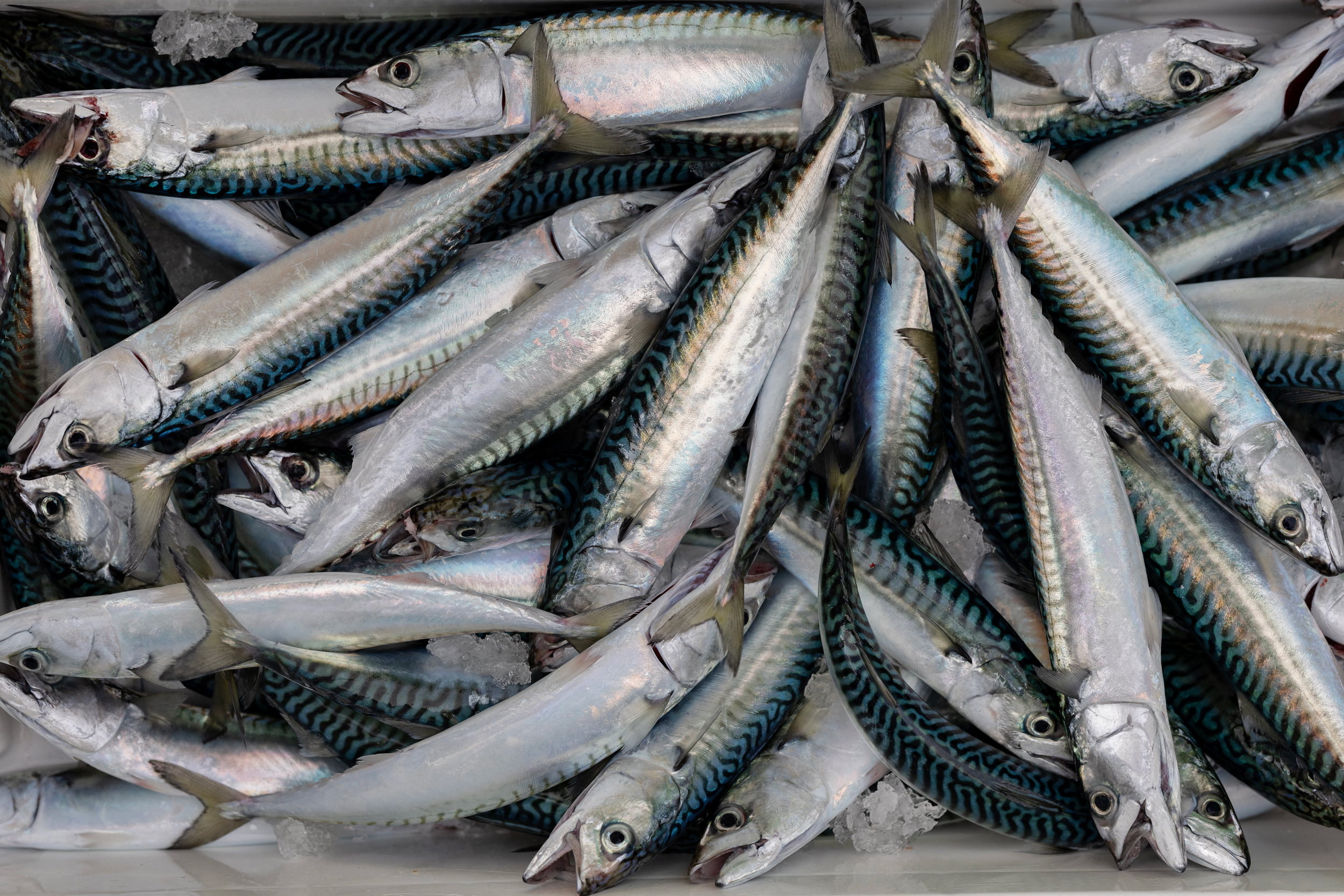


Europe’s fish stocks are in such dire straits that even the retailers who rely on them are now telling the fishing industry to slow down.
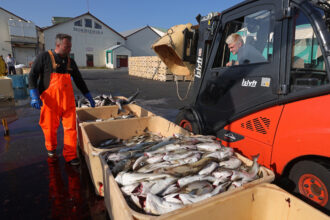
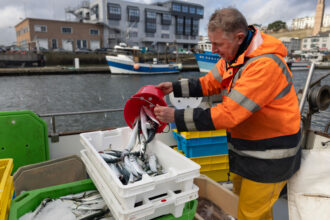
Last week, the International Council for the Exploration of the Sea—an intergovernmental marine science organization whose data is used to determine annual catch limits—published its annual mackerel report. Following upward population trends, they suggested the maximum sustainable yield could be over 350,000 tons of the silvery species—more than double what they recommended last year.
But knowing that mackerel is routinely overfished well beyond annual scientific recommendations, a coalition representing some of the world’s largest seafood businesses has issued a warning to the fishing industry.
“Care is needed as the stock is still in a precarious position,” said the North Atlantic Pelagic Advocacy Group in a press release. “[Mackerel fishing nations] cannot afford to mistake short term good fortune for effective long-term management,” added NAPA, highlighting that even if the new figure is adhered to, there’s still a 33 percent chance that stock levels will fall below safe limits within a year.
NAPA, a coalition of 58 major seafood businesses, is now calling on Norway, Iceland, the Faroe Islands, Greenland, the U.K., the E.U. and Russia to agree on a sustainable solution before it’s too late.
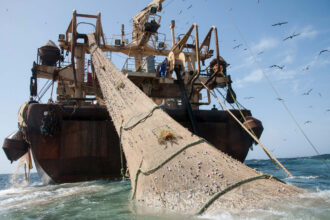
As a result of bitter economic and political disagreements over quota sharing, these seven nations have rampantly overfished mackerel to the point where stocks have declined by over 10 million tons since 2014. Between 2020 and 2024, the catch limits agreed by all parties were, on average, 39 percent higher than scientists recommend.
In fact, because states have so consistently fished above scientific advice, adherence to the 2027 ICES advice would, in theory, reflect an 11 percent cut to actual catch—a testament to the industry’s wanton disregard for long-term species protection.
“Without an effective management regime, these stocks remain at risk of falling below critical biological thresholds,” NAPA warned. “We urge political leaders to treat the 2027 advice as a floor for responsible management, not a ceiling to be pushed against.”
Despite being a $1 billion industry, supermarkets have already shown a willingness to make good on that threat. Earlier this year, NAPA-retailer Waitrose announced it would pull mackerel from supermarket shelves in Britain to “make a stand against overfishing,” while Lidl switched to Chilean jack mackerel instead.
“Sourcing decisions will be shaped not only by sustainability considerations but by whether viable alternatives exist, and in many cases, they do not,” said Aoife Martin, NAPA executive chair, in an email to Inside Climate News.
“Business patience has limits, and while [mackerel fishing nations] continue to capitulate, businesses and consumers will eventually move on,” warned Martin, whose organization represents European retailers like Aldi, Sainsbury’s and Tesco, and the American agriculture giant Cargill. Martin emphasized that long-term quota mismanagement has “very real and disproportionate impacts on shore‑side businesses.”
Though mackerel has drawn the most scrutiny, ICES also released increased catch advice for two other North Atlantic species: herring’s quota recommendation is up 10 percent while blue whiting’s is up 25 percent.
However, NAPA has warned against complacency for herring following various downward recruitment trends. The end of the industry’s Fishery Improvement Project for blue whiting this October means retailers might not be able to take advantage of increased catches for the species, according to NAPA.
The Marine Stewardship Council, a fisheries sustainability non-profit, and the Pelagic Advisory Council, a European Union fishing-guidance body, highlighted that climate change is accelerating the shifting distribution of fish stocks and rendering existing management models obsolete.
Calling for adaptive management plans that account for ecosystem changes, the MSC warned that the “collapse of [mackerel, herring and blue whiting] stocks would cause huge harm to marine ecosystems in the region.” In fact, since March 2019, the MSC has suspended its trademark sustainability certification scheme for all northeast Atlantic mackerel stocks.
The Pelagic AC has now gone further, formally calling on the European Commission to end the annual political bargaining between states, demanding regulators replace it with a long-term, binding management plan.
In the U.K., mackerel is the nation’s most heavily caught species. Yet the announcement of increased catch advice was met online by many who scoffed at the suggestion of recovering stocks. From the wild coasts of Cornwall in the southwest to Northumberland in the northeast, fishermen and anglers shared identical, troubling accounts on the water: massive, undeniable decades-long decline.
With the next major mackerel meeting taking place in two weeks between six coastal states —and a full summit including Russia in November—a pressing deadline looms. Now retailers have firmly drawn a line in the sand, any failure to deliver a binding, quota-sharing agreement could soon leave European supermarket shelves devoid of mackerel.
“There is a risk that [mackerel fishing nations] will take this latest stock assessment as a licence to continue excessive fishing pressure,” said Martin. “It is imperative that all parties follow the scientific advice this year and adhere to it.”
About This Story
Perhaps you noticed: This story, like all the news we publish, is free to read. That’s because Inside Climate News is a 501c3 nonprofit organization. We do not charge a subscription fee, lock our news behind a paywall, or clutter our website with ads. We make our news on climate and the environment freely available to you and anyone who wants it.
That’s not all. We also share our news for free with scores of other media organizations around the country. Many of them can’t afford to do environmental journalism of their own. We’ve built bureaus from coast to coast to report local stories, collaborate with local newsrooms and co-publish articles so that this vital work is shared as widely as possible.
Two of us launched ICN in 2007. Six years later we earned a Pulitzer Prize for National Reporting, and now we run the oldest and largest dedicated climate newsroom in the nation. We tell the story in all its complexity. We hold polluters accountable. We expose environmental injustice. We debunk misinformation. We scrutinize solutions and inspire action.
Donations from readers like you fund every aspect of what we do. If you don’t already, will you support our ongoing work, our reporting on the biggest crisis facing our planet, and help us reach even more readers in more places?
Please take a moment to make a tax-deductible donation. Every one of them makes a difference.
Thank you,

Johnny Sturgeon
Fisheries Reporter
Johnny Sturgeon is a London-based reporter covering fisheries and aquaculture. Joining us from the Outlaw Ocean Project, he has experience producing in-depth maritime investigations for nonprofit newsrooms. A former boatbuilder, he holds a B.A. in History & Politics from the University of Oxford, and an M.S. from Columbia Journalism School.