

New York City is running out of places to dump its trash.
In the latest draft of the city’s once-a-decade solid waste management plan, the sanitation department warns that the landfills receiving much of the city’s garbage are filling up fast.
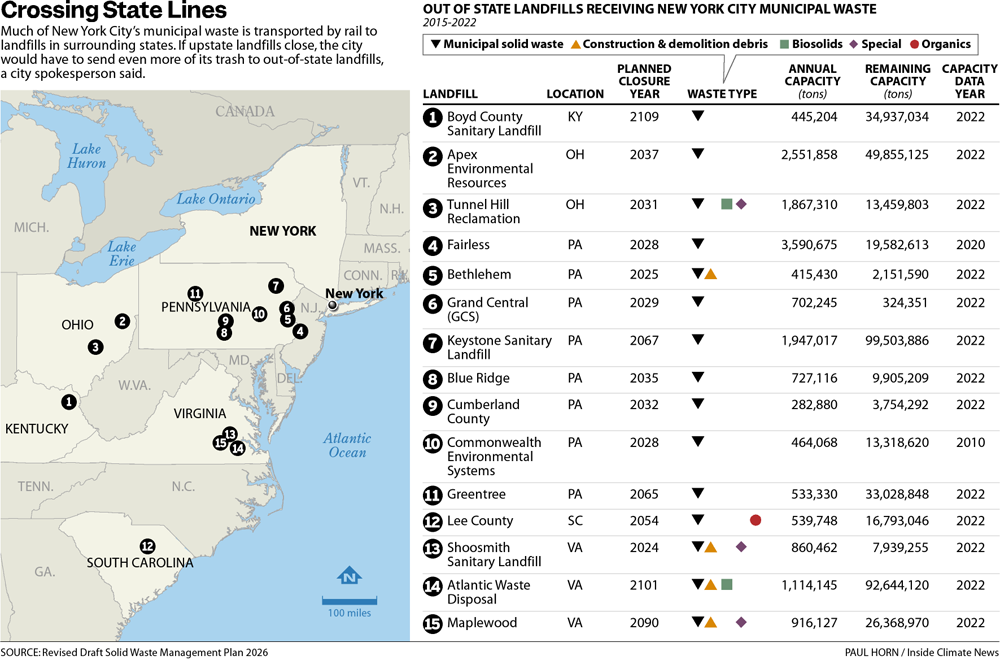
More than two-thirds of the city’s municipal waste is transported to landfills hundreds of miles away. Yet, under current permits, the state is projected to run out of landfill capacity for that garbage within 16 to 25 years.
As communities upstate push back against new and expanding landfills, the city may have to send its trash farther away. While efforts to divert more waste from landfills have made progress, experts say the city remains heavily reliant on landfill and waste incineration.
When landfills expand, they generate more methane, a greenhouse gas 86 times more potent than carbon dioxide in the near term. The Seneca Meadows landfill is the single largest source of methane emissions in New York state.
Another environmental concern is leachate, a mixture of rainwater and toxins from landfill trash. Though it’s supposed to be pumped out and treated, some older landfills leak into the soil beneath and eventually into groundwater, spreading toxins to local waterways.
Landfills also emit small amounts of hydrogen sulfide and ammonia, gases that can cause unpleasant odors and immediate health effects, such as coughing and eye irritation.
“Who wants to have the landfill near them expand?” asked Craig Benson, an environmental engineer who has spent much of his career studying landfills. “But everybody wants their trash taken away.”
“Nobody Wants it to Grow”
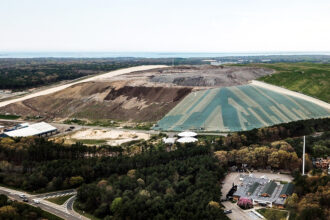
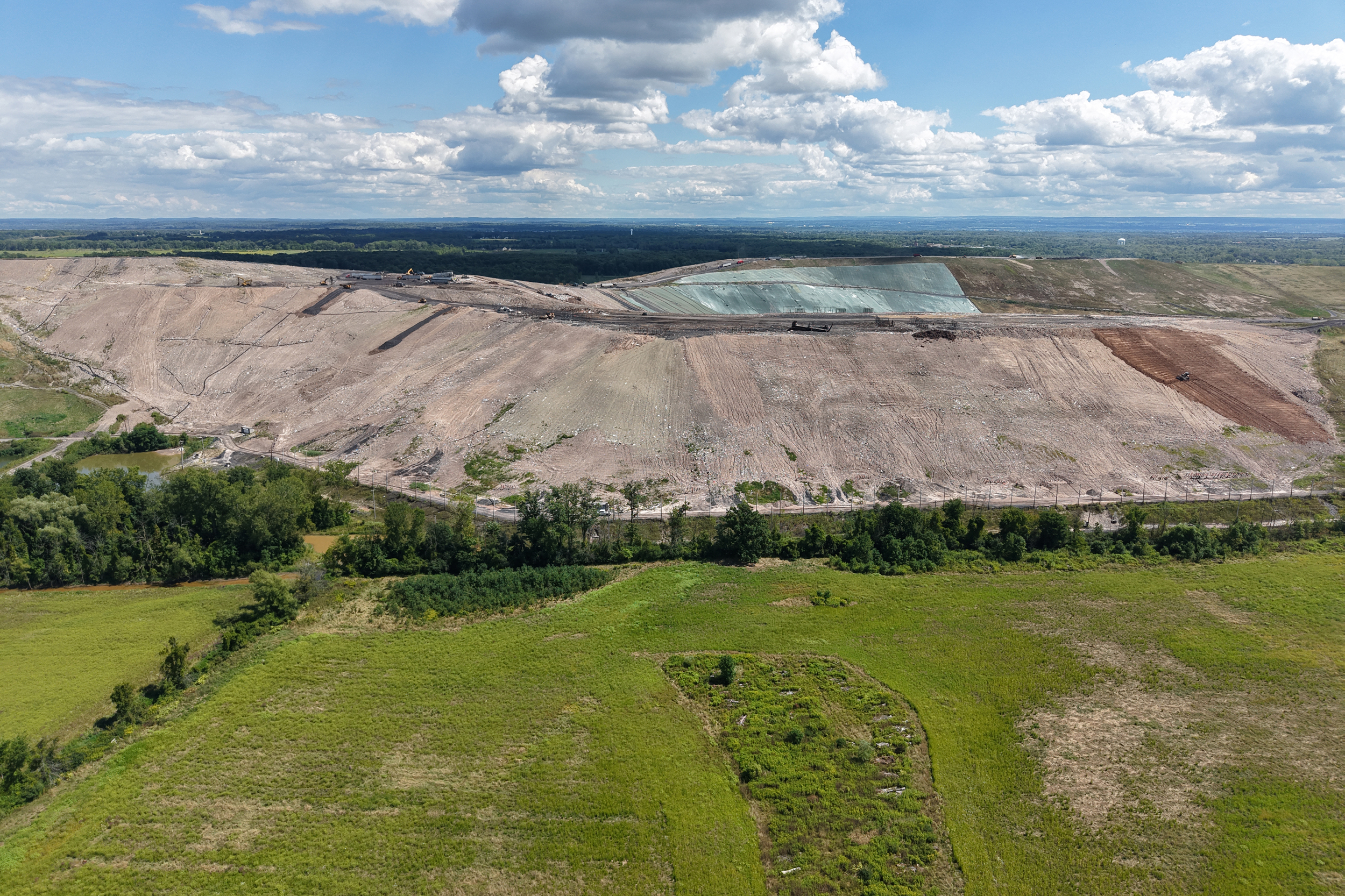
The state’s largest landfill, Seneca Meadows in the Finger Lakes region, has applied for a permit to expand, but nearby communities have opposed the proposal. It is the single largest source of methane emissions in New York state.
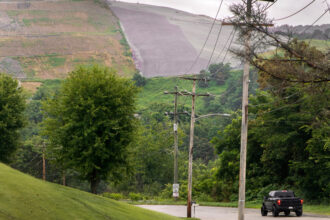
Seneca Meadows towers over the warehouse and offices where Mark Pitifer works for Waterloo Container, a company that sells glass packaging to wine manufacturers across the Finger Lakes and beyond. Pitifer said that he smells the landfill at least once a week on his way to work.
“You get out of your car, you get hit with a raw, rotten stench,” he said. “Sometimes it’s more of a gassy smell. Today, it was a raw garbage smell.”
Trash from New York City accounted for around 20 percent of the waste trucked to the landfill in 2024. Queens alone sent 221,000 tons of solid waste there.
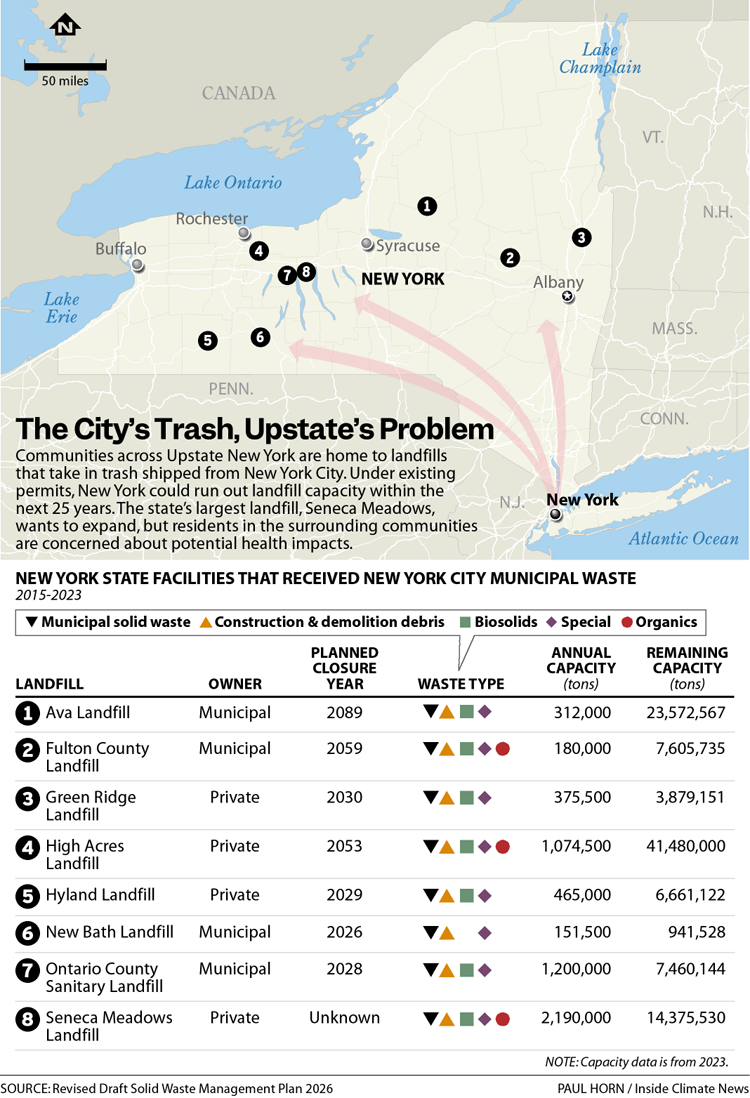
In a 2024 draft environmental impact statement, the landfill operator, Seneca Meadows Inc., said three New York City counties send a “significant amount” of their waste to the landfill.
Most of the tons of trash sent to the landfill from New York City in recent years, a New York City Department of Sanitation spokesman said, was “almost certainly commercial,” meaning it came from businesses such as restaurants and supermarkets. Commercial waste is handled by private companies, not the city sanitation department.
The spokesman for the city sanitation department wrote in an email that, according to the department’s records, it has not sent material directly to Seneca Meadows since at least 2018. However, he said some residential trash may end up there through city subcontractors.
In the draft environmental impact statement, Seneca Meadows Inc. wrote that the expansion would allow the landfill to “continue to provide the disposal capacity” needed not only in the Finger Lakes region but also in communities across New York state.
The Town of Seneca, where the Seneca Meadows landfill is located, passed a law in 2016 that required the landfill to close when its permit expires in 2025. After Seneca Meadows Inc. sued to challenge the law, the New York State Appellate Court ultimately declared it invalid. The company has since applied to expand the landfill.
While the state’s Department of Environmental Conservation weighs the request, the landfill can continue operating—as long as it doesn’t exceed its current capacity.
By the end of 2024, the landfill had just eight months of permitted capacity remaining, according to the most recent report filed with state regulators.
But that estimate is not fixed. Benson, a professor emeritus at the University of Wisconsin, Madison, and dean of engineering emeritus at University of Virginia, said landfill operators can often extend a site’s permitted capacity by further compressing waste as it decomposes. A landfill’s remaining life can vary depending on how it is managed and how much waste it accepts in a given year.
Documents that Seneca Meadows Inc. submitted to state regulators show the company wants to increase the landfill’s height by about 70 feet, making it more than 840 feet high—almost as tall as Rockefeller Center in New York City. The expansion would extend the landfill’s life by 15 years, the company estimates.
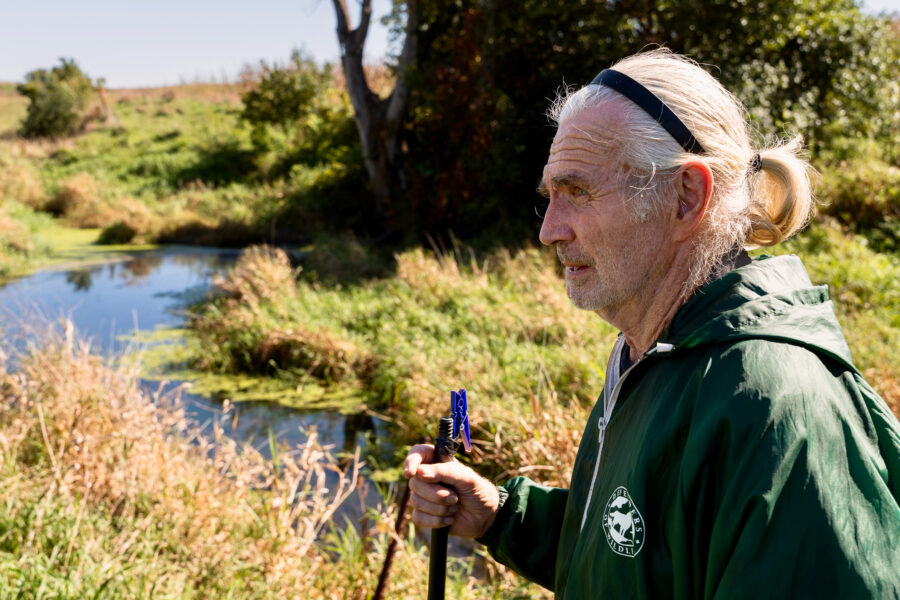
“It’s a horrendous idea,” said Yvonne Taylor, the vice president of Seneca Lake Guardian, an environmental nonprofit that opposes the landfill expansion. “Nobody wants it to grow except for people who work at the landfill.”
While EPA records show that the landfill emits benzene, a known carcinogen, a June investigation that Seneca Lake Guardian advocated for did not find a direct link between the landfill and elevated cancer rates.
The organization sued the landfill in 2024 to stop its expansion, claiming that the odors it emits are a nuisance and violate locals’ rights to breathe clean air, as set out in the state’s Green Amendment. A judge dismissed parts of both parties’ complaints and stayed the case while Seneca Lake Guardian and Seneca Meadows Inc., the landfill company, appeal the decision.
Seneca Meadows Inc. did not respond to requests for comment.
This story is funded by readers like you.
Our nonprofit newsroom provides award-winning climate coverage free of charge and advertising. We rely on donations from readers like you to keep going. Please donate now to support our work.
Donate NowBenson said local opposition is often the primary obstacle to building or expanding landfills. Expansion is often the better choice, especially if the management company has an unproblematic history, he said.
The Ontario County Sanitary Landfill, which in 2019 accepted 144,000 tons of municipal solid waste from Queens, received just 2,100 tons of construction debris from the city in 2024, according to reports filed with the state Department of Environmental Conservation.
In 2024, the town board voted to close the landfill when its permit expires in 2028. An analysis commissioned by county leaders found that the closure would require the area to ship its waste to other landfills, increasing costs through long-haul transportation.
The potential closure of Seneca Meadows could be a significant problem not just for the state, but for the entire region.
“If this capacity is lost at Seneca Meadows, these tons will be diverted to remaining landfills and [waste-to-energy] facilities, potentially with a dramatic tightening of the available disposal capacity in the region,” the analysis commissioned by Ontario County determined.
Landfill closures have major implications across the Northeast, where landfill capacity is already limited. Half of the waste managed by New York City’s sanitation department ends up in landfills in Virginia and South Carolina.
“We’ve seen a dramatic increase in rail hauling waste away from the Northeast, in part because of that limited available space,” said Bryan Staley, the president of the Environmental Research & Education Foundation, which has researched landfills across the country.
Acquiring permits for a new landfill can take between five and 10 years, Benson said, so expanding an existing one can seem like an attractive alternative for private companies—though that can also take years because of state regulations.
Staley said that this has led to the “regionalization” of waste management. Waste is not disposed of locally in a nearby “dump,” but instead in a massive landfill that takes in trash from all across the region.
“It’s very difficult to permit what we call a greenfield facility—where you’re going to go to new land and develop a new landfill,” Benson said. “It’s just difficult because, honestly, nobody wants a new landfill near wherever they are.”
Vincent Gragnani, a New York City Department of Sanitation spokesperson, said in an email that while the city sends waste to upstate landfills and others across the state, those facilities handle a “relatively small portion” of the waste the city manages.
“As capacity continues to shrink in the region, we will likely export trash to further locations,” Gragnani wrote.
The city plans to release its final solid waste management plan later this year.
Trash Talk
The mounting trash problem in New York City also has consequences for its residents. Diesel trucks that transport trash from waste transfer facilities—where local trash is sorted—to landfills expose residents to fine particulate matter, which can contribute to childhood asthma, cancer, cardiovascular and respiratory diseases.
Another environmental concern is leachate, a mixture of rainwater and toxins from landfill trash. Though it’s supposed to be pumped out and treated, some older landfills leak into the soil beneath and eventually into groundwater, spreading toxins to local waterways.
These concerns have prompted legislators and city officials to push for policies aimed at reducing the amount of trash that reaches landfills.
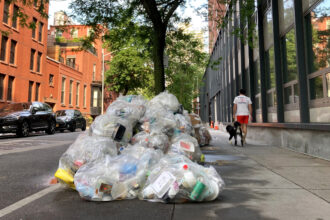
The city’s most recent waste characterization study found that 73 percent of the city’s waste could be diverted from landfills through recycling or composting. Yet in the 2023 fiscal year, only about 20 percent of the city’s waste was diverted. New Yorkers threw away two-thirds of the plastic, metal and glass materials that could have been recycled.
Environmental groups have backed legislation to address the problem. Last year, a bill aimed at reducing plastic packaging came close to passing the state legislature, despite strong opposition from industry groups. It would have reduced non-recyclable packaging in the state by 30 percent over the next 12 years and required packaging producers to contribute funds to recycling and waste-disposal costs.

At the beginning of 2026, Mayor Zohran Mamdani restarted the city’s mandatory composting program—the latest turn in New York’s on-again, off-again approach to composting. Gragnani, the city spokesperson, said the sanitation department has seen “steadily increasing participation” in the program.
About a third of the city’s waste is compostable. The program could significantly reduce the amount of waste sent to landfills by diverting food scraps, said Ana Baptista, an associate professor of environmental and climate justice at The New School’s Parsons School of Design.
Policies like these can benefit environmental justice communities located near waste infrastructure, including landfills. For residents living near Seneca Meadows, changes to how New Yorkers dispose of their waste cannot come soon enough.
“We do not want that waste to become another burden on another community,” Taylor said. “We can turn this ship around and stop being a throwaway culture … the solutions are out there.”
This story was updated Oct. 7, 2026, to include additional comment from the New York City Department of Sanitation and more information about trash transported from New York City to the Seneca Meadows landfill.
Correction: This article was updated Oct. 5, 2026, to delete an incorrect reference to the New York City Department of Sanitation. The agency is not currently sending municipal waste to the Seneca Meadows Inc. landfill in upstate New York.
About This Story
Perhaps you noticed: This story, like all the news we publish, is free to read. That’s because Inside Climate News is a 501c3 nonprofit organization. We do not charge a subscription fee, lock our news behind a paywall, or clutter our website with ads. We make our news on climate and the environment freely available to you and anyone who wants it.
That’s not all. We also share our news for free with scores of other media organizations around the country. Many of them can’t afford to do environmental journalism of their own. We’ve built bureaus from coast to coast to report local stories, collaborate with local newsrooms and co-publish articles so that this vital work is shared as widely as possible.
Two of us launched ICN in 2007. Six years later we earned a Pulitzer Prize for National Reporting, and now we run the oldest and largest dedicated climate newsroom in the nation. We tell the story in all its complexity. We hold polluters accountable. We expose environmental injustice. We debunk misinformation. We scrutinize solutions and inspire action.
Donations from readers like you fund every aspect of what we do. If you don’t already, will you support our ongoing work, our reporting on the biggest crisis facing our planet, and help us reach even more readers in more places?
Please take a moment to make a tax-deductible donation. Every one of them makes a difference.
Thank you,

Lauren Dalban
Reporter, New York City
Lauren Dalban is a New York City-based reporter with a background in local journalism. A former ICN fellow, she now covers environmental issues in all five boroughs. Originally from London, she earned a B.A. in History and English from the University of Virginia, and an M.S. from Columbia Graduate School of Journalism.