

A new report from the United Nations Environment Programme suggests that limiting global warming to 1.5 degrees Celsius above pre-industrial levels is no longer a realistic outcome, even under the most ambitious emissions-reduction scenarios.
The report’s lowest-warming scenario, which would require steep cuts in greenhouse gas emissions, would only limit peak global warming to 1.7 to 1.8 degrees Celsius above pre-industrial levels.
The 2015 Paris Agreement, adopted by almost every country in the world, set a goal of keeping global warming below 2 degrees Celsius (3.6 degrees Fahrenheit) while pursuing efforts to limit the increase to 1.5 degrees. The United States has withdrawn from the agreement twice under President Donald Trump, most recently last year.
The report’s projections do not mean the world should abandon the 1.5 degree target, said Inger Andersen, UNEP’s executive director, at a press briefing.
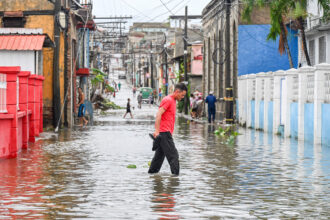
“Every additional fraction of a degree matters, and every additional year of warming above 1.5 will increase climate impacts such as deadly floods, heatwaves, wildfires that have plagued nations this year,” Andersen said.
Robert Kopp, a climate scientist and professor at Rutgers University in New Jersey, said the report’s findings were not surprising. Even in 2015, he said, the 1.5 degree target was at the edge of what was considered feasible.
Reaching the report’s lowest warming scenario would require emissions to fall by 18 percent by 2030, 45 percent by 2035 and 69 percent by 2040, relative to 2025 levels. It would also require removing substantial amounts of carbon dioxide from the atmosphere, an effort that would likely involve not only reforestation, but also the rapid development of carbon-capture technologies that remain in the early stages of development.
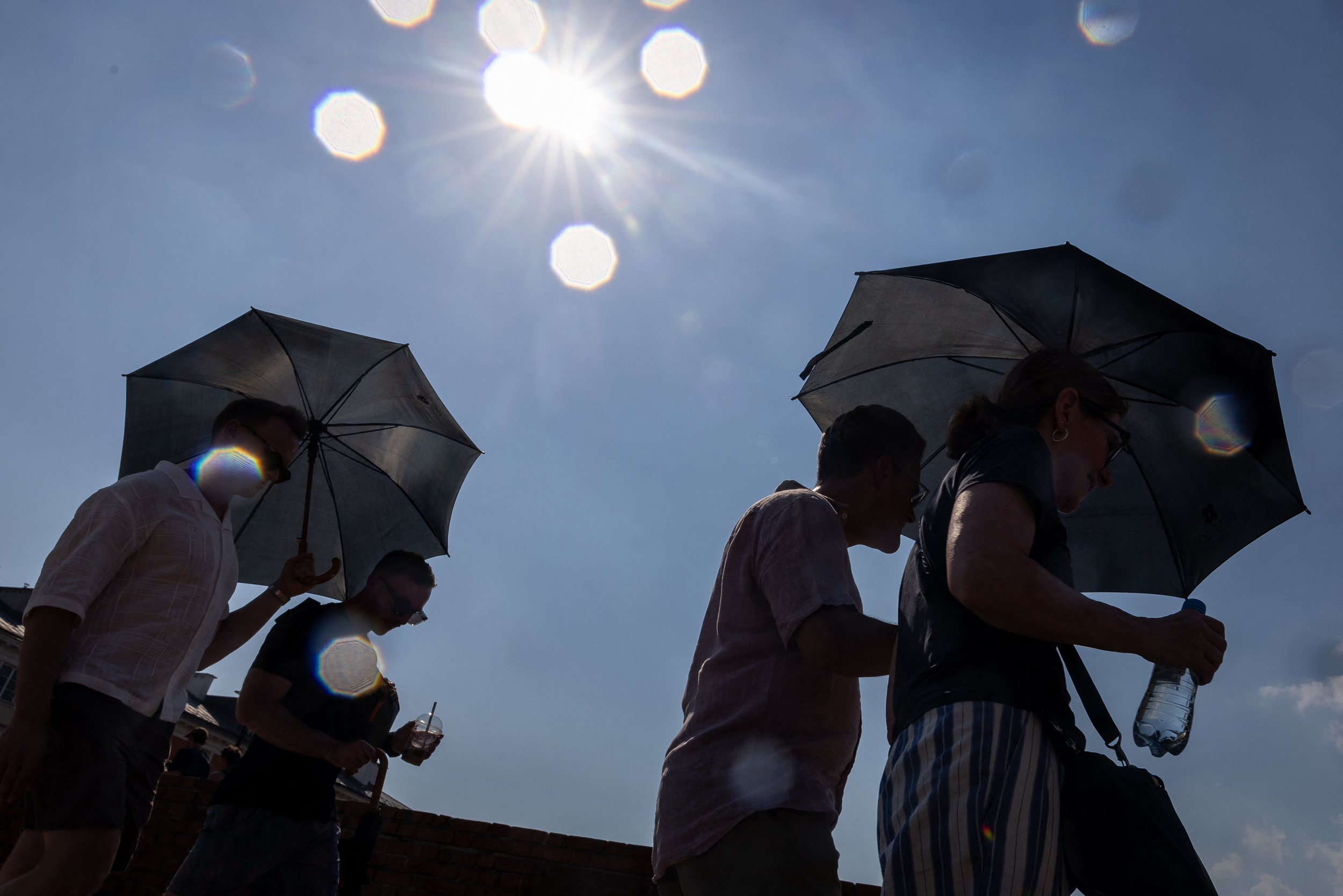
Meanwhile, climate impacts are mounting, putting pressure on efforts to adapt to global warming. Western Europe saw thousands of heat-related deaths last spring and summer, a period which encompassed four of the region’s 10 most severe heat waves since 1950.
Still, the report highlights the expansion of renewable energy as an area of progress. Despite what Jan Minx, head of the Evidence for Climate Solutions working group at the Potsdam Institute for Climate Impact Research, described as “bleak” predictions for global warming, the growth of renewable energy capacity, particularly wind and solar, has outpaced expectations. Minx co-authored a chapter in the report.
Global renewable electricity capacity expanded three times faster than was anticipated in 2015, according to the report, while solar photovoltaic capacity grew seven times faster.
Setu Pelz, a research scholar at the International Institute for Applied Systems Analysis who co-authored a chapter in the report, said countries must sustain that momentum to triple renewable capacity by 2030, a priority in keeping with Paris Agreement targets.
Global emissions in 2025 were comparable to those a year prior—a “welcome divergence from a growth trend of past decades,” Anne Olhoff, the director of the UNEP Copenhagen Climate Centre and the report’s lead author, said at a press briefing.
But the expansion of clean energy has yet to drive down fossil fuel emissions. According to the report, emissions from the combustion of oil, gas and coal continue to rise.
“We provide some evidence that can inform the discussions about 2030, 2035 and 2040 targets in these sectors, so that we can see the same level of ambition in the fossil fuel transition as we have seen in the real renewable capacity scale-up,” said Pelz.
Released annually, UNEP’s emissions gap report is part of a growing body of research warning that current climate policies fall short of what is needed to meet international temperature targets. Under existing policies, global warming could reach 2.8 degrees by 2100—far above the Paris Agreement’s 2-degree threshold.
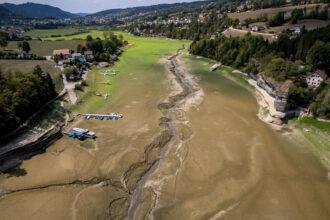
When asked what a world that is more than 2 degrees Celsius warmer than pre-industrial levels might look like, Andersen referenced recent extreme weather events.“Think of the heat wave … in much of Europe last year, think of the wildfires that we are seeing in Scandinavia as an example, think of droughts and harvest failures,” she said.
“Think of that happening much more frequently.”
About This Story
Perhaps you noticed: This story, like all the news we publish, is free to read. That’s because Inside Climate News is a 501c3 nonprofit organization. We do not charge a subscription fee, lock our news behind a paywall, or clutter our website with ads. We make our news on climate and the environment freely available to you and anyone who wants it.
That’s not all. We also share our news for free with scores of other media organizations around the country. Many of them can’t afford to do environmental journalism of their own. We’ve built bureaus from coast to coast to report local stories, collaborate with local newsrooms and co-publish articles so that this vital work is shared as widely as possible.
Two of us launched ICN in 2007. Six years later we earned a Pulitzer Prize for National Reporting, and now we run the oldest and largest dedicated climate newsroom in the nation. We tell the story in all its complexity. We hold polluters accountable. We expose environmental injustice. We debunk misinformation. We scrutinize solutions and inspire action.
Donations from readers like you fund every aspect of what we do. If you don’t already, will you support our ongoing work, our reporting on the biggest crisis facing our planet, and help us reach even more readers in more places?
Please take a moment to make a tax-deductible donation. Every one of them makes a difference.
Thank you,

Lauren Dalban
Reporter, New York City
Lauren Dalban is a New York City-based reporter with a background in local journalism. A former ICN fellow, she now covers environmental issues in all five boroughs. Originally from London, she earned a B.A. in History and English from the University of Virginia, and an M.S. from Columbia Graduate School of Journalism.