

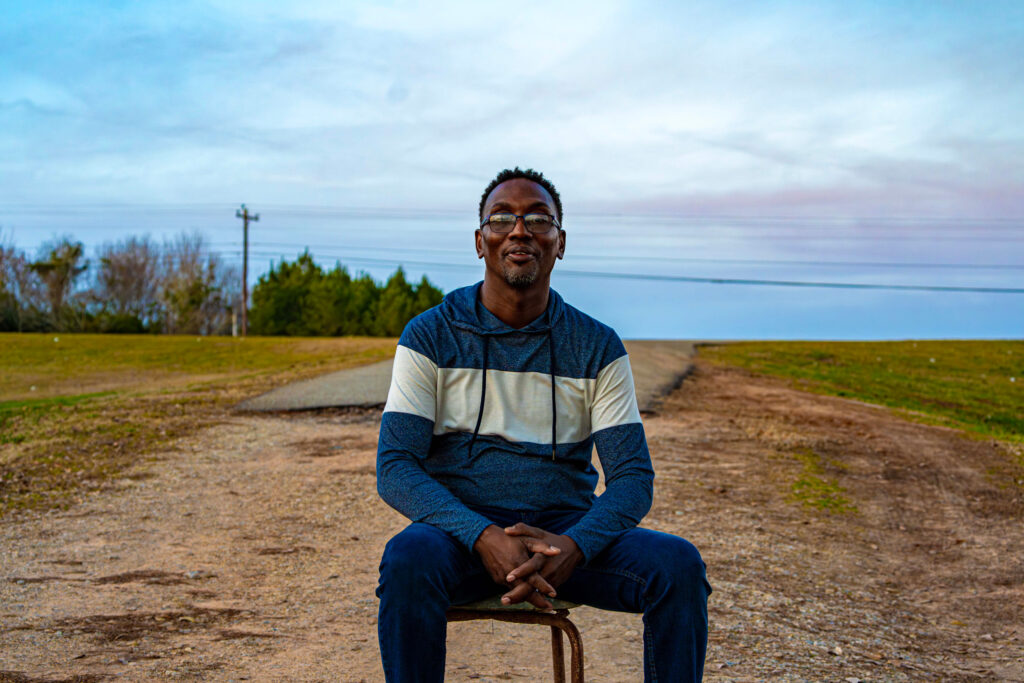
Warren Tidwell is glad the election is over.
Tidwell, a community organizer, recognizes there was a sea change on election night.
“They say it was a blue wave,” Tidwell said. “Or a blue tsunami.”
But he’s tired of the water metaphors.
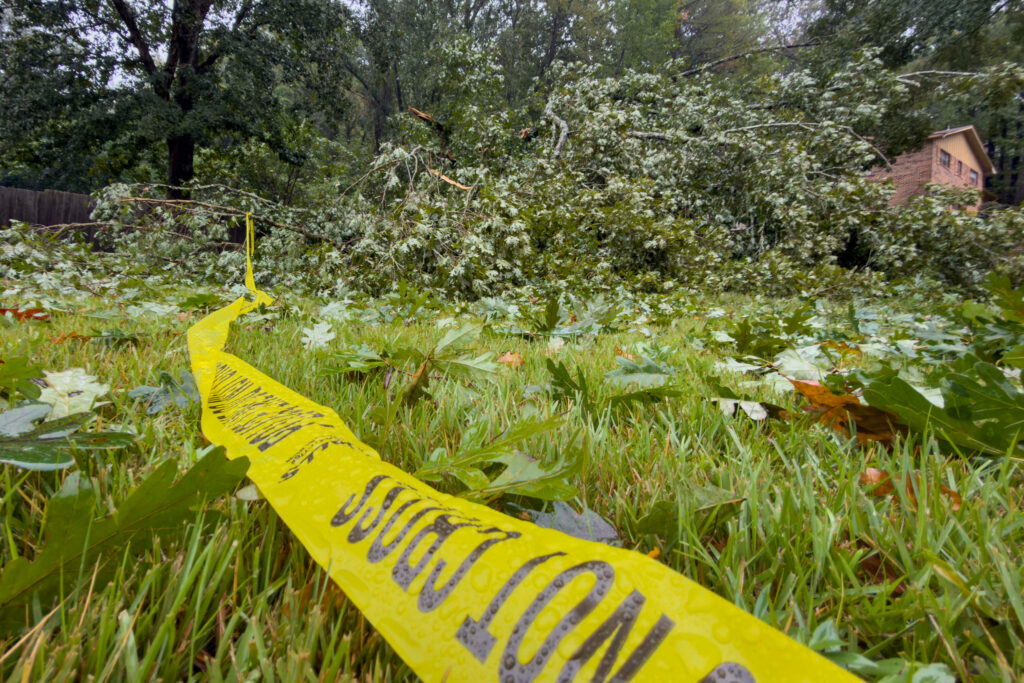
For weeks, Tidwell had been working to help organize disaster relief across the rural Alabama counties that stretch atop the Florida panhandle. Because of the rains and winds of Hurricane Isaias, which hit Alabama last month, he’s seen enough water damage for a lifetime. So for him, the analogies fall flat.
And for the residents he’s been helping, the election wasn’t a political game, he said. It was a cry for help.
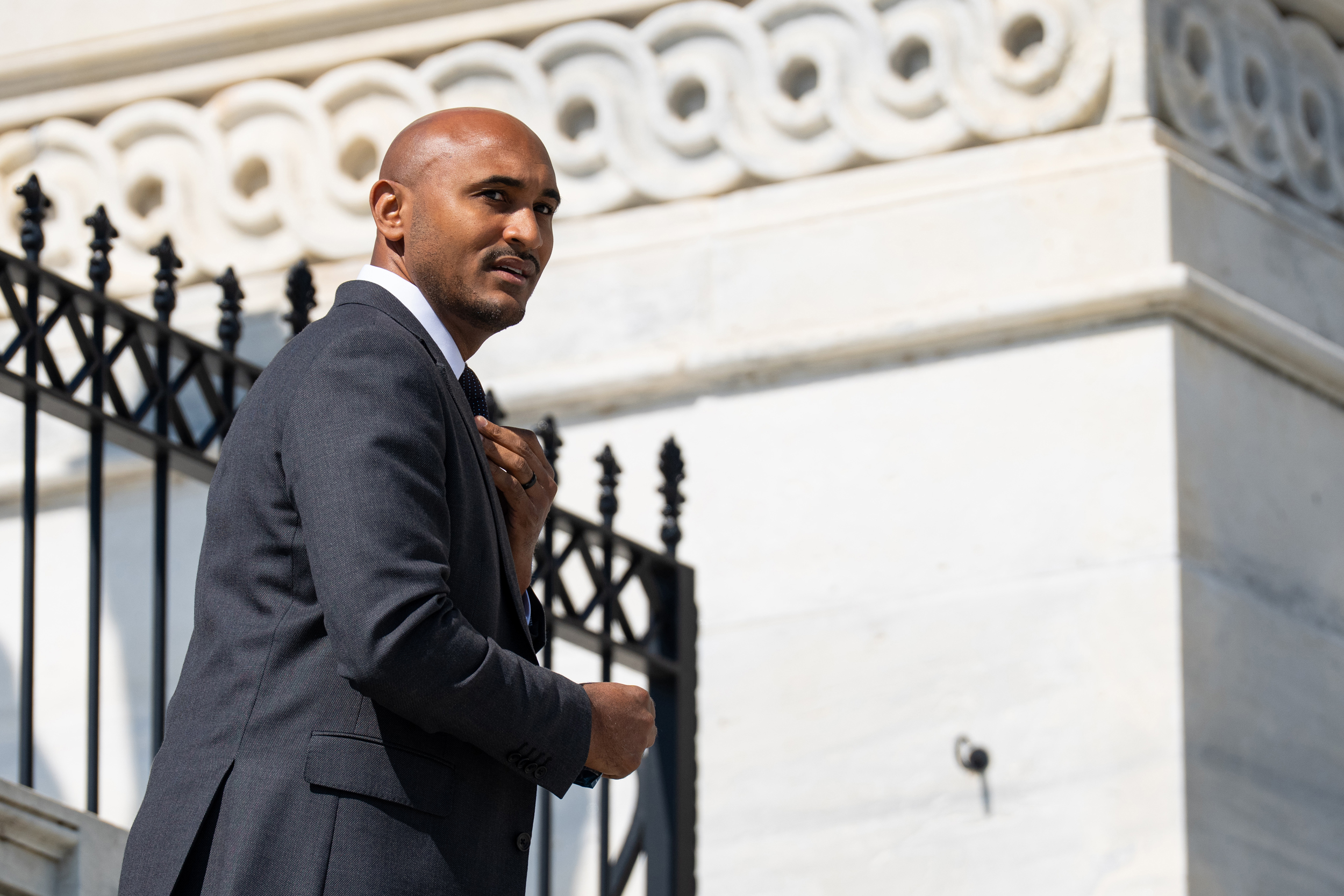
In Alabama’s 2nd Congressional District, which includes many of the impacted counties, voters bucked state Republicans’ attempt to oust U.S. Rep. Shomari Figures, a Black Democratic incumbent they had drawn out of his own district earlier this year. That move came after President Donald Trump called for redistricting in red states, and the Supreme Court ruled that the Voting Rights Act does not require the creation of majority-minority congressional districts to facilitate the election of minority voters’ candidates of choice.
Figures, running in the new, heavily Republican district, outperformed all expectations, defeating his Trump-endorsed opponent, Rhett Marques, by more than 7 points. Had those new boundaries been in effect during the 2024 presidential election, Donald Trump would have beaten Kamala Harris by 15 points, 57 percent to 42 percent.
“Where is FEMA?”
On Oct. 9, Hurricane Isaias made landfall on the Florida Gulf coast around 8:30 p.m. local time, cutting its way across the middle of Alabama, eventually killing nine people across three states and causing billions of dollars in damage.
On Oct. 24, all of Alabama’s congressional delegation—Republicans and Democrats— signed a letter supporting Gov. Kay Ivey’s request to Trump for a major disaster declaration for 23 counties in the southern part of the state, including much of the second district. They have received no reply.
Instead, on Oct. 27, Trump issued a major disaster declaration for the 15 Florida counties in the path of the storm. Escambia County, Florida, residents would benefit from a major disaster declaration; residents of neighboring Escambia County, Alabama, still have no word whether they will get help.
Everywhere Tidwell has travelled across the impacted counties in south Alabama, residents still struggling to meet their basic needs have asked him the same question: “Where is FEMA?”
Tidwell, who serves as executive director of the Alabama Center for Rural Organizing and Systemic Solutions, said many voters likely had that question in mind on election day. But disaster relief shouldn’t be about political affiliation, he said.
“If someone asks me who these people voted for, I’ll scream,” he said. “These people need help, not a campaign promise.”
Pastor Timothy Williams, a resident of the historically Black Shiloh community in Coffee County, said voters living in the district were already tired of high prices and low wages before the hurricane. In its wake, Williams said, neighbors have had to rely on each other, not the federal government, to recover from the storm.
“We haven’t seen much of any federal response,” Williams said. “The hurricane split light poles. It took trees. It damaged people’s roofs.”
Williams’ family evacuated to a local motel during the storm instead of hunkering down in their home, which has repeatedly faced flooding since a 2018 highway expansion.
Andrea Eckelman, a political science professor at the University of Montevallo, Alabama’s public liberal arts college, said that issues like disaster relief can compel voters to the polls for a very good reason.
“That’s the point at which it all starts to feel personal,” Eckelman said. “You may be able to explain away high prices for a while, but you can’t explain away why the family whose home has been destroyed isn’t getting help.”
Sources familiar with Ivey and Trump’s relationship told Inside Climate News that Trump’s delayed decision on a major disaster declaration for Alabama in the wake of Isaias stems from his icy relationship with the state’s governor, which began with the denial of Trump’s request to hold a political rally in 2021 onboard the U.S.S. Alabama, a battleship docked in Mobile Bay. Ivey denied any involvement in the decision to reject Trump’s request at the time.
In a statement, White House spokesperson Lauren Bis denied that Trump’s decisions regarding disaster relief are motivated by politics.
“The President responds to each request for Federal assistance under the Stafford Act with great care and consideration, ensuring American tax dollars are used appropriately and efficiently by the states to supplement—not substitute, their obligation to respond to and recover from disasters,” Bis wrote. “There is no politicization to the President’s decisions on disaster relief.”
In an interview Monday, Rep. Figures said that he hopes the president isn’t playing politics with disaster relief decisions but that he wouldn’t be surprised.
“Nothing would surprise me with this president and how petty [the White House] can be in terms of decisions they make—even decisions as basic as getting disaster relief to impacted communities,” Figures said.
Figures’ first speech on the House floor in 2025 urged federal relief for California in the wake of the state’s historic wildfires.
“I still don’t know that they’ve received adequate aid like they would have gotten under a normal presidency, Democrat or Republican,” he said.
As he fed his fussy one-year-old—his “fourth and final” child—Figures told Inside Climate News that Alabama’s congressional delegation and Gov. Ivey have done everything they can to secure a major disaster declaration.
“One would think that we’d be able to get a response quickly and go ahead and get resources down to the people who actually need it, but unfortunately that hasn’t happened yet,” Figures said. “But we’re going to keep pushing.”
Figures said that those most heavily impacted by the storm in Alabama are in areas of his former district now represented by U.S. Rep. Terri Sewell, also a Democrat, and that regardless of district lines, all Alabamians deserve access to disaster relief regardless of their politics.
“Some of these are very rural communities with high levels of poverty and not a lot of infrastructure and certainly not a lot of local resources to respond to a major disaster like this,” he said. “So we need federal aid. We need it in those communities, regardless of whether they’re in my district or not. Those communities still need the federal government to be there when they need them most.”
There’s a lesson to be learned here, Figures said. People need help from their government regardless of what voting district they’ve been placed into for political reasons. And those decisions—politicans choosing voters instead of the other way around—can ultimately have unexpected consequences at the ballot box.
Steve Flowers, a veteran GOP political commentator and former state House member, said that in the end, Republicans will have to realize that redistricting ultimately backfired, even in Alabama. Instead of creating new safe seats for Republicans, the redistricting drove Black voters to the polls in areas of the state where turnout has lagged for decades. That had impacts on election results, he said. Alabama may not have experienced a blue tsunami. But it got wet.
“It was probably a bad idea for Republicans,” Flowers said, “And Figures benefited from the blue wave across the nation, too.”
Flowers acknowledged that Republicans in the state had tried their best to boot Figures from Congress in the wake of a U.S. Supreme Court decision further diminishing the Voting Rights Act.
“They wanted to destroy his district,” Flowers said of state Republicans.
Instead of “destroying the district,” the GOP plan drove Black turnout. Figures won more votes in majority-Black Montgomery County in the midterm election than he had in the last presidential cycle.
Alabama Republicans knew Shomari Figures is a Mobile man.
This story is funded by readers like you.
Our nonprofit newsroom provides award-winning climate coverage free of charge and advertising. We rely on donations from readers like you to keep going. Please donate now to support our work.
Donate NowHis father, civil rights attorney Michael Figures, had helped bankrupt the Klan in the wake of the 1981 lynching of Michael Donald, a black teenager, in the state’s port city. His mother has represented Mobile in the state Senate for years, championing air quality reforms while cheering on her son, who worked at the U.S. Department of Justice before his tenure in Congress.
So when the state GOP went to the drawing board, they knew what they were doing, Flowers said. State Republicans, emboldened by the national push to redistrict, placed Figures in a district that didn’t include Mobile, his hometown and incorporated areas of the predominantly white Wiregrass in the far southeastern part of the state.
“I don’t think it’s a secret,” Figures said Monday. “They were hoping to get rid of me and then probably take steps in the next session to try and get rid of [Congresswoman] Sewell, too.”
But Republicans’ plan to isolate Figures and move the state one step closer to an all-Republican congressional delegation didn’t quite work.
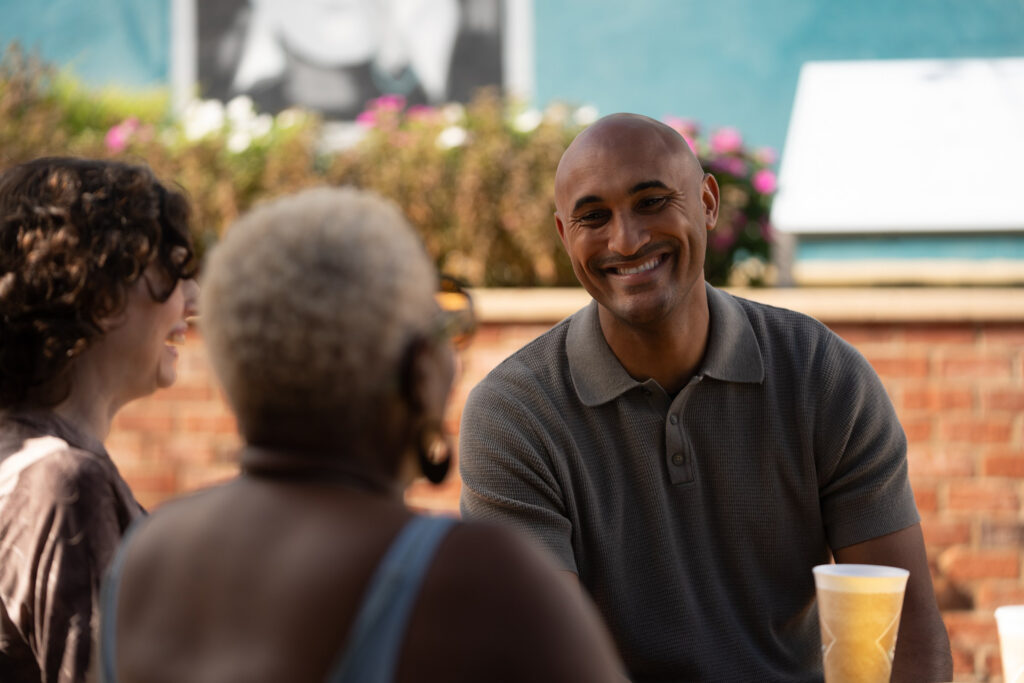
Figures moved to Montgomery and mounted an aggressive campaign to retain his seat—a campaign focused on affordability, agriculture and improving rural access to health care. It would be a winning combination.
A Blue Win in Deep Red Alabama
Figures said unlike some national pundits, he wasn’t surprised by the election results.
“A lot of these national race raters and experts have never spent a day in Alabama,” Figures said. “They’ve never worked a race in Alabama. They don’t even have friends or family in Alabama. They just look at numbers on a screen.”
But Figures and his team knew what was happening on the ground in the district for one simple reason: They were actually there, listening to voters.
“They’re tired of the breakdown in decency. Tired of the breakdown in norms. Tired of being lied to by the government, particularly by the White House. ‘I’m going to lower prices on day one.’ Did not happen. ‘I’m not getting into forever wars.’ Did not happen. ‘I’m going to release the Epstein Files.’ Did not happen.”
Another clear factor?
“Gas prices, gas prices, gas prices,” Figures said. “And they’re high right now because of an optional war that we are in in Iran.”
The war has also impacted farmers in Figures’ district as fertilizer prices spike as a result of shipping disruptions in the Strait of Hormuz.
Eckelman, the Montevallo political science professor, said that some of the fragile coalitions that provided the GOP such decisive victories in the past have also begun to erode, even in places in Alabama considered deep Trump country. And while Alabama didn’t see Democrats take any major offices statewide, Eckelman said that victories like Figures’ will serve as examples of what a winning Democratic campaign in a Republican state could look like.
“The national media and the national Democratic Party may not pay much attention to Alabama, but things are happening here,” Eckelman said. The state’s Democratic Party infrastructure, for example, is improving for the first time in decades, and the party is able to recruit better candidates up and down the ticket, she said.
Former U.S. Sen. Doug Jones was the party’s nominee for governor, coming within four points of Sen. Tommy Tuberville, a Republican and former Auburn football coach, in the race for governor, the closest margin for the office in decades. Figures called Alabama’s gubernatorial race the largest swing to the left in the country, despite the outcome.
Down the line, Figures and Sewell may have to deal with efforts to again redraw district lines to oust them from congress. But for now, said David A. Hughes, a political scientist at the University of Louisiana at Lafayette who studies Alabama politics, progressives in the state can rest assured that Democrats in Alabama did better on Nov. 3 than they have in years.
“Go look at the election map of Alabama,” Hughes said. “All 67 counties shifted toward the Democratic side compared to the last election. That’s saying something.”
Figures agreed.
“There’s hope,” he said. “There’s a lot of work to be done, but we’ve made significant strides. And I do think there’s more on the horizon.”
About This Story
Perhaps you noticed: This story, like all the news we publish, is free to read. That’s because Inside Climate News is a 501c3 nonprofit organization. We do not charge a subscription fee, lock our news behind a paywall, or clutter our website with ads. We make our news on climate and the environment freely available to you and anyone who wants it.
That’s not all. We also share our news for free with scores of other media organizations around the country. Many of them can’t afford to do environmental journalism of their own. We’ve built bureaus from coast to coast to report local stories, collaborate with local newsrooms and co-publish articles so that this vital work is shared as widely as possible.
Two of us launched ICN in 2007. Six years later we earned a Pulitzer Prize for National Reporting, and now we run the oldest and largest dedicated climate newsroom in the nation. We tell the story in all its complexity. We hold polluters accountable. We expose environmental injustice. We debunk misinformation. We scrutinize solutions and inspire action.
Donations from readers like you fund every aspect of what we do. If you don’t already, will you support our ongoing work, our reporting on the biggest crisis facing our planet, and help us reach even more readers in more places?
Please take a moment to make a tax-deductible donation. Every one of them makes a difference.
Thank you,

Lee Hedgepeth
Reporter, Alabama
Lee Hedgepeth is Inside Climate News’ Alabama reporter. Raised in Grand Bay, Alabama, a small town on the Gulf Coast, Lee holds master’s degrees in community journalism and political development from the University of Alabama and Tulane University. Lee is the founder of Tread, a newsletter of Southern journalism, and has also worked for news outlets across Alabama, including CBS 42, Alabama Political Reporter and the Anniston Star. His reporting has focused on issues impacting members of marginalized groups, including homelessness, poverty, and the death penalty. His award-winning journalism has appeared in publications across the country and has been cited by the New York Times, the Wall Street Journal and the Washington Post, among others.