

HUNTSVILLE, Ala.—Candidates for Alabama’s second-highest office took the stage Wednesday for what was the first major-party debate for a statewide office since 2010, the year Republicans took the reins of government from Democrats for the first time in the modern era.
In a debate hosted by WHNT, a Huntsville-based television station, state Rep. Phillip Ensler, a Democrat, and former Republican Party Chairman John Wahl answered questions from moderators and engaged in significant back-and-forth for about an hour, including on a couple of environmental and energy issues.
One major sticking point in the debate was the impact of data centers on Alabamians, their communities and their energy bills.
Asked whether he believes data centers are good for Alabama, Wahl said he thinks the facilities are inevitable but that he shares the concerns of some residents about their impacts.
“Data centers are a necessary evil,” Wahl said. “We already have them. We all like our YouTube, our cloud, our streaming services. But the question is when these are moving into communities, we have to make sure that those communities are protected.”
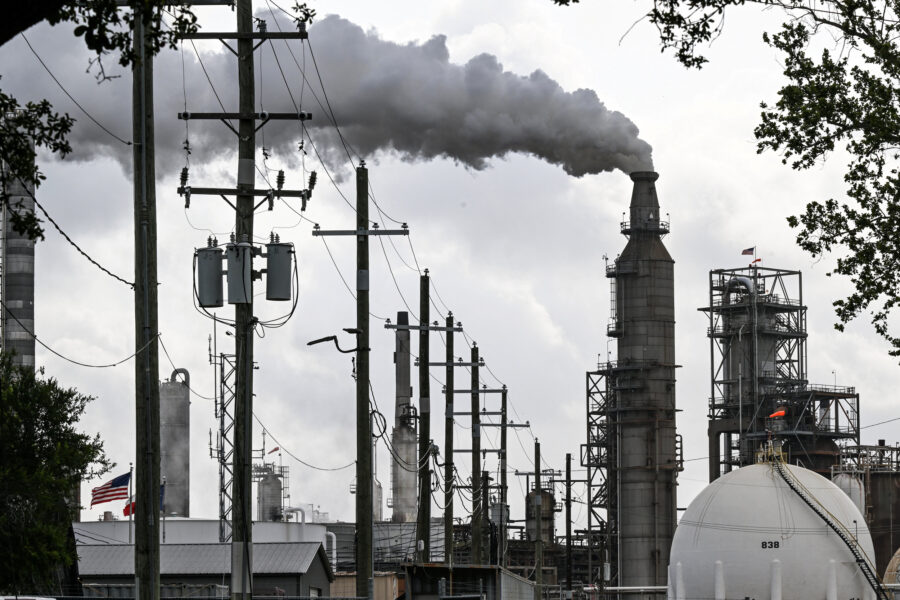
The demand for data centers in Alabama and across the country has been driven largely by the spread of artificial intelligence tools like large language models, not by the use of services like YouTube or Netflix, according to experts. If built to full capacity, data center campuses proposed in Alabama would consume more energy than all of the homes in the state combined, an Inside Climate News analysis found.
“We want the capital investment,” Wahl said. “We need data centers, but we need to do it the right way.”
Ensler, the first statewide candidate to propose a moratorium on new data center construction, said he’s met with residents across the state who have made their views about the facilities clear.
“There are residents all over that are very concerned about the lack of transparency. They’re concerned about data centers being forced on their communities,” he said. “They’re concerned that Alabama Power is [jacking] up their prices.”
An Inside Climate News investigation found that Alabamians paid the highest average residential electricity bills in the nation in 2024, the latest year with complete data at the time.
Ensler has made data centers and concerns around Alabama Power, the state’s powerful electric utility, a focal point of his campaign. Ensler, from Montgomery, has visited Lowndes County, whose residents are fighting a proposed hyperscale data center, five times.
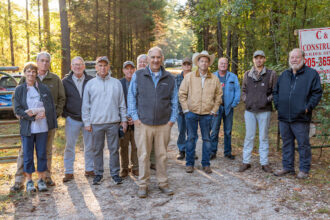
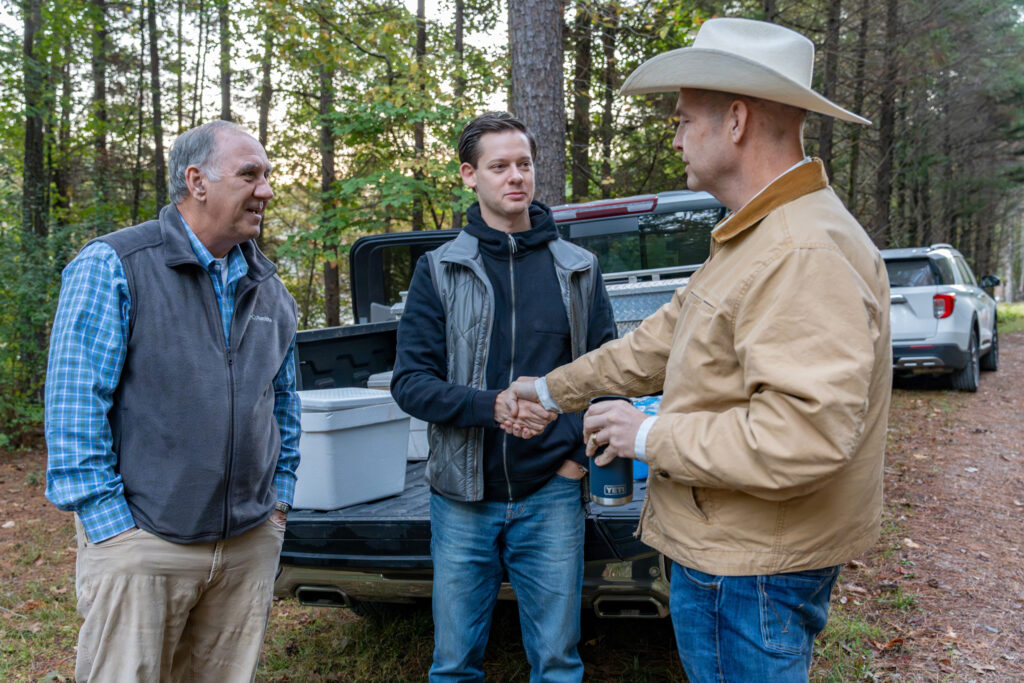
Hours before the debate, and in the days leading up to it, Ensler stood in solidarity with Fenn Church at his home in Shelby County. Church has been in a months-long legal dispute with Alabama Power over its use of eminent domain to lay transmission lines across his property.
“Alabama Power thinks they can just walk over anyone and everyone,” Ensler has said of the situation. “They’re just trying to flex their muscles and intimidate people, and if they can do that to him and do it here, they can do it anywhere.”
In a statement, a representative of Alabama Power said that the utility understands “that property is personal, and we remain committed to treating property owners fairly and respectfully.
“The Alabama Supreme Court’s decision allows work on this section of the transmission line to move forward, supporting a project that is an important investment in the security and reliability of the electric grid for the customers and communities we serve,” the emailed statement said.
Church had won a temporary victory against the utility in lower court earlier this year, receiving a preliminary injunction from a Circuit Court judge that prevented Alabama Power from accessing the property while the lawsuit moved forward.
Last Wednesday, the Alabama Supreme Court granted a motion from the utility to stay that decision. Since then, Fenn and the utility have been at a stalemate.
This story is funded by readers like you.
Our nonprofit newsroom provides award-winning climate coverage free of charge and advertising. We rely on donations from readers like you to keep going. Please donate now to support our work.
Donate NowChurch has said he’s attempted to have U.S. Sen. Tommy Tuberville, the Republican candidate for governor, act as a mediator between himself and Alabama Power. But Ensler, Church said, is the only candidate who has come to his property to stand toe to toe with the utility.
“And I so appreciate him for it,” Church said. “It’s not about Republican or Democrat. It’s about what’s right.”
The topic of the Public Service Commission, the state’s utility regulator, arose at the debate when Wahl accused Ensler of supporting an effort to take away Alabamians’ right to vote for lieutenant governor by having the governor and lieutenant governor run as a ticket.
Alabama lieutenant governor is primarily charged with presiding over the state Senate. If the office of governor becomes vacant, the lieutenant governor assumes the state’s highest office.
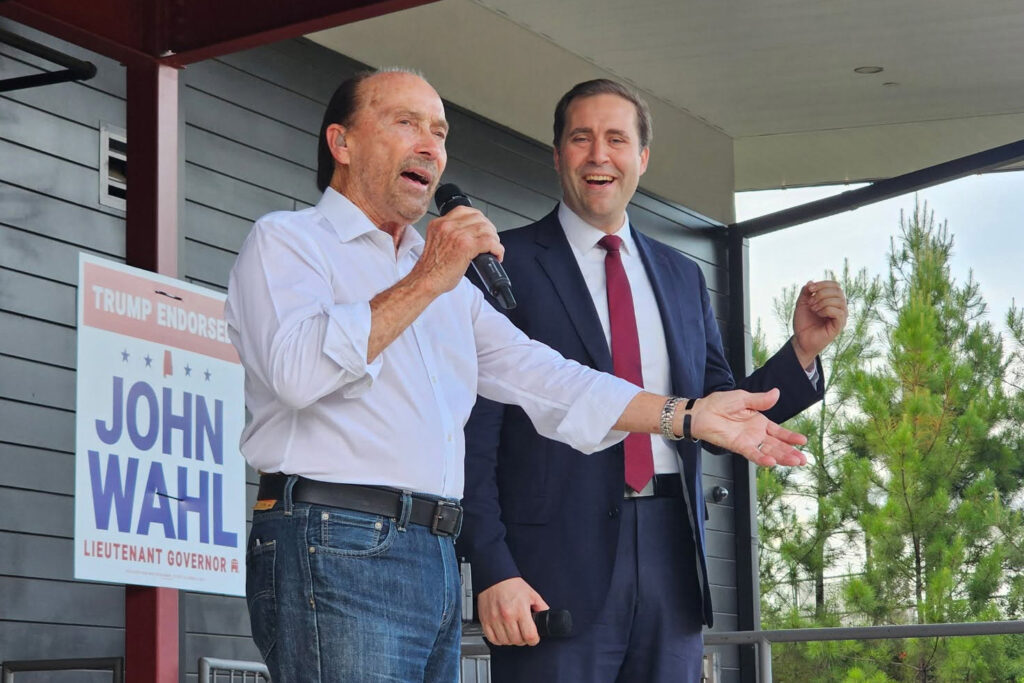
Ensler and Doug Jones, the Democratic candidate for governor, have said they would support a state constitutional amendment that would have voters elect their governor and lieutenant governor on the same ticket, the method used by most states with both roles and similar to the way federal elections for president and vice president work.
“I think that’s a bad move,” Wahl said. “I don’t like it.”
Ensler responded that any changes like that would have to be approved by Alabama voters through a constitutional amendment. Ensler then brought up the Public Service Commission overhaul.
“Who has taken away the right to vote from people is Republicans who pushed a bill to change the Public Service Commission and take away people’s voices for a very important body at a time in which utility rates are going up,” Ensler said. “So if we’re concerned about taking away the voice of the people, that was done by Republicans when it comes to the Public Service Commission.”
He was referring to legislation proposed in the 2026 session that would have ended elections for public service commissioners, the regulators charged with overseeing Alabama Power. That bill failed after public outcry, but a bill eventually passed that expanded the commission’s elected membership and weakened its ability to control its own agenda through the creation of a secretary of energy to be appointed by the governor.
Neither Ensler nor Wahl mentioned climate change during Wednesday’s debate.
The general election for Alabama’s top offices is scheduled for Tuesday, Nov. 3.
About This Story
Perhaps you noticed: This story, like all the news we publish, is free to read. That’s because Inside Climate News is a 501c3 nonprofit organization. We do not charge a subscription fee, lock our news behind a paywall, or clutter our website with ads. We make our news on climate and the environment freely available to you and anyone who wants it.
That’s not all. We also share our news for free with scores of other media organizations around the country. Many of them can’t afford to do environmental journalism of their own. We’ve built bureaus from coast to coast to report local stories, collaborate with local newsrooms and co-publish articles so that this vital work is shared as widely as possible.
Two of us launched ICN in 2007. Six years later we earned a Pulitzer Prize for National Reporting, and now we run the oldest and largest dedicated climate newsroom in the nation. We tell the story in all its complexity. We hold polluters accountable. We expose environmental injustice. We debunk misinformation. We scrutinize solutions and inspire action.
Donations from readers like you fund every aspect of what we do. If you don’t already, will you support our ongoing work, our reporting on the biggest crisis facing our planet, and help us reach even more readers in more places?
Please take a moment to make a tax-deductible donation. Every one of them makes a difference.
Thank you,

Lee Hedgepeth
Reporter, Alabama
Lee Hedgepeth is Inside Climate News’ Alabama reporter. Raised in Grand Bay, Alabama, a small town on the Gulf Coast, Lee holds master’s degrees in community journalism and political development from the University of Alabama and Tulane University. Lee is the founder of Tread, a newsletter of Southern journalism, and has also worked for news outlets across Alabama, including CBS 42, Alabama Political Reporter and the Anniston Star. His reporting has focused on issues impacting members of marginalized groups, including homelessness, poverty, and the death penalty. His award-winning journalism has appeared in publications across the country and has been cited by the New York Times, the Wall Street Journal and the Washington Post, among others.