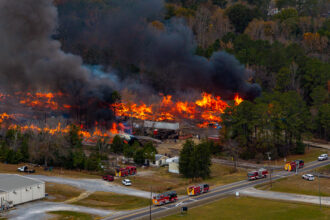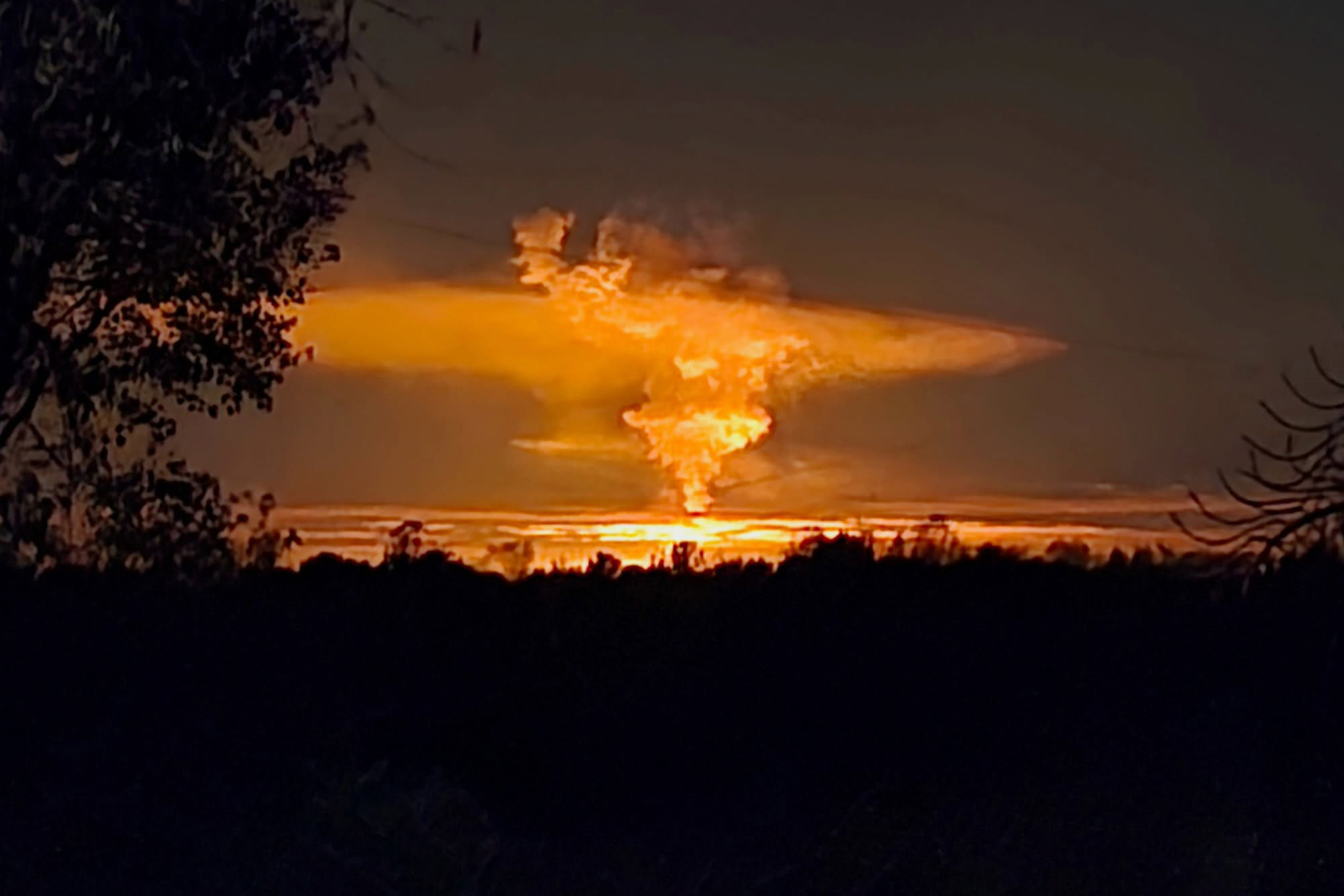


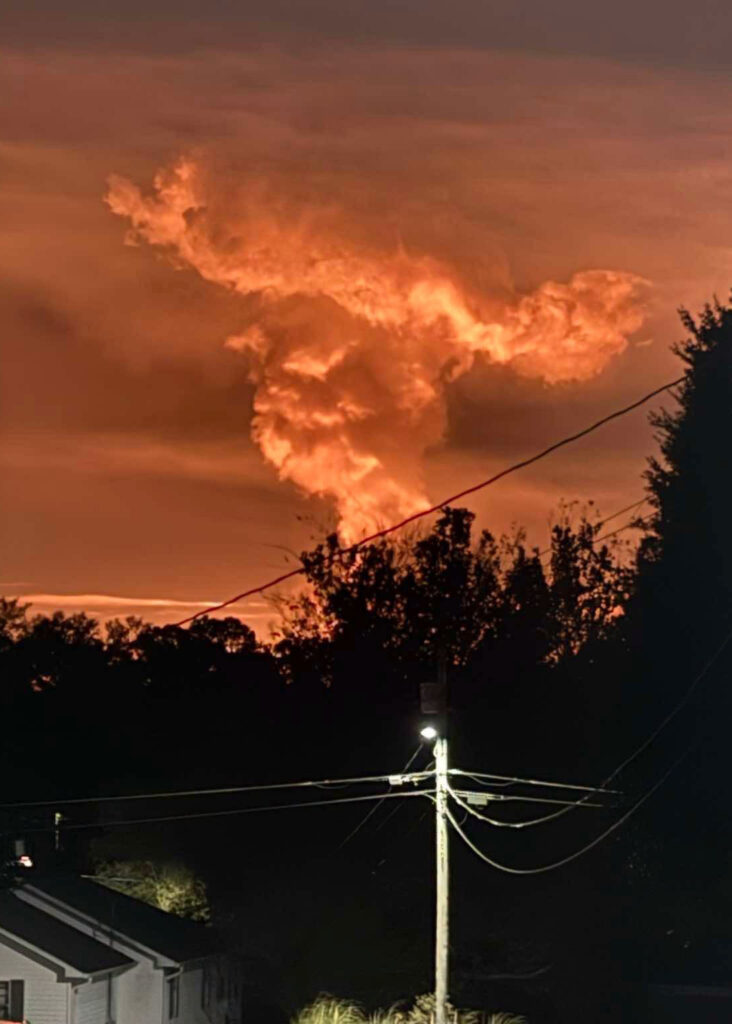
On Saturday night, the midnight skies over west Alabama lit up as a massive fireball leaped hundreds of feet in the air, visible from more than 50 miles away.
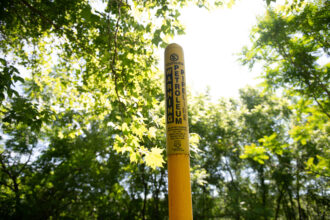
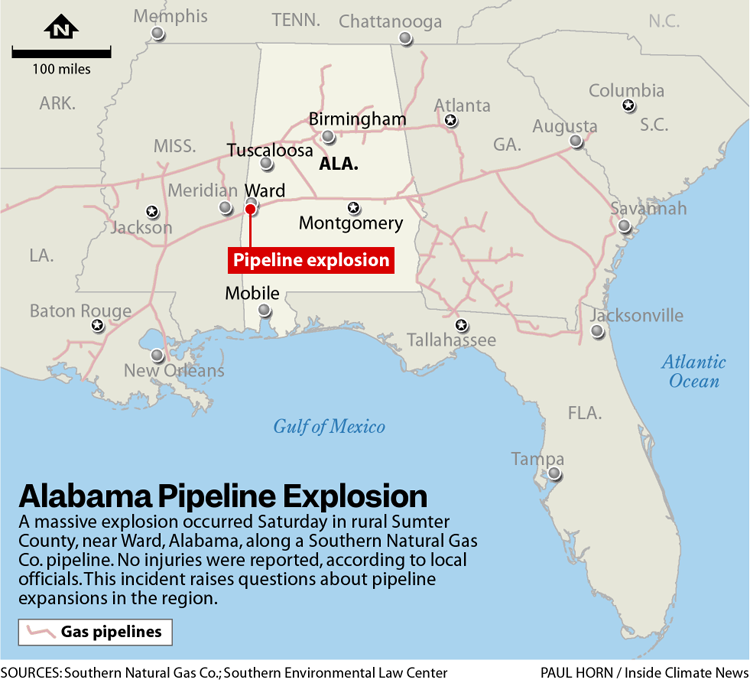
The source of the explosion, officials later confirmed, was a segment of Southern Natural Gas Company pipeline running through rural Sumter County, about eight miles east of the Mississippi state line in Alabama’s Black Belt.
The explosion occurred at approximately 11:27 p.m. in an empty field near the unincorporated community of Ward. The blast was significant enough to be visible on weather radar, according to local meteorologists.
No injuries were reported, according to the company and local officials.
Shortly after the explosion, Mayor Renee Ward Pringle of nearby York, population 2,400, said she’d heard from many residents asking about the seemingly apocalyptic views of a massive blaze on the horizon.
“We understand the concerns of our citizens, especially with the light from the flames being visible from York,” Pringle wrote on social media. “While the preliminary information is encouraging, we do not want to make any premature assurances regarding public safety.”
Southern Natural Gas Company is jointly owned by Kinder Morgan and Southern Company and operated by Kinder Morgan. The company operates about 7,000 miles of pipelines distributing fossil gas throughout the Southeast, including to major gas-fired power plants operated by Southern Company and its subsidiaries, Alabama Power, Georgia Power and Mississippi Power.
Kinder Morgan described the explosion as a force majeure incident, meaning the company claims the incident was caused by circumstances beyond human control, which it characterized as “a natural gas release and fire on a pipeline segment.” No further information on the cause of the explosion has been released as of Monday afternoon.
In response to questions about the explosion, the Pipeline and Hazardous Materials Safety Administration confirmed to Inside Climate News that its staff has been deployed to the site of the pipeline failure and that the agency’s investigation is ongoing.
Portia Shepherd, executive director of the environmental justice nonprofit Blackbelt Women Rising, said she sees the explosion as a warning shot.
“This could have happened in any community along this pipeline,” Shepherd said. “These explosions are happening again and again, and they want to expand.”
Federal regulators issued orders forcing SNG to take corrective actions following explosions along other sections of the pipeline in 2022 and 2026, records show.
Still, SNG plans to expand the pipeline at issue as part of a multi-billion project called South System Expansion 4 that would increase the company’s pipeline capacity by about 1.3 billion cubic feet per day—enough methane to fill nearly 15,000 Olympic-sized swimming pools.
This story is funded by readers like you.
Our nonprofit newsroom provides award-winning climate coverage free of charge and advertising. We rely on donations from readers like you to keep going. Please donate now to support our work.
Donate NowShepherd and other community leaders across Alabama’s Black Belt are opposed to the expansion, which they have said will lead to increased risks for communities that are already suffering.
In October, attorneys for the Southern Environmental Law Center filed a lawsuit on behalf of impacted landowners and nine nonprofits across the South, including Shepherd’s, asking a federal court to review and set aside a ruling by the Federal Energy Regulatory Commission that authorized the major methane pipeline expansion across Mississippi, Alabama and Georgia.
Megan Gibson, an attorney for SELC, said that Saturday’s explosion is a “stark reminder that the risks of building another pipeline alongside aging, existing pipelines are very real for the families and communities living along these routes.”
Gibson called on FERC to act immediately to address safety concerns raised by the incident.
“In our ongoing challenge to FERC’s approval of the massive SSE4 expansion of this aging infrastructure, we raised serious concerns about the dangers of constructing new high-pressure pipelines alongside existing lines with a history of failures—and FERC should immediately order a stop to any and all construction activities and fully examine and address these risks, including in partnership with the Pipeline and Hazardous Materials Safety Administration,” Gibson said.
The explosion has also raised concerns about the passage of federal permitting legislation that would cut red tape for major energy infrastructure projects like SSE4.
“The Bipartisan American Affordability and Jobs Act, or BAAJA, will fast track pipelines like this one, hindering our ability to have a voice in the process and putting more Alabama communities in immediate danger,” the Alabama Rivers Alliance, an environmental nonprofit, wrote in a statement in the wake of Saturday’s explosion.
Shepherd said she’s grateful that no one was injured in the incident, but residents in Sumter County and across the Black Belt that she’s spoken with are concerned that no comprehensive safety plans exist for when incidents like this happen. Even when limited planning is in place, she said, companies and public officials don’t do a good job of informing the public about what they should do in case of an emergency.
“Where is the plan that these communities can actually see?” Shepherd asked. “Where are the safety measures?”
In the end, Shepherd said she doesn’t believe that companies like Kinder Morgan have communities’ best interests at heart.
“These companies’ executives need to look at these communities as places where they would actually live, because I think they’d be doing a better job if these risks were in their community,” Shepherd said.
“But the reality is these discussions don’t come up in their community, because they don’t let companies do stuff like this in their communities. It’s always us. We’re the ones who get dumped on.”
About This Story
Perhaps you noticed: This story, like all the news we publish, is free to read. That’s because Inside Climate News is a 501c3 nonprofit organization. We do not charge a subscription fee, lock our news behind a paywall, or clutter our website with ads. We make our news on climate and the environment freely available to you and anyone who wants it.
That’s not all. We also share our news for free with scores of other media organizations around the country. Many of them can’t afford to do environmental journalism of their own. We’ve built bureaus from coast to coast to report local stories, collaborate with local newsrooms and co-publish articles so that this vital work is shared as widely as possible.
Two of us launched ICN in 2007. Six years later we earned a Pulitzer Prize for National Reporting, and now we run the oldest and largest dedicated climate newsroom in the nation. We tell the story in all its complexity. We hold polluters accountable. We expose environmental injustice. We debunk misinformation. We scrutinize solutions and inspire action.
Donations from readers like you fund every aspect of what we do. If you don’t already, will you support our ongoing work, our reporting on the biggest crisis facing our planet, and help us reach even more readers in more places?
Please take a moment to make a tax-deductible donation. Every one of them makes a difference.
Thank you,

Lee Hedgepeth
Reporter, Alabama
Lee Hedgepeth is Inside Climate News’ Alabama reporter. Raised in Grand Bay, Alabama, a small town on the Gulf Coast, Lee holds master’s degrees in community journalism and political development from the University of Alabama and Tulane University. Lee is the founder of Tread, a newsletter of Southern journalism, and has also worked for news outlets across Alabama, including CBS 42, Alabama Political Reporter and the Anniston Star. His reporting has focused on issues impacting members of marginalized groups, including homelessness, poverty, and the death penalty. His award-winning journalism has appeared in publications across the country and has been cited by the New York Times, the Wall Street Journal and the Washington Post, among others.

Dennis Pillion
Reporter, Alabama
Dennis Pillion is a reporter for Inside Climate News based in Alabama. He joined ICN in 2024 after 17 years working for Alabama Media Group, including nine as the statewide natural resources reporter. His work for AL.com and The Birmingham News, won numerous Green Eyeshade and Alabama Press Association awards for his coverage of environmental issues in Alabama. He was born and lives in Birmingham, Ala.