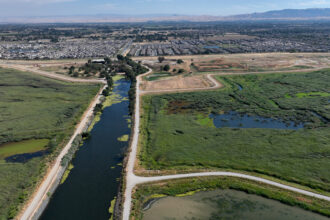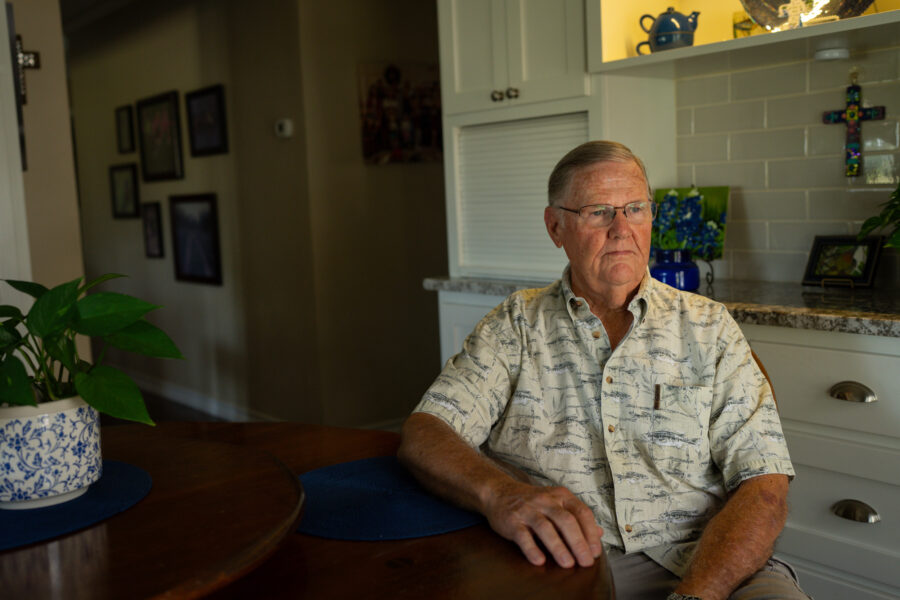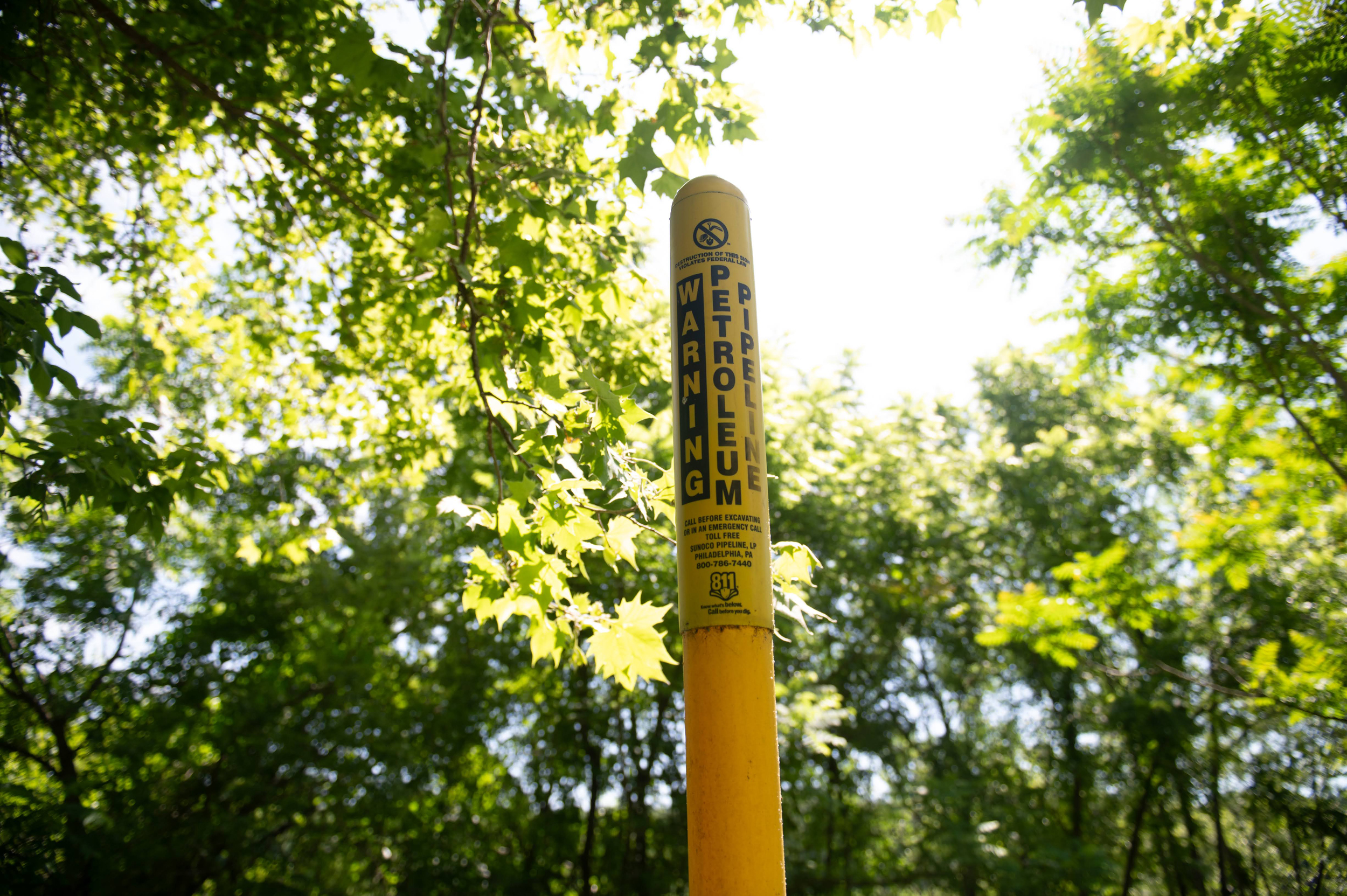


Energy Transfer, the Dallas-based pipeline giant facing a state-level criminal probe related to a jet fuel spill that polluted drinking water in a suburban Philadelphia neighborhood, is seeking to have part of Pennsylvania’s 89-year-old Clean Streams Law declared unconstitutional.
The extraordinary lawsuit, filed quietly in April, asks Pennsylvania’s Commonwealth Court to declare one or more sections of the law unconstitutionally vague under the due process clauses of both the state constitution and the U.S. Constitution.
Energy Transfer’s objection to the law: Parties could be found guilty of an environmental crime even if their actions are accidental. Because one section of the law lacks what is called a “mens rea,” or “guilty mind” provision, the company said, parties could face fines or imprisonment whether or not their actions were knowing and purposeful.
“A lack of mens rea requirement here offends the principles of justice and does not provide adequate notice of the offending conduct that could form the basis for criminal liability,” Energy Transfer’s petition said.
But the challenge comes before any charges have been filed against Energy Transfer. And it concerns both a law and a legal interpretation that may not be relevant to the criminal investigation the company and its subsidiary Sunoco now face over their Twin Oaks pipeline, said Pennsylvania Attorney General Dave Sunday in his Aug. 25 response to the lawsuit.
Sunday urged the court to dismiss the lawsuit, which he characterized as an improper effort “to pre-empt an anticipated criminal proceeding.” Instead of waiting to see if a case is filed and defending itself against whatever charges it faces, Sunday said Energy Transfer is seeking to get a court ruling in its favor—a declaratory judgment—in advance.
“A criminal investigation is not a criminal charge, and a declaratory judgment cannot be used to substitute a defense against a criminal charge,” Sunday said in his brief.
Neither Energy Transfer nor its lawyers immediately responded to a request for comment on the case, nor did Sunday’s office.
Not a First Brush With the Law
Energy Transfer and Sunoco have found themselves ensnared in criminal charges involving Pennsylvania’s Clean Streams Law in the past.
In 2022, the company pleaded no contest in a sprawling criminal case over industrial waste spills and drinking water pollution at 22 sites across 11 Pennsylvania counties. The plea covered incidents that occurred during construction of the company’s cross-state Mariner East II natural gas products pipeline and an explosion on its Revolution gas pipeline that leveled a home and a barn in western Pennsylvania.
That case, brought by Pennsylvania Gov. Josh Shapiro when he was state attorney general, was partly about the Clean Streams Law but also cited other laws and violations, including failure to report contamination to authorities.
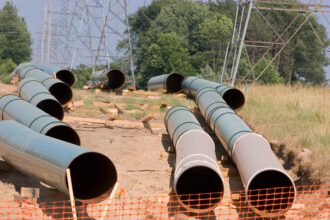
The probe Energy Transfer now faces could be similarly complex. The company is under fire not only because of the jet fuel leak found early last year on the Twin Oaks pipeline. It also faces a slew of lawsuits that focus on its failure to detect the underground spill despite resident complaints of a gasoline smell and taste in their drinking water for 16 months prior to the January 2025 discovery. The company also did not notify the federal Pipeline and Hazardous Materials Safety Administration of the repeated complaints, the agency has said.
By the time the pipeline breach was discovered, six homes in Upper Makefield Township, Bucks County, had jet fuel in their drinking water wells.
Since then, toxic chemicals like benzene and xylenes, components of fuel, have been detected in the wells of at least 28 homes and the company has paid for home treatment systems in more than 200 homes to protect against contamination. The company has recently proposed a cleanup plan, involving vacuum extraction and long-term water testing, that could take years.
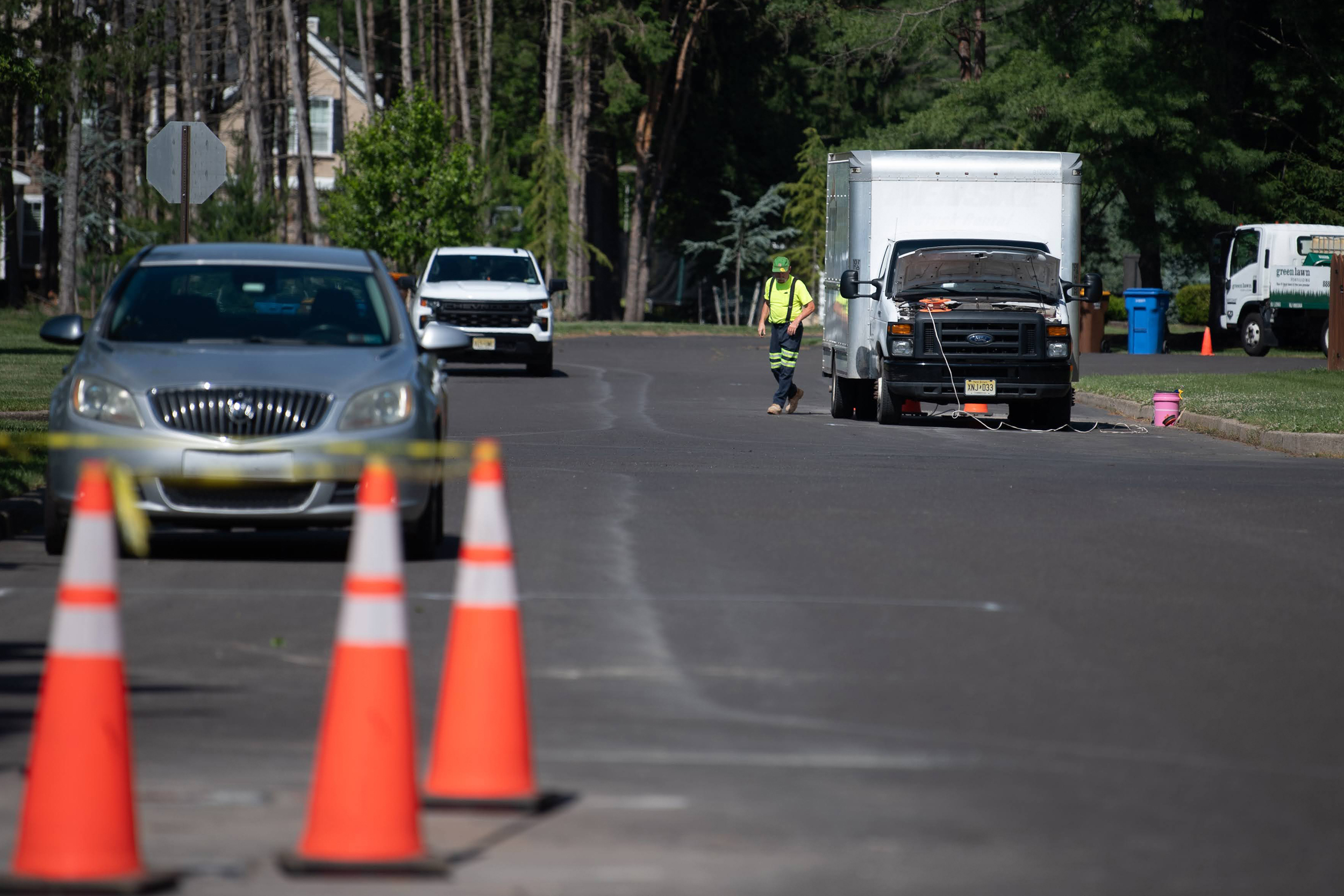
At a public community meeting soon after the spill was discovered, a representative of the Bucks County district attorney’s office said it had asked the attorney general’s office to investigate the spill. A spokesperson for the attorney general’s office confirmed to The Philadelphia Inquirer that it was investigating in March 2025. Energy Transfer disclosed the investigation to investors in its annual report in February 2026: “Potential charges, penalties or damages are not known at this time,” the company said.
But two months later, the company filed its challenge of the Pennsylvania Clean Streams law in Commonwealth Court, the court with jurisdiction over cases against the state. Energy Transfer said that because the Pennsylvania Department of Environmental Protection entered an administrative order against the company in March 2025 that identified several potential violations of the state’s Clean Streams Law, the company believed that statute may form the basis of any criminal charges that may be brought against the company.
Energy Transfer and Sunoco wrote that they were filing the petition, which names the DEP as well as Sunday, because they face “uncertainty about their rights and potential scope of criminal liability under the Clean Streams Law because it is not readily apparent that certain provisions of the law include a mens rea requirement.”
Legal experts say what makes the filing particularly unusual is that it zeroes in on the section of the law that relates to the lowest level offenses, or “summary offenses”—often viewed as the traffic tickets of the law. Under that section, 602 (a) of the Clean Streams Law, any person could face a fine of $100 to $10,000 for pollution discharges into “waters of the Commonwealth” and could face a 90-day prison sentence for failure to pay the fine.
That section does not discuss state of mind, but other sections of the law do, giving prosecutors other options for charging violators who engaged in either purposeful or reckless acts. There are higher fines and greater prison sentences in the law for either negligent behavior (misdemeanors) or knowing and intentional actions (felonies).
This story is funded by readers like you.
Our nonprofit newsroom provides award-winning climate coverage free of charge and advertising. We rely on donations from readers like you to keep going. Please donate now to support our work.
Donate NowIn his briefs, Sunday said his office had taken no position on how the Clean Streams Law applied to the case, and he raised the possibility that the criminal investigation may not be about the water pollution at all. Although his office announced an investigation, that announcement did not specify the scope, theory or subject of the investigation, Sunday said in his brief.
“This is so early in the process,” said Ronald Sarachan, a retired federal prosecutor who headed the Department of Justice’s environmental crimes section during President Bill Clinton’s administration. “The only thing the attorney general’s office has said was that they received a referral and they’re investigating. They didn’t say that they’re going to use this statute at all.”
Sarachan spent many years handling white collar crime cases in the U.S. Attorney’s Office in Philadelphia, working often with Pennsylvania prosecutors, and so is familiar with the range of options they have under the state’s Clean Streams Law. “There’s really a tremendous amount of doubt that they would ever be resorting to the provision that this lawsuit is trying to have declared unconstitutional,” Sarachan said.
Upending Decades of Well-Settled Law?
But Energy Transfer’s lawsuit could have a far broader impact than on one provision of the Clean Streams Law.
The suit argues that part of Pennsylvania’s Criminal Code also is unconstitutional because it has allowed the state legislature to pass laws without a mens rea for summary offenses. If the Commonwealth Court were to agree, it would throw into question numerous laws governing minor offenses, like traffic codes, underage drinking laws, laws governing hunting without a license—all cases where violators currently could face fines even if they broke the law unknowingly.
Bucks County District Attorney Joe Khan, a Democrat who took office early this year, cited this possibility in moving last month to intervene in the Energy Transfer case.
“Petitioners seek this extreme relief, which could upend decades of well settled laws which have been used for decades to keep citizens of this Commonwealth safe, all without naming a single District Attorney as a respondent,” Khan said in his brief filed Aug. 7.
Energy Transfer said in its filings that it does not object to Khan’s intervention in the case, but Sunday, who is a Republican, objected. He said the intervention—like the case itself—is premature. Khan’s office did not respond to a request for comment.
Sunday also successfully had the case sealed from public view temporarily in August, arguing that to respond to Energy Transfer’s lawsuit, it would be forced to disclose information “expressly made confidential under Pennsylvania law.” Although Sunday’s briefs did not specify the reason for the confidentiality, prosecutors typically hold the details of a criminal investigation in confidence unless and until they are prepared to file charges.
Energy Transfer objected to Sunday’s request and after a closed-to-the-public oral argument, Commonwealth Court Judge Matthew Wolf unsealed the majority of the case filings on Aug. 19. Wolf ruled that only those documents containing “confidential information” could be filed under seal. So far, only Sunday has filed briefs under seal.
The court has not yet ruled on Khan’s motion to intervene, which emphasized the importance of the Clean Streams Law and Energy Transfer’s record of violations.
“For more than a century, this law has served as an important tool to deter polluters and provide accountability for those who defile our water ways,” Khan said in his brief, which accused Energy Transfer and Sunoco of “a notorious record of committing environmental atrocities in the Commonwealth.”
“Rather than provide the public with assurances that they will comply with the law moving forward, petitioners now seek to weaken the enforcement power of DEP, the Attorney General and every District Attorney in Pennsylvania,” Khan wrote.
The Commonwealth Court has set a Sept. 24 deadline for Energy Transfer to file a brief in support of its petition.
About This Story
Perhaps you noticed: This story, like all the news we publish, is free to read. That’s because Inside Climate News is a 501c3 nonprofit organization. We do not charge a subscription fee, lock our news behind a paywall, or clutter our website with ads. We make our news on climate and the environment freely available to you and anyone who wants it.
That’s not all. We also share our news for free with scores of other media organizations around the country. Many of them can’t afford to do environmental journalism of their own. We’ve built bureaus from coast to coast to report local stories, collaborate with local newsrooms and co-publish articles so that this vital work is shared as widely as possible.
Two of us launched ICN in 2007. Six years later we earned a Pulitzer Prize for National Reporting, and now we run the oldest and largest dedicated climate newsroom in the nation. We tell the story in all its complexity. We hold polluters accountable. We expose environmental injustice. We debunk misinformation. We scrutinize solutions and inspire action.
Donations from readers like you fund every aspect of what we do. If you don’t already, will you support our ongoing work, our reporting on the biggest crisis facing our planet, and help us reach even more readers in more places?
Please take a moment to make a tax-deductible donation. Every one of them makes a difference.
Thank you,

Marianne Lavelle
Bureau Chief, Washington, D.C.
Marianne Lavelle is the Washington, D.C. bureau chief for Inside Climate News. She has covered environment, science, law, and business in Washington, D.C. for more than two decades. She has won the Polk Award, the Investigative Editors and Reporters Award, and numerous other honors. Lavelle spent four years as online energy news editor and writer at National Geographic. She spearheaded a project on climate lobbying for the nonprofit journalism organization, the Center for Public Integrity. She also has worked at U.S. News and World Report magazine and The National Law Journal. While there, she led the award-winning 1992 investigation, “Unequal Protection,” on the disparity in environmental law enforcement against polluters in minority and white communities. Lavelle received her master’s degree from Columbia University Graduate School of Journalism, and is a graduate of Villanova University.