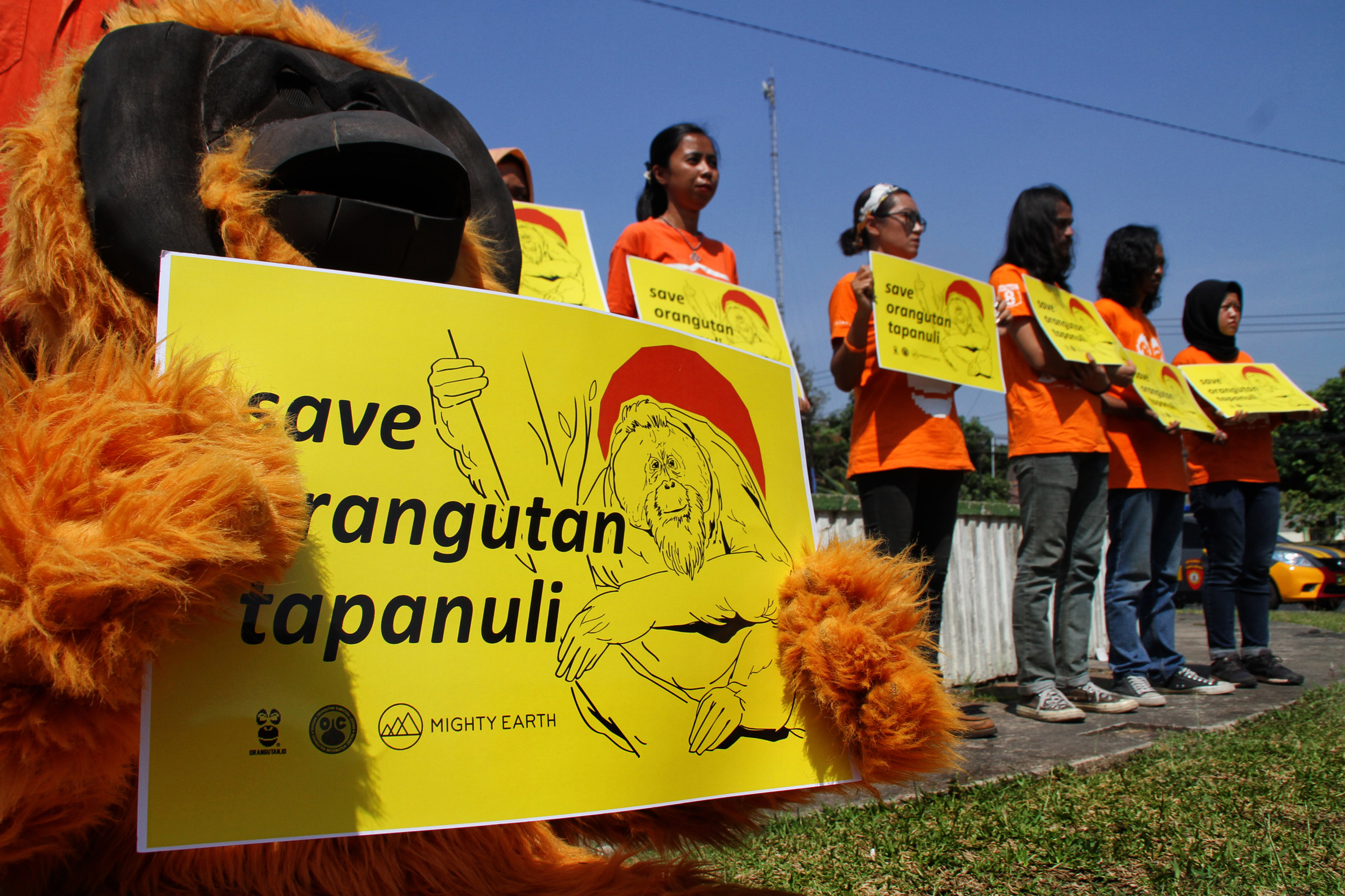


When scientists identified the Tapanuli orangutan as its own species in 2017, it immediately became the world’s rarest great ape. A survey suggested there were fewer than 800 remaining. The animals had already been pushed into a forbidding mountainous territory about the size of Los Angeles in northern Sumatra, and were hemmed in by human settlements, a gold mine and a hydroelectric dam that had just begun construction. The outlook was not good.
Now, a pair of new studies indicate there were even fewer of the arboreal apes remaining than previously thought and that its population was decimated by a rare equatorial cyclone that tore through Sumatra in November.
In July, scientists published a survey estimating the total population of Tapanuli orangutans in the low 700s. While the previous estimate placed the number in the high 700s, the difference may reflect better survey techniques rather than an actual decline in population.
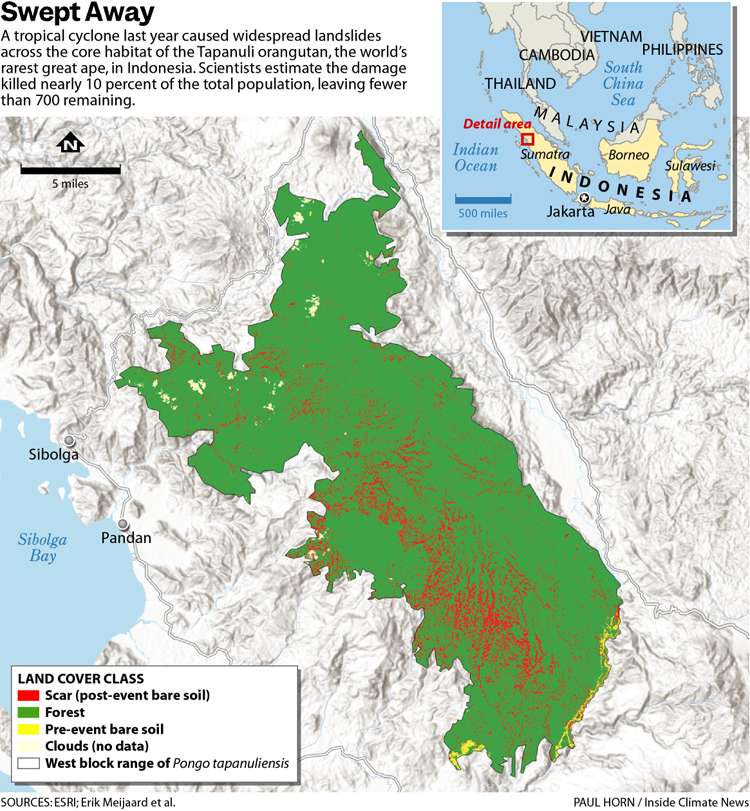
But the new survey was conducted from 2021-2023, before the cyclone caused widespread flooding and landslides that devastated the Batang Toru ecosystem, the orangutan’s home. A peer-reviewed paper that was published in June determined that landslides wiped away some 32 square miles of forest within the orangutan’s prime habitat, killing an estimated 58 individuals.
Taken together, the studies suggest there are likely about 650 Tapanuli orangutans left.
“It looks bleak,” said Serge Wich, a professor in primate biology at Liverpool John Moores University in the United Kingdom and a co-author on both studies. The animals that remain, he added, live across a fragmented forest that is still being cut down as roads, farms and the dam and mine continue to encroach. “All these things combined made a real alarm bell go off in my head.”

Scientists and environmental advocates had fought hard to block construction of the dam, which is owned, financed and being built by Chinese state-owned enterprises. Some of those who opposed the dam lost their jobs or, like Wich, were barred from working in Indonesia’s national parks. One person died under suspicious circumstances. But the construction continued.
After the cyclone killed more than 1,200 people, the government ordered a halt to work on the dam, along with other projects in the region, pending an environmental audit. That pause remains, said Amanda Hurowitz, a senior director at Mighty Earth, a conservation nonprofit.
But satellite imagery shows the project is nearly finished, and the Indonesian government, which holds a minority stake in the dam, has long pushed for its completion.
For the orangutan, the dam could pose an existential threat. The project lies directly where three blocks of habitat connect. Even before its construction, the Tapanuli orangutan had been split among the three blocks, with limited connectivity. The dam, scientists fear, could make it even harder for animals to cross between the blocks because the roads, power lines and a small reservoir required for the dam have broken up the forest.
If orangutans in the eastern and southern blocks of habitat become isolated from their neighbors, their populations could be too small to be viable long term.
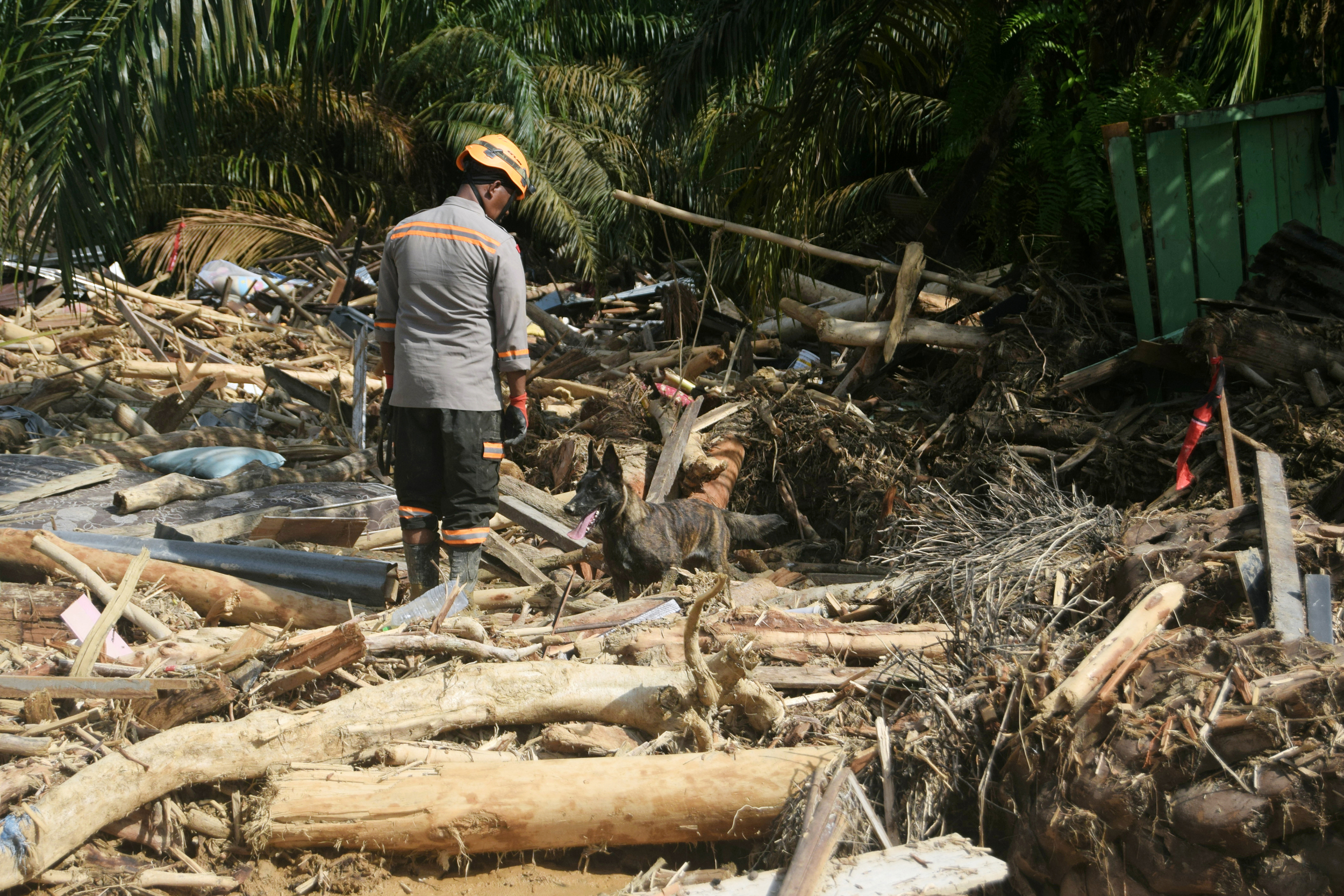
The cyclone caused the most widespread damage in the western block of habitat, home to the greatest number of orangutans. In six days, the area received more than 22 inches of rain, with two days of more than 6 inches each.
As water saturated the area’s steep mountainsides, large swaths of soil simply gave way.
The scientists used spatial analysis and data on orangutan density to estimate that the demolished forests had been home to some 58 orangutans. Because of the ferocity and speed of the landslides, the researchers assumed any animals in their path were killed.
Even if some survived, however, those 32 square miles of land are now unable to provide food or habitat for orangutans, and the researchers estimate they will remain that way for at least five to 10 years.
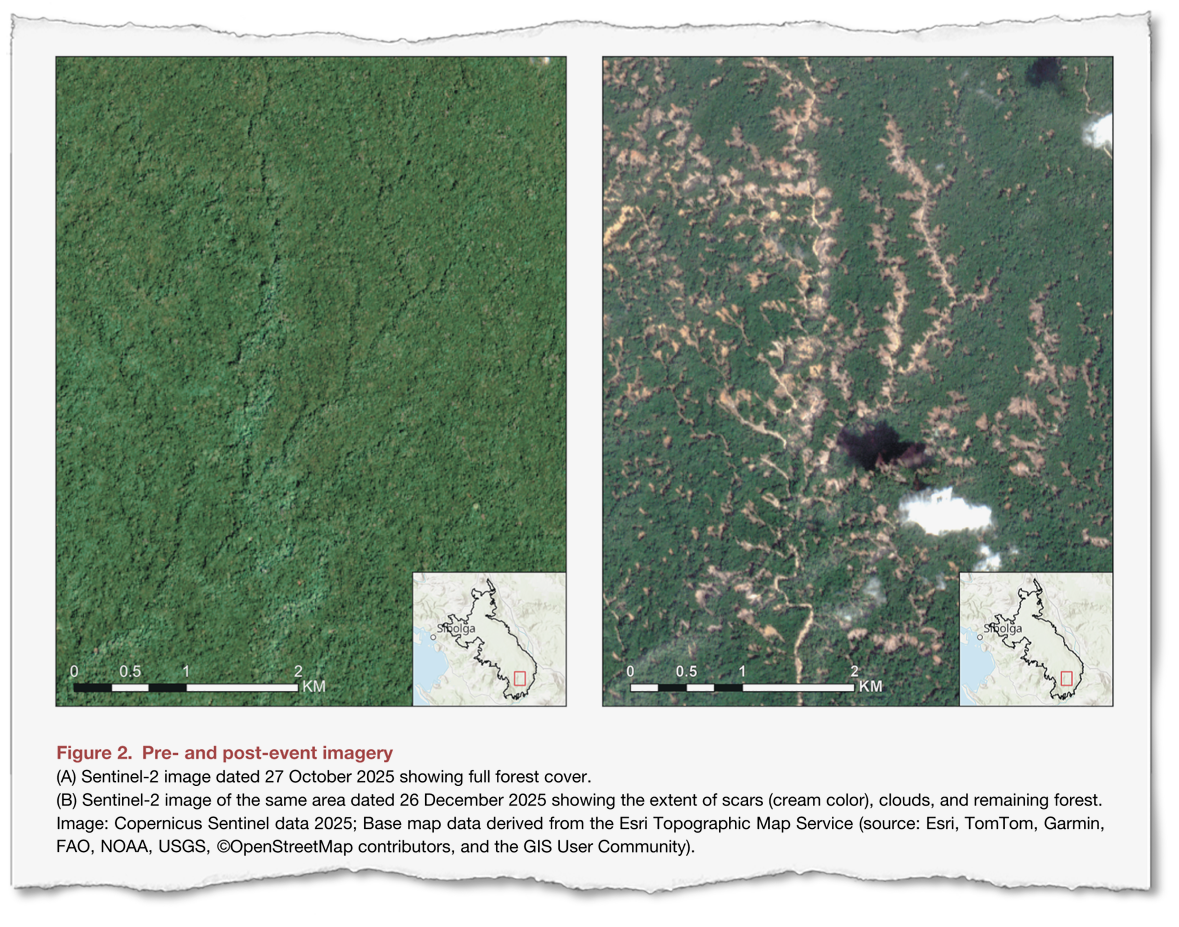
Each gash in the forest created an area that is harder for orangutans to cross. The animals rarely come to the ground if they don’t need to, and descending and climbing requires additional energy. Because they generally operate near their minimal energy budgets, any additional exertion can decrease reproductive rates and increase mortality, the study said.
Orangutans have the slowest reproductive cycle of the great apes, giving birth only once every six to nine years, the authors wrote. That fact, combined with their dwindling population, can make recovering from these types of disasters extremely difficult.
Experts also worry that the strong El Niño weather pattern that is underway could bring forest fires, which would find plenty of fuel in trees felled by the landslides.
“It’s bad,” said Hurowitz, who was not involved in the studies. “You have a species that was already on the brink of extinction, and as many as 58 may have been killed of a population that was lower than we thought. It’s really a red alert, all-hands-on-deck moment.”
To conduct the population survey, researchers walked transects across the orangutan’s known habitat and counted how many nests they saw in trees.
Orangutans generally construct a new nest to sleep in each day, and they can erect them in a mere 10 minutes or so, Wich said, folding branches over one another to build a frame, which they then top with smaller branches. The animals have been known to deck their nest out more elaborately, Wich said. Sometimes they build a structure above the nest that can act like a rain cover.
“Sometimes they make a little pillow,” Wich said. “In a few cases people think they have seen them make, like, a doll, a set of smaller branches that they just hold for no clear function.”
The survey also assessed the Sumatran orangutan, which is more widespread but also critically endangered. It estimated there were about 11,700 of that species living in the island’s forests, a decline of nearly 20 percent since 2011.
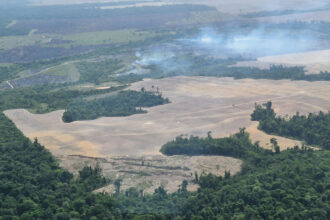
Forest loss has largely driven the decline of both species, the survey said. Across the entire range of both species, about 364 square miles of forest, or nearly 5 percent of the total, was cleared from 2011 to 2023. The rate of decline slowed in recent years, but two areas, including the east block of Batang Toru, had their highest rates of loss in 2023.
This story is funded by readers like you.
Our nonprofit newsroom provides award-winning climate coverage free of charge and advertising. We rely on donations from readers like you to keep going. Please donate now to support our work.
Donate NowIn some areas, however, the orangutans’ decline has been greater than expected from deforestation alone, suggesting other factors, including killings by humans, play a role.
In a press release that accompanied the official announcement of the orangutan survey, Indonesia’s Forestry Ministry said the study would support the creation of a conservation strategy for both species.
“Orangutan conservation is a shared responsibility,” Deputy Forestry Minister Rohmat Marzuki said in a statement. “Success depends on close collaboration among the government, academics, conservation partners, businesses, and local communities. The scientific data generated from this survey will serve as a vital basis for formulating targeted conservation policies.”
While scientists and advocates welcomed the government’s announcement that a strategy would be developed, they said they have been calling for such a plan for years, to no avail.
“It’s really a red alert, all-hands-on-deck moment.”
— Amanda Hurowitz, Mighty Earth
“The government nicely said it’s a new path for strengthening the protection strategies for orangutans,” said Panut Hadisiswoyo, founder of the Orangutan Information Centre in Sumatra and a co-author on the study of cyclone damage. “But I don’t know the meaning of ‘strengthening.’”
Hadisiswoyo said he has not observed the level of alarm or action he thinks is needed for the Tapanuli orangutan. He and other experts say the government must immediately protect all remaining forests where the orangutan lives—while most of its habitat is legally protected, deforestation and development continue—and needs to help people who live in the area develop economic pursuits, like agroforestry, that prevent deforestation.
Hurowitz said such a plan would need broad coordination and funding, which could come from corporations that have cleared forests for palm oil, paper and other uses and from international donors and governments.
Wich said that despite the alarmingly low numbers of Tapanuli orangutans left, it is not too late to save them.
“We know what to do to turn things around,” Wich said, pointing to mountain gorillas in central Africa, whose population has increased after reaching a low of a few hundred. “This should be possible for other species like the Tapanuli orangutan as well. But we need to start doing things.”
About This Story
Perhaps you noticed: This story, like all the news we publish, is free to read. That’s because Inside Climate News is a 501c3 nonprofit organization. We do not charge a subscription fee, lock our news behind a paywall, or clutter our website with ads. We make our news on climate and the environment freely available to you and anyone who wants it.
That’s not all. We also share our news for free with scores of other media organizations around the country. Many of them can’t afford to do environmental journalism of their own. We’ve built bureaus from coast to coast to report local stories, collaborate with local newsrooms and co-publish articles so that this vital work is shared as widely as possible.
Two of us launched ICN in 2007. Six years later we earned a Pulitzer Prize for National Reporting, and now we run the oldest and largest dedicated climate newsroom in the nation. We tell the story in all its complexity. We hold polluters accountable. We expose environmental injustice. We debunk misinformation. We scrutinize solutions and inspire action.
Donations from readers like you fund every aspect of what we do. If you don’t already, will you support our ongoing work, our reporting on the biggest crisis facing our planet, and help us reach even more readers in more places?
Please take a moment to make a tax-deductible donation. Every one of them makes a difference.
Thank you,