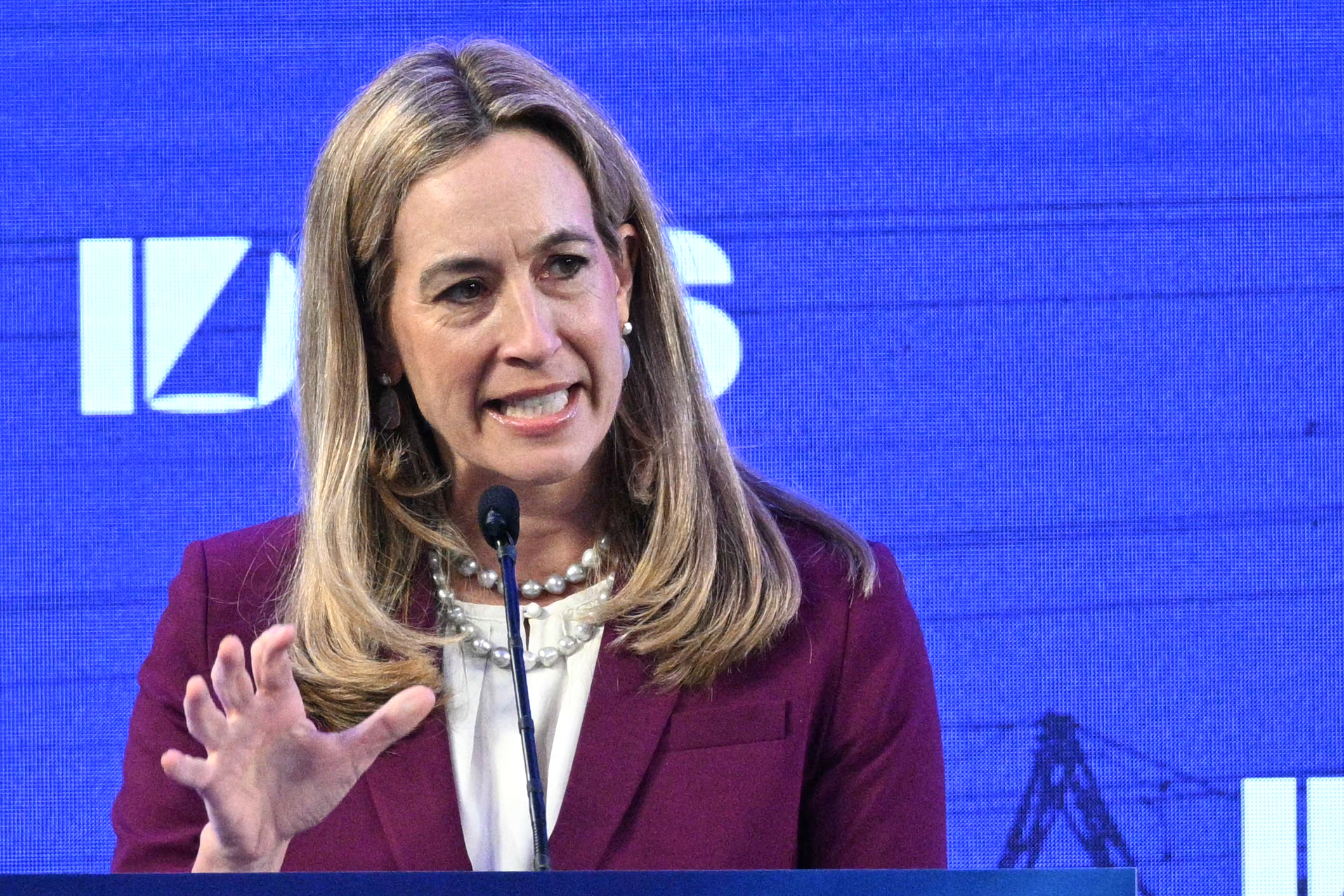


After months of complaints from business and political leaders about new coastal management rules, New Jersey Gov. Mikie Sherrill is now facing blistering criticism from environmental advocates for agreeing to a one-year delay and new review of regulations intended to prepare the state for sea-level rise and more flooding.
Jeff Tittel, a longtime environmental policy expert and former head of the New Jersey Sierra Club, said the decision was the first test of how Sherrill, a Democrat who took office in January, will deal with pressing environmental issues. “She’s on a path to really pare back and weaken environmental protection,” he said on Monday.
The regulations, known as the Resilient Environments and Landscape (REAL) rule, were adopted on the final day of Gov. Phil Murphy’s administration in January and have been strongly opposed by business and political leaders, including state Senate President Nicholas Scutari, a Democrat, and a coalition of mayors from coastal communities. They were to have taken effect on July 20.
“This extension gives us time to meaningfully engage with local leaders, communities and other stakeholders across New Jersey to get this right,” Sherrill said in a statement released Friday by the state Department of Environmental Protection (DEP).
Ed Potosnak, who was confirmed by the state Senate as the new DEP commissioner the day before the announcement, said a comprehensive review of the much-anticipated rules will be done that “advances the Governor’s priorities of streamlining permitting, supporting new and resilient development, and protecting life and property.”
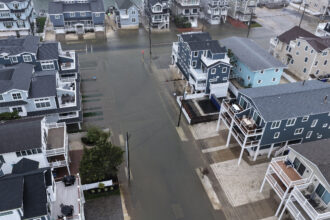
The regulations factor in an ever-increasing rise in sea level—perhaps nearly five feet—by 2100 and mandate more stringent construction standards and flood protections, better stormwater management and greater protections for wetlands.
The most controversial provision requires new shore homes and substantial remodels of existing homes to be constructed four feet higher than current FEMA standards, which already have caused many houses to be raised since Superstorm Sandy in 2012.
The rules are considered an important step in preparing New Jersey, the nation’s most densely populated state, for climate change and rising seas—a global problem as glaciers melt, oceans get warmer and greenhouse gas emissions primarily from burning fossil fuels continue to pollute the atmosphere.
The state has already experienced an increase in sea level of about 18 inches since the early 1900s—more than twice the global mean rate of approximately eight inches, according to the New Jersey Climate Change Resource Center.
The new regulations map out what scientists and regulators think is a likely scenario for the future and create new “inundation risk zones” that put more homes in a flood zone and anticipate what scientists say is a likely four-foot rise in sea level by 2100.
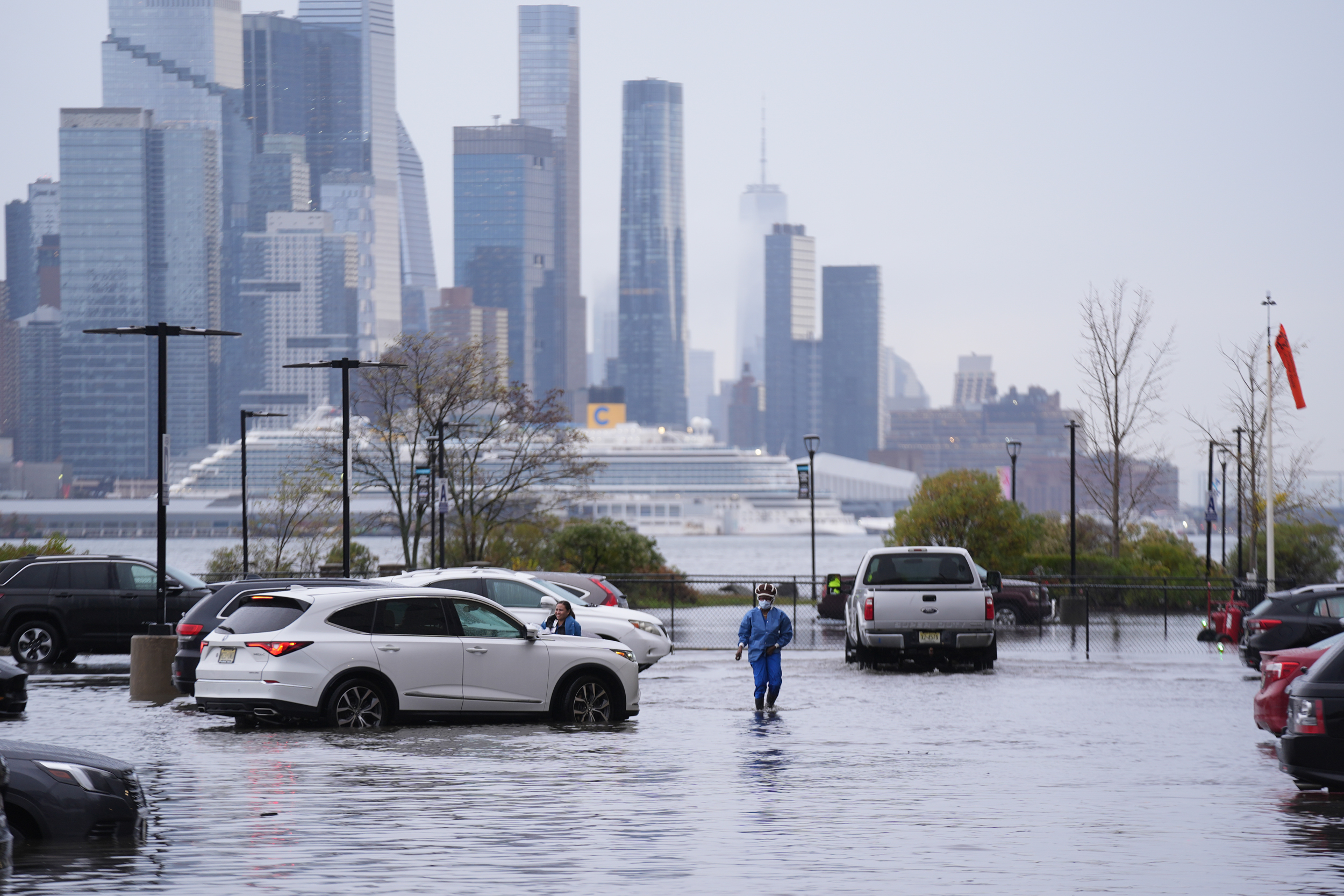
The one-year delay will extend a grace period for some projects to continue under old, less-stringent rules and will open the door to possible changes.
Business, industry and political leaders welcomed the delay. A statement put out by the New Jersey Business & Industry Association said Scutari and Sen. Paul Sarlo, a Democrat who co-sponsored Scuteri’s legislative resolution to invalidate the regulations, support the new review, saying the regulations went too far and would have increased housing costs, hindered development and stifled economic growth.
Michael Pisauro, policy director of The Watershed Institute, an environmental advocacy group, said Monday that the rules were carefully crafted, reviewed and revised over a number of years and are an important step in preparing the state for the future.
He said environmental advocates, some of whom issued a scathing rebuke of the decision on Friday, are “extremely disappointed” and that building in flood zones during the delay “is going to put people and property at risk” for flooding.
“That’s the saddest part,” he said.
In a news release issued shortly after the delay was announced on Friday, a coalition of environmental advocates said the decision is “dangerous and places New Jersey residents squarely in harm’s way.”
Jennifer M. Coffey, executive director of the Association of New Jersey Environmental Commissions, called the delay “a capitulation to big money interests.” And Ben Dziobek, executive director of Climate Revolution Action Network, expressed disappointment that “this administration chose to side with wealthy developers instead of working-class residents fighting to protect their homes.”
Tittel said the decision does not bode well for the future of good environmental policy.
“I think this is just a charade to basically kill the rule—and I think it has devastating consequences,” said Tittel.
About This Story
Perhaps you noticed: This story, like all the news we publish, is free to read. That’s because Inside Climate News is a 501c3 nonprofit organization. We do not charge a subscription fee, lock our news behind a paywall, or clutter our website with ads. We make our news on climate and the environment freely available to you and anyone who wants it.
That’s not all. We also share our news for free with scores of other media organizations around the country. Many of them can’t afford to do environmental journalism of their own. We’ve built bureaus from coast to coast to report local stories, collaborate with local newsrooms and co-publish articles so that this vital work is shared as widely as possible.
Two of us launched ICN in 2007. Six years later we earned a Pulitzer Prize for National Reporting, and now we run the oldest and largest dedicated climate newsroom in the nation. We tell the story in all its complexity. We hold polluters accountable. We expose environmental injustice. We debunk misinformation. We scrutinize solutions and inspire action.
Donations from readers like you fund every aspect of what we do. If you don’t already, will you support our ongoing work, our reporting on the biggest crisis facing our planet, and help us reach even more readers in more places?
Please take a moment to make a tax-deductible donation. Every one of them makes a difference.
Thank you,