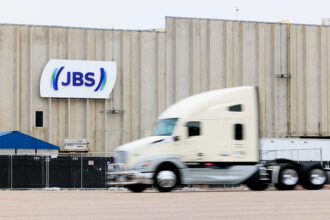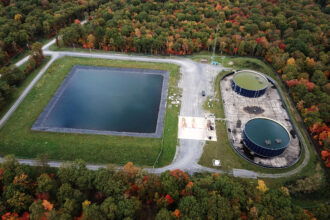


An international team of lawyers on Wednesday filed a coordinated battery of lawsuits against JBS, the world’s largest meat company, and its financiers, accusing them of money laundering in connection with the destruction of the Amazon rainforest.
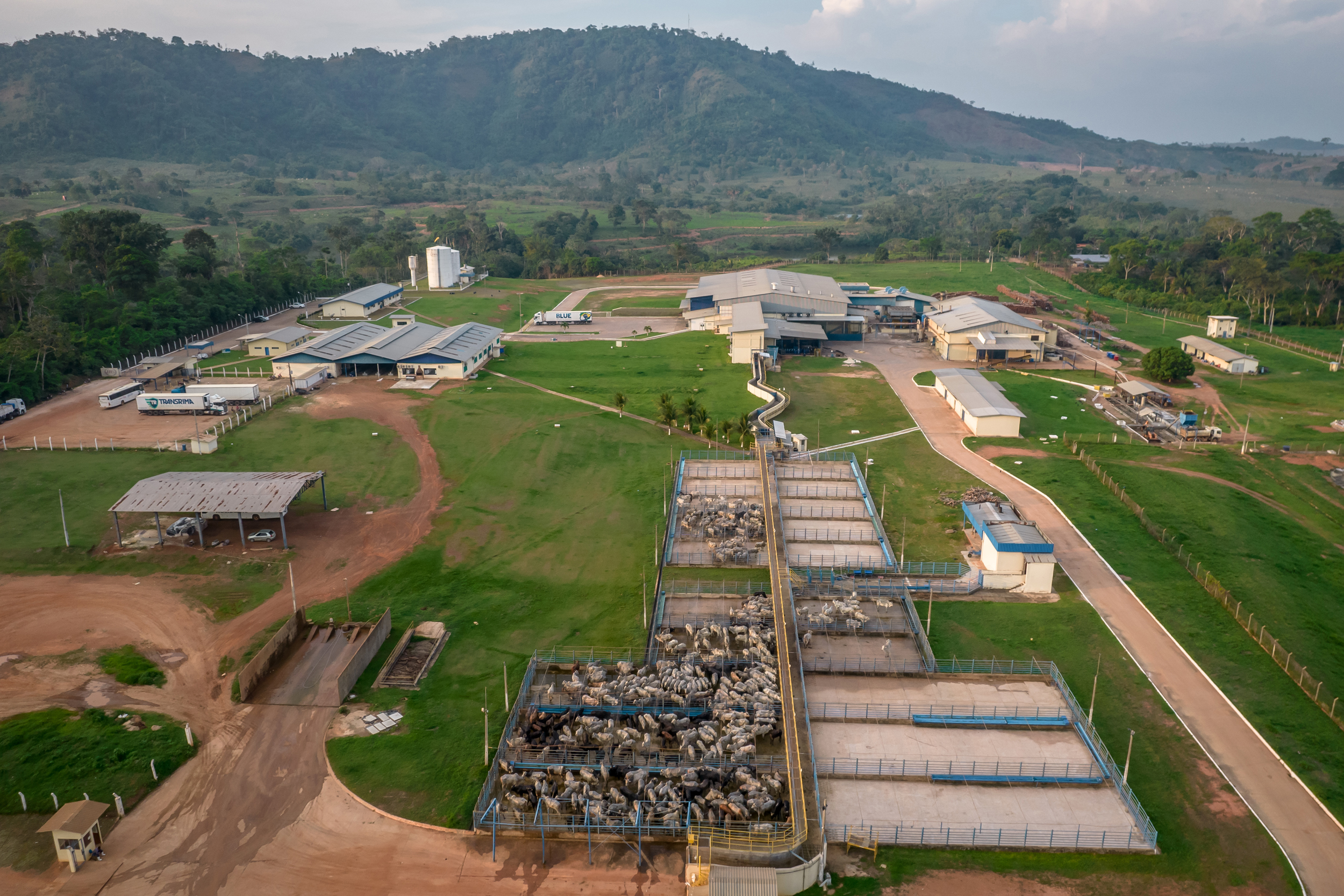
The 14 legal actions, filed in four European jurisdictions, accuse JBS and its affiliated banks, asset managers, accountants and lawyers of criminal complicity in connection with the meat giant’s purchase of cattle from deforested land, in violation of Brazilian law. JBS, a historically Brazilian company, is now officially headquartered in the Netherlands, though it continues to maintain major operations in Brazil and to source much of its beef from the Amazon and neighboring ecosystems.
The lawsuits are the latest attempts by advocacy groups to open up new legal avenues to challenge JBS, which recent research has found emits as much planet-warming methane as oil giants ExxonMobil and Shell combined.
The Transnational Legal Coalition, a newly formed network of advocacy groups and lawyers that prosecutes environmental crimes and filed the complaints, says the lawsuits are the first in a series of legal efforts that will target deforestation in JBS’s supply chain. Raising livestock is the biggest driver of forest loss in the world’s largest rainforest, a crucial ecosystem for stabilizing Earth’s atmosphere and a massive harbor for biodiversity.
The coalition commissioned a study to support their filings, conducted by the environmental research group AidEnvironment, which found that JBS was linked to more than 16 million deforested acres, both through direct and indirect suppliers.
The complaints focus on European Union anti-money laundering laws, which require financial institutions, attorneys and accountants to do “enhanced due diligence” on businesses that have a high risk of deforestation in their supply chains. They allege JBS makes huge profits off cattle raised on land that is likely criminally deforested, and therefore, the cattle are criminal property.
They argue these institutions, which include the banks Barclays and Rabobank, the asset manager BlackRock and accounting firms KPMG and EY, were all obligated to perform enhanced due diligence but did not. The coalition also filed a criminal complaint with public prosecutors in the Dutch criminal justice system against JBS directly, accusing the company of money laundering.
“If the European enabler complied with its enhanced due diligence obligations, it would have found out about the risk that JBS is engaged in money laundering and would either have stopped working with JBS or reported them to the criminal authorities,” said George Collecott, an attorney with the Global Legal Action Network, one of the coalition members. “As each of the financial institutions have a long-standing relationship with JBS, they haven’t done that.”
The EU’s anti-money laundering law says a failure to report suspected money laundering to authorities is an offense by both the company and company employees, including compliance officers.
“What we’re really asking is for the regulators in the U.K., Germany, Netherlands and Ireland to open an investigation into these financial institutions and investigate whether there has been a failure of these due diligence obligations,” Collecott said. “It’s really making sure the banks can’t plead ignorance.”
In a response to Inside Climate News, a Barclays spokesperson said the company had reviewed the legal complaint but could not comment. The bank said it has conducted enhanced due diligence for clients engaged in beef production since 2021.
JBS did not respond to a request for comment, nor did Rabobank, Blackrock, KPMG or EY.
As part of its long-sought effort to list on the New York Stock Exchange, which it accomplished successfully in 2025, JBS re-incorporated in the Netherlands, where many companies take advantage of Dutch tax exemptions.
Dutch law, however, requires companies to meet a “duty of care” threshold, which includes harms caused by greenhouse gases. That prompted Greenpeace Netherlands in April to file a preliminary letter with the Dutch authorities, indicating its intent to sue the company.
In this case, Greenpeace Netherlands plans to sue because of the company’s expansion into Nigeria. In its letter, the group asked for details about the company’s intended operations there, its first on the African continent. So far, Greenpeace Netherlands says, neither the Nigerian government nor JBS has provided information about its $2.5 billion investment to develop poultry, beef and pork processing facilities there.
As JBS expands its global footprint, it has also pulled back on its climate commitments. In July, the company issued its annual sustainability report, in which it said it would abandon its previous goal of reaching net-zero emissions by 2040. It also dropped any mentions of its goal to eliminate deforestation connected to its Brazilian supply chains.
About This Story
Perhaps you noticed: This story, like all the news we publish, is free to read. That’s because Inside Climate News is a 501c3 nonprofit organization. We do not charge a subscription fee, lock our news behind a paywall, or clutter our website with ads. We make our news on climate and the environment freely available to you and anyone who wants it.
That’s not all. We also share our news for free with scores of other media organizations around the country. Many of them can’t afford to do environmental journalism of their own. We’ve built bureaus from coast to coast to report local stories, collaborate with local newsrooms and co-publish articles so that this vital work is shared as widely as possible.
Two of us launched ICN in 2007. Six years later we earned a Pulitzer Prize for National Reporting, and now we run the oldest and largest dedicated climate newsroom in the nation. We tell the story in all its complexity. We hold polluters accountable. We expose environmental injustice. We debunk misinformation. We scrutinize solutions and inspire action.
Donations from readers like you fund every aspect of what we do. If you don’t already, will you support our ongoing work, our reporting on the biggest crisis facing our planet, and help us reach even more readers in more places?
Please take a moment to make a tax-deductible donation. Every one of them makes a difference.
Thank you,