Jose Young was blunt about his predicament: “It’s all so crazy.”
That’s what the disabled Alabamian kept emphasizing when I visited him at his home in the small town of Chickasaw, Alabama. Young had just been criminally charged over a garbage collection bill he had been unable to pay—and he wasn’t alone.
He was one of more than 180 Chickasaw residents who I found had been criminally prosecuted by the town for nonpayment of garbage bills.
Chickasaw had passed an ordinance in 2021, giving it authority to issue a criminal summons or arrest a resident who falls behind on garbage or sewer bills—basic municipal services.
Lawyers for the Southern Poverty Law Center sent a letter to the Chickasaw city attorney on the residents’ behalf. They pointed out that the city’s ordinance violated multiple constitutional provisions, and state and federal laws that prohibit jailing anyone for debt. The lawyers received no response.
It seemed like a case ripe for the court of public opinion. After I met with Young, I conducted more than a dozen interviews with Chickasaw residents. Shaquala Jackson, a young Black mother whose landlord told her that the garbage collection fee was included in her rent, was among them.
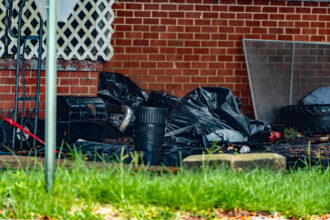
In fact, she didn’t know that the garbage bill was going unpaid by her landlord. Jackson found herself on the hook, and she couldn’t pay in full, so the mother of three was prosecuted. Her trash, uncollected, piled up. When her three-year-old screamed at the sight of a rat, Jackson decided to leave the home she loved.
I reviewed hundreds of pages of court records, documenting the impact of the city’s ordinance—passed by an all-white city council—and found that it disproportionately harmed women and Black residents.
Less than a week after ICN published my story, it was republished and cited by The Atlanta Journal-Constitution, Capital B News, Black Enterprise, and more. It racked up thousands of views and reactions across social media sites, and public outrage grew. Chickasaw officials broke their silence. They notified the residents’ lawyers that the city was dropping all charges for nonpayment of garbage bills.
Partly as a result of ICN’s reporting, the Alabama Legislature is now considering a ban explicitly prohibiting municipalities from criminalizing unpaid garbage bills.
This is an example of ICN impact: a satisfying result that shows how journalism can bring relief and a measure of justice to vulnerable citizens. I will keep an eye on these cases and how the town clears up its billing.
About This Story
Perhaps you noticed: This story, like all the news we publish, is free to read. That’s because Inside Climate News is a 501c3 nonprofit organization. We do not charge a subscription fee, lock our news behind a paywall, or clutter our website with ads. We make our news on climate and the environment freely available to you and anyone who wants it.
That’s not all. We also share our news for free with scores of other media organizations around the country. Many of them can’t afford to do environmental journalism of their own. We’ve built bureaus from coast to coast to report local stories, collaborate with local newsrooms and co-publish articles so that this vital work is shared as widely as possible.
Two of us launched ICN in 2007. Six years later we earned a Pulitzer Prize for National Reporting, and now we run the oldest and largest dedicated climate newsroom in the nation. We tell the story in all its complexity. We hold polluters accountable. We expose environmental injustice. We debunk misinformation. We scrutinize solutions and inspire action.
Donations from readers like you fund every aspect of what we do. If you don’t already, will you support our ongoing work, our reporting on the biggest crisis facing our planet, and help us reach even more readers in more places?
Please take a moment to make a tax-deductible donation. Every one of them makes a difference.
Thank you,