

An ambitious bill to keep toxic “forever chemicals” off California produce lost its teeth after the chemical and agricultural industry spent hundreds of thousands of dollars lobbying against it.
The bill that landed on Gov. Gavin Newsom’s desk last week simply requires regulators to track and disclose pesticide applications in the state.
It’s “a shell of what we set out to do,” said its author, Assemblymember Nick Schultz, D-Burbank. “We missed an opportunity this year to really be a national leader on this issue, and to catch up with a handful of other states that are already pursuing this legislation,” he added, referring to Maine and Minnesota, which have already enacted laws restricting PFAS pesticides.
Early versions of Schultz’s bill, A.B. 1603, would have prohibited state regulators from approving new pesticides with perfluoroalkyl and polyfluoroalkyl substances, or PFAS, starting in 2028. In 2030, the legislation would have outlawed the sale of 23 PFAS pesticides already banned in Denmark and started to phase out the rest of the already approved products in 2035.
“I was shocked to learn that the state was not doing anything about PFAS-containing pesticides that are regularly used on crops,” Schultz told his colleagues when he sought their support in April.
He said he was even more shocked to learn that the pesticides taint the fruits and vegetables consumers feed their families, after reading that nearly 40 percent of conventional California produce have PFAS residues in an Environmental Working Group report from March.
“A.B. 1603 would phase out the use of PFAS pesticides once and for all,” Schultz said.
PFAS earned the nickname “forever chemicals” because their nearly indestructible carbon-fluorine bonds, extremely rare in nature, remain in living tissue and the environment for years. PFAS has contaminated nearly half of drinking water supplies across the country—which researchers recently linked to higher rates of several types of cancer—and 79 percent of 150 public water systems tested across California in 2022.
While Schultz was trying to persuade his colleagues to support a PFAS pesticide phaseout, the chemical and agricultural industries spent nearly $900,000 to lobby legislators, regulators and other California officials on A.B. 1603 and other issues, an Inside Climate News review of state campaign finance disclosures filed between January and June found. Lobbyists distributed more than $1,000 worth of pistachios, strawberries and fruit boxes to legislators and treated them to a $300-a-person steak dinner, the disclosures show.
The American Chemistry Council, which represents chemical manufacturers, spent nearly $179,000 to influence state officials on A.B. 1603 and other bills during that time.
The American Chemistry Council supports policies that protect human health and the environment, said spokesperson Erich Shea when asked about his organization’s opposition to the bill. “ACC supports risk-based approaches that evaluate pesticides individually and makes regulatory decisions based on scientific evidence and actual product data.”
Syngenta, which makes pesticides with PFAS, spent more than $20,000 between April and June to influence just one issue: A.B. 1603.
Syngenta’s head of sustainability and government affairs, Val Dolcini, served as director of California’s Department of Pesticide Regulation for two years, starting in 2019. Inside Climate News asked Syngena if Dolcini lobbied his former agency, but did not receive a reply.
Schultz was optimistic that his colleagues would protect consumers from PFAS since the Legislature had recognized what he called their “very problematic properties” when they prohibited or limited their use in cosmetics, food packaging, carpets and other products.
This story is funded by readers like you.
Our nonprofit newsroom provides award-winning climate coverage free of charge and advertising. We rely on donations from readers like you to keep going. Please donate now to support our work.
Donate NowBut after hearing objections from colleagues representing agricultural districts, Schultz tried to find a compromise and assured them in May that the bill would address their concerns. By the end of June, a Senate version of the bill had removed provisions to phase out the chemicals, which have been linked to a litany of serious health conditions besides cancer, including obesity, immune suppression, hormone disruption, reduced fertility and neurodevelopmental problems.
The amended bill also ditched a provision to classify PFAS pesticides as restricted materials, which require a permit and typically cannot be used by homeowners. Now, the bill just requires regulators to track and disclose pesticide applications.
“Ask Them to Do Better”
The industry pushback was not a surprise to Susan Little, California legislative director for Environmental Working Group, an A.B. 1603 sponsor. “The agriculture and the pesticide industries are just vehemently opposed to any kind of reasonable, logical public health efforts to rein in or to reform pesticide use in California,” she said.
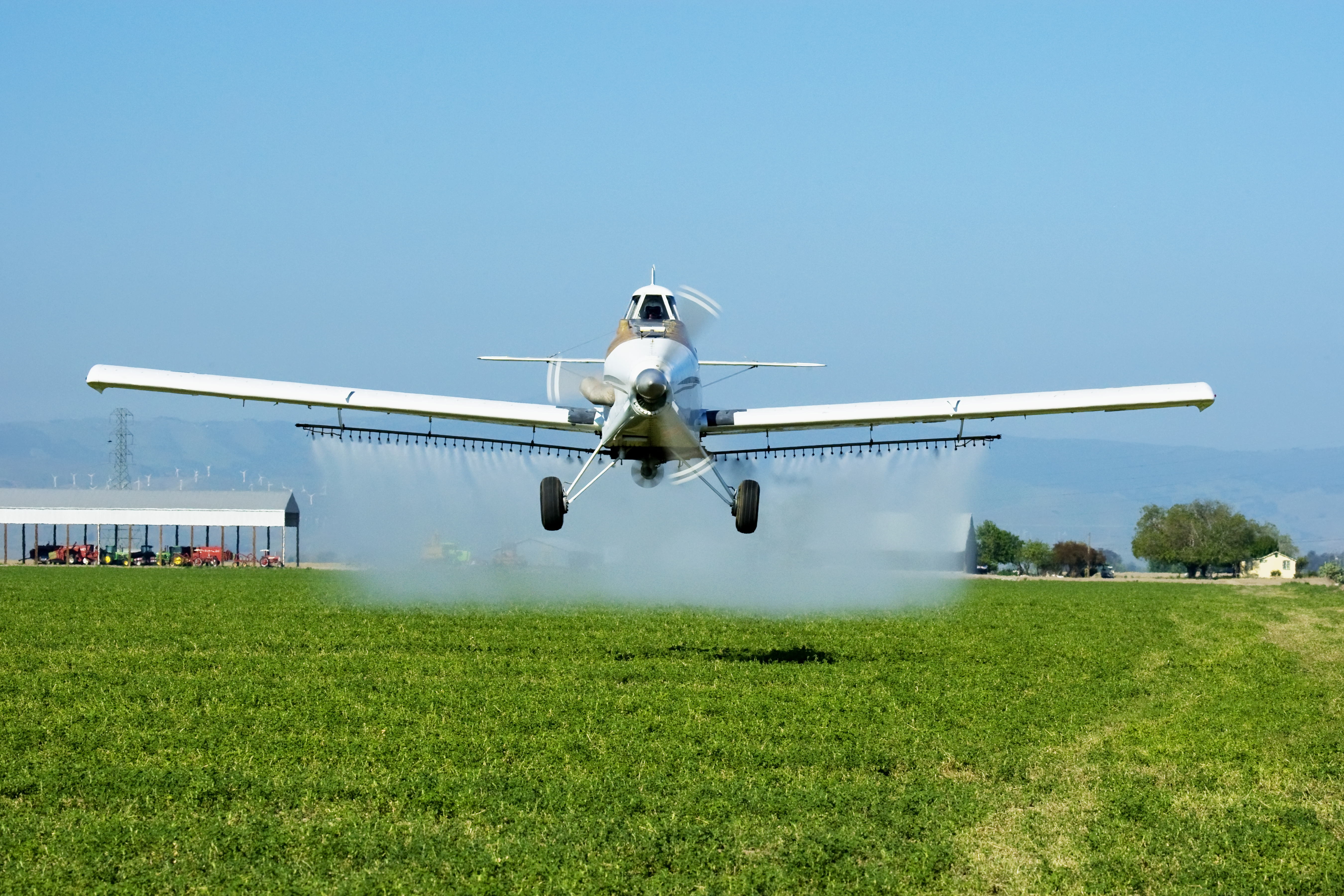
California growers applied more than 14.2 million pounds of dozens of PFAS pesticides on crops between 2018 and 2023, the most recent publicly available data, averaging more than 2.3 million pounds a year. Another 1.9 million pounds of these pesticides were used during that time to kill pests in non-agricultural settings like green strips along roads and golf courses.
Growers in California’s $2.7 billion almond industry used far more PFAS pesticides than other farmers, applying more than 734,000 pounds of the chemicals, including more than 416,000 pounds of bifenthrin and oxyfluorfen. The U.S. Environmental Protection Agency classifies both chemicals as possible human carcinogens, and laboratory evidence suggests they also disrupt hormone function.

The Almond Alliance’s concerns with earlier versions of A.B. 1603 were not about opposing appropriate protections for human health or the environment, said Amanda Russell, a spokesperson for the trade group. “Our concern was with imposing broad restrictions on crop protection products through legislation rather than allowing California’s Department of Pesticide Regulation to evaluate individual products based on science, exposure, risk and actual use,” she said.
Department of Pesticide Regulation officials told the Assembly appropriations committee that the agency would lose close to $18 million in fees from registration and taxes on PFAS pesticides if they were banned.
Inside Climate News asked the agency, known as DPR, how it balances its mission to protect human health and the environment while depending on fees from registration and sales of pesticides. Spokesperson Amy MacPherson replied, “DPR’s work is guided by our mission to protect human health and the environment by fostering sustainable pest management and regulating pesticides.”
MacPherson said the agency is supported through special‑funded revenue sources, primarily the fee on pesticide sales. That funding arrangement has undergone independent review, she said, and has been adjusted to “ensure we can carry out our statutory, regulatory, and legal responsibilities.”
Schultz told Inside Climate News he was expecting a tough battle. He knew the agriculture industry would worry that alternatives would be unavailable or too costly and that his colleagues feared that restricting agricultural tools would hurt California’s economy, the fourth largest in the world.
Schultz understands both concerns but pointed out that the European Union also has a “pretty dang large economy” and still banned some of the most dangerous PFAS pesticides.
Environmental advocates and other supporters of Schultz’s bill are hopeful that Newsom will sign it.
On the whole, the governor has supported bills trying to get PFAS out of the environment and away from consumers, and A.B. 1603 has no official opposition now, said Environmental Working Group’s Little. “But we have no idea what he’s going to do with this bill.”
Little credits Schultz with sending the governor what she considers a meaningful bill in the face of “tremendous spending on opposition activities.”
When Little started looking into PFAS pesticide use in California, she was surprised to discover that farmers and local governments had no idea the chemicals were being applied to their lands. She sees the bill, even in its narrowed focus, as an important first step in requiring regulators to track PFAS pesticides and educate farmers, local officials and the public.
As a father who was shocked to learn that the strawberries he buys his kids every week could be contaminated with 10 different PFAS pesticides, Schultz said he is committed to fighting for safer products.
Just over 40 legislators passed a more ambitious version of A.B. 1603 in the Assembly, Schultz said. He urges consumers to educate their representatives about the issue and “ask them to do better.”
Schultz does not believe the agricultural industry is trying to put unsafe products on the market. But the data shows there are very serious and significant long-term health effects from PFAS pesticides, he said. “We have got to do a better job of regulating them.”
About This Story
Perhaps you noticed: This story, like all the news we publish, is free to read. That’s because Inside Climate News is a 501c3 nonprofit organization. We do not charge a subscription fee, lock our news behind a paywall, or clutter our website with ads. We make our news on climate and the environment freely available to you and anyone who wants it.
That’s not all. We also share our news for free with scores of other media organizations around the country. Many of them can’t afford to do environmental journalism of their own. We’ve built bureaus from coast to coast to report local stories, collaborate with local newsrooms and co-publish articles so that this vital work is shared as widely as possible.
Two of us launched ICN in 2007. Six years later we earned a Pulitzer Prize for National Reporting, and now we run the oldest and largest dedicated climate newsroom in the nation. We tell the story in all its complexity. We hold polluters accountable. We expose environmental injustice. We debunk misinformation. We scrutinize solutions and inspire action.
Donations from readers like you fund every aspect of what we do. If you don’t already, will you support our ongoing work, our reporting on the biggest crisis facing our planet, and help us reach even more readers in more places?
Please take a moment to make a tax-deductible donation. Every one of them makes a difference.
Thank you,

Liza Gross
Reporter, California
Liza Gross is a reporter for Inside Climate News based in Northern California. She is the author of The Science Writers’ Investigative Reporting Handbook and a contributor to The Science Writers’ Handbook, both funded by National Association of Science Writers’ Peggy Girshman Idea Grants. She has long covered science, conservation, agriculture, public and environmental health and justice with a focus on the misuse of science for private gain. Prior to joining ICN, she worked as a part-time magazine editor for the open-access journal PLOS Biology, a reporter for the Food & Environment Reporting Network and produced freelance stories for numerous national outlets, including The New York Times, The Washington Post, Discover and Mother Jones. Her work has won awards from the Association of Health Care Journalists, American Society of Journalists and Authors, Society of Professional Journalists NorCal and Association of Food Journalists.