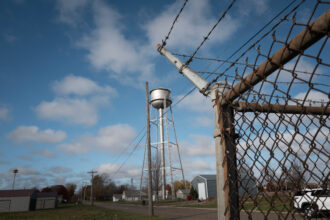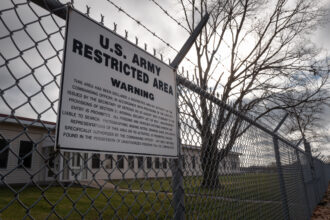


The U.S. Army detonated five tons of degraded lead azide explosives in southeast Iowa this morning, following delays and legal challenges over concerns about toxic dust generated by the blast.
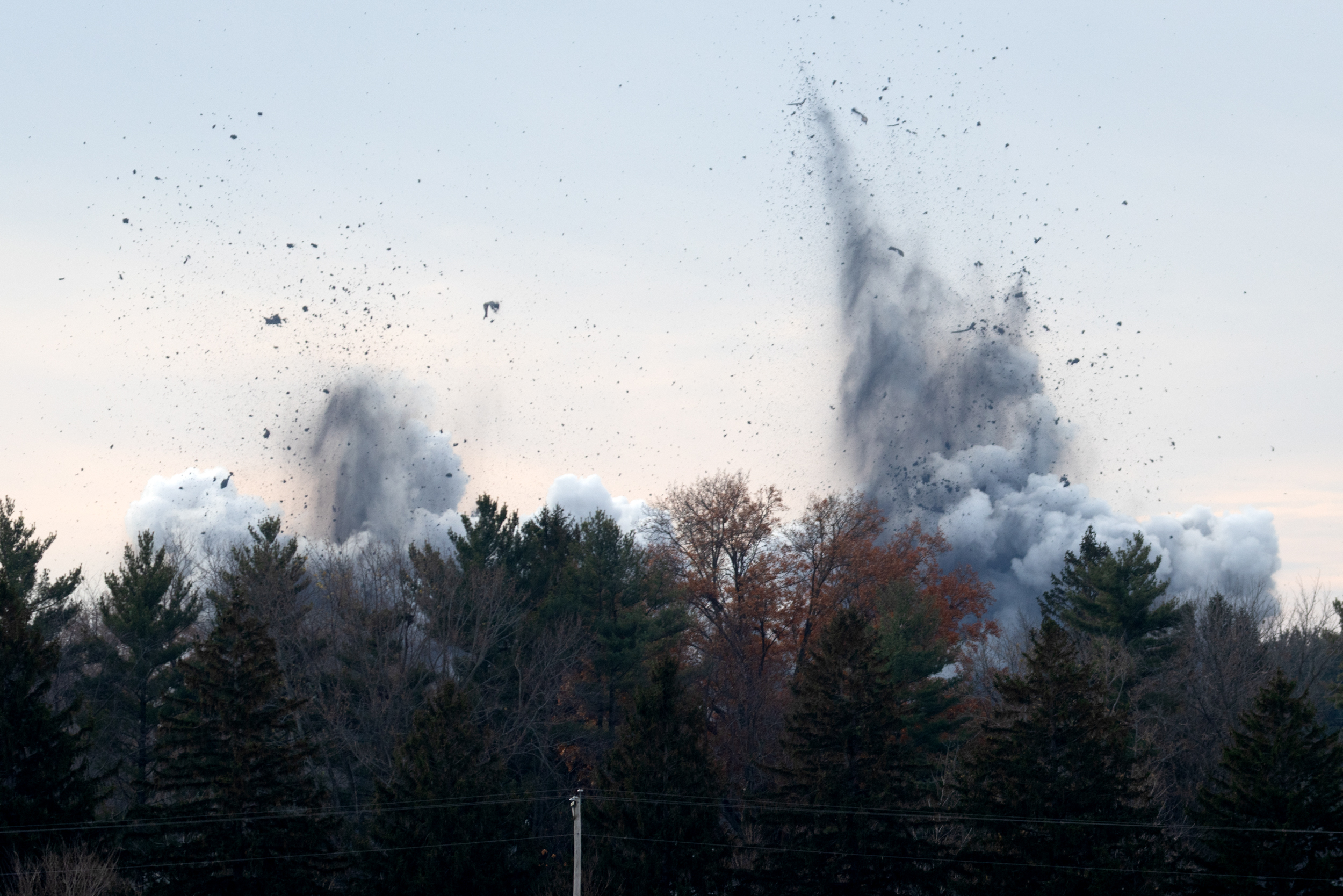
Shortly after 9 a.m. local time, a series of explosions ignited the bomb-making material, sending two plumes into the air that were visible for miles. Cars passed along the north end of the Iowa Army Ammunition Plant in Middletown a minute before the detonation, with more traffic passing soon afterward.
After the blast, Environmental Protection Agency administrator Lee Zeldin said initial air samples collected downwind of the explosion showed no detectable lead. “It looks like it caved inward perfectly,” he told CNN. At an 11 a.m. briefing, Army officials also said initial air monitoring had detected no airborne lead.
But some scientists cautioned against drawing broad conclusions from the initial results, questioning whether the Army’s monitoring could totally rule out lead exposure from a blast of this scale.
Measuring airborne lead is more complicated than a single reading might suggest, said Bruce Lanphear, an expert on lead exposure and professor of health sciences at Simon Fraser University in British Columbia. The monitoring methods used, the size of the particles being measured and the height and location of monitoring equipment can all affect the results.
“The failure to detect an increase in airborne lead from preliminary samples does not establish that no lead was released or that no one was exposed,” Lanphear said in an email exchange with Inside Climate News on Wednesday. Lanphear submitted an expert witness statement in support of an emergency lawsuit filed last week on behalf of the Iowa Environmental Council and the Sierra Club’s Iowa Chapter.
“We need to know how lead was measured and the detection limits of the sampling methods. We should also await the results of other environmental samples before drawing conclusions.”
After the blast, wind gusts traveled southwest.
The force of the blast could be felt at least four miles away, according to a KWQC-TV reporter observing the detonation from a field north of the ammunition plant. The haze from the plumes dissipated quickly, but officials are tracking air quality into Missouri.
The Army says that extensive mitigation reduced the release of lead.
“I would characterize the controlled detonation as exceeding expectations,” said Major General Eric Shirley. “I believe, absolutely, that we reduced as close to zero as is absolutely humanly possible the risk to the health and safety of the people of Middletown and the extended communities throughout Iowa.”
The EPA’s air monitoring results are being rounded to one decimal place, said Alexander More, a professor of urban public health at the University of Massachusetts Boston and a researcher at Harvard University’s Initiative for the Science of the Human Past. In an email to Inside Climate News, More said the website’s code shows values less than 0.05 micrograms per cubic meter, one third of the federal air quality standard for lead, are rounded down to 0.0.
This story is funded by readers like you.
Our nonprofit newsroom provides award-winning climate coverage free of charge and advertising. We rely on donations from readers like you to keep going. Please donate now to support our work.
Donate NowMore added that seven non-zero readings registered in the EPA’s website code as of noon on Wednesday after the blast. There were three non-zero readings before the detonation.
Soil monitoring in the days ahead will reveal how much lead dust settled in the environment, and where. Blood lead levels in children will also be important to monitor.
The EPA and Army will continue monitoring the blast site and surrounding communities.
After delaying the detonation by five days while a court weighed a challenge to the military’s plan, the Army and EPA say they used the extra time to collect more than 1,000 soil, dust, water and air samples and take additional mitigation measures.
In a post early Wednesday morning, the Army wrote that personnel in Middletown implemented measures including “a water wall filled with more than 100,000 gallons of water, earth berms, sand filled blocks, expert dispersion modeling, and temperature-regulating tarps.”
The Army also used a PFAS-free retardant foam to contain the blast. General Shirley attributed the plumes visible for miles following the explosion to the 3,600 gallons of liquid foam they’d applied to the site.
The Army believes these actions limited the spread of lead after the detonation.
Lanphear said detecting little or no lead is a sign that the delay and additional safeguards the Army took ahead of the operation were necessary and successful. “The public outcry prompted additional safeguards, and we should commend the Army, EPA and other agencies for taking steps to better protect surrounding communities,” he said.
Lanphear hopes the situation in Iowa will help draw more attention to other sources of lead exposure for Americans, such as the use of leaded aviation fuel by small aircraft.
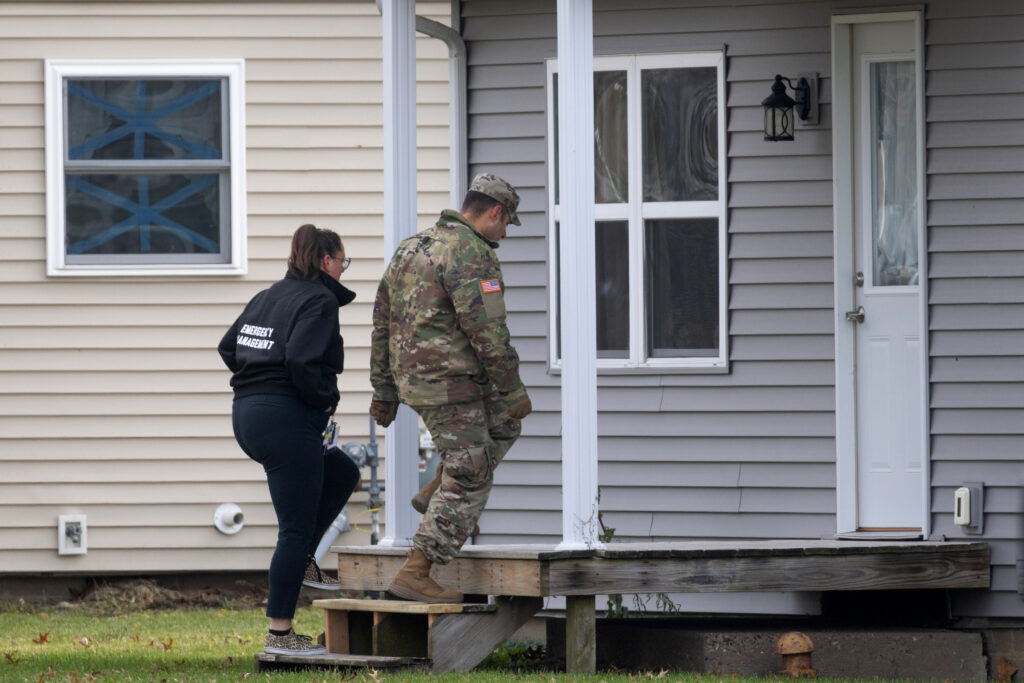
Ahead of Wednesday’s detonation, the Army encouraged residents up to five miles southwest of the site to evacuate with support from the Federal Emergency Management Agency, a change from earlier plans.
While Middletown residents learned of the planned explosion at an October town hall, most Iowa residents, including state agencies and Gov. Kim Reynolds, weren’t notified until just five days before the operation was set to take place. The detonation was originally scheduled for Friday, Nov. 20.
At the time, the Army advised members of the public in the plume’s projected path to “consider avoiding the affected area” and keep windows and doors closed. It also suggested cleaning indoor and outdoor surfaces after the air exposure period ends.
Health and safety advice took on a more urgent tone this week. Ahead of this morning’s detonation, federal officials strongly urged community members to evacuate the affected area and advised those in areas with lead deposition to wet-clean surfaces that infants and children may touch.
On Tuesday, the EPA reported dispatching 200 staff to Iowa with plans for over 300 personnel on the ground Wednesday. As of late Tuesday night, the EPA said it had collected over 1,200 environmental samples.
The agency will compare those with others taken during and after the blast to track the range and amount of lead generated by the detonation. Minutes after the detonation, NASA aircraft circled the area to collect air samples.
About This Story
Perhaps you noticed: This story, like all the news we publish, is free to read. That’s because Inside Climate News is a 501c3 nonprofit organization. We do not charge a subscription fee, lock our news behind a paywall, or clutter our website with ads. We make our news on climate and the environment freely available to you and anyone who wants it.
That’s not all. We also share our news for free with scores of other media organizations around the country. Many of them can’t afford to do environmental journalism of their own. We’ve built bureaus from coast to coast to report local stories, collaborate with local newsrooms and co-publish articles so that this vital work is shared as widely as possible.
Two of us launched ICN in 2007. Six years later we earned a Pulitzer Prize for National Reporting, and now we run the oldest and largest dedicated climate newsroom in the nation. We tell the story in all its complexity. We hold polluters accountable. We expose environmental injustice. We debunk misinformation. We scrutinize solutions and inspire action.
Donations from readers like you fund every aspect of what we do. If you don’t already, will you support our ongoing work, our reporting on the biggest crisis facing our planet, and help us reach even more readers in more places?
Please take a moment to make a tax-deductible donation. Every one of them makes a difference.
Thank you,

Anika Jane Beamer
Reporter, Iowa
Anika Jane Beamer covers the environment and climate change in Iowa, with a particular focus on water, soil and CAFOs. A lifelong Midwesterner, she writes about changing ecosystems from one of the most transformed landscapes on the continent. She holds a master’s degree in science writing from the Massachusetts Institute of Technology as well as a bachelor’s degree in biology and Spanish from Grinnell College. She is a former Outrider Fellow at Inside Climate News and was named a Taylor-Blakeslee Graduate Fellow by the Council for the Advancement of Science Writing.

Jake Bolster
Reporter, Wyoming and the West
Jake Bolster reports on Wyoming and the West for Inside Climate News. Previously, he worked as a freelancer, covering climate change, energy, and the environment across the United States. He holds a Masters in Journalism from Columbia University.