

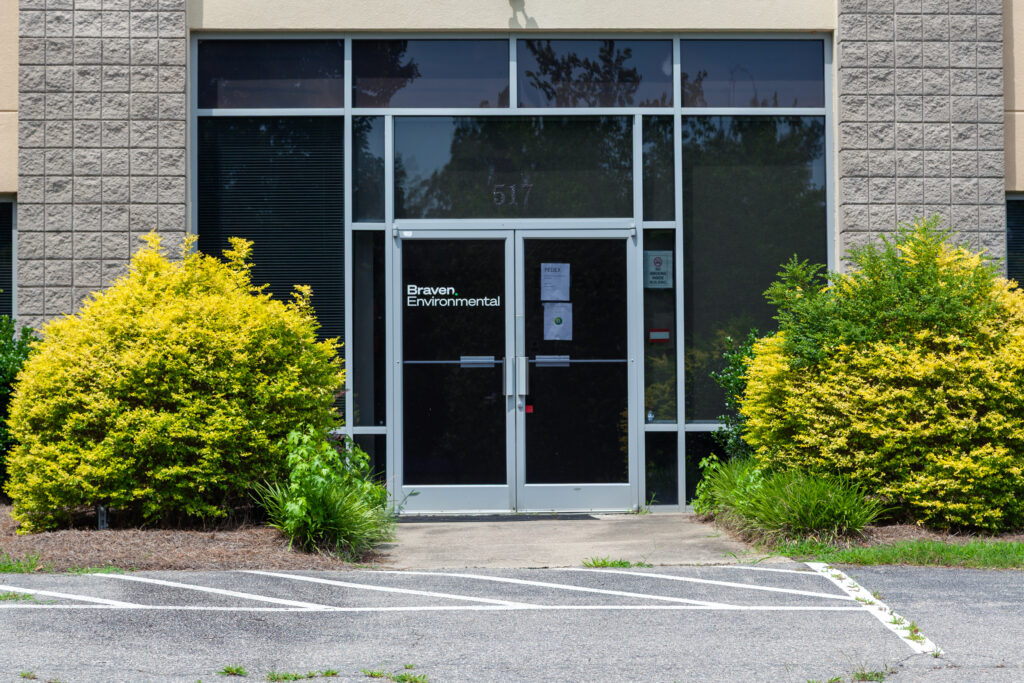
ZEBULON, N.C.—The blank, beige building at 507 N. Industrial Drive, still emblazoned with the words “Braven Environmental,” looks benign from the street.
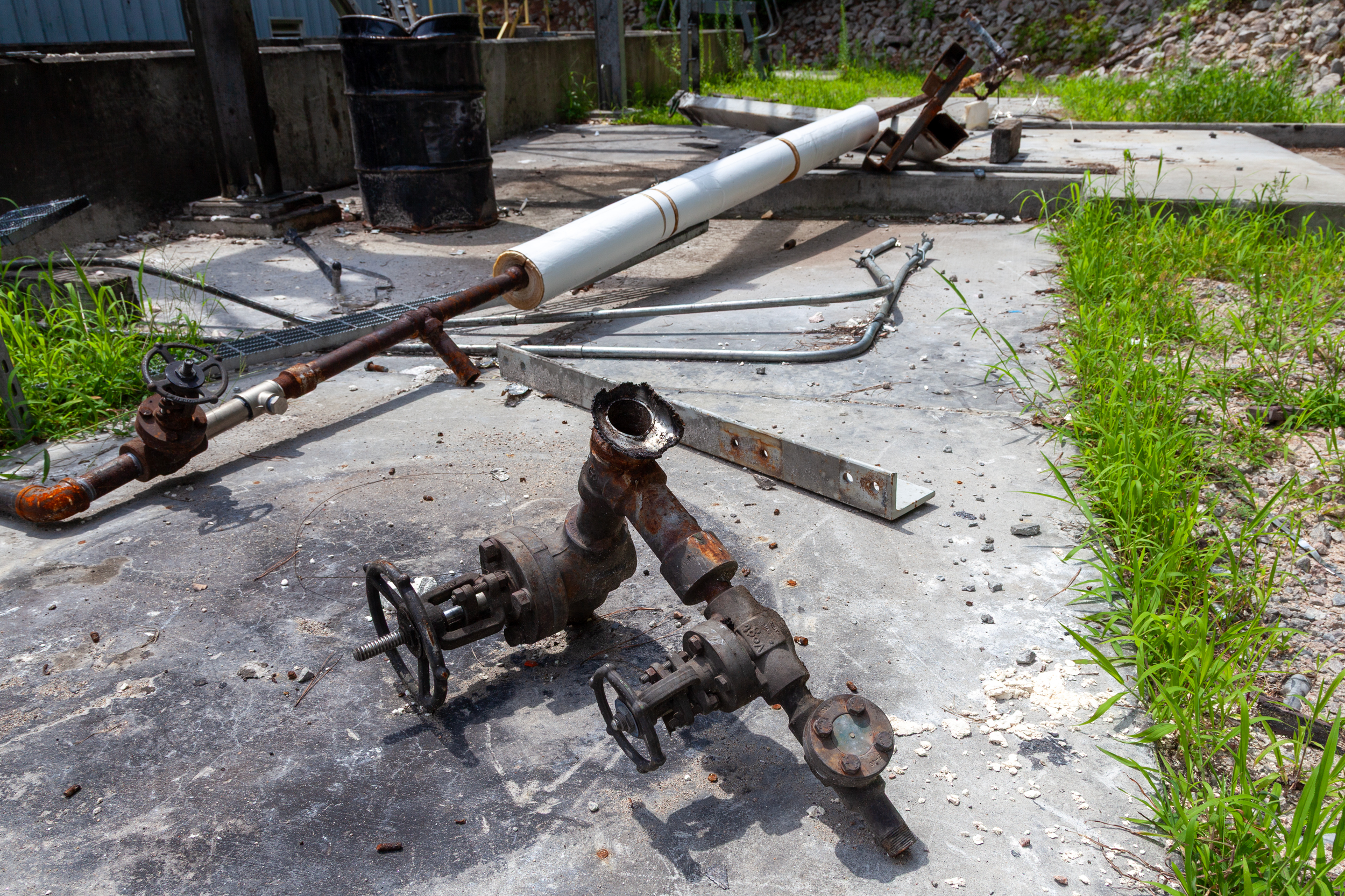
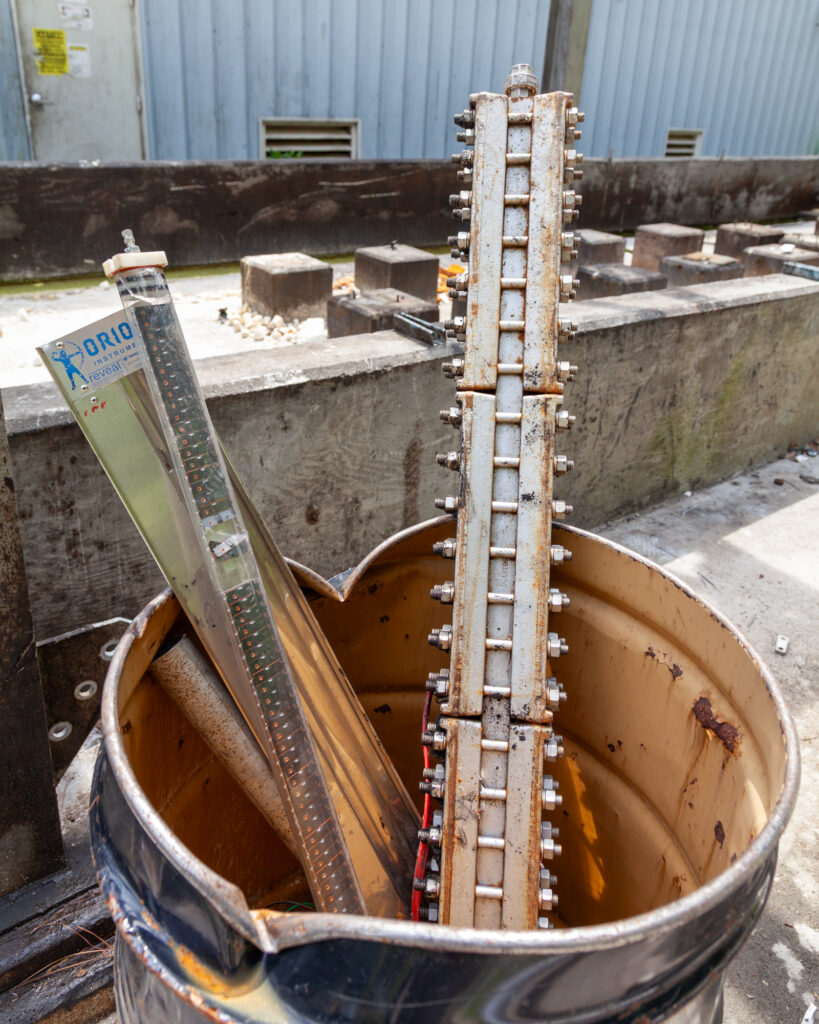
But on a recent weekend, an interior alarm beeped nonstop, piercing the midday quiet. Around back, past the side doors with a designated smoking area and a sign that read “Caution Respirators Required,” an acrid whiff of old oil wafted from several concrete pits.
Sharp metal parts jutted from barrels. Hunks of blackened machinery moldered nearby.
Braven Environmental, a New York-based company whose dozens of hazardous waste violations invited scrutiny by state and federal regulators, had hauled away most of its equipment.
The plant was once touted as an example of how chemical recycling could solve the plastic waste crisis. Now it’s the latest case in point for environmental advocates who say that converting plastic into chemicals and fuel through pyrolysis is no solution at all.
State records show that the plant has mishandled hazardous waste. Chemical recycling waste can contain known carcinogens such as arsenic, benzene and hexavalent chromium, and internal emails show that state regulators expressed particular concern that the facility mishandled benzene.
The North Carolina Department of Environmental Quality plans to assess the site for potential chemical contamination, according to an agency spokesperson.
The company still holds regulatory permits and has not requested they be rescinded, the spokesperson said. However, agency staff noted on a recent visit that the facility doesn’t appear to be operating.
Braven Environmental began operations in New York under the name Golden Renewable Energy. Michael Moreno, a co-founder of the company, obtained a permit from the New York State Department of Environmental Conservation to construct a “biomass conversion facility” to convert vegetable oil into home heating oil and diesel.
A few years later, Braven Environmental set its sights on chemical recycling.
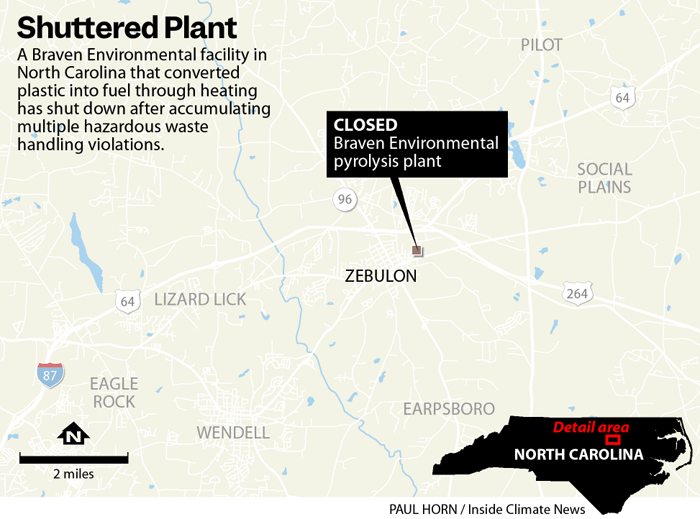
From 2020 to 2025, Braven Environmental operated at the Triangle East Business Park in Zebulon, a small but fast-growing town 24 miles east of Raleigh. The company claimed that it could process around 90 percent of plastics using pyrolysis, which subjects the waste to high temperatures in an oxygen-free environment.
“This should take the argument away that chemical recycling is the solution,” said Judith Enck, a former Environmental Protection Agency regional administrator and now the president of the nonprofit organization Beyond Plastics, who follows these types of plants closely. In late June, one of her staff members went down to the plant in Zebulon and observed that the company no longer seemed to be operating there.
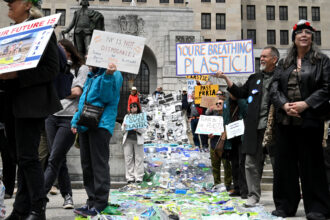
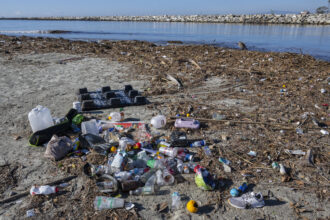
Some plastic, if it is adequately cleaned, can be recycled mechanically—shredded into small pellets and then reused to make new plastic products. But most used plastic is not recycled. Fossil fuel companies and their lobbyists, faced with calls to reduce plastic production or ban certain types of plastic, have touted chemical recycling as an alternative to incinerating or landfilling the waste.
In the past, the American Chemistry Council, a trade association that represents producers of plastic packaging, has touted Braven Environmental for its work on recycling plastics. According to 2025 reporting by New York Focus, the lobbyist group organized a trip to the plant for New York state lawmakers during the debate over a bill that would reduce plastic packaging in the state and require producers to help fund recycling efforts.
The policy, to the council’s dismay, would not classify chemical recycling—often called “advanced recycling” by the industry—as recycling. The legislation has stalled in the state Assembly for two consecutive years.
“Advanced recycling is an emerging manufacturing sector, and in any competitive market, some new businesses will scale, some will pivot, and some will close,” Matthew Kastner, an American Chemistry Council spokesperson, said in response to questions about the facility. “We can’t speak to an individual company’s business decisions, but one small facility does not define an entire industry.”
Pyrolysis, the chemical recycling method chosen by Braven Environmental, breaks down plastic into its chemical components, producing pyrolysis oil, which can be reused as a fuel, though it is usually diluted with other fossil fuels to be effective.
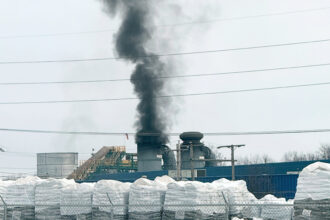
But the process produces tons of hazardous waste. Fewer than a dozen facilities in the United States claim to be able to break down plastics for reuse in this way—and news of Braven Environmental’s shuttering comes weeks after a plant in Ohio ceased operations.
Another entity, Waste Energy, planned to operate a pyrolysis plant near a residential neighborhood in Fayetteville, North Carolina, about an hour south of Zebulon. However, in March 2025, it scrapped the proposal amid public opposition; it moved to Midland, Texas, but has yet to begin production.
A “Large Quantity Generator” of Hazardous Waste
Braven Environmental, for its part, has violated multiple federal and state regulations in the four years since it began operations.
According to EPA records, the company is classified as a “large quantity generator” of hazardous waste. Over the course of its pyrolysis operations, Braven Environmental produced dozens of tons of benzene, a chemical that can cause certain types of cancer.
In its first two years, the plant repeatedly mishandled its hazardous waste, state inspection records show. DEQ inspectors said the company “may have disposed of hazardous waste to the ground” and “dark staining was observed on rocks and soil.”
The Intercept, in partnership with The Assembly and Carolina Public Press, reported in 2023 on the company’s “significant noncompliance” with hazardous waste management regulations.
This story is funded by readers like you.
Our nonprofit newsroom provides award-winning climate coverage free of charge and advertising. We rely on donations from readers like you to keep going. Please donate now to support our work.
Donate NowIn April of that year, state environmental officials issued an “immediate action notice of violations,” alleging that Braven Environmental, unable to find a buyer for some of its oils, disposed of them as hazardous waste.
Braven officials later told DEQ inspectors that it had shipped containers of hazardous waste to a warehouse—which was not permitted to receive or store such material—on Mack Todd Road, a mile and a half away. Braven officials could not provide shipping manifests, nor did they know the name of the trucking company, only that it was “local,” state records show.
Regulators also documented that the company did not maintain records identifying some of the waste as hazardous or non-hazardous, which have different disposal processes.
Alex Gonzalez, the general counsel for the company, and Chris Serrati, then the plant manager, told inspectors they did not know the exact quantities of hazardous waste generated since the facility began operating or the dates on which the waste was shipped.
Reached by phone, Serrati told Inside Climate News that he had no comment on the violations that happened under his tenure and that he had “moved on” from Braven Environmental, where he says he has not worked for nearly a year.
Other current and former company officials could not be reached or did not respond to requests for comment. The company phone line appears to have been disconnected.
In March 2024, state inspectors returned to the site to discuss Braven Environmental’s required plan for assessing and removing contaminated soil where the inspectors believed hazardous material seeped into the ground. Sampling by a company contractor identified several areas with arsenic and hexavalent chromium levels above state standards.
Arsenic can cause cancer when ingested, and breathing in high levels of it can irritate the lungs and, in some long-term exposure cases, lead to lung cancer. Hexavalent chromium can cause cancer when inhaled or consumed in drinking water.
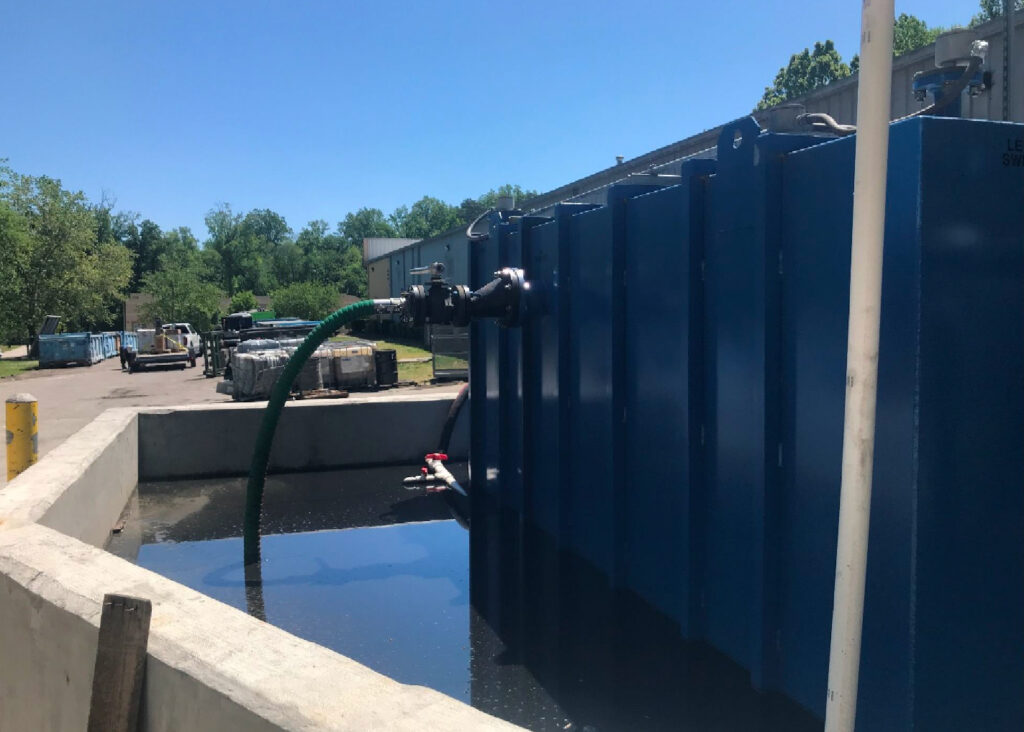
DEQ officials were also concerned about potential soil contamination with benzene, a carcinogen that could have spilled from the plant’s oil and water separator—a machine that prevents the oil used in industrial operations from entering the drainage system.
The company’s report said it found no evidence of impacts on the soil from the substance, and that higher levels of chromium and arsenic in some places are incompatible with the waste stored there. DEQ later requested additional testing to confirm the findings because of quality-control issues at the lab the company used.
The city of Raleigh denied Braven Environmental’s 2023 permit request to discharge water from the oil-water separator into the sewer after a DEQ inspector determined that the company was storing uncovered petroleum containers outdoors, exposing them to the elements. Contractors with the city later confirmed, in a 2024 analysis of collected samples, that stormwater and dikewater treated by the separator at the facility contained levels of benzene and other chemicals that exceeded regulatory limits.
In May 2024, Thad Valentine, a DEQ environmental specialist, visited the site and found it in disarray: Roughly 40 storage tanks filled with petroleum or petroleum residue were outside, exposed to the weather. At least one had been hit and crushed by heavy equipment, Valentine wrote in the inspection notes.
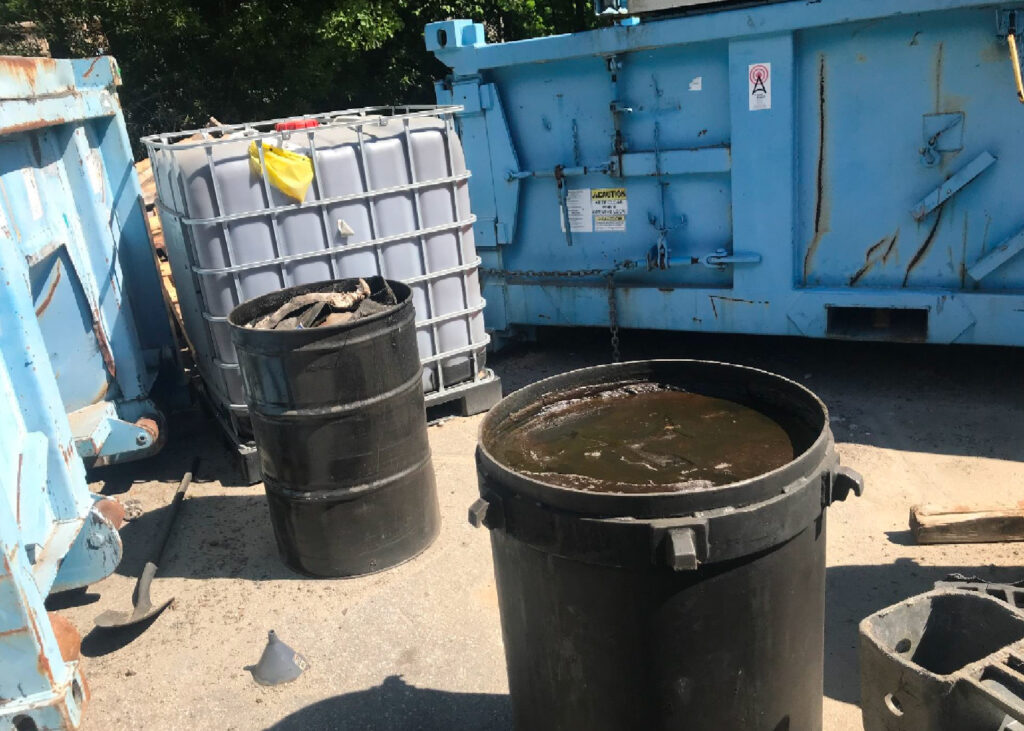
Open drums of petroleum, some of which contained rain, sat outside. According to the investigation report, the drums should have had a failsafe—something that would contain the petroleum if they leaked. There was none.
Internal emails at the DEQ Raleigh Regional Office in July 2024 showed that regulators raised concerns about the company’s handling of benzene and that multiple agencies were “looking at Braven right now.”
“They just had an incident last week where some landscape workers at the business next door became sick while working next to Braven, and an ambulance had to come,” Valentine said in an email that summer. “There is concern that contamination from Braven is somehow the culprit. EPA called this morning with questions.”
In February 2025, an EPA special agent, Jacob Hamm, visited the plant and saw water draining from a Braven Environmental stormwater pipe into a ditch—notable because it wasn’t raining, so there should not have been runoff. He was unable to confirm whether the water was coming from company property.
An EPA spokesman told Inside Climate News that the agency “does not comment on potential or ongoing enforcement matters.”
In March 2025, Valentine met with plant manager Serrati and Kirk Claborn, identified as the plant manager for Braven Environmental’s Texas facility—the plans for which were ultimately canceled. Claborn was there to oversee the cleanup in Zebulon, according to state records.
Valentine found two ladders covered in “product” lying on the ground behind the building, the inspection report shows; Claborn took them inside. Industrial storage tanks and drums were also improperly stored without a failsafe. In a later internal email, Valentine wrote that he assumed that at least one of the tanks contained benzene.
During the inspection, Valentine also found a 55-gallon drum “overflowing with product and water on the sidewalk” next to the “nasty” secondary containment area.
“I made Kirk aware of this, and he said it was unintentional and would take care of it,” Valentine wrote in his inspection report.
Last summer, emails show regulators were still concerned about the discharge of contaminated stormwater—rainwater that mixes with exposed chemicals at the site. Company officials wanted to run potentially contaminated water through the oil-water separator, then send it down stormwater drains for treatment by the city sewer system.
But regulators noted that the machine would not remove benzene or other carcinogenic chemicals from the contaminated water. They denied Braven Environmental’s request to discharge the contaminated water into local drains, because the company’s permit did not allow it.
The plant, though, had already stopped operations earlier in the year. Michael Bloss, the vice president of engineering and construction at Braven Environmental, wrote to state regulators in May 2025: “We have idled the plant for the foreseeable future and are not pursuing any activity that is not an immediate Environmental, Health, or Safety or Compliance Item.”
About This Story
Perhaps you noticed: This story, like all the news we publish, is free to read. That’s because Inside Climate News is a 501c3 nonprofit organization. We do not charge a subscription fee, lock our news behind a paywall, or clutter our website with ads. We make our news on climate and the environment freely available to you and anyone who wants it.
That’s not all. We also share our news for free with scores of other media organizations around the country. Many of them can’t afford to do environmental journalism of their own. We’ve built bureaus from coast to coast to report local stories, collaborate with local newsrooms and co-publish articles so that this vital work is shared as widely as possible.
Two of us launched ICN in 2007. Six years later we earned a Pulitzer Prize for National Reporting, and now we run the oldest and largest dedicated climate newsroom in the nation. We tell the story in all its complexity. We hold polluters accountable. We expose environmental injustice. We debunk misinformation. We scrutinize solutions and inspire action.
Donations from readers like you fund every aspect of what we do. If you don’t already, will you support our ongoing work, our reporting on the biggest crisis facing our planet, and help us reach even more readers in more places?
Please take a moment to make a tax-deductible donation. Every one of them makes a difference.
Thank you,

Lauren Dalban
Reporter, New York City
Lauren Dalban is a New York City-based reporter with a background in local journalism. A former ICN fellow, she now covers environmental issues in all five boroughs. Originally from London, she earned a B.A. in History and English from the University of Virginia, and an M.S. from Columbia Graduate School of Journalism.

Lisa Sorg
Reporter, North Carolina
Lisa Sorg is the North Carolina reporter for Inside Climate News. A journalist for 30 years, Sorg covers energy, climate environment and agriculture, as well as the social justice impacts of pollution and corporate malfeasance.
She has won dozens of awards for her news, public service and investigative reporting. In 2022, she received the Stokes Award from the National Press Foundation for her two-part story about the environmental damage from a former missile plant on a Black and Latinx neighborhood in Burlington. Sorg was previously an environmental investigative reporter at NC Newsline, a nonprofit media outlet based in Raleigh. She has also worked at alt-weeklies, dailies and magazines. Originally from rural Indiana, she lives in Durham, N.C.